In modern hospital systems, the ICU is a critical area where severely ill patients are treated and continuously monitored under extremely strict environmental control requirements. Every factor from air quality and medical equipment to circulation pathways must be optimized to ensure safety and minimize the risk of infection. In this context, ICU hospital doors are not merely entry and exit points; they play a vital role in environmental control, continuous operation, and patient monitoring. A properly designed ICU door system contributes significantly to operational efficiency and the overall quality of patient care.
What is an ICU? Environmental control requirements
Characteristics of ICU rooms in hospitals
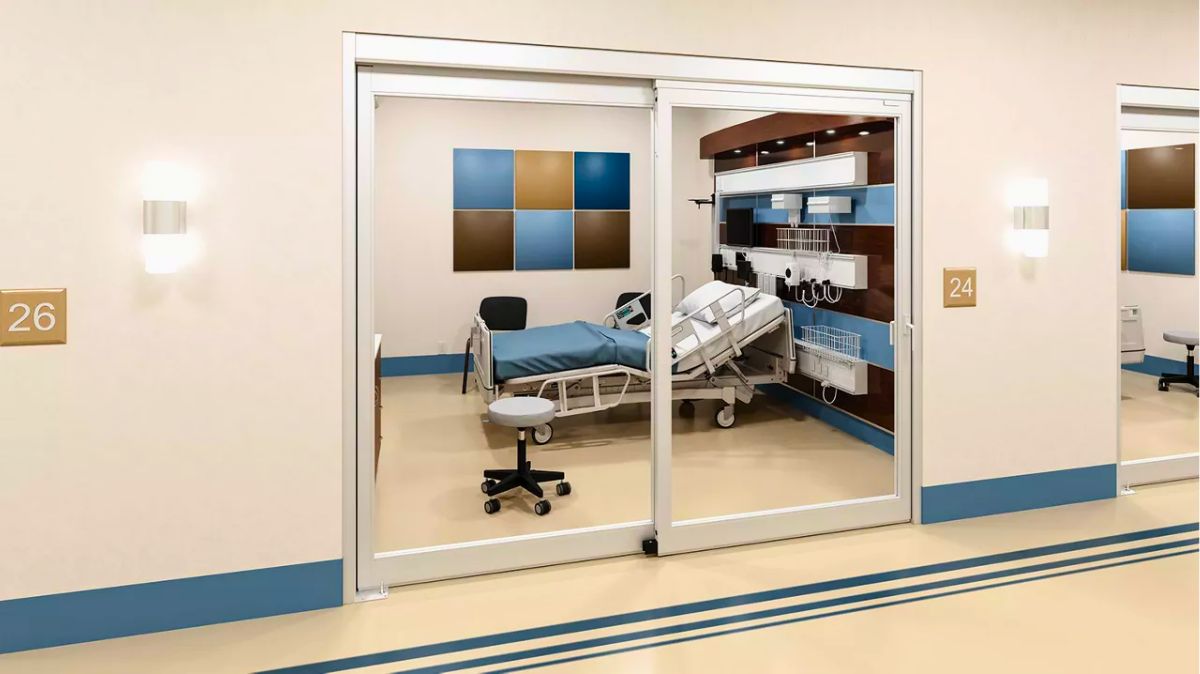
The ICU (Intensive Care Unit) is a specialized area dedicated to critically ill patients who require continuous monitoring using advanced medical equipment. Unlike standard patient rooms, ICU areas experience a high frequency of movement from medical staff and equipment.
This places stringent demands on the door system. ICU hospital doors must ensure both smooth accessibility and effective environmental control.
Air quality and isolation requirements
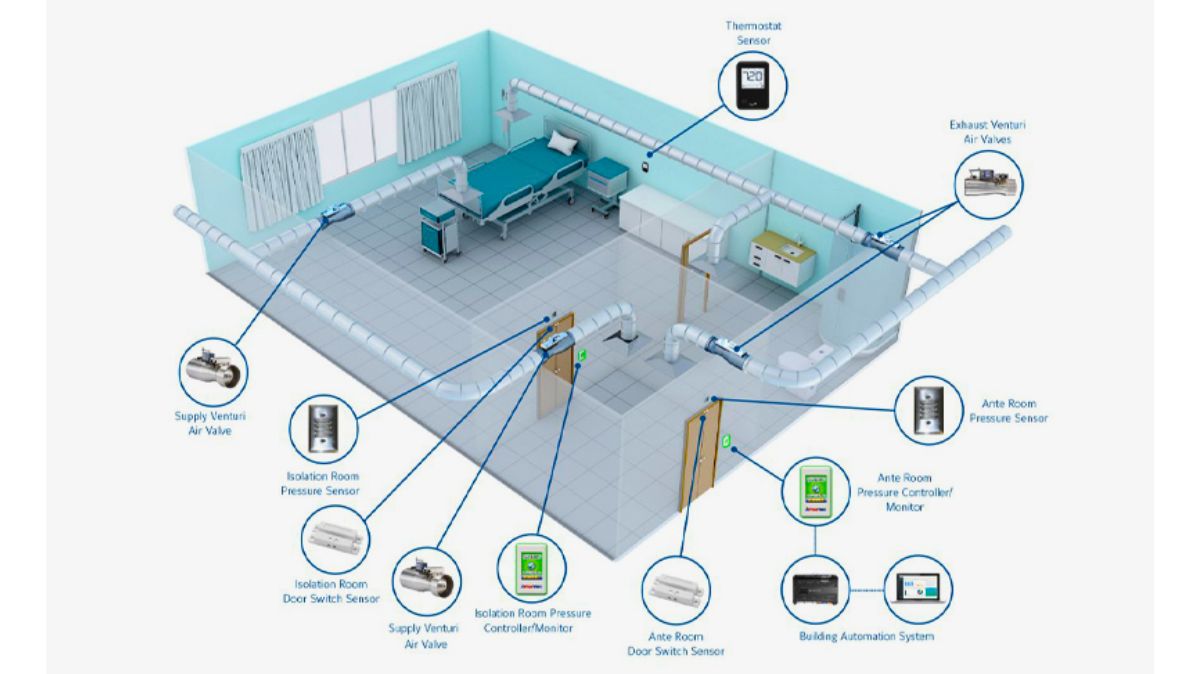
One of the most critical aspects of ICU environments is air control to minimize cross-contamination. Depending on the design, ICU rooms may adopt standards similar to cleanroom doors or approach hermetic door performance to maintain a stable environment.
- The door system must:
- Support room pressure control
- Minimize uncontrolled air exchange between different areas
The role of ICU doors in hospital operations
In practice, ICU doors act as control points between functional zones. Beyond regulating movement, they also help:
- Monitor patients from outside
- Reduce unnecessary door opening
- Minimize direct contact and improve sterility
As a result, ICU doors are an essential component of modern hospital entrance solutions.
What are ICU hospital doors? Structure and operation
Definition of ICU doors
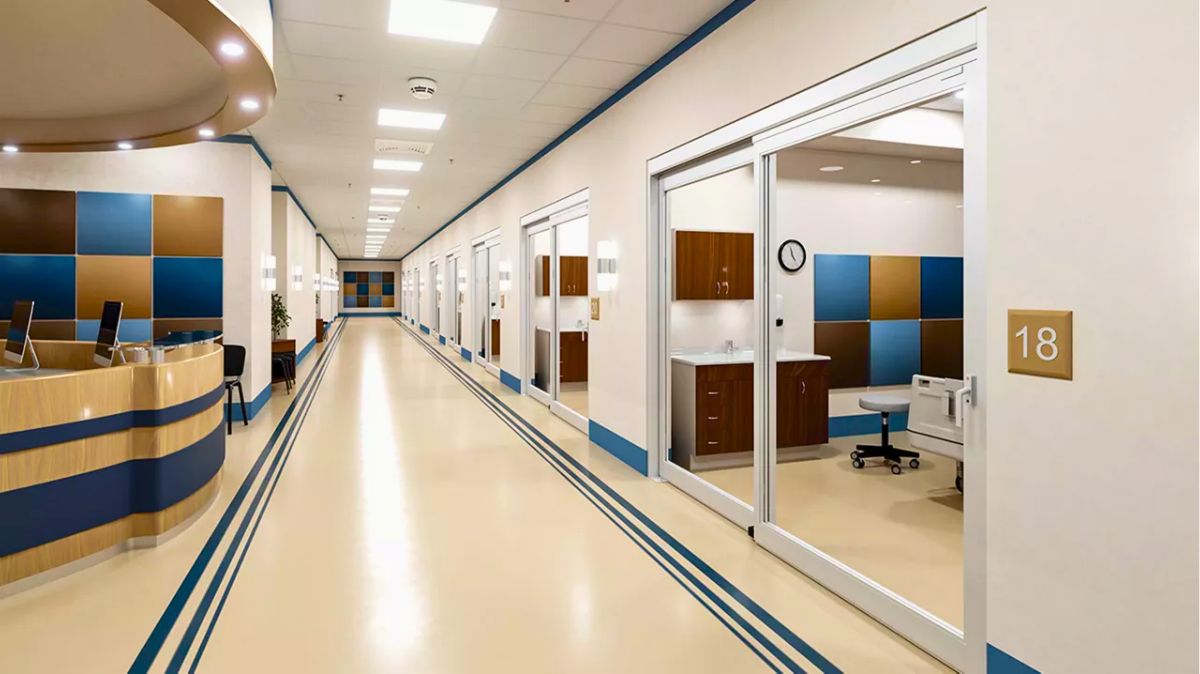
ICU doors are specially designed for critical care areas and must meet strict requirements for hygiene, safety, and continuous operation. Compared to standard doors, ICU doors are optimized in terms of materials, sealing performance, and visibility.
Basic structure of ICU doors
A standard ICU door system typically includes:
- Door leaf made of specialized materials
- Sliding track or hinge system
- Sealing gaskets to limit airflow
- Integrated observation glass
This structure ensures both operational flexibility and compliance with medical environmental requirements.
Operating principle and automatic closing mechanism
In modern hospitals, ICU doors are often equipped with automatic or semi-automatic closing mechanisms. After being opened, the door returns to a closed position to minimize air loss and reduce infection risks.
This mechanism can operate via:
- Hydraulic closers
- Motion sensors
- Automatic control systems
This ensures stable and safe operation under continuous use.
ICU door materials – A key factor for durability and hygiene
Common materials used for ICU doors
Material selection directly impacts durability and hygiene performance. Common materials include:
- Stainless steel: durable, corrosion-resistant, easy to clean
- Powder-coated steel: cost-effective, high durability
- Aluminum and glass: lightweight, aesthetic, easy to integrate observation panels
Material requirements in ICU environments
Due to the nature of medical environments, door materials must:
- Be antibacterial
- Resist dust accumulation
- Be easy to clean and disinfect
These requirements are similar to cleanroom door standards, where all surfaces must meet strict hygiene criteria.
Comparison with cleanroom doors
Compared to operating room doors or cleanroom doors, ICU doors offer more flexibility in material selection but must still meet essential hygiene and durability standards. In some cases, ICU doors may adopt configurations close to hermetic doors to enhance environmental control performance.
Observation glass – A critical component of ICU doors
Role of observation glass
Observation glass is an indispensable part of ICU hospital doors. It allows medical staff to monitor patients without opening the door, thereby minimizing disruption to the room’s air environment.
Glass standards in hospitals
Glass used in ICU doors must meet the following criteria:
- Safety glass with high impact resistance
- Laminated or tempered glass
- Shatter-resistant and safe during use
Design of observation panels in modern ICU doors
The glass panel is typically positioned at the center of the door leaf with appropriate dimensions to optimize visibility. In addition to technical functionality, this design also enhances the aesthetic quality of hospital spaces.
ICU doors and requirements for sealing and safety
In ICU environments, door systems must provide an appropriate level of sealing to maintain environmental control. While not requiring absolute airtightness like operating rooms, ICU doors must still minimize air exchange between different zones.
This helps to:
- Reduce infection risks
- Maintain stable room pressure
- Support efficient HVAC system performance
Compared to hermetic doors used in operating rooms, ICU doors have lower sealing requirements but must still provide a certain level of isolation.
In surgical areas, hospitals often use NABCO operating room doors, which apply specialized airtight sealing technology to achieve maximum sealing performance.
To enhance efficiency, ICU doors are typically equipped with:
- Sealing gaskets to reduce gaps
- Automatic closing mechanisms
- Optimized designs to minimize leakage points
This ensures stable operation and compliance with modern medical requirements.
Advantages of automatic ICU doors in modern hospitals
Automatic closing – Reduced contact and improved safety
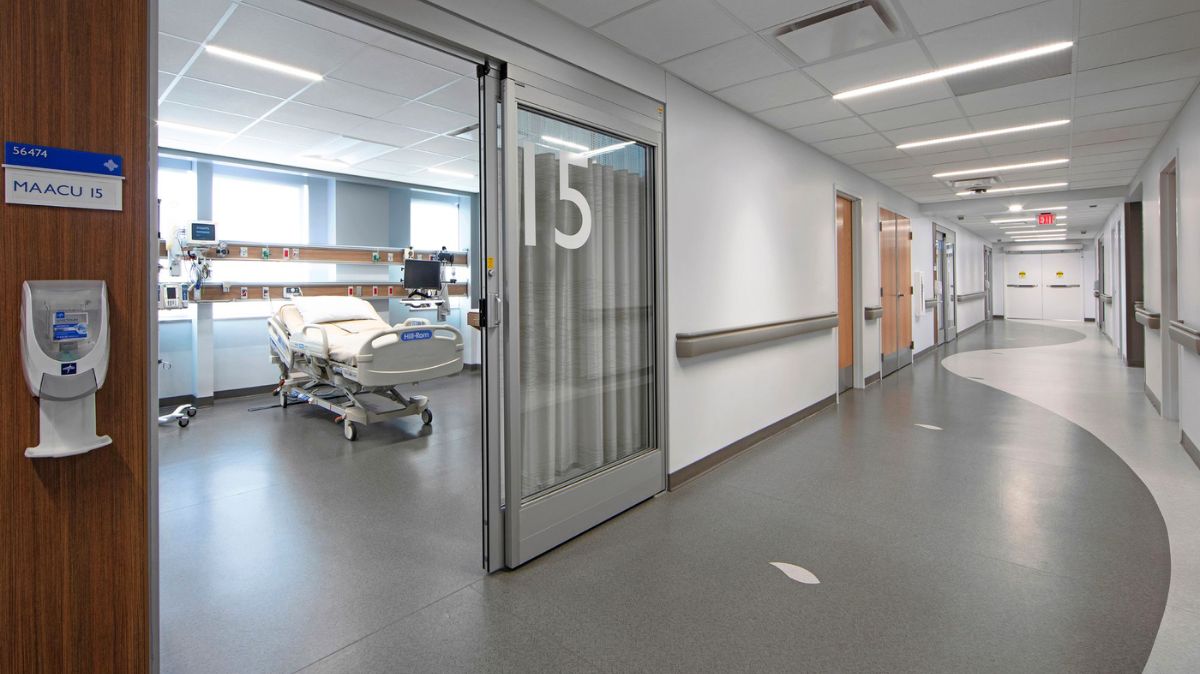
With the development of smart hospitals, ICU doors are increasingly integrated with automation technologies to improve operational efficiency and user safety. One key advantage is automatic closing, which reduces direct hand contact with door surfaces—an important factor in minimizing cross-contamination risks.
Stable operation under high frequency use
ICU door systems must operate reliably under high-frequency usage conditions. Given the constant movement of medical staff, doors must function smoothly, minimize errors, and avoid disruptions to patient care.
Integration with smart hospital systems
Modern ICU doors can also integrate with hospital management systems such as access control and building management systems (BMS). This not only optimizes operations but also contributes to a comprehensive hospital entrance solution, supporting a safer and smarter healthcare environment.

NABCO entrance solutions for hospitals
Within hospital door systems, each area has its own technical requirements. While ICU areas require medium to high levels of environmental control, operating rooms demand the highest standards of airtightness and sterility.
For this reason, many hospitals choose NABCO operating room doors specialized systems with superior airtight performance. By applying advanced sealing technology, these doors minimize air exchange and maintain sterile conditions during surgical procedures.
Compared to ICU doors, NABCO solutions are more suitable for high-standard areas such as operating rooms and cleanrooms.
- A flexible combination of ICU doors and NABCO hermetic doors enables hospitals to build a synchronized door system that:
- Meets the technical requirements of each area
- Optimizes overall operational efficiency
>>> See more: NABCO Hermetic Door – Airtight operating room door solution for hospitals
Conclusion
ICU hospital doors are not merely technical components; they play a critical role in ensuring a safe treatment environment. From materials and structure to operating mechanisms, every aspect must be optimized to meet the specific requirements of critical care areas. When properly designed and selected, ICU door systems help:
- Maintain environmental control
- Reduce infection risks
- Improve operational efficiency
At the same time, integrating advanced solutions such as NABCO operating room doors enables hospitals to complete a comprehensive entrance system that meets the increasingly high standards of modern healthcare.