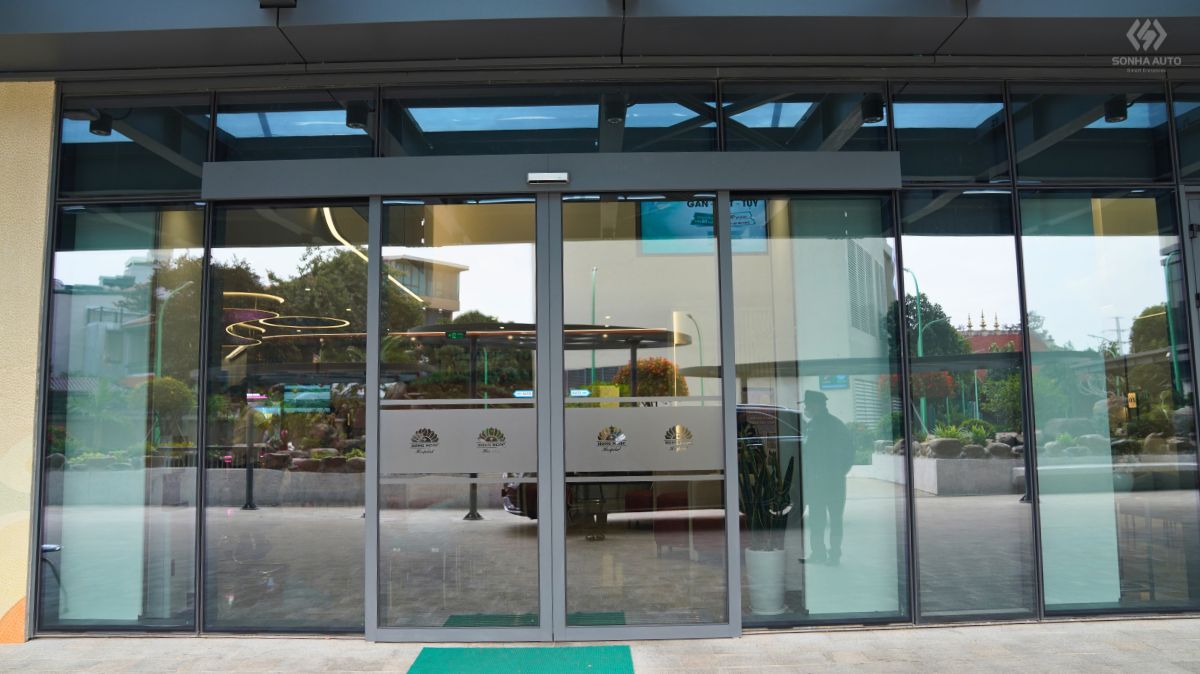
In modern facilities such as shopping malls, hospitals, office buildings, and high-end hotels, automatic sliding doors have become an essential standard. However, after a period of continuous operation, many users encounter automatic sliding door malfunction, which causes inconvenience, compromises safety, and negatively affects the professional image of the facility. Understanding the causes and proper solutions for automatic sliding door malfunction allows users to respond proactively in any situation. So where do automatic sliding door malfunctions typically originate? What are the common warning signs, and how can these issues be resolved correctly from a technical perspective? The following article provides a comprehensive A–Z overview, from operating principles to effective troubleshooting solutions.
How does an automatic sliding door work?
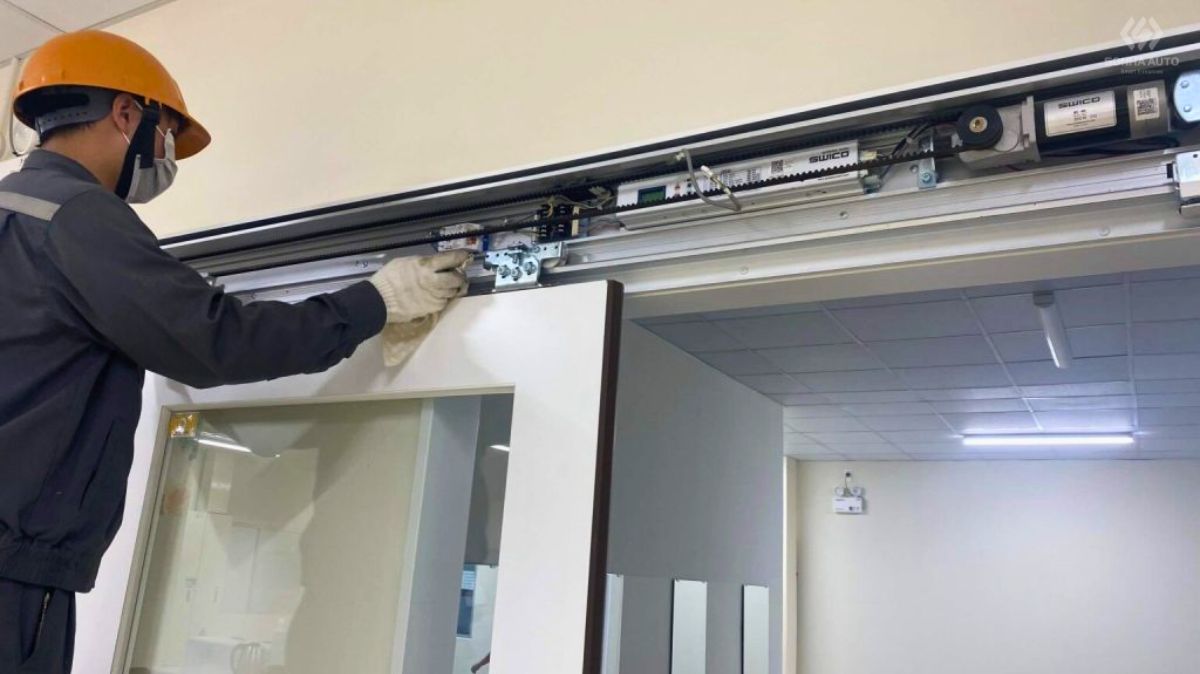
To understand why an automatic sliding door malfunction occurs, it is important to first grasp the basic operating principle of the system. A complete automatic sliding door system typically includes:
- Automatic sliding door motor: Provides the driving force for door movement along the track
- Automatic sliding door sensor: Detects motion or obstacles and sends open/close signals
- Controller (control unit): Receives sensor signals, processes data, and commands motor operation
- Track and roller system: Ensures smooth and accurate door movement
- Power supply and auxiliary components
When any of these components is affected by dust, environmental conditions, or mechanical wear, an automatic sliding door malfunction can occur immediately.
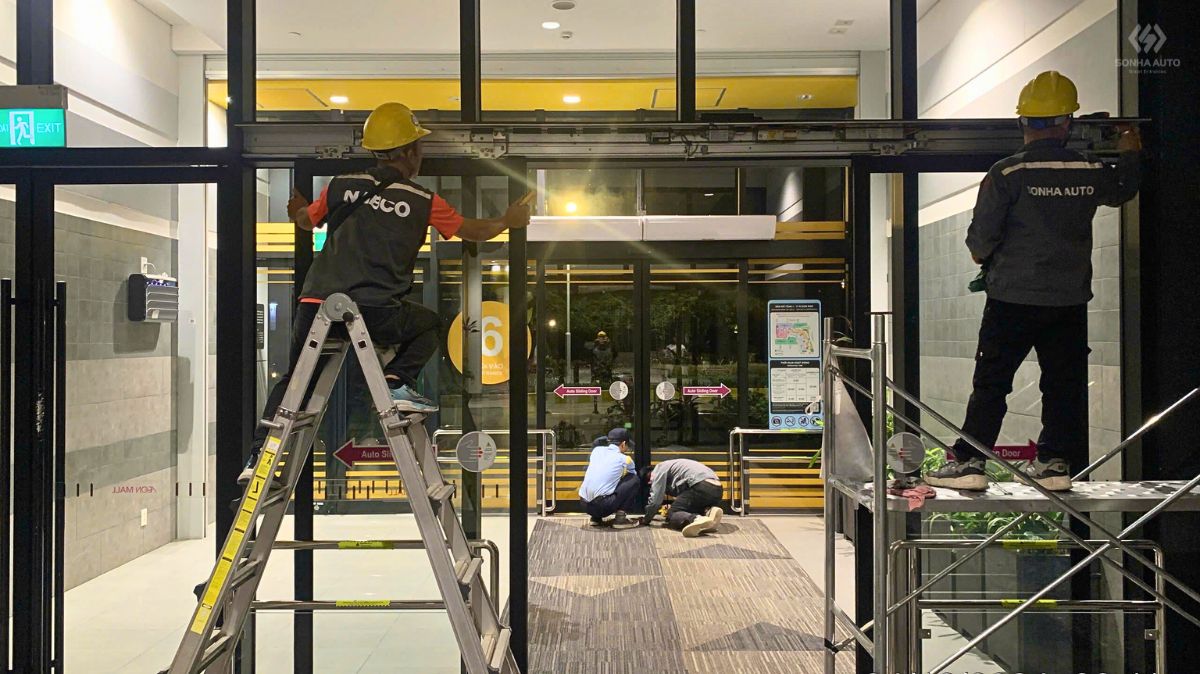
Automatic sliding door malfunction and common warning signs
During real-world operation in homes, office buildings, hospitals, and shopping centers, automatic sliding doors are subject to continuous use and environmental impact, making malfunctions unavoidable. Early detection of abnormal signs helps prevent safety risks and more serious damage. Below are the most common automatic sliding door malfunctions encountered in practice.
Automatic sliding door does not open or close
This is the most common malfunction, where the door remains completely inactive even when a person stands in front of the sensor or presses the control button.
Common causes:
- Power failure or unstable power supply
- Faulty control board
- Damaged or mechanically jammed motor
Recommendation: If the power supply has been checked and the door still does not operate, contact a professional automatic sliding door repair service to inspect the motor and control board.
Automatic sliding door moves slowly or jerks
The door moves unevenly or hesitates during opening or closing.
Possible causes:
- Dusty tracks or lack of lubrication
- Loose or stretched drive belt
- Overloaded motor
Initial solution: Clean the tracks and apply proper lubrication. If the issue persists, component replacement may be required.

Automatic sliding door produces loud noise during operation
Abnormal noises such as squeaking, scraping, or rattling indicate system deterioration.
Common causes:
- Worn rollers
- Bent or deformed tracks
- Insufficient lubrication
If left unaddressed, this automatic sliding door malfunction may spread to the motor and transmission system.
Automatic sliding door opens and closes by itself
Some users experience doors opening and closing unexpectedly without pedestrian traffic.
Primary causes:
- Sensor signal interference
- Incorrect sensor detection zone settings
- Strong lighting or reflective objects triggering false signals
Solution: Recalibrate the sensor or replace it with a model suitable for the operating environment.
Automatic sliding door sensor does not respond
The door fails to react when someone approaches, even though the motor and power supply appear functional.
Causes:
- Dust-covered or obstructed sensor
- Loose or broken signal wiring
- Sensor aging or failure
Cleaning may provide temporary relief, but replacing the sensor is recommended for long-term reliability.

Automatic sliding door stops midway
The door halts before completing its opening or closing cycle.
Possible causes:
- Door leaf imbalance
- Insufficient motor pulling force
- Safety mode activated by the controller
This condition requires professional inspection and system recalibration.
Automatic sliding door becomes misaligned with the track
The door vibrates, runs off-center, or risks derailing.
Causes:
- Strong external impact
- Unevenly worn rollers
This is a serious mechanical automatic sliding door malfunction that must be addressed promptly to avoid accidents.
Door does not respond to remote control or push button
Possible causes:
- Depleted remote battery
- Lost connection between remote and controller
- Controller malfunction or system error

Control board malfunction
A faulty control board may cause the entire system to stop functioning or operate incorrectly.
Common causes:
- Unstable power supply
- Aging electronic components
System reset or in-depth board inspection is required.
Automatic sliding door operates inconsistently over time
Intermittent malfunctions that appear and disappear are often the result of:
- Lack of periodic maintenance
- Progressive component wear
On-site quick diagnosis for automatic sliding door malfunction
Before contacting an automatic sliding door repair service, you can carry out the following four-step quick diagnostic process to preliminarily identify the cause of the automatic sliding door malfunction.
- Check the power supply: Ensure the outlet, circuit breaker, or power source is stable and not disconnected.
- Inspect the sensor: Wave a hand in front of the sensor and check for indicator light response.
- Listen during manual movement: Turn off the power and manually slide the door to detect abnormal noises.
- Check for track obstructions: Inspect upper and lower tracks for stones, debris, or foreign objects.
Note: This process only provides a preliminary assessment. If the door remains unstable or exhibits serious faults, a professional automatic sliding door repair service should be contacted.

When should you call a professional automatic sliding door repair service?
While minor issues such as sensor cleaning or power checks can be handled by users, professional support is necessary when:
- The door does not open or respond after basic checks
- Malfunctions recur frequently
- Motor or control board damage is suspected
- The door vibrates heavily or emits loud noises
Improper repair can accelerate motor failure, disrupt system logic, create safety hazards, and increase long-term replacement costs. Choosing a professional service is therefore essential for resolving automatic sliding door malfunction thoroughly and safely.
Sonha Auto – A reliable and comprehensive solution for automatic sliding door repair
With many years of experience in the automatic door industry, Sonha Auto provides professional automatic sliding door repair services for both residential and commercial projects. We deliver on-site troubleshooting and repair services, available 24/7, to minimize operational disruptions and ensure user safety.

Sonha Auto currently provides automatic door repair services in Hanoi, Ho Chi Minh City, Da Nang, Hai Phong, and many other provinces nationwide. Our technicians are professionally trained and highly experienced in sensors, motors, control boards, and various automatic sliding door systems, enabling accurate diagnosis of common issues such as non-responsive doors, recurring malfunctions, motor or board failure, excessive vibration, and loud operational noise.
All repair services follow a standardized technical process, including system inspection, solution consultation, transparent quotation, and professional execution. Sonha Auto is committed to using genuine components, correct technical specifications, and no hidden costs, ensuring long-term stability, safety, and durability of the automatic sliding door system.
Beyond immediate repair, Sonha Auto also provides maintenance and operational optimization consulting to help clients prevent future automatic sliding door malfunctions and extend system lifespan. With extensive experience across office buildings, hospitals, shopping centers, factories, and residential complexes, Sonha Auto is a trusted automatic sliding door repair provider for both investors and individual customers.
>>> See more: Repair NABCO automatic doors in Hanoi for door failure, motor or sensor faults, track jamming
Conclusion
An automatic sliding door malfunction is unavoidable after prolonged use. Understanding common faults, recognizing early warning signs, and applying correct repair methods can help reduce costs and ensure operational safety.
For complex issues, contact Sonha Auto for timely, accurate, and effective professional support.