In healthcare facilities especially general hospitals, specialized hospitals, and large-scale medical treatment centers smoke exhaust window solutions for hospitals are not merely a technical component of the fire prevention and firefighting (PCCC) system. They are a critical factor that directly determines patient and medical staff safety, as well as the facility’s ability to control incidents when a fire occurs. Unlike typical civil buildings, hospitals accommodate a high concentration of people, include many enclosed functional areas, and house numerous patients with limited mobility. For this reason, smoke exhaust systems of which smoke exhaust windows play a pivotal role must be properly designed and correctly invested in from the outset.
Why do hospitals require specialized smoke exhaust window solutions?
In a fire incident, toxic smoke and high temperatures are the primary causes of casualties, often more dangerous than flames themselves. In hospitals, this risk is significantly higher due to the following factors:
- Long corridors and numerous enclosed functional rooms.
- Patients undergoing treatment who have difficulty moving or are unable to evacuate independently.
- Complex medical equipment systems that increase the risk of fire ignition.
Without an effective window-based smoke exhaust system, smoke can rapidly accumulate and spread both horizontally and vertically, causing loss of visibility, suffocation, and serious obstruction to rescue operations. Therefore, automatic smoke exhaust windows for hospitals cannot be replaced by conventional ventilation windows or manually operated windows; they must be purpose-designed solutions that comply with fire safety standards.
What are smoke exhaust windows for hospitals? Distinguishing them from other window types
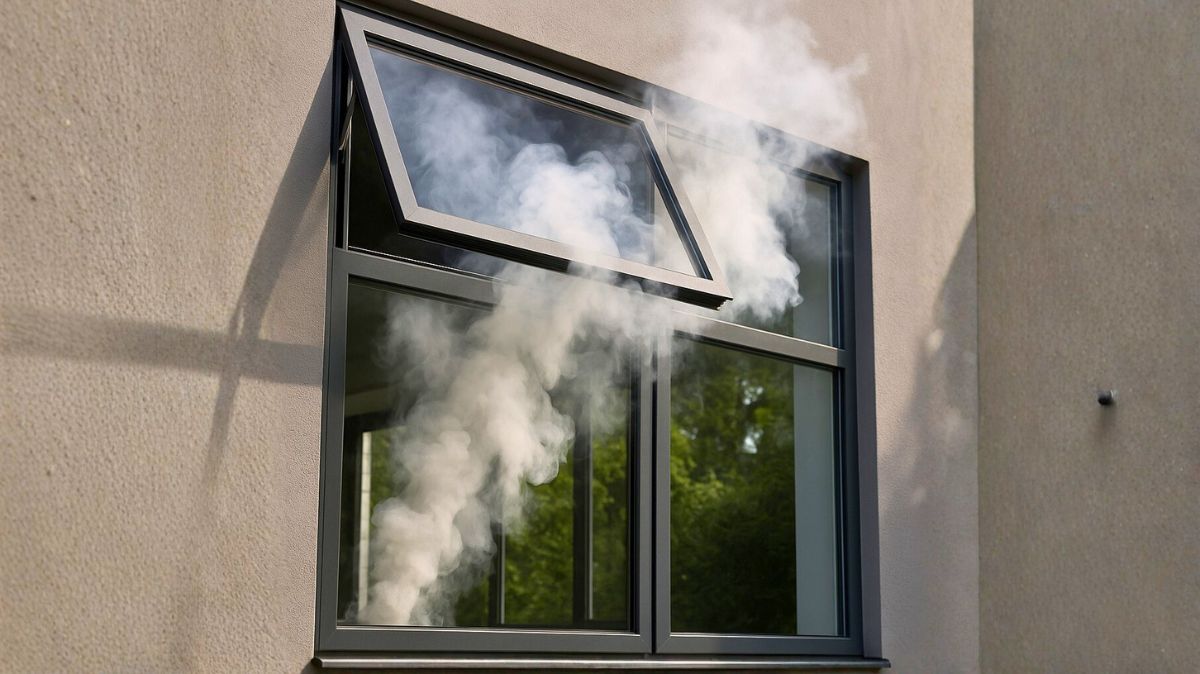
Automatic fire-rated smoke exhaust windows for hospitals are windows equipped with dedicated motors and a central control panel that is directly integrated with the hospital’s fire alarm system. These windows are capable of opening automatically even during power failure and can withstand high temperatures for a specified period in accordance with regulatory standards.
Common window types and distinctions:
- Natural ventilation windows: Serve air circulation only; no fire safety requirements.
- Automatic opening windows: Used for convenience and ventilation; not required to be integrated with fire alarm systems.
- Automatic fire-rated smoke exhaust windows: Mandatory opening upon receiving a fire signal; subject to specific technical fire safety standards.
The key point is that ventilation windows cannot replace smoke exhaust windows in hospitals, even if they appear visually similar.
Fire safety standards applied to hospital smoke exhaust windows
Smoke exhaust window solutions for hospitals in Vietnam must strictly comply with national technical regulations on fire safety for buildings and structures.
Relevant codes and technical standards
- QCVN 06:2022/BXD: The most recent and most critical regulation governing smoke protection for buildings and structures. For hospitals, evacuation corridors and high-occupancy rooms must be equipped with natural or mechanical smoke exhaust solutions.
- TCVN 5687:2010: Ventilation and air conditioning – Design standard.
Installation location requirements
Smoke exhaust windows are considered an integral part of the overall fire safety system, not a standalone item. In hospitals, they are typically installed in:
- Corridors: Especially corridors longer than 15 meters without natural ventilation.
- Atrium or skylight areas: To release heat for multiple floors.
- Public lobbies and cafeterias: High-occupancy areas.
- Principle: Windows must be installed at a minimum height of 2.2 meters above floor level to capture rising hot smoke layers and avoid directing smoke toward occupants moving below.
Motor and control solutions for hospital smoke exhaust windows
Requirements for smoke exhaust window motors
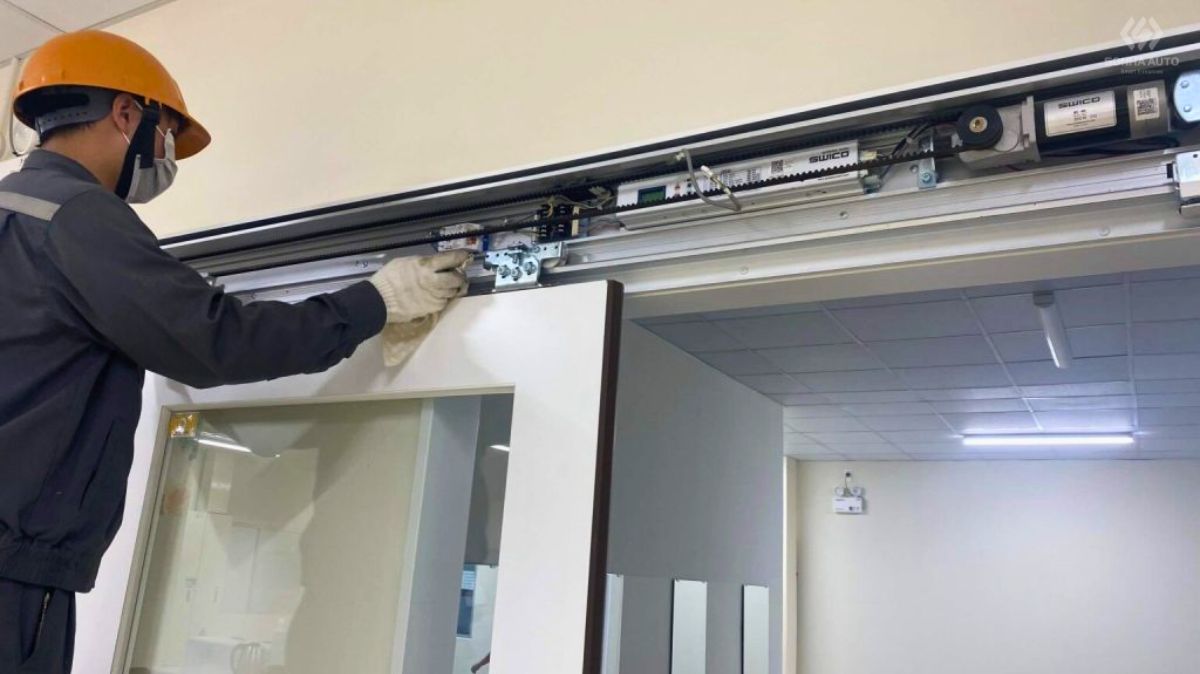
The motor is the most critical component determining the effectiveness of the entire solution. In hospital environments, smoke exhaust window motors must meet the following requirements:
- Opening force appropriate to sash weight and size.
- Stable, durable operation with minimal maintenance.
- Safe performance under emergency conditions.
Using incorrect or non-certified motors is the leading cause of smoke exhaust systems being deemed non-compliant with fire safety standards.

Integration with the central fire alarm system
Hospital smoke exhaust windows must not operate independently. They are required to:
- Open automatically upon receiving signals from the fire alarm control panel.
- Prioritize fire safety commands over manual operation.
- Operate synchronously with other fire protection systems.
This is the decisive factor for smoke exhaust windows to be recognized as compliant fire safety equipment.
In addition, any hospital smoke exhaust window solution must include:
- Dedicated UPS (uninterruptible power supply): Ensuring the windows can operate for at least two opening cycles even during power outages.
- Fire-resistant cables: Wiring from the control panel to the motor must be fire-resistant, maintaining signal integrity for at least 60 – 120 minutes.
Common mistakes causing hospital smoke exhaust windows to fail compliance
Practical implementation shows that many projects encounter issues due to:
- Incorrect window or motor selection.
- Failure to integrate with the fire alarm system.
- Improper placement or insufficient opening area.
- Lack of technical documentation for acceptance.
These issues not only affect fire safety approval but also result in costly corrective work later.

Choosing a provider of hospital smoke exhaust window solutions
Hospitals are specialized facilities that require contractors not only to understand mechanical systems but also to have thorough knowledge of current fire safety regulations. Sonha Auto is a leading Vietnamese provider specializing in intelligent and safe entrance solutions for key healthcare projects. We deliver comprehensive solutions including:
- International-standard equipment: Smoke exhaust window motors from leading global brands (such as TOPP – Italy and Heinda – China), offering powerful thrust and exceptional durability
- In-depth design consultancy: Sonha Auto’s engineering team supports investors in calculating clear opening areas, opening angles, and optimal installation locations in strict accordance with approved fire safety drawings
- Integrated installation: Complete solutions from window hardware to central fire alarm interlocking control systems
- Proven project experience: Successful implementation of automatic door and smoke exhaust systems for major hospitals such as Mat Troi Hospital – Phu Quoc, Vinmec Hospital, and the 108 Central Military Hospital
>>> See more: Fire safety standards for smoke exhaust windows and common mistakes during installation
Conclusion
Smoke exhaust window solutions for hospitals represent an investment in safety and responsibility. In healthcare environments, every second that a window opens in time can mean a life-saving opportunity for thousands of people. Strict compliance with technical standards on opening area, opening angle, and motor systems not only ensures legal operation but also affirms the humanitarian values and credibility of medical institutions.
If you are seeking an appropriate automatic smoke exhaust window solution for hospitals, contact Sonha Auto today for detailed consultation tailored to each project and specific technical requirements.