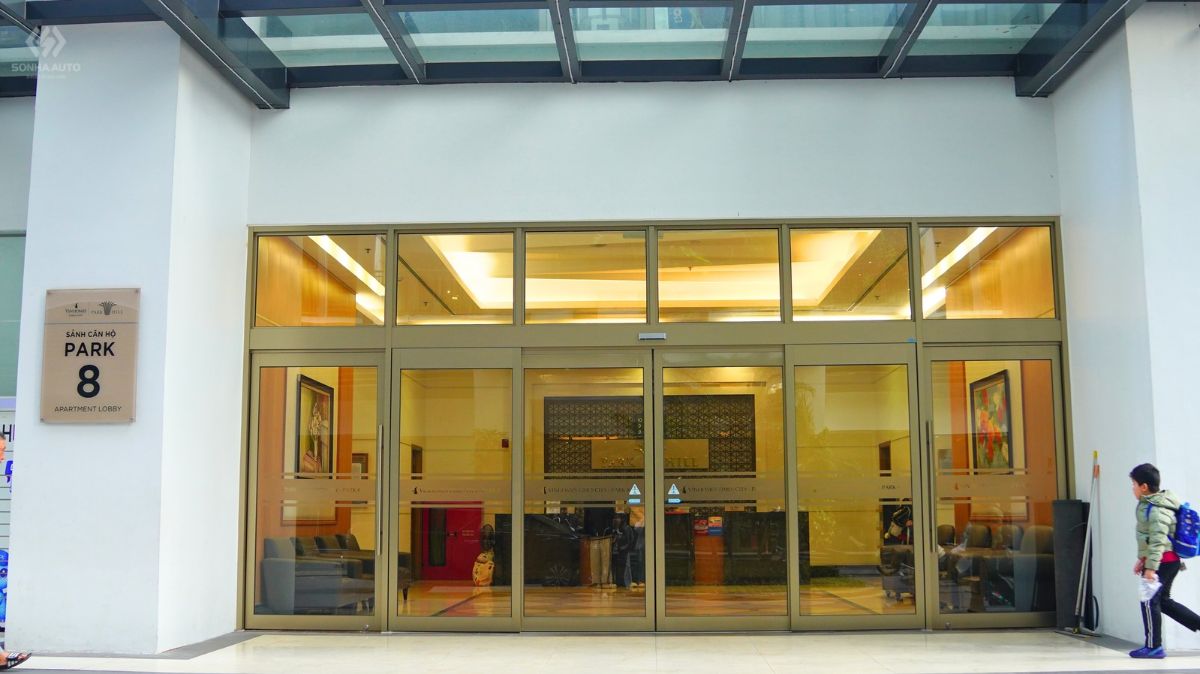
Sonha Auto has completed the installation and officially handed over 03 sets of NABCO GT-1175 breakout sliding doors at Park 8 Times City (part of the Park Hill subdivision in Hanoi). This modern entrance solution is designed to accommodate high pedestrian traffic while ensuring strict access control and providing enhanced emergency escape capabilities.
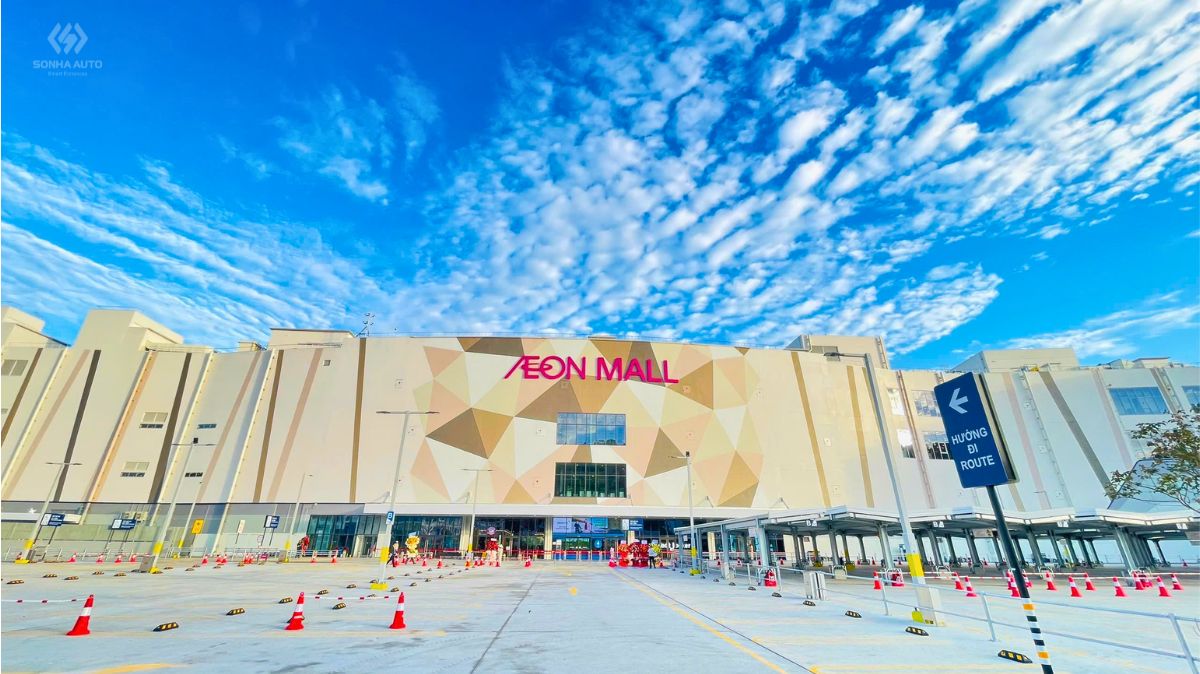
>>> See more: Sonha Auto installs 25 sets of NABCO automatic sliding doors at AEON MALL Ha Long
Park 8 Times City – An apartment tower in the heart of Park Hill
Park 8 is one of the apartment towers in the Park Hill subdivision of Vinhomes Times City. The building comprises 28 above-ground floors, 2 basement levels, and 416 apartments, with a density of 16 apartments per typical floor. The first and second floors are allocated to shophouses, while floors 3 to 28 accommodate residential apartments.
The building is bordered by Park 1 to the north, Park 3 to the east, the central plaza to the south, and a landscaped hill to the west. This location provides residents with convenient access to on-site amenities such as the outdoor swimming pool, clock tower, performance stage, and landscaped areas. Given the frequent use of amenities and the high volume of pedestrian traffic in this residential complex, the lobby entrances require door systems that facilitate convenient movement while meeting access control requirements.
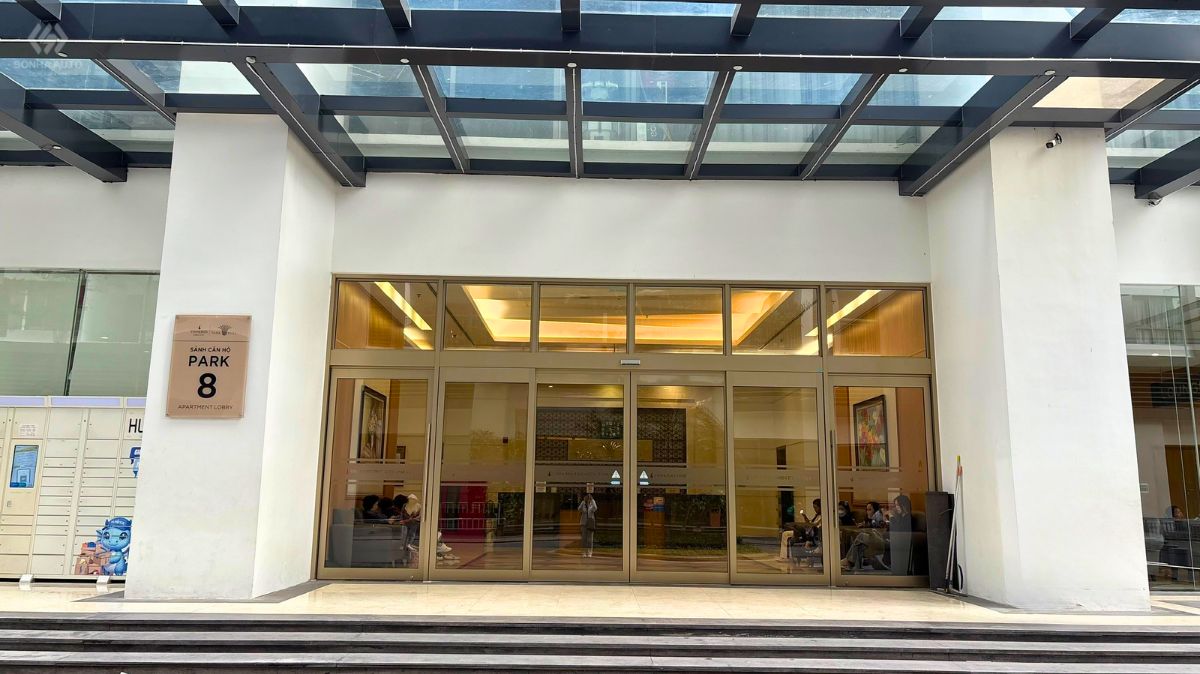
Completing the automatic door system in the lobby areas
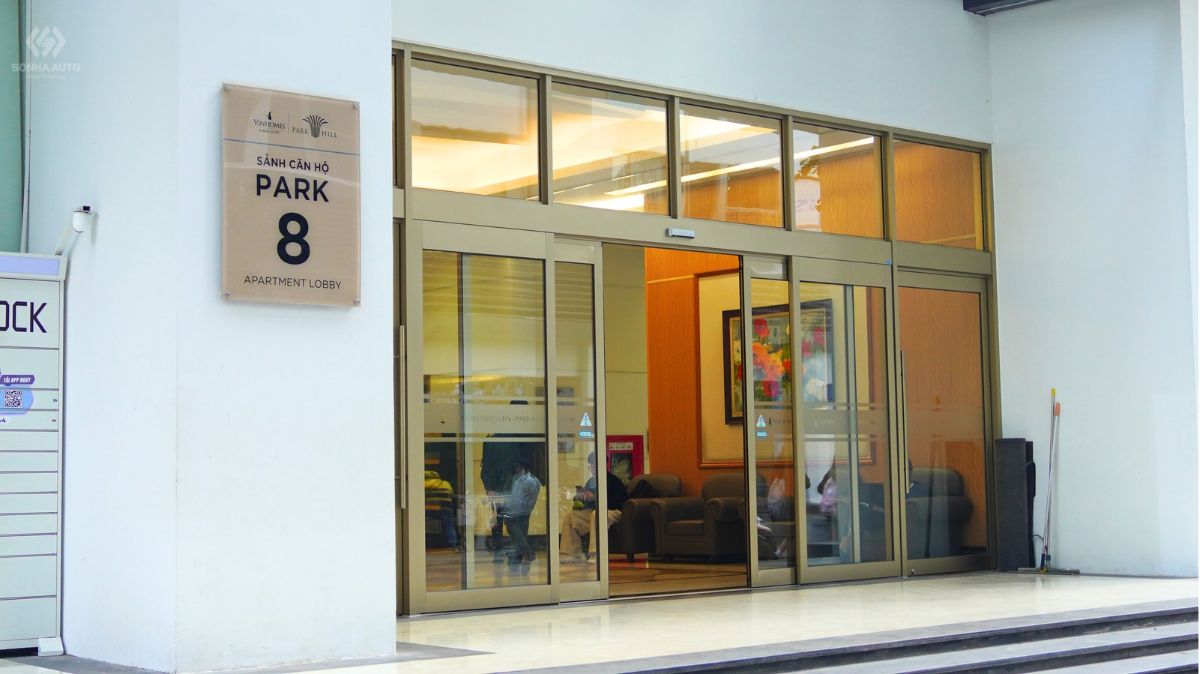
To address the challenge of managing heavy internal pedestrian traffic while maintaining residents’ privacy, Sonha Auto installed NABCO GT-1175 at Park 8, with 03 sets of breakout sliding doors configured to suit the specific requirements of each lobby location:
- 01 set of doors at the main lobby: Integrated with NABCO NSW-A01 sensors to detect the direction of movement and help prevent unnecessary door activation.
- 02 sets of bi-parting doors at the inner lobby: Integrated with a facial recognition system for entry control and motion-detection sensors for exiting.
This integrated entrance solution helps the building facilitate smooth daily movement while enhancing access control for the residential areas.
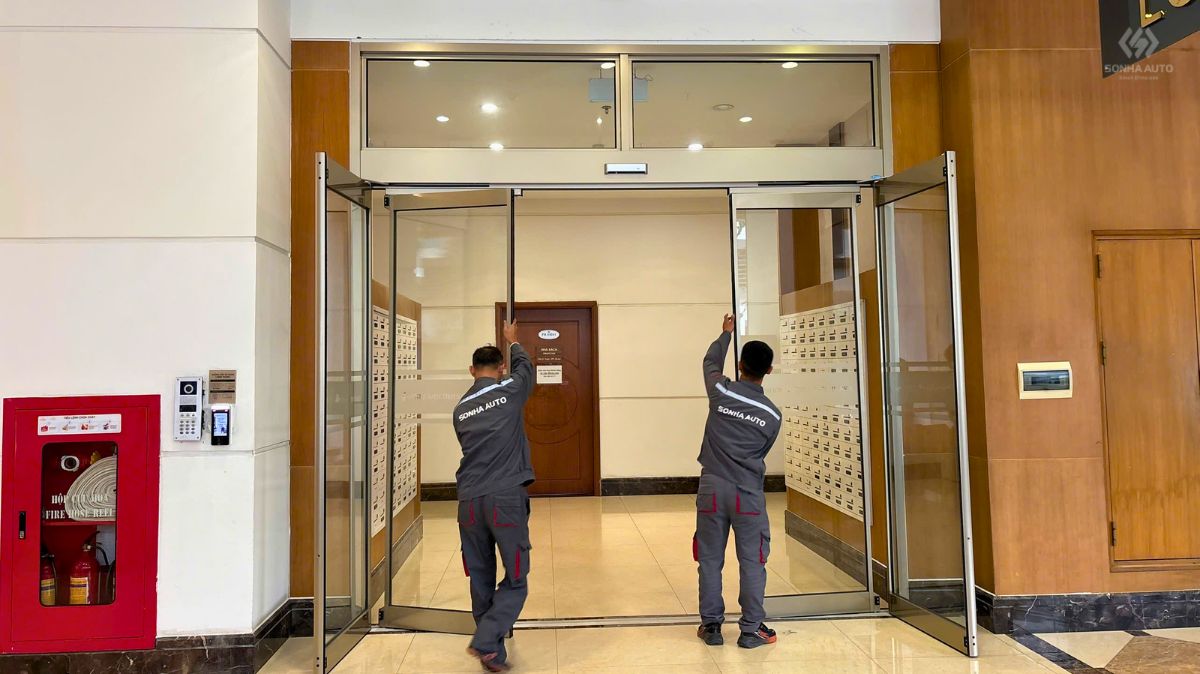
Flexible passageway expansion with the emergency Breakout function
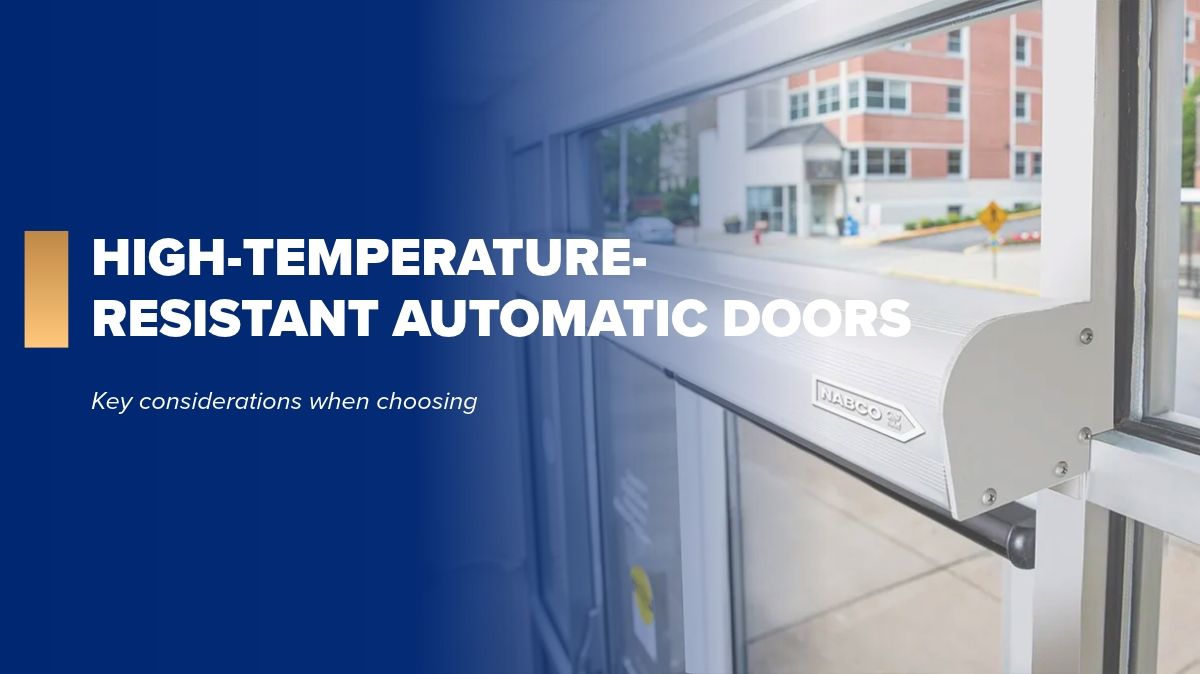
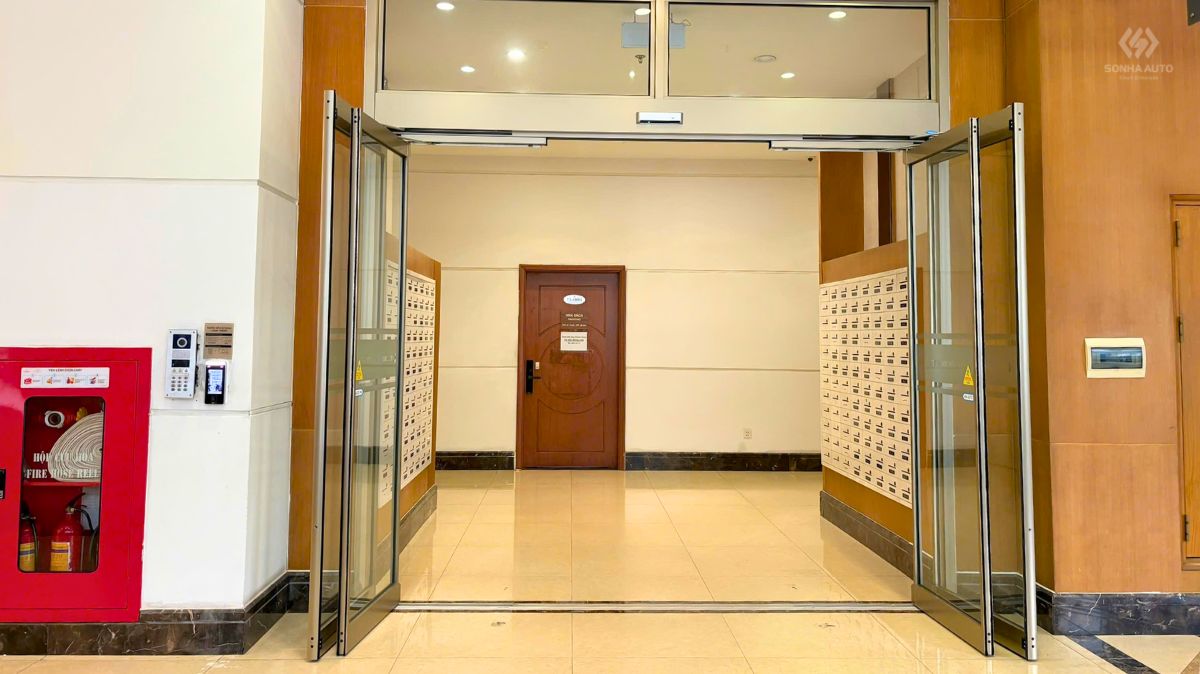
A key technical feature of this automatic door solution for residential complexes is the Breakout function of the NABCO GT-1175. Under normal operating conditions, the doors slide open and close smoothly and automatically, just like conventional automatic sliding doors. When a wider passageway is required, users can manually push the door leaves outward in the direction of escape.
This mechanism increases the clear opening width, making passage easier when transporting bulky items or when an emergency escape route needs to be widened. After use, the door leaves can simply be folded back into their original positions on the guide rails, allowing automatic operation to resume without affecting the control system.
Integration of NSW-A01 sensors and FaceID access control technology
At the main lobby of Park 8, the GT-1175 sliding door set is integrated with a NABCO NSW-A01 sensor. The device helps detect the direction of movement and distinguish people approaching the doors from those merely walking past the sensor detection zone. This reduces unnecessary activations and allows the system to respond more appropriately to actual pedestrian traffic in the lobby.
For the two door sets at the inner lobby, facial recognition technology is integrated directly to control entry. Residents authenticate their identity using FaceID at the access control device, and the doors open automatically once the data has been successfully verified. For exiting, motion-detection sensors trigger the doors to open automatically, allowing residents to leave conveniently without having to authenticate their identity.
NABCO NSW-A01 direction-detection sensor
Independent adjustment of sensor detection zones around the storage lockers
One notable aspect of NABCO GT-1175 at Park 8 is the arrangement of two storage locker systems on either side of the doors in the inner lobby. People frequently move around this area to retrieve or deposit belongings without intending to pass through the doors.
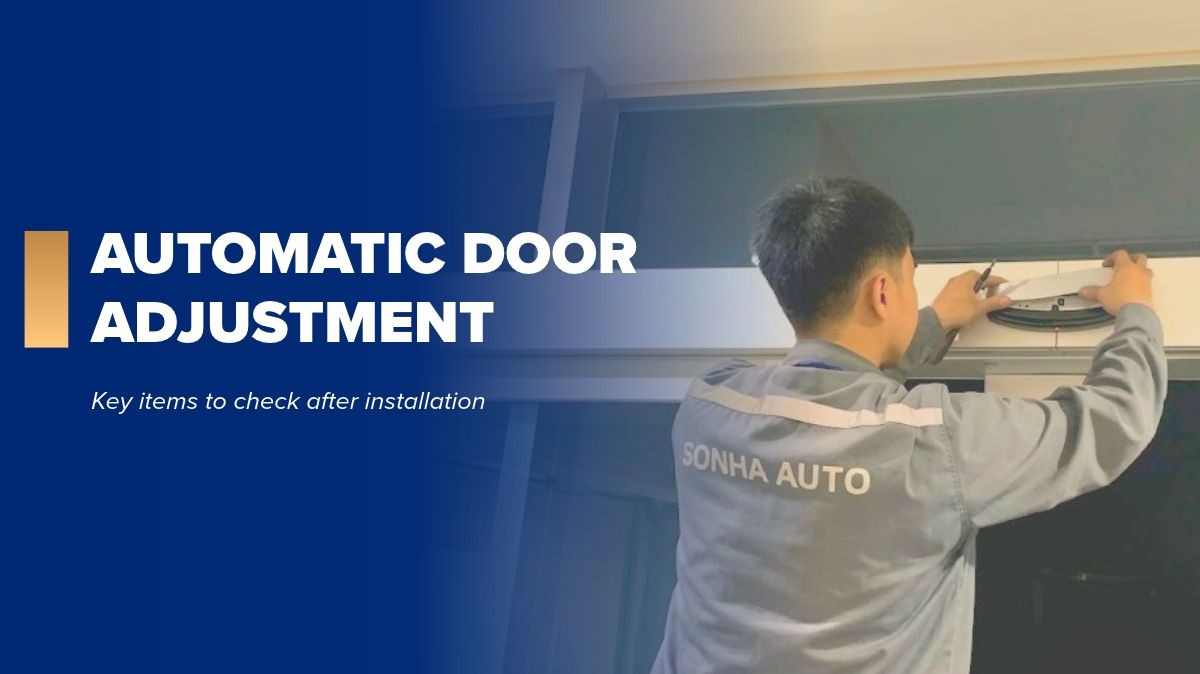
To prevent unintended door activation, Sonha Auto technicians independently adjusted the sensors’ scanning angles and detection zones in this area. This configuration helps minimize interference from movements unrelated to pedestrian access while maintaining the sensors’ ability to detect people who need to pass through the doors.
NABCO GT-1175 meets stringent international safety standards
In addition to its flexible operating features, the NABCO GT-1175 automatic door system is developed with reference to various technical safety and quality standards, including:
- EN 16005: A European standard specifying safety requirements for the design and operation of power-operated pedestrian doors.
- JIS A 4722: A Japanese Industrial Standard addressing the safety of automatic doors.
- TÜV: An organization that conducts product and system conformity assessments and certification against safety and quality requirements.
These standards and assessment frameworks provide important technical references for investors when selecting equipment and putting it into long-term operation at their projects.
Sonha Auto – Automatic door solutions tailored to each project
Every project has its own pedestrian traffic patterns and operational requirements. Therefore, in addition to selecting suitable equipment, Sonha Auto places strong emphasis on site surveys, sensor positioning, and configuring operating modes to suit actual site conditions.
The NABCO GT-1175 at Park 8 project demonstrates how Sonha Auto tailors its solutions to the specific characteristics of each site. Beyond equipment installation, the technical team also assessed and adjusted the sensor detection zones around the storage lockers to help prevent unintended door activation while ensuring convenient pedestrian access.
Through its practical project experience, Sonha Auto aims to deliver automatic door systems that are safe, reliable, and suited to each project’s long-term operational requirements.