In modern hospital systems, the operating room is the area with the most stringent environmental control requirements. Here, every factor from air quality, pressure, and materials to operational procedures must strictly comply with medical standards to ensure absolute safety for both patients and medical staff. Within this system, operating room door standards play a particularly important role. Doors are not only entry and exit points but also directly contribute to maintaining a sterile environment, controlling pressure, and minimizing contamination risks. Proper selection and design of doors in accordance with standards are critical to the overall efficiency of the operating room system.
Overview of operating room door standards in hospitals
What is an operating room door and its role in healthcare systems
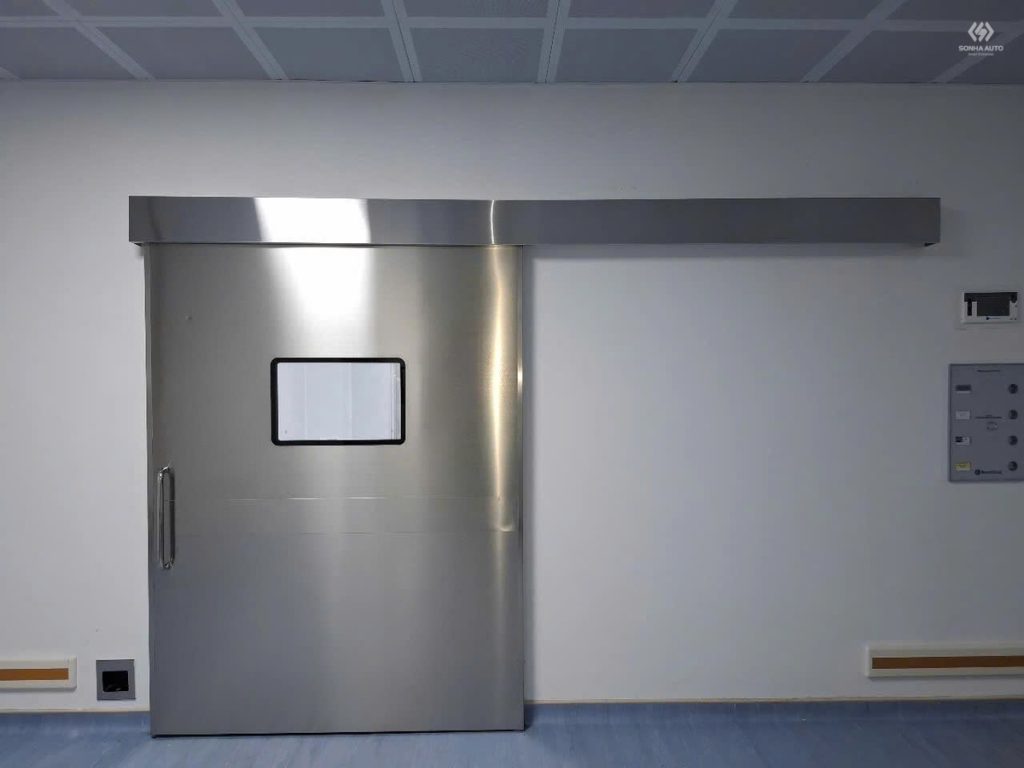
An operating room door, also known as a hermetic door, is a specialized door designed to provide high airtightness, helping control the environment inside surgical rooms. It is an essential component of hospital cleanroom door systems.
The roles of operating room doors include:
- Maintaining a sterile environment
- Supporting room pressure control
- Preventing contaminated airflow from entering
- Optimizing movement and workflow during surgery
Why operating room doors require strict standards
During surgical procedures, the risk of infection remains high if the environment is not properly controlled. Factors such as airflow, pressure fluctuations, or uncontrolled door operation can directly affect surgical outcomes.
Therefore, operating room door standards are established to:
- Ensure maximum airtightness
- Maintain stable room pressure
- Minimize cross-contamination
- Integrate with automatic hospital door systems
Cleanroom requirements in operating room door design
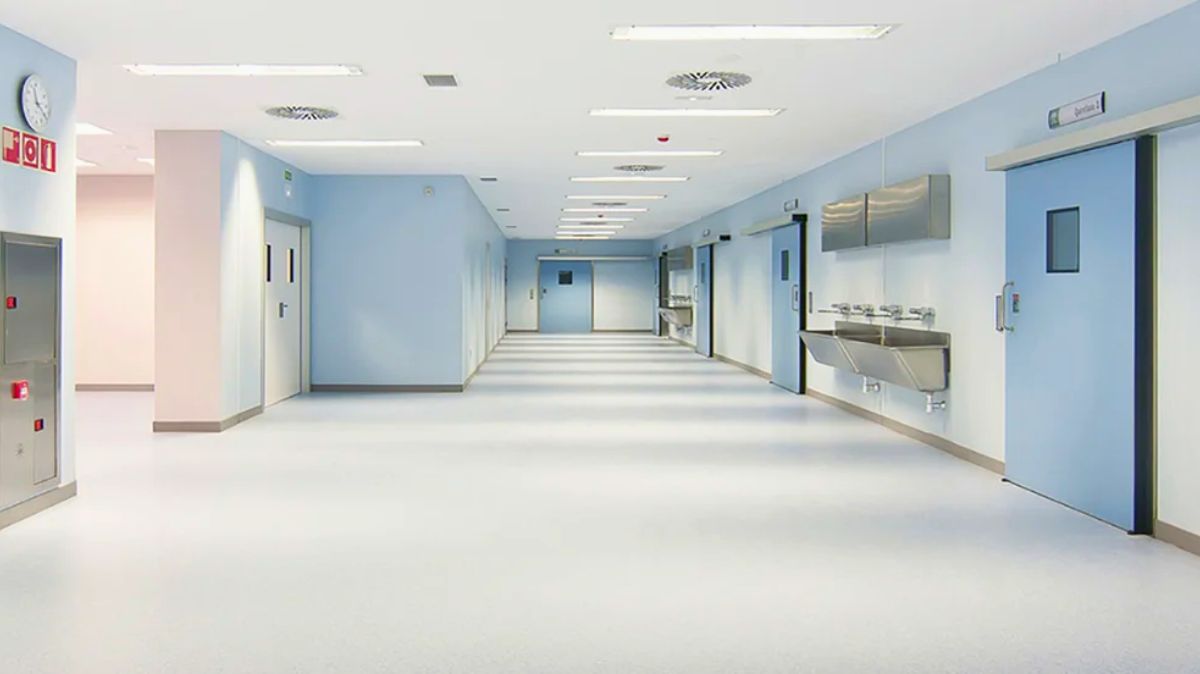
- Cleanroom standards applied to operating rooms: Operating rooms are designed according to cleanroom standards such as ISO or GMP, ensuring strict control over dust, bacteria, and microorganisms. Within this system, doors act as critical control points, maintaining sterile conditions and ensuring uninterrupted clean airflow.
- Operating room doors in cleanroom systems: Operating room doors must be integrated with walls, floors, and ceilings to create a fully enclosed environment. Door surfaces should be flat with minimal gaps to prevent dust and bacterial accumulation. Materials must be easy to clean, resistant to disinfectants, and suitable for medical environments.
- Impact of doors on infection control: Due to frequent opening and closing, operating room doors can become sources of contamination if they do not meet standards. Conversely, airtight door systems with easy-to-clean surfaces and stable operation help control airflow, prevent contaminated air intrusion, reduce cross-infection, and maintain a safe surgical environment.
Room pressure standards and airtightness of operating room doors
Operating room pressure and working principle
One of the key principles in operating room design is maintaining positive pressure compared to adjacent areas. This ensures that clean air flows outward, preventing contaminated air from entering. However, to maintain stable pressure, doors must close completely after each use. If airtightness is compromised, room pressure will be disrupted, directly affecting the sterile environment.
Airtightness of operating room doors
Among all operating room door standards, airtightness is the most critical requirement. When closed, gaps must be virtually eliminated to prevent uncontrolled air exchange.
Compared to ICU doors, which require moderate to high environmental control, operating room doors demand significantly higher airtight performance due to the need for absolute sterility during surgery.

Airtight door mechanism in hospital cleanroom systems
To meet airtight standards, operating room doors are equipped with specialized technical solutions. Rubber gaskets play a key role in sealing gaps when the door is closed. Combined with a compression mechanism, they increase the tightness between the door leaf and frame, ensuring effective air sealing.
In addition, the overall door design is optimized to minimize leakage points. Together, these features allow the door to function as an effective “seal” between areas with different environmental requirements.
Structure of operating room doors according to medical standards
Materials for operating room doors
Material selection is fundamental to durability and hygiene performance. In medical environments, doors are typically made from stainless steel, powder-coated steel, or antibacterial-coated materials.
These materials are corrosion-resistant, easy to clean, and suitable for frequent disinfection. More importantly, they must comply with medical standards and be compatible with cleanroom environments where all surfaces are strictly controlled.
Observation glass in operating room doors
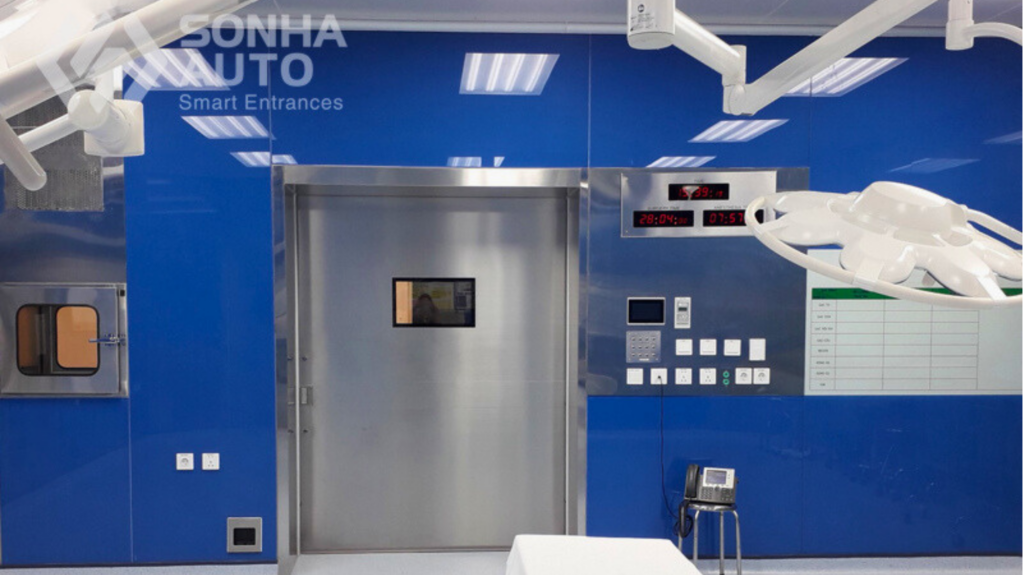
Observation windows are an important component that enhances operational efficiency. They allow medical staff to monitor conditions inside without opening the door, preventing disruption to the sterile environment. These windows are typically made from tempered or laminated glass, providing high strength and safety in case of impact. Their design must also maintain airtight integrity without creating weak points in the door structure.
Automatic closing and operation mechanisms
In modern hospitals, operating room doors or automatic hospital doors are integrated with advanced technologies. One key feature is the automatic closing mechanism, ensuring the door always returns to a sealed state after use. Doors can be controlled via motion sensors or central control systems, minimizing direct hand contact. This not only improves convenience but also reduces the risk of cross-contamination.
Infection control standards in operating room doors
Infection control in door design
In operating room environments, every design detail aims to control infection. For doors, this includes antibacterial surfaces, dust resistance, and easy cleaning.
These features help maintain clean surfaces and support a sterile environment throughout surgical procedures.
Reducing contact and cross-contamination
The use of automatic hospital doors is an effective solution to reduce direct contact. By minimizing physical touch, the risk of cross-contamination between areas is significantly reduced.
This is a growing trend in modern hospital design, especially in areas requiring strict infection control.
Role in sterile workflows
Operating room doors are not only structural elements but also part of sterile operational workflows. They help control movement between clean and potentially contaminated areas while ensuring controlled access. As a result, sterile conditions in operating rooms can be maintained consistently and reliably.
Comparison between operating room doors and ICU doors
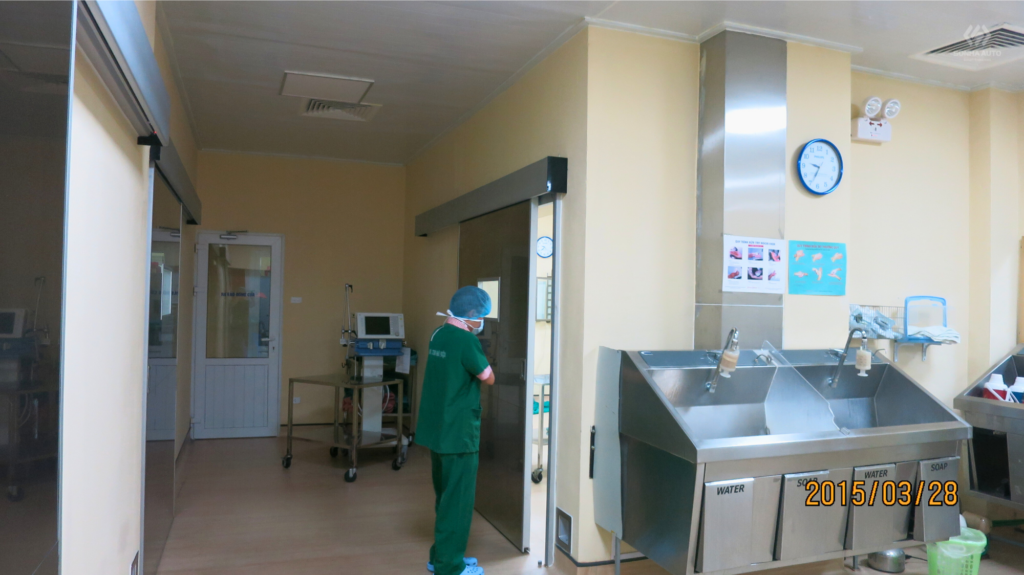
Although both are specialized hospital doors, operating room doors and ICU doors differ significantly in technical standards. ICU doors serve environments with moderate to high control requirements, while operating room doors require near-perfect airtightness and stricter pressure control.
Door selection depends on the function of each area. ICU doors must balance environmental control and operational flexibility, whereas operating rooms demand the highest level of sterility, requiring specialized airtight door solutions.
NABCO operating room door solutions for hospitals
As hospitals continue to modernize, door systems must not only meet technical standards but also ensure long-term stability and system integration. NABCO hospital door solutions stand out with advanced compression sealing technology, delivering high airtightness and effective environmental control in operating rooms. In addition, these systems are designed for stable operation under continuous use, making them suitable for demanding medical environments.
Beyond operating rooms, these door systems can also be applied in cleanroom areas or spaces requiring pressure control. Implementing NABCO solutions helps create a synchronized system, completing the overall hospital entrance solution from ICU to operating rooms.
Key considerations when selecting standard operating room doors
- Technical criteria to evaluate: When selecting operating room doors, it is essential to assess factors such as airtightness, materials, operating mechanisms, and durability under real conditions. These are the core criteria determining compliance with standards.
- Choosing a reliable supplier: In addition to technical factors, selecting a reputable supplier is equally important. Priority should be given to companies with experience in hospital projects, certified products, and long-term technical support capabilities.
>>> See more: NABCO door solutions for hospitals – Safety, sterility, and intelligent operation
Conclusion
Operating room door standards go beyond structural requirements they are closely linked to environmental control, pressure management, and infection safety. A compliant door system helps maintain sterile conditions, minimize risks, and improve surgical efficiency.
In modern trends, combining automatic hospital doors with advanced solutions like NABCO is becoming the optimal choice, helping complete hospital entrance systems and meet the increasingly stringent demands of the healthcare sector.