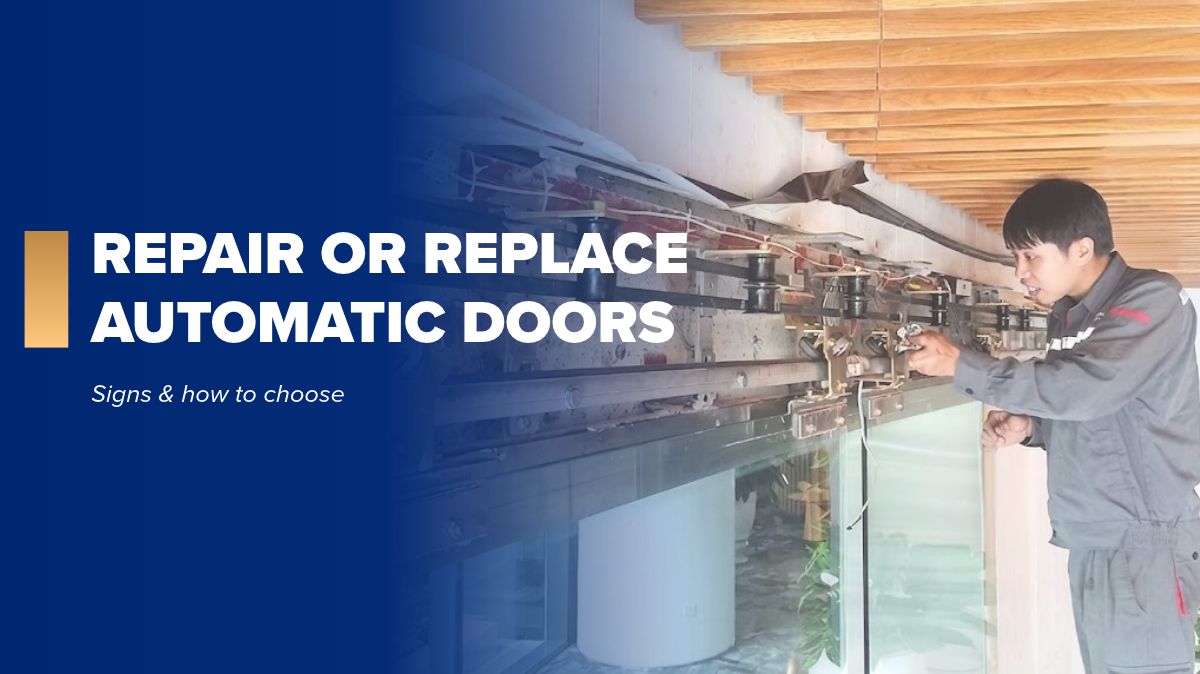
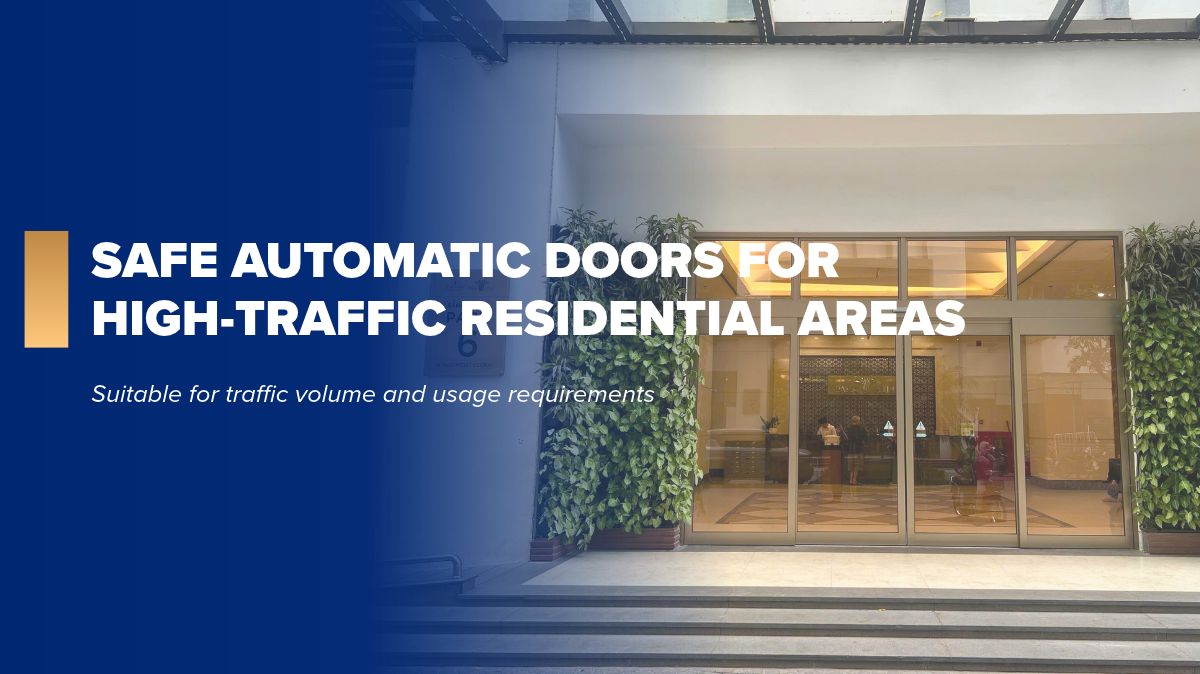
When automatic doors begin to show signs of inconsistent opening and closing, unusual noises, or frequent errors, building owners often face two options: repair or replace automatic doors. However, not every long-serving automatic door system needs to be completely replaced. Inspecting the actual condition of the operator, mechanical components, sensors, and the system’s ability to meet current usage requirements can help determine the most appropriate solution.
Signs that automatic doors need to be inspected

Doors open or close slowly or operate inconsistently
Slow door movement, poor response, or failure to complete the opening or closing cycle may be related to the power supply, motor, control unit, or operating settings. Technicians should check the power supply, control unit, and motor operation before determining whether any components need to be replaced.
Doors produce unusual noises, vibration, or jerky movement
Squeaking, vibration, or jerky door movement is often caused by rollers, timing belts, sliding rails, or misaligned door leaves. In these cases, cleaning the rail, adjusting the door leaves, and replacing worn components may restore stable operation without requiring a complete replacement.
Sensors do not detect people accurately
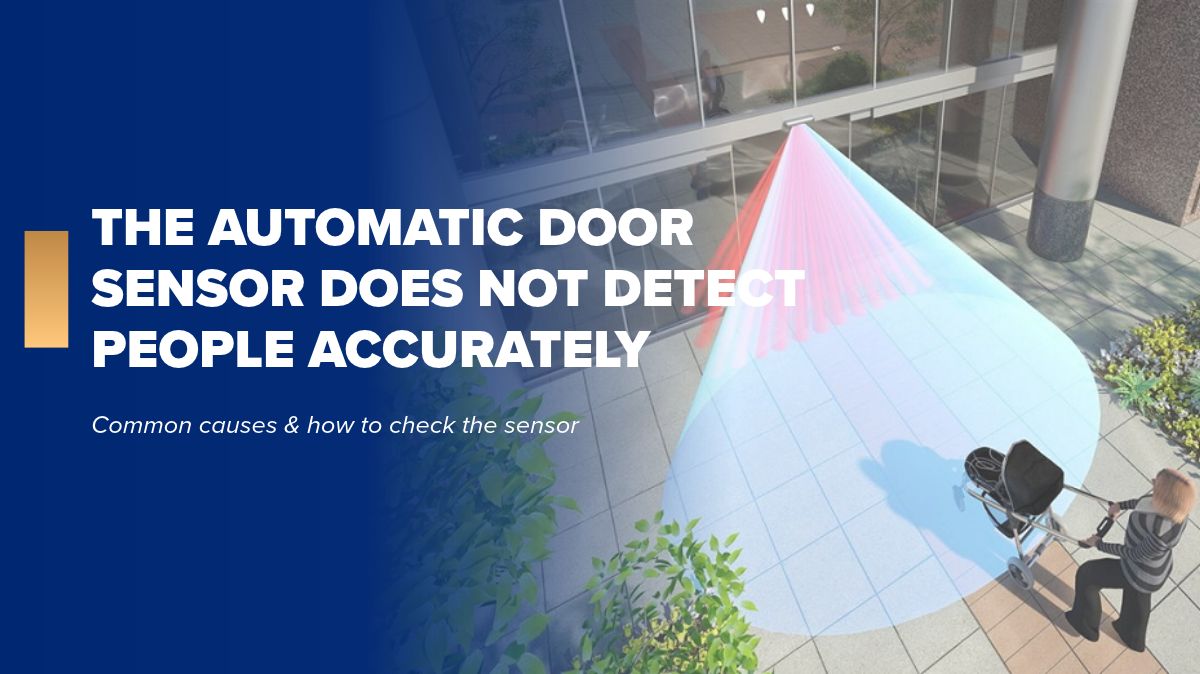
Automatic door faults such as doors repeatedly opening when no one is present or closing while a person is still within the detection area are signs that the sensors need to be inspected. The cause may be as simple as dust on the sensor surface or an incorrect detection angle, but it may also involve the detection circuit. Cleaning, adjustment, and inspection of the detection area should be carried out before deciding to replace the sensor.
Doors frequently display errors or require restarting
If the door stops midway, repeatedly displays errors, or only operates again after the power is switched off and on, the control unit, motor, safety sensors (safety beam), and signal wiring should be inspected. These issues should not simply be handled by repeatedly restarting the system, as the underlying cause may lie in the electronic components or safety system.
Components are no longer compatible
For systems that have been in use for many years, some components may no longer be manufactured or replacement parts with the correct specifications may be difficult to source. In such cases, the exact door model and availability of compatible components should be determined before choosing to repair the automatic door. Using incompatible components can affect the stability and safety of the entire system.

Repair or replace automatic doors: Which option is right for your project?
To decide whether to repair or replace automatic doors, it is necessary to determine whether the problem is limited to a few individual components or has affected the entire system. If the operator remains stable and the door only has issues with the sensors, timing belt, rollers, or certain mechanical components, repair is generally the appropriate option.
When should you repair automatic doors?
Depending on the equipment condition and extent of the damage, repairing automatic doors or replacing individual components is generally appropriate when the fault is limited to one or several components while the main operator remains in good working condition. Typical cases that can often be addressed this way include:
- The issue is limited to one or several components.
- The motor and control unit are still operating stably.
- The door leaves, rails, and drive system remain in good condition.
- The system still adequately meets the actual pedestrian traffic volume.
For door systems with clearly documented components and technical specifications, diagnosing faults and replacing the correct parts is generally more straightforward. For example, with NABCO automatic doors, Sonha Auto technicians can identify the components requiring attention based on the equipment model and actual condition, helping optimize replacement costs instead of replacing the entire system when this is not yet necessary.
CONSULTATION & SITE SURVEY: 0934 546 008
When should you replace automatic doors?
Replacement should be considered when multiple components of the system have deteriorated or when the system is no longer suitable for current usage requirements. Important signs to consider when deciding whether to repair or replace automatic doors include:
- Multiple critical components have deteriorated at the same time.
- The system frequently fails despite previous repairs.
- The door model is outdated and compatible components are no longer available.
- The current capacity no longer meets the actual traffic volume.
- The building requires new safety, access control, emergency evacuation, or architectural renovation features.
In particular, replacement does not necessarily mean replacing the entire door assembly. If the existing glass leaves and structural components remain safe and suitable, it may be possible to upgrade the operator and related equipment to meet new requirements.
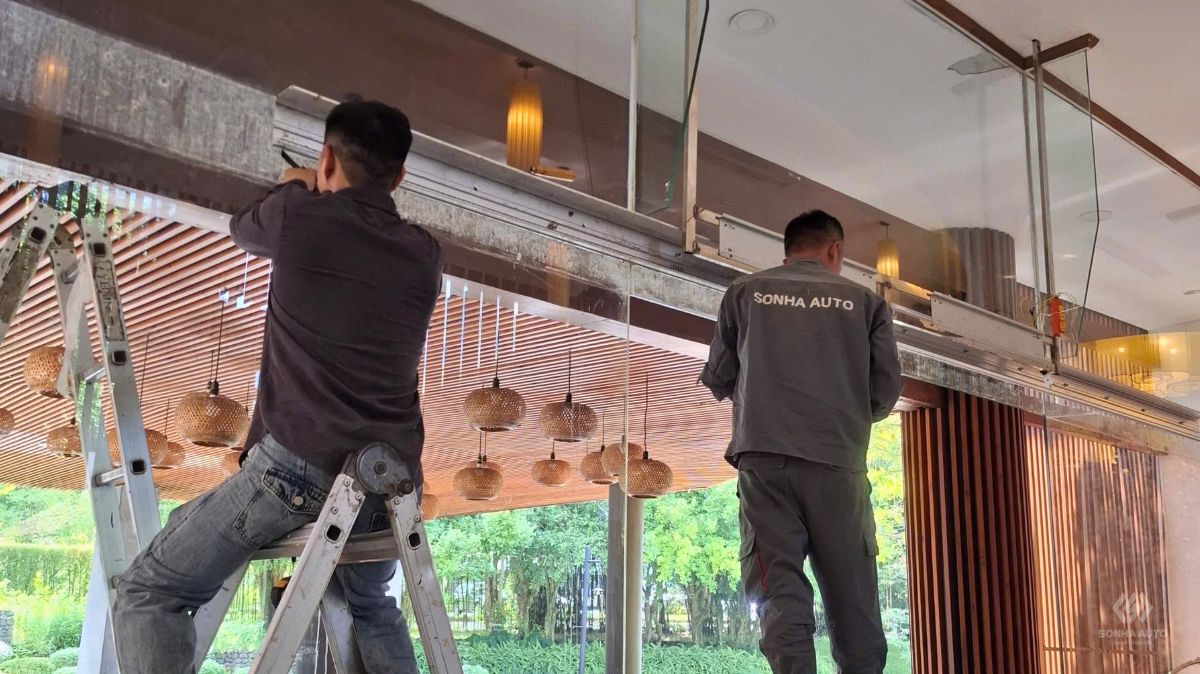
Practical assessment before deciding whether to repair or replace
To avoid unnecessary repairs or premature replacement, the system should be inspected through a relatively comprehensive process:
- Assess the door leaves and sliding rails: Check door leaf balance, safety clearances, and the condition of the rail surface.
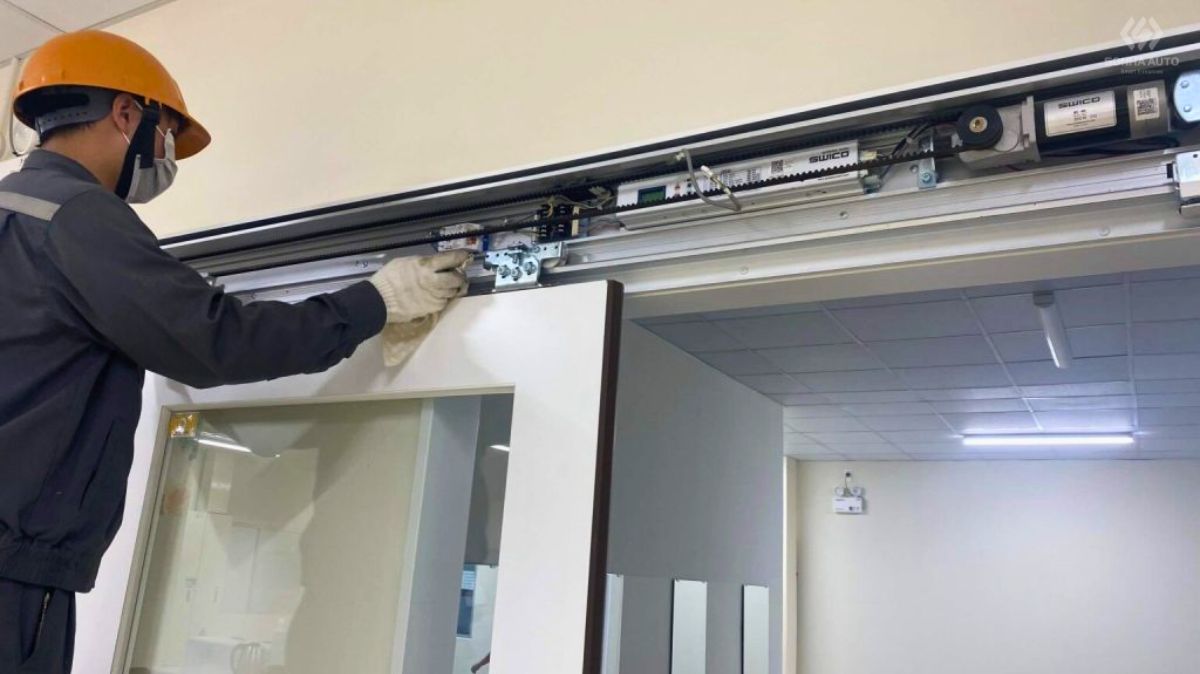
- Inspect the operator and drive system: Assess the condition of the motor, control unit, rails, rollers, and timing belt to determine the extent of wear.
- Check sensors and safety devices: Verify detection performance, detection angle, and the automatic reversal function when an obstruction is detected.
- Assess actual usage requirements: Consider pedestrian traffic volume and operating frequency to determine whether the existing system can still meet current requirements.
Based on the overall inspection, technicians can determine whether to repair or replace automatic doors according to the system condition, its ability to handle actual traffic volume, and the project’s operating requirements.
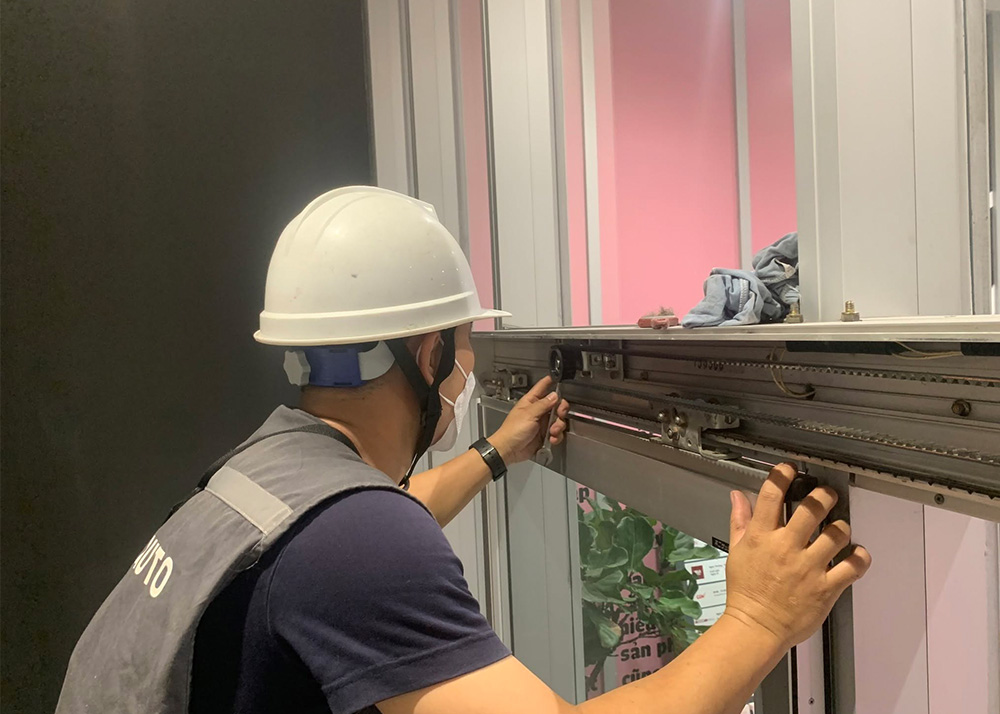
Automatic door upgrade at Viettel Giang Van Minh Building
A practical example showing that the decision to replace an automatic door system is not necessarily based solely on equipment failure is the Viettel Giang Van Minh Building. The NABCO automatic door system at this building had been in use for many years before being upgraded to the NABCO V-150SL-S in 2026, alongside the renovation of the entire lobby area. This case shows that when assessing an automatic door system, building owners should not only consider whether the existing equipment is still operational, but also evaluate its suitability for the building’s appearance, actual traffic requirements, and new usage objectives.
>>> See more: Japanese-standard automatic door maintenance steps following a professional technical process
Conclusion
When automatic doors begin to open or close inconsistently, produce unusual noises, or frequently display errors, building owners often need to consider whether to repair or replace automatic doors. However, not every long-serving system needs to be completely replaced. The key is to identify the cause of the problem and assess the extent of deterioration of each component.
With more than 20 years of experience in NABCO automatic doors in Vietnam, Sonha Auto provides professional automatic door supply, installation, and repair services, offering solutions suited to the actual requirements and conditions of each project.