Breakout doors and conventional automatic sliding doors both operate using a sliding mechanism, open and close automatically, and are suitable for high-traffic areas. However, a breakout door is equipped with a special mechanism that allows the door leaves to swing open when necessary, creating a wider opening than the normal sliding travel. So, how is a breakout door different from a conventional automatic sliding door, and when should a project choose this solution? Let Sonha Auto explore the following analysis.
How is a breakout door different from a conventional automatic sliding door?
If you only observe how the doors operate on a daily basis, it is difficult to recognize the difference between the two types. Both can use sensors to detect people, after which the operator controls the door leaves to slide to one or both sides and automatically close after the person passes through.
The key difference lies in the ability to open the door when necessary: a conventional automatic sliding door only opens along its designed travel path, while a breakout door features an additional breakout mechanism that allows the passageway to be expanded when needed.
| Criteria | Conventional automatic sliding door | Breakout door |
| Daily operation | Automatic sliding door leaves | Automatic sliding door leaves |
| Breakout mechanism | No | Yes |
| Passageway expansion | According to the original design | Can swing open depending on configuration |
| Emergency exit/evacuation support | Depending on design | Additional support mechanism |
| Suitable for | Standard access requirements | Projects requiring additional passageway expansion |
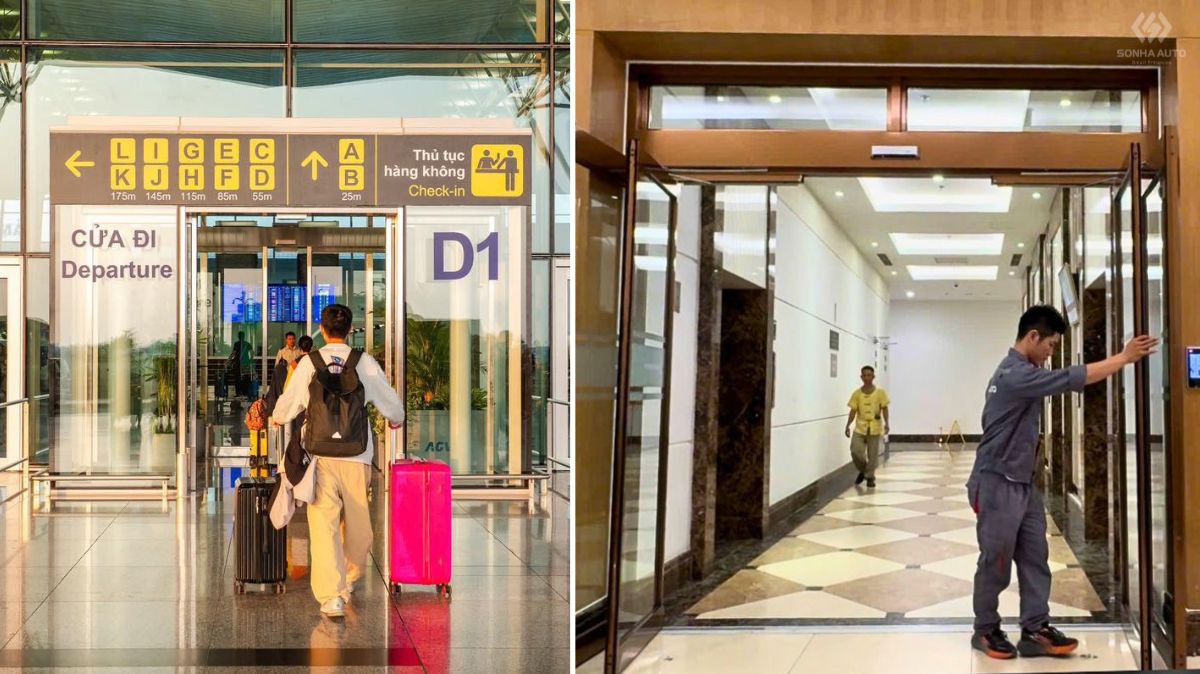
How does a breakout door work?
Under normal conditions, a breakout door operates like an automatic sliding door: the sensor detects a person, the operator is activated, and the door leaves slide open to allow the user to pass through. The door then closes automatically without requiring direct operation.
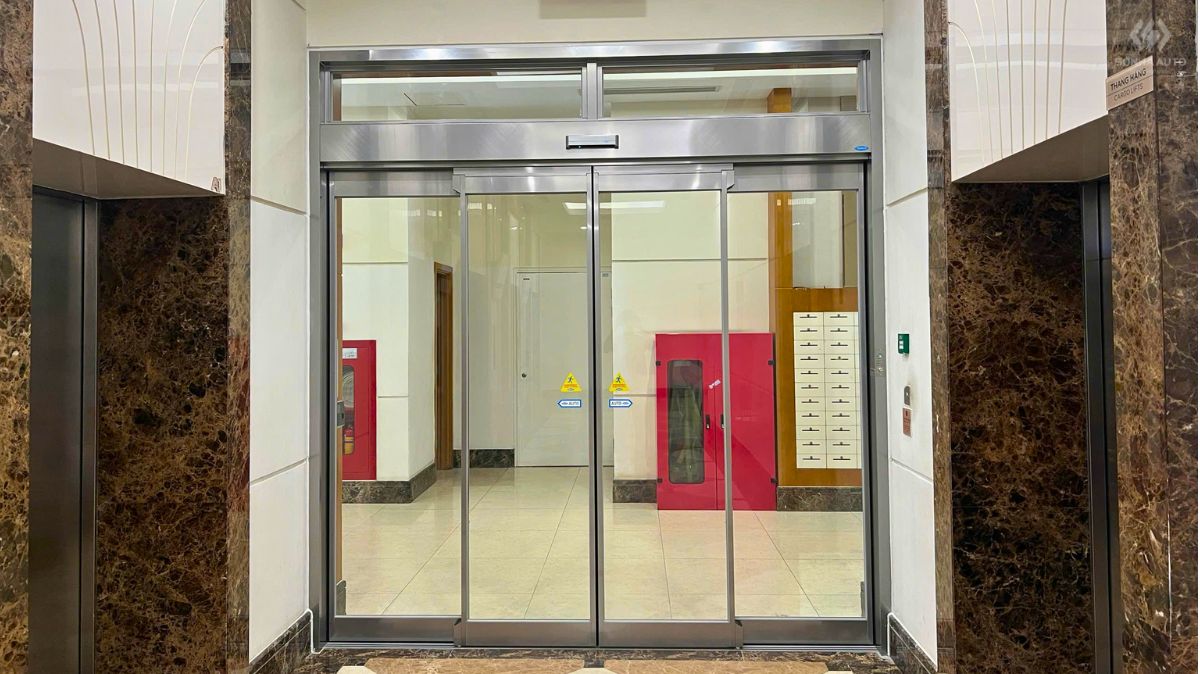
When the passageway needs to be expanded, the breakout mechanism is activated. At this point, the door leaves do not simply slide along the track as they normally do; they can also swing open in another direction, creating additional circulation space beyond the limits of the normal sliding travel. This is also the key point that clarifies how is a breakout door different from a conventional automatic sliding door in actual operation.
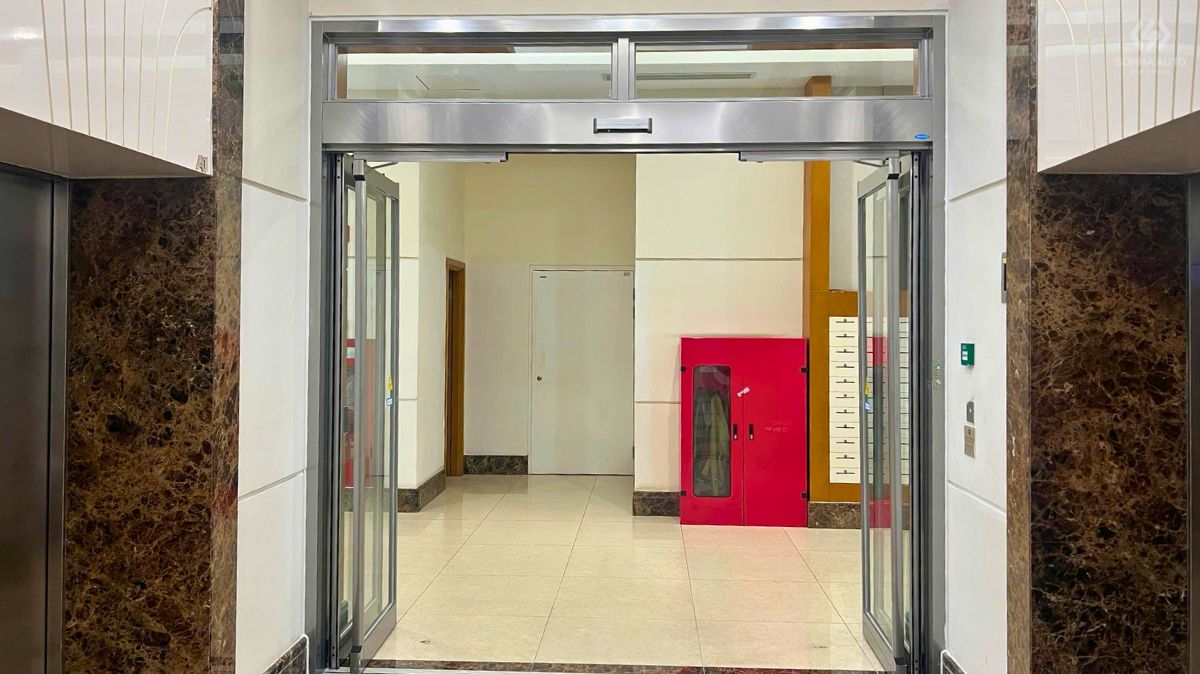
Why are breakout doors suitable for projects requiring a large opening width?
The key advantage of a breakout door is that, in addition to automatic sliding operation during daily use, the door can also swing open to increase the available passage space when necessary. As a result, this entrance solution is suitable for buildings with high pedestrian traffic or locations where large numbers of people, carts, or objects frequently need to pass through the doorway.
Increasing circulation space when needed
Under normal conditions, the door opens to the designed opening width to accommodate daily access. When more circulation space is required, the breakout mechanism allows the additional space beside the door leaves to be utilized, creating a wider passageway than in the normal sliding position.
Supporting emergency exit and evacuation
The ability to expand the passageway also gives breakout doors an advantage in situations where people need to move quickly or large numbers of people need to be evacuated. When the breakout mechanism is activated, the expanded opening can facilitate smoother movement through the doorway.
However, a breakout mechanism does not mean that the door is fire-rated or automatically qualifies as an emergency exit door. Whether the door system can be used as part of an evacuation plan or meet specific safety standards depends on the model, configuration, applicable standards, and design of each individual project.

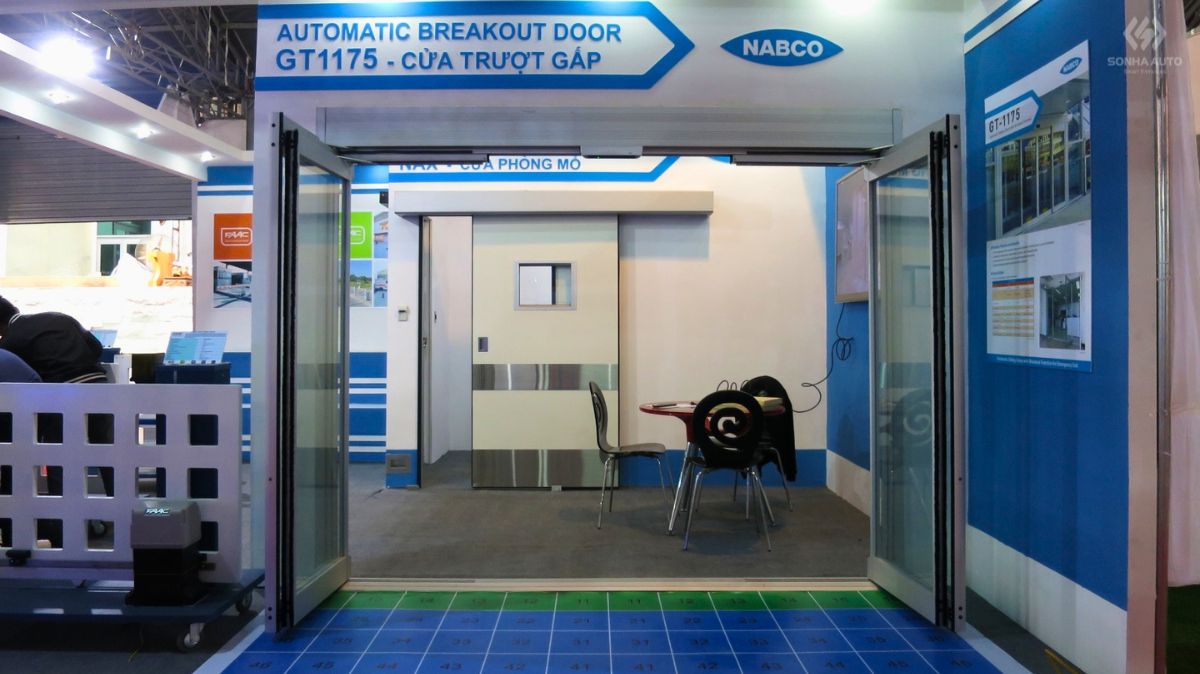
NABCO GT-1175BO-FO – A typical example of a breakout door
NABCO GT-1175BO-FO is a typical example of how a breakout mechanism is integrated into an automatic sliding door system, giving the door an additional opening option beyond its normal operating mode.
According to NABCO’s technical information, when subjected to a pushing force of 110 N, both the active and fixed leaves of the NABCO GT-1175BO-FO automatic door can open up to 90°, similar to a swing door set. This allows the door system to transition from automatic sliding mode to breakout mode when additional circulation space is required.
NABCO states that the breakout door series was developed to enhance emergency egress and evacuation capabilities, with the full-open width potentially reaching approximately twice that of a standard automatic door, depending on the configuration. However, the actual opening width still depends on the door leaf dimensions, model, and design of each project.
In terms of standards, NABCO states that the GT-1175BO-FO complies with ANSI A156.10, UL, CSA, and CSFM, helping to meet safety requirements when the door system is selected and installed with the appropriate configuration.
Simply put, the GT-1175BO-FO is not an entirely different system from an automatic sliding door. It remains an automatic sliding door during daily use, but incorporates a breakout mechanism that allows the door leaves to swing open and increase the opening width when special project requirements arise.
When should you choose a breakout door instead of a conventional automatic sliding door?
Not every project requires a breakout door. The selection should be based on traffic volume, opening width requirements, and circulation needs rather than simply comparing which type of door is better. Breakout doors are suitable for projects with high pedestrian traffic, where the passageway needs to be expanded in certain special situations or where emergency exit and evacuation support is required. This solution is particularly worth considering for airports, railway stations, shopping malls, convention centers, high-end residential buildings, and large-scale public facilities.
Conversely, a conventional automatic sliding door can adequately meet the requirements of a project that primarily needs to automate opening and closing, provide convenient access for users, and has no special requirement for a breakout function. It is also a reasonable choice when the project owner wants to optimize the initial investment while maintaining effective daily operation.
Therefore, understanding how is a breakout door different from a conventional automatic sliding door helps project owners determine whether the project actually requires the additional breakout capability or only needs a conventional automatic sliding door system. Properly assessing traffic volume, opening width, and circulation requirements from the outset will help ensure the appropriate configuration is selected, avoiding over-investment while still ensuring long-term operational efficiency.
How to operate the NABCO Breakout Folding Sliding Door by pushing the door leaves open to 90° to create a wider passageway
>>> See more: NABCO GT1175 Breakout Sliding Door – A flexible automatic door solution with emergency breakout function
Conclusion
The key difference when understanding how is a breakout door different from a conventional automatic sliding door lies in the ability to swing open when necessary. A conventional automatic sliding door only opens along its designed travel path, while a breakout door features an additional breakout mechanism to increase the opening width and circulation space. With the NABCO GT-1175BO-FO, both the active and fixed leaves can open up to 90° under a pushing force of 110 N, providing an additional door-opening option alongside automatic sliding movement. Therefore, breakout doors are suitable for projects that need to combine automated daily access with the ability to expand the passageway when necessary. The selected configuration should be based on the dimensions, load capacity, traffic volume, and actual conditions of each project.
Sonha Auto provides consultation on NABCO automatic door solutions, from conventional sliding doors to breakout doors, tailored to the technical and architectural requirements of each project.