In modern buildings especially hotels, shopping malls, and Grade A office buildings the entrance area is not only a passageway but also the first point of impression for visitors. As a result, automatic revolving doors are increasingly favored thanks to their ability to control traffic flow, retain indoor temperature, and enhance overall aesthetics. However, how many types of automatic revolving doors are there and which type should be selected for each type of project remain the most frequently asked questions. In the following article, Sonha Auto will help you explore each type in detail to choose the optimal solution in terms of both operational efficiency and user experience for different projects.
What is an automatic revolving door? Operating principle
An automatic revolving door is a door system that operates by rotating around a central axis. Instead of sliding or swinging open, the door creates continuous compartments that allow users to pass through without disrupting the airflow between the interior and exterior.
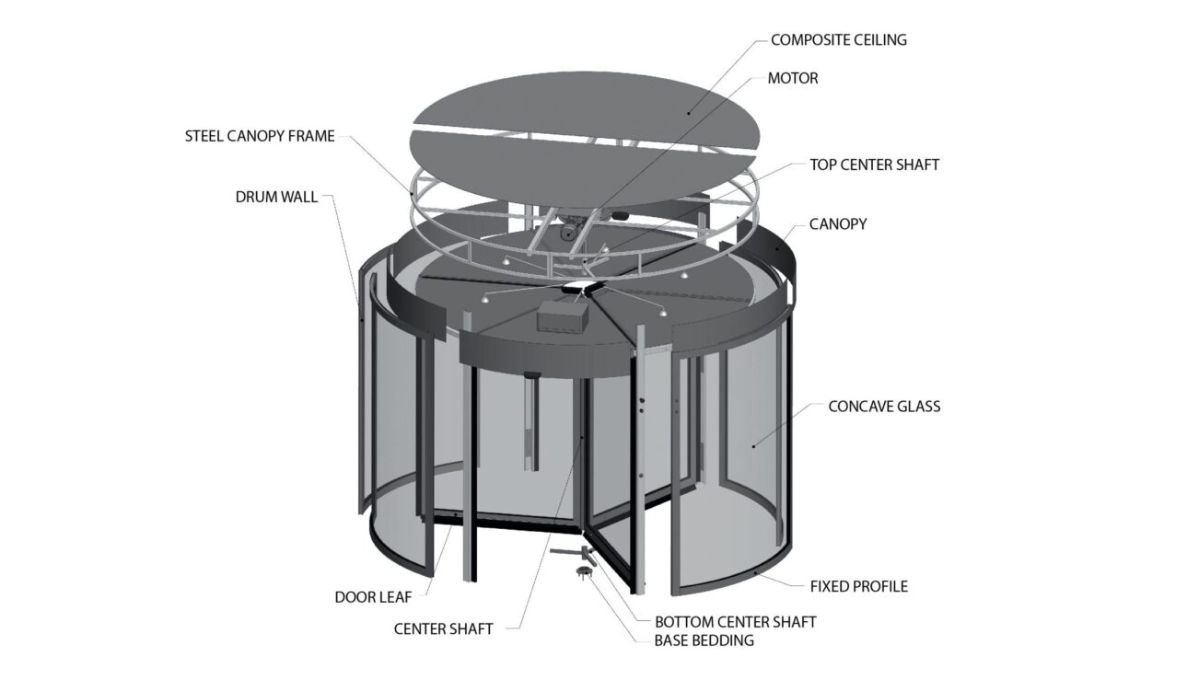
A standard revolving door system typically includes a central shaft, door wings, motor system, sensors, and a control unit. When a person approaches, the sensor system activates the motor to rotate the door at an appropriate speed, ensuring safety and convenience for users.
The key advantage of this type of door lies in its ability to maintain a stable indoor environment, reduce energy loss, and effectively manage pedestrian flow. This is why revolving doors are considered an essential component of smart entrance solutions in high-end buildings.
How many types of automatic revolving doors are there? Common classifications today
When exploring how many types of automatic revolving doors are there, you will find various variations on the market. However, fundamentally, they are typically classified into three main groups based on the number of wings.
2-wing automatic revolving door
The 2-wing revolving door features a simple design with two symmetrical wings around a central axis. It is a suitable choice for projects with limited space while still maintaining a modern and aesthetic appearance.
Its main advantages are compact design, ease of installation, and lower investment cost compared to multi-wing options. At the same time, it still ensures smooth operation and basic traffic flow control. However, due to fewer compartments, it does not support very high pedestrian volumes. Therefore, 2-wing revolving doors are commonly used in small offices, showrooms, or areas with moderate traffic.
3-wing automatic revolving door
Among all types, the 3-wing revolving door is considered the most balanced solution between traffic capacity and installation space. With three evenly distributed wings, the door creates well-proportioned compartments that enhance user experience.
Compared to the 2-wing version, it accommodates higher traffic flow without requiring excessive space. At the same time, it maintains a strong aesthetic appeal, making it suitable for office buildings, hotels, or medium-sized shopping centers. This is also a popular choice for investors seeking a flexible solution that balances operational efficiency and cost optimization.

4-wing automatic revolving door
The 4-wing revolving door is the most premium option among automatic revolving doors, typically used in high-traffic environments such as airports, 5-star hotels, or large shopping malls.
With four wings forming four separate compartments, this design effectively distributes pedestrian flow, reduces congestion, and enhances user experience. Additionally, it minimizes air exchange between indoor and outdoor environments, thereby improving energy efficiency. However, installation requires sufficient space and a higher investment cost. In return, it delivers long-term value in both performance and brand image.
Comparison of automatic revolving door types
When comparing the three types, each has its own advantages depending on usage requirements.
- The 2-wing door is suitable for small spaces with low traffic.
- The 3-wing door offers a balance between performance and space.
- The 4-wing door is the optimal choice for projects requiring high traffic capacity and premium aesthetics.
Choosing the right revolving door should not be based solely on initial cost but should consider overall factors such as pedestrian volume, installation space, and long-term operational goals.

Key advantages of automatic revolving doors in modern buildings
It is no coincidence that when considering how many types of automatic revolving doors are there, many investors also focus on their real-world operational benefits. Compared to traditional doors, revolving doors offer several outstanding advantages:
- Traffic flow control: The continuous rotation mechanism naturally organizes entry and exit flow, reducing congestion at entrances.
- Significant energy savings: The compartments maintain separation between indoor and outdoor environments, minimizing air exchange. This is especially important in buildings using central air conditioning systems.
- Aesthetic value: With a modern and luxurious design, revolving doors enhance the building’s image, particularly in hotels and high-end properties.
Modern safety and convenience features
In addition to performance, safety is always a top priority in revolving door design. Modern systems are equipped with advanced features to ensure safe usage for all users:
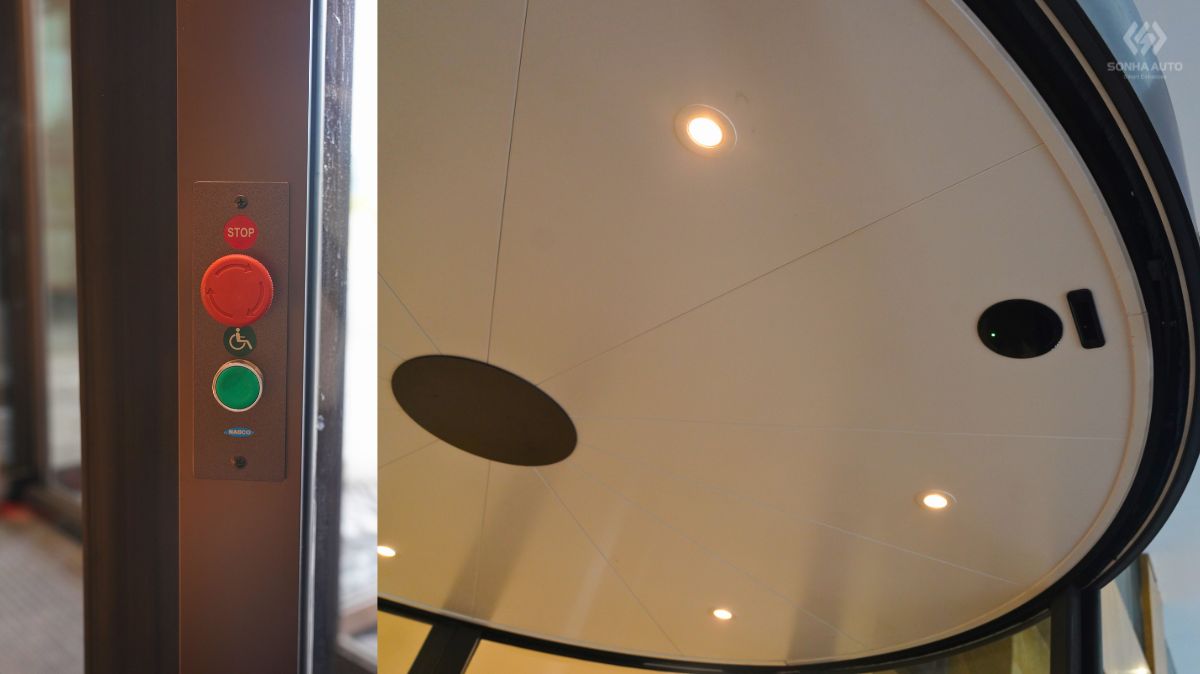
- Emergency stop function that immediately halts operation in case of incidents
- Anti-pinch sensors that detect obstacles and adjust movement to prevent collisions
- Accessibility mode for disabled users or wheelchair access, with slower rotation speed and sufficient space
These features help revolving doors meet the standards required for modern public buildings.
Applications in high-end buildings
In practice, automatic revolving doors are commonly selected for projects that demand both high performance and strong visual impact.
- Hotels: create a luxurious first impression and control access effectively
- Shopping malls: handle large daily traffic while reducing energy loss
- Airports, hospitals, Grade A buildings: function as part of an integrated smart entrance solution
NABCO revolving door solution for modern buildings
Among available brands, NABCO automatic revolving doors are highly regarded for combining Japanese technology with refined design. These systems are known for stable long-term operation, making them suitable for high-frequency environments.
Durable motors, precise sensors, and intelligent control systems ensure smooth performance and maximum safety. In addition, NABCO doors feature high aesthetic value and can be integrated into various architectural styles.
Advanced features such as emergency stop, accessibility mode, and multi-zone sensors further enhance real-world usability. With these advantages, NABCO revolving doors are not just a product but a key component of smart entrance solutions for modern buildings.

Which type of automatic revolving door should you choose?
Returning to the original question: how many types of automatic revolving doors are there, and which one should you choose?
The answer depends on the specific requirements of each project:
- Small spaces with low traffic → 2-wing door
- Balanced needs → 3-wing door
- Large-scale, high-traffic projects → 4-wing door
Selecting the right type not only optimizes initial investment but also directly impacts long-term operational efficiency and user experience.
>>> See more: What is a revolving door? A detailed comparison between revolving doors and pivot doors
Conclusion
In reality, when exploring how many types of automatic revolving doors are there, the key is not just distinguishing between 2, 3, or 4 wings, but understanding which type best fits the traffic flow, space, and operational goals. A well-informed choice from the beginning ensures stable performance, reduces future costs, and delivers a consistent user experience. In modern buildings especially hotels, shopping malls, and Grade A offices revolving doors are not merely technical solutions but an integral part of a comprehensive smart entrance strategy.
If you are considering a solution, exploring NABCO revolving doors can provide an optimal option in terms of durability, performance, and long-term reliability.