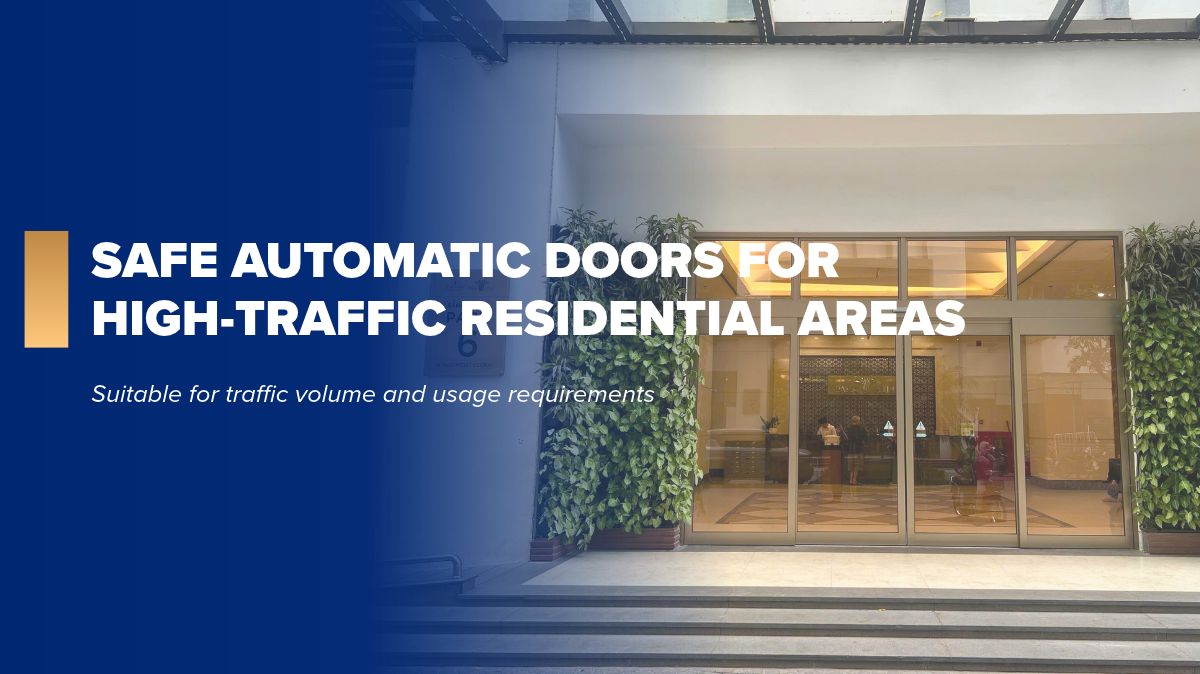
Many investors only pay attention to automatic doors when a malfunction occurs. However, warning signs such as slow opening and closing, reduced sensor responsiveness, or unusual motor noise often appear long before a failure happens and can be identified through routine maintenance. Like elevators or central air-conditioning systems, automatic doors operate continuously every day. Over time, both mechanical and electronic components gradually wear down, affecting the system’s performance and safety. So, How often should automatic doors be maintained to ensure stable operation? This is a common concern among investors, building management teams, and businesses during the course of operation.
Why is periodic automatic door maintenance necessary?
Many organizations only contact technicians when an automatic door develops a fault or stops working. However, based on practical experience, most failures show warning signs beforehand and can be detected through regular automatic door maintenance.
Similar to elevators and central HVAC systems, automatic doors are electromechanical systems that require routine inspections to ensure all components operate within their specified parameters. Periodic maintenance helps identify worn parts early, maintain sensor safety performance, minimize the risk of unexpected breakdowns, and significantly reduce future repair costs.
Particularly in facilities with heavy pedestrian traffic, maintaining a regular automatic door inspection schedule also helps preserve a professional image and provide a convenient experience for users.

How often should automatic doors be maintained?
In reality, there is no fixed maintenance interval that applies to every building. The frequency of automatic door maintenance primarily depends on usage intensity and operating conditions.
For small offices, showrooms, or retail stores with moderate traffic, maintenance every six months is generally sufficient to keep the system operating reliably.
For hotels, schools, apartment buildings, and office towers, automatic doors are required to operate continuously throughout the day. In such cases, technical experts recommend carrying out maintenance every 3–4 months to inspect and fine-tune the system.
For facilities with extremely high pedestrian traffic, such as hospitals, shopping malls, airports, railway stations, and manufacturing plants, the recommended maintenance schedule is every 1–3 months. Frequent inspections help ensure the system continues to perform at its best while minimizing potential risks.
Rather than waiting until a malfunction occurs, establishing a regular automatic door inspection schedule is a far more effective solution from both technical and cost perspectives.
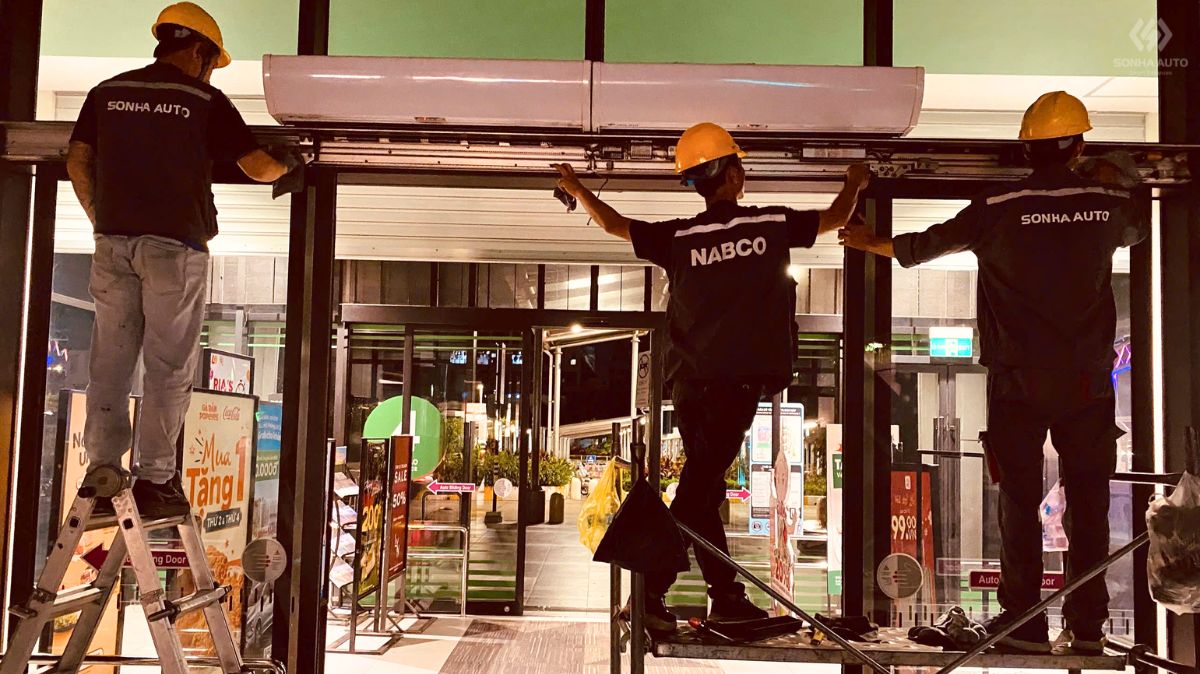
What should be inspected during automatic door maintenance?
A professional maintenance procedure for NABCO automatic doors and other high-quality automatic door systems typically focuses on the following key areas:
Safety sensor system
Sensors are inspected for detection range, sensitivity, and their ability to identify people or obstacles. This component directly affects operational safety and the accuracy of the door’s opening and closing functions.
Motor and controller
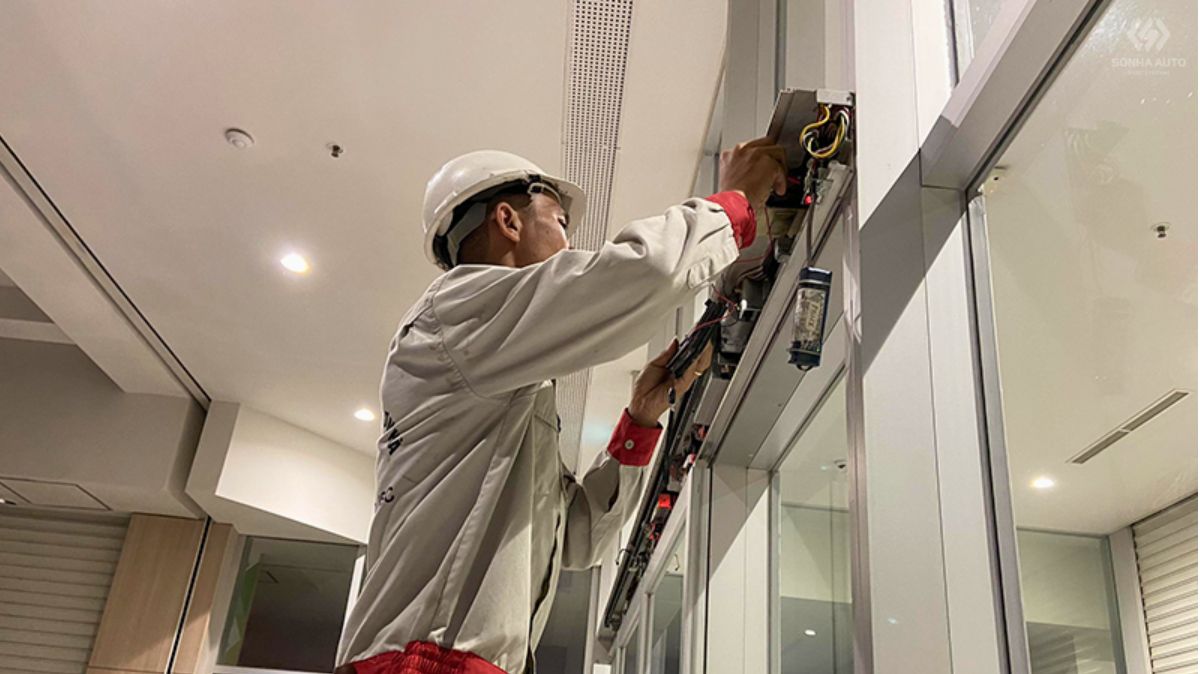
The motor is considered the “heart” of an automatic door system. During maintenance, technicians assess the motor’s operating condition, power supply, and controller parameters to identify any early signs of abnormal performance.
Drive belt and transmission system
After prolonged use, the drive belt may stretch or experience natural wear. Checking belt tension and transmission performance helps ensure smooth operation and prevents unexpected failures.
Guide rail and rollers
Guide rails and rollers are components subjected to continuous friction. Regular cleaning, wear inspection, and lubrication help the door operate smoothly, reduce noise, and extend the lifespan of the system.
Overall operational inspection
After all technical checks have been completed, the door is tested to evaluate opening and closing speed, operational stability, and sensor responsiveness before being returned to service.

Signs that indicate an automatic door requires immediate maintenance
In addition to following a scheduled maintenance plan, users should contact a technical service provider promptly if they notice any of the following warning signs:
- The door opens and closes more slowly than usual.
- Unusual noise or vibration occurs during operation.
- Sensor detection becomes inconsistent.
- The door opens or closes unexpectedly.
- The motor becomes hotter than normal.
- The door operates unevenly or jerks during opening and closing.
When these symptoms appear, early inspection can help prevent serious damage and reduce repair costs.
Why should you sign a periodic automatic door maintenance contract?
For facilities that rely on automatic doors on a daily basis, an automatic door maintenance service contract offers several practical benefits.
- The system is inspected according to a scheduled maintenance plan rather than waiting for a failure to occur. As a result, signs of wear in the motor, sensors, or drive system can be identified and addressed promptly.
- Regular maintenance also helps ensure user safety, particularly in high-traffic environments such as hospitals, shopping malls, hotels, and office buildings.
- From a long-term perspective, the cost of an automatic door maintenance contract is typically much lower than the expense of repairing or replacing equipment after a major breakdown. It is also an effective way to extend the lifespan of the system and maximize the return on investment for the facility.
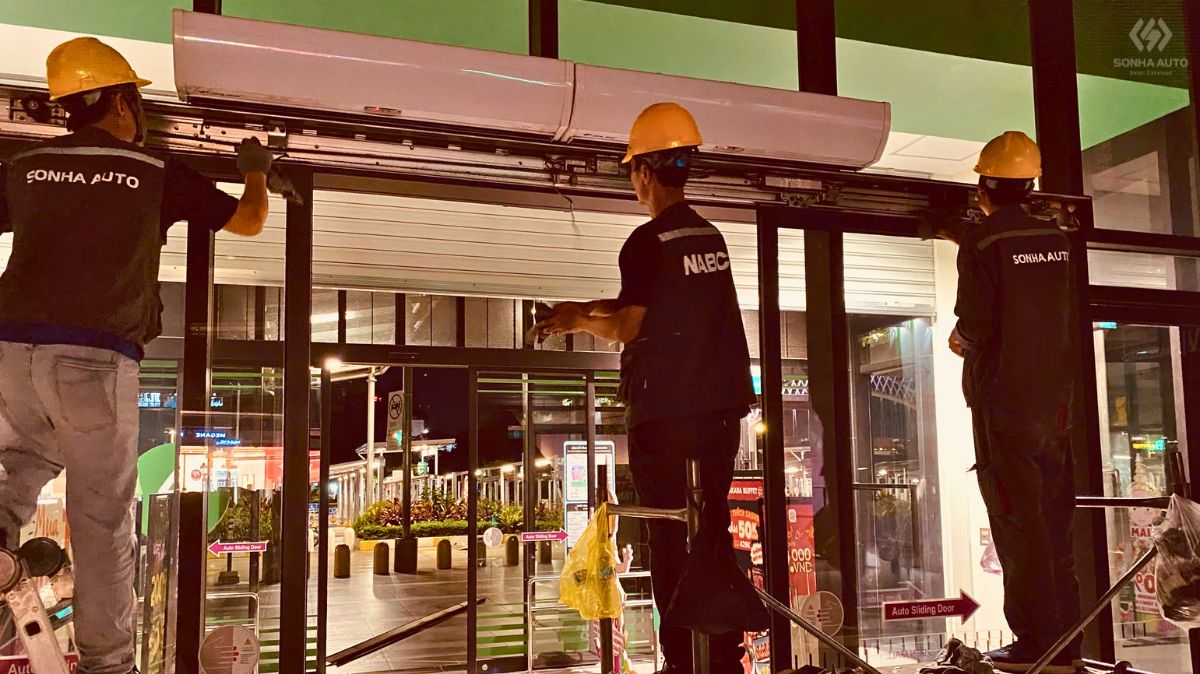
Sonha Auto – Professional automatic door maintenance provider
As NABCO’s strategic distribution partner in Vietnam, Sonha Auto provides automatic door maintenance services for a wide range of products, including automatic sliding doors, automatic swing doors, and specialized door systems.
Its professionally trained technical team conducts comprehensive inspections, evaluates operating conditions, and recommends suitable maintenance solutions to ensure the system remains stable, safe, and durable over time.
>>> See more: Automatic door maintenance during the storm season: Why shouldn’t you wait until a malfunction occurs?
Conclusion
So, how often should automatic doors be maintained? For most facilities, a maintenance schedule of every 3–6 months is appropriate. For high-traffic environments such as hospitals, shopping malls, and factories, more frequent inspections are recommended to ensure the system continues to operate safely and efficiently.
Investing in automatic door maintenance not only helps prevent unexpected failures but also extends equipment lifespan, reduces repair costs, and maintains long-term operational efficiency for the facility.