In environments that require stringent hygiene standards, such as hospitals, cleanrooms, and food processing plants, infection prevention is not solely dependent on sanitation procedures or HVAC systems. It begins at the entrance itself. As the primary passage for people, equipment, and airflow, entrances represent one of the highest-risk points for the transfer of microorganisms, airborne particles, and other contaminants. For this reason, infection control automatic doors have become an increasingly important component in the design of modern facilities. Beyond minimizing direct contact, these automatic door systems help maintain room pressure differentials, control airflow, and improve the overall effectiveness of the building’s infection prevention strategy.
Infection prevention is about controlling the environment not just cleaning
When people think of infection prevention, they often associate it with surface disinfection, hand hygiene, or personal protective equipment (PPE). However, according to the Infection Prevention and Control (IPC) principles recommended by the World Health Organization (WHO), effective infection prevention is achieved through the integration of operational procedures, HVAC systems, traffic flow management, and facility design.
Within this approach, entrance doors are considered an integral part of environmental control. They separate areas with different cleanliness classifications, minimize unwanted air exchange, and help maintain stable operating conditions in hospitals, cleanrooms, and food processing facilities.
This is why infection control automatic doors are increasingly regarded as an essential component of an overall Infection Prevention and Control (IPC) strategy rather than simply automated entrance systems.
What requirements must automatic doors meet in hospitals?
Not every automatic door system is suitable for healthcare environments. In addition to providing reliable opening and closing performance, hospital doors must satisfy a wide range of technical requirements to ensure safety while supporting infection prevention.
| Requirement | Purpose |
| Minimize physical contact | Reduce the risk of cross-contamination through door handles |
| High airtightness | High airtightness |
| Quiet operation | Reduce noise in treatment areas and operating rooms |
| Safe operation | Protect patients, healthcare staff, and medical carts |
| Continuous operation | Support 24/7 high-frequency use |
| Easy to clean | Minimize gaps and simplify cleaning and disinfection |
| System integration | Connect with access control, fire alarm, and Building Management Systems (BMS) |
These are also among the key criteria considered by project owners when selecting automatic door solutions for hospitals, cleanrooms, and other hygiene-critical environments.
Technical standards related to hospital and cleanroom doors
To better understand these requirements, it is important to recognize that hospital and cleanroom doors are evaluated according to internationally recognized technical standards rather than visual appearance alone.
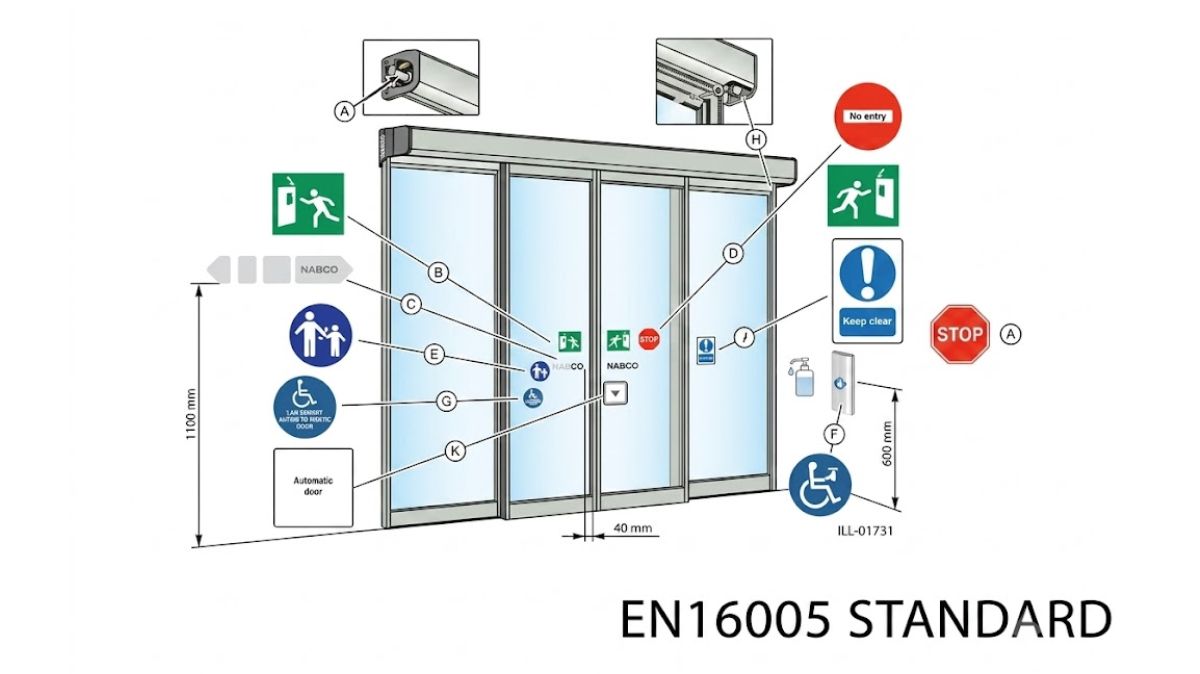
EN 16005 – Safety standard for pedestrian automatic doors
EN 16005 is the European safety standard governing automatic pedestrian doors. It specifies requirements for operating force, sensor detection zones, obstacle detection, and user protection.
Today, EN 16005 serves as one of the primary international references used by many automatic door manufacturers during product development.
ISO 14644 – Cleanroom standard
ISO 14644 defines cleanroom air cleanliness classifications based on the allowable concentration of airborne particles. Although the standard does not prescribe specific door designs, door systems must support cleanroom performance by minimizing air leakage and reducing particle generation during operation.
GMP and HACCP requirements for pharmaceutical and food production
In pharmaceutical manufacturing facilities, doors must comply with Good Manufacturing Practice (GMP) requirements for hygiene, cleanability, and environmental control. For food processing plants, Hazard Analysis and Critical Control Points (HACCP) identifies entrance areas as critical control points where cross-contamination risks must be effectively managed.
These standards demonstrate that automatic doors are not merely mechanical systems they are integral components of quality assurance and safety management within highly controlled environments.
How do infection control automatic doors help prevent contamination?
Infection control automatic doors contribute to infection prevention through the combination of advanced sensor technology, airtight door construction, and automated operation. Together, these features help reduce the risk of cross-contamination while supporting environmental control in areas with stringent hygiene requirements.
Minimize direct contact
Door handles are among the most frequently touched surfaces in hospitals. When multiple users repeatedly touch the same surface, the risk of cross-contamination increases significantly unless frequent disinfection is performed.
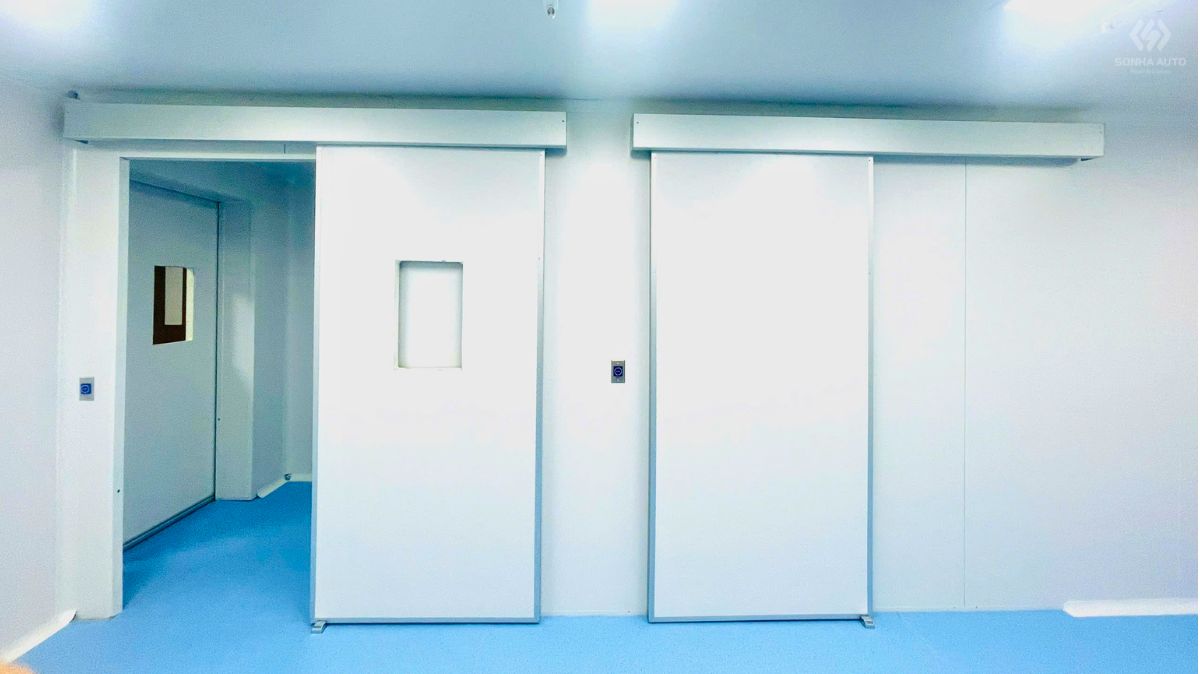
Automatic doors use sensors or touchless activation devices, such as non-contact infrared switches, to open automatically when a person approaches, helping reduce direct contact with the door surface. The system can also be integrated with infrared sensors, touchless push buttons, or access control systems to meet the specific operational requirements of different functional areas.
Help maintain room pressure and airtightness
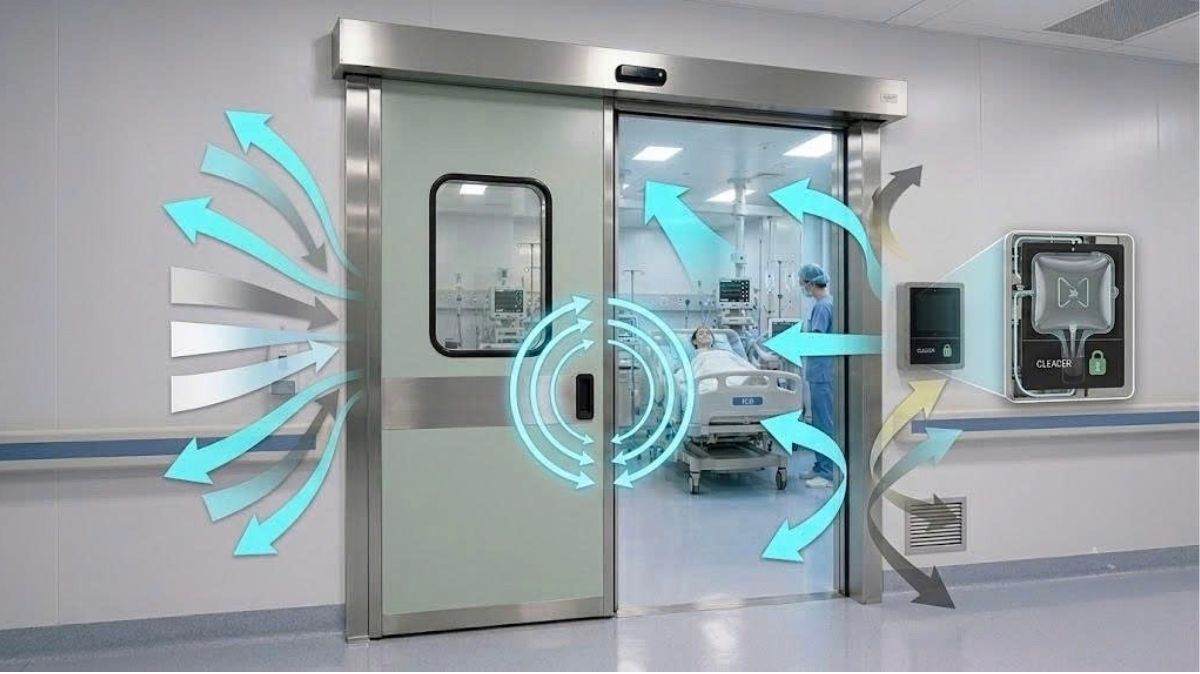
For operating theatres, isolation rooms, intensive care units (ICUs), and cleanrooms, maintaining positive or negative room pressure is essential for controlling airflow direction and preventing the spread of airborne contaminants.
If a door is not sufficiently airtight or remains open longer than necessary, pressure differentials may be compromised, reducing the effectiveness of the entire HVAC system.
For this reason, automatic airtight doors typically incorporate a compression sealing mechanism together with perimeter gaskets. Once fully closed, the door leaf is pressed firmly against the frame to minimize air leakage, helping maintain the environmental conditions required for operating rooms and cleanrooms.
Reduce unnecessary air exchange
A properly configured automatic door opens only when necessary and closes immediately after people or carts have passed through. This minimizes the loss of conditioned air, reduces the workload on the building’s HVAC system, and helps maintain a stable environment within controlled areas.

Giải pháp cửa tự động NABCO cho môi trường kiểm soát nhiễm khuẩn
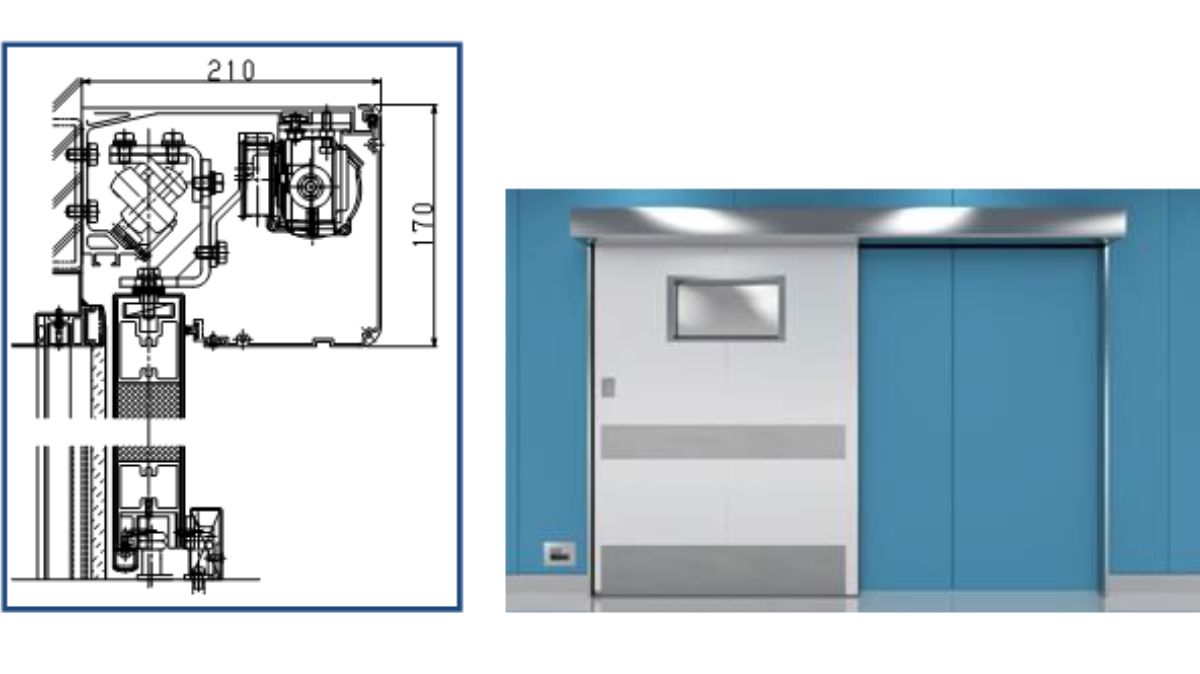
As a Japanese automatic door manufacturer with nearly 70 years of experience, NABCO offers a comprehensive range of infection control automatic doors designed for hospitals, cleanrooms, and other facilities with stringent hygiene requirements. These door systems are engineered to help maintain airtightness, minimize physical contact, and deliver reliable performance under continuous operation.
NABCO’s automatic airtight door systems incorporate an Automatic Compression Mechanism together with perimeter sealing gaskets. Once fully closed, the door leaf is compressed tightly against the frame to reduce air leakage, helping maintain pressure differentials and improve infection control performance in operating theatres, cleanrooms, and other critical healthcare environments.
In addition, NABCO offers a variety of supporting technologies, including touchless activation sensors, the NATRUS intelligent sensor system, HDS-A5 control switches, and seamless integration with access control, fire alarm, and Building Management Systems (BMS).
These technologies help minimize unnecessary door activations, optimize traffic flow, and enhance operational safety.
NABCO solutions are widely installed in hospitals, cleanrooms, pharmaceutical manufacturing plants, and food processing facilities throughout Japan and many other countries, delivering reliable performance even in high-traffic environments.
>>> See more: Why do operating rooms need airtight doors? A contamination control solution for modern hospitals
Sonha Auto provides the right solution for every project
The effectiveness of infection control automatic doors depends not only on the quality of the equipment but also on selecting the appropriate solution for each application. Every project has unique requirements regarding cleanliness classification, traffic volume, safety standards, and environmental conditions. Therefore, the door system should be properly specified from the outset to ensure it performs its intended function effectively.
With more than 20 years as NABCO’s official partner in Vietnam, Sonha Auto has delivered automatic door solutions for hospitals, operating theatres, cleanrooms, and food processing facilities across the country.
From on-site surveys and system configuration to installation and preventive maintenance in accordance with NABCO’s technical standards, every door system is designed to meet the project’s requirements for airtightness, operational safety, and long-term reliability.