In operating room environments, maintaining sterility depends not only on air filtration systems or pressure-control HVAC systems but also directly on the design of the entrance doors. Operating rooms are areas where people, medical equipment, and supplies frequently move in and out, making doorways one of the most common points for air leakage. So, why do operating rooms need airtight doors instead of conventional doors? What role do airtight doors play in maintaining a sterile environment, and which solutions are best suited for modern healthcare facilities? Let’s explore these questions in detail with Sonha Auto.
The role of doors in operating room environments
When discussing operating rooms, many people immediately think of HEPA filtration systems, pressure-controlled ventilation, or strict infection-control protocols. However, the door system is also a critical component of the overall environmental control strategy.
In practice, the door serves as the direct connection between the operating room and surrounding areas. Every opening and closing cycle can affect room pressure, clean airflow, and contamination control if the door system is not properly designed.
For this reason, operating room doors are not merely entrances and exits. They are considered part of the environmental control system, helping maintain sterile conditions throughout surgical procedures.
What happens if an operating room uses conventional doors?
To understand why operating rooms need airtight doors, it is important to first examine the limitations of conventional door systems in specialized healthcare environments.
Difficulty maintaining room pressure
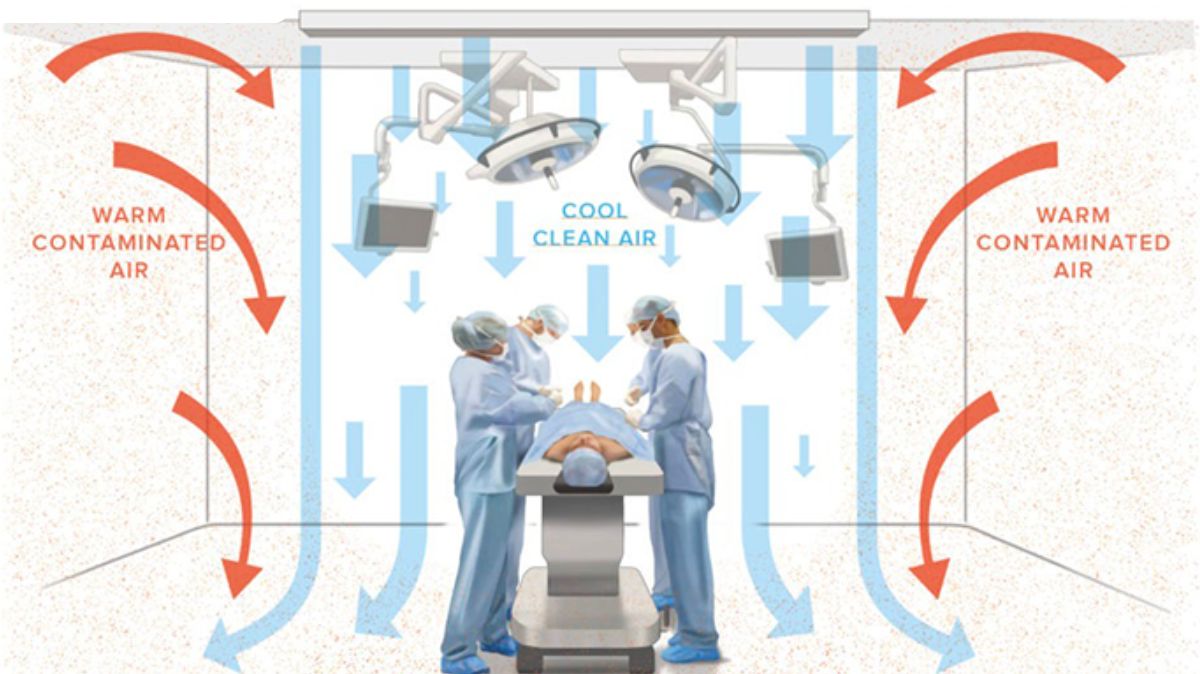
Most modern operating rooms are designed with positive pressure to prevent outside air from entering the surgical area.
However, if the door contains gaps or lacks sufficient airtightness, air continuously escapes from the room. This reduces the effectiveness of pressure maintenance and forces the HVAC system to work harder to compensate for lost air.
Increased risk of infection and cross-contamination
Air from corridors and adjacent spaces may carry dust particles, bacteria, and other contaminants. When a door cannot provide adequate sealing performance, these contaminants can enter the operating room, reducing the effectiveness of sterility-control systems and increasing the risk of surgical-site infections.
Higher operating costs
Air leakage not only affects environmental quality but also reduces the efficiency of HVAC and air-filtration systems. Over time, this leads to higher energy consumption, increased operating costs, and greater wear on HVAC equipment.
Why do operating rooms need airtight doors?
The reason operating rooms require airtight doors is not simply related to the door materials themselves. Rather, it is the door’s ability to support environmental control within the operating room.
Supporting stable pressure maintenance
One of the primary functions of an airtight door is to minimize air leakage when the door is closed. By reducing air loss, positive pressure within the operating room can be maintained more consistently, helping prevent outside air from entering the surgical area.
Supporting infection control
Operating rooms require the highest possible level of contamination prevention. When unintended air exchange is minimized, dust, microorganisms, and airborne contaminants have fewer opportunities to enter the room. As a result, airtight doors effectively support air-filtration systems and hospital infection-control procedures.
Optimizing operational efficiency
Airtight doors do not replace HVAC systems, but they play an important supporting role. By maintaining stable environmental conditions within the room, HVAC and filtration systems can operate more efficiently without excessive workload. This helps reduce energy consumption, lower operating costs, and maintain a more stable environment over the long term.
These are the key reasons why operating rooms need airtight doors in most modern healthcare facilities today.
What requirements should a compliant operating room door meet?
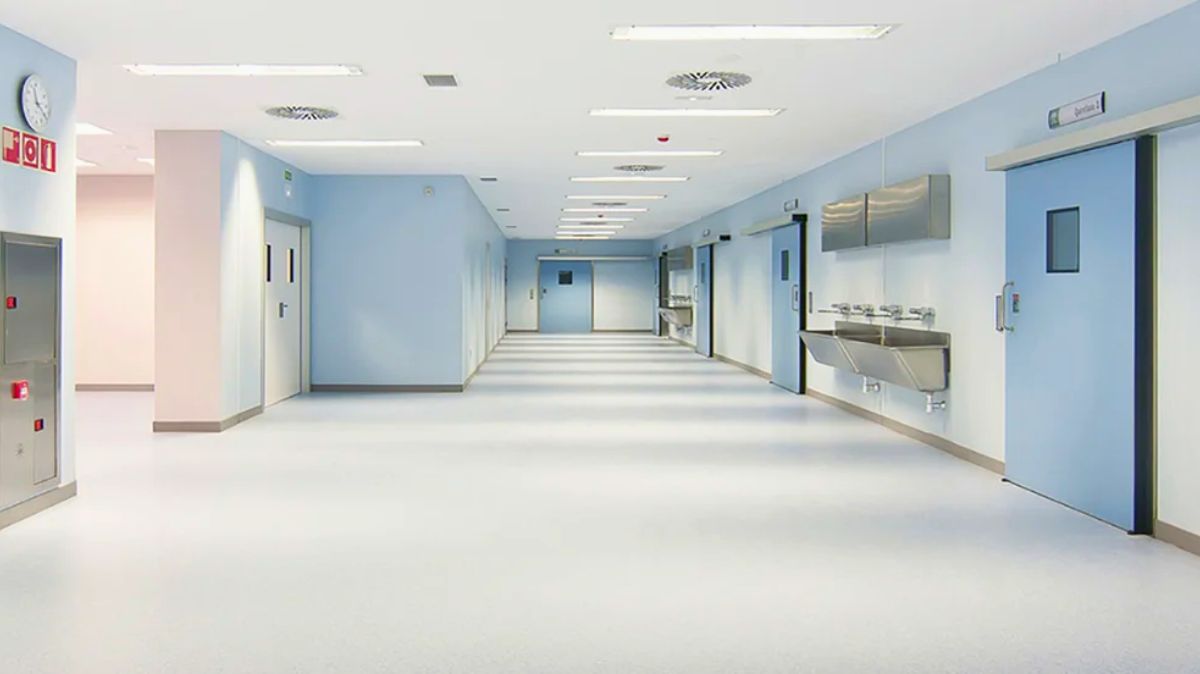
To perform effectively in demanding healthcare environments, operating room doors must satisfy several technical requirements simultaneously.
First, they must provide a high level of airtightness to minimize air leakage and support room pressure maintenance. In many modern hospital projects, operating room doors are required to achieve high airtightness performance, such as A-4 airtightness according to JIS A 4702.
In addition, the door system should operate automatically to reduce direct contact and improve infection control compared with traditional manual doors.
The finishing materials must also be suitable for healthcare environments, easy to clean, resistant to contamination, and capable of withstanding frequent disinfection procedures. Furthermore, the door should operate reliably under high-frequency use while maintaining long-term performance.
How do NABCO airtight doors meet operating room requirements?
After understanding why operating rooms need airtight doors, the next question many project owners ask is which solution can effectively meet these requirements in real-world applications.
As a leading brand in automatic entrance solutions, NABCO has developed specialized airtight door systems for hospitals, operating rooms, and other areas requiring stringent environmental control.
Achieves A-4 airtightness according to JIS A 4702
One of the key advantages of NABCO airtight doors is their ability to achieve A-4 airtightness performance according to JIS A 4702. This high airtightness classification is commonly specified for operating rooms, cleanrooms, and other environments requiring strict environmental control.
In practice, the goal of an operating room is not merely to open and close doors but to maintain stable positive pressure throughout operation. If excessive air leakage occurs through the door system, room pressure may be affected, reducing the effectiveness of air filtration and infection-control measures.
By achieving A-4 airtightness, NABCO airtight doors minimize air leakage and support HVAC systems in maintaining environmental conditions according to design specifications.
Specialized compression sealing technology makes the difference
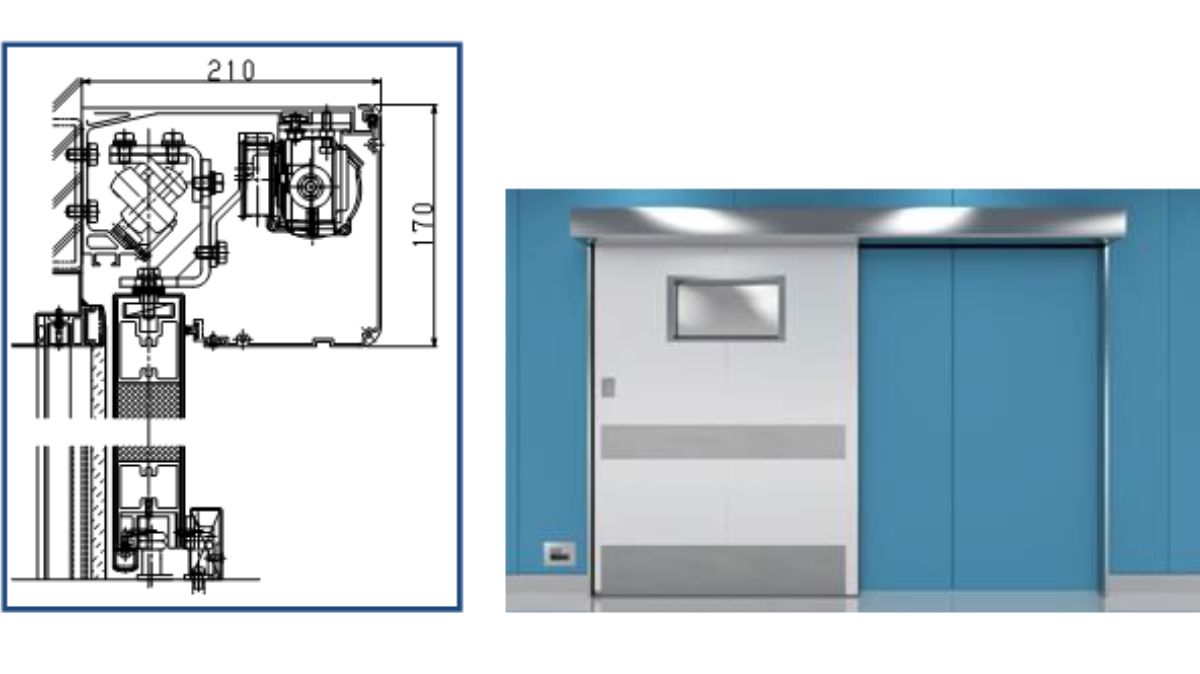
The most significant difference between NABCO airtight doors and conventional automatic sliding doors lies in the compression sealing mechanism. With standard sliding doors, the door leaf simply moves horizontally into the closed position. In contrast, after reaching the closed position, NABCO airtight doors perform an additional sealing movement that presses the door leaf firmly against the frame and airtight gasket system.
This mechanism significantly reduces gaps between the door panel and frame, improving airtightness and helping maintain stable pressure conditions within operating rooms. It is this engineering principle that enables NABCO doors to achieve high airtightness performance and satisfy the stringent requirements of healthcare environments.
Automatic operation reduces physical contact
NABCO airtight doors can be integrated with automatic sensors, push-button activators, or dedicated access-control systems. By reducing direct contact with door surfaces, the system helps minimize the risk of cross-contamination among healthcare workers, patients, and visitors while enhancing infection-control effectiveness.
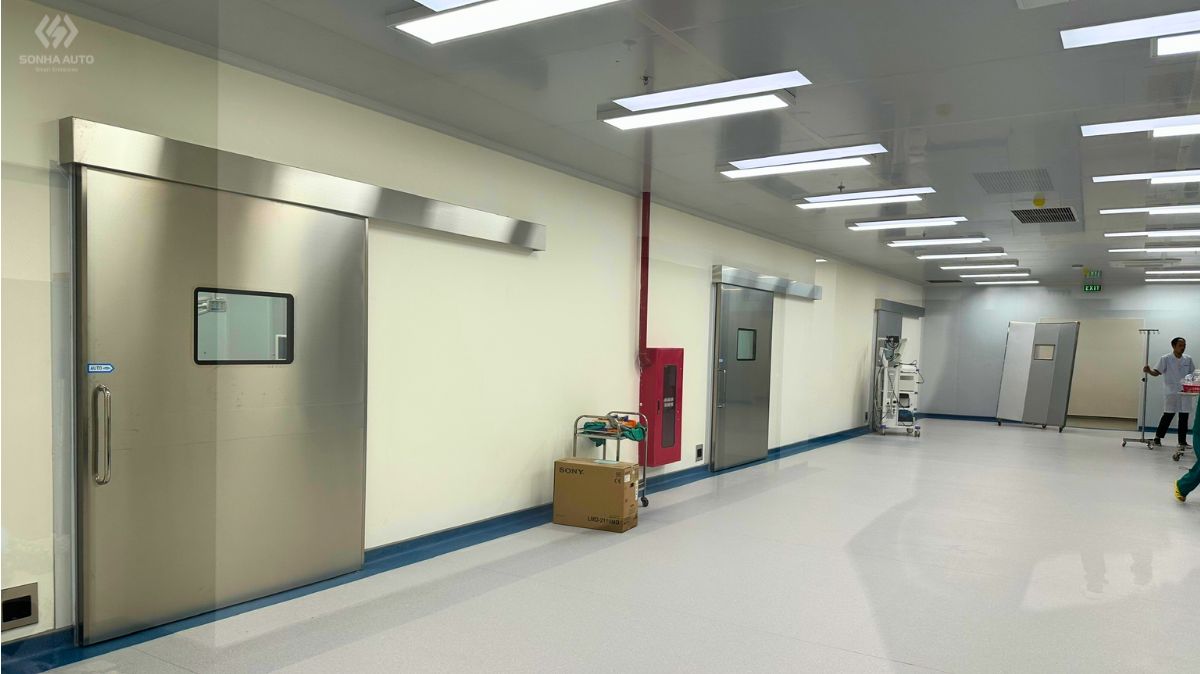
Airlock and Interlock integration capability
In modern operating room environments, airtight doors do more than separate spaces they form part of a comprehensive environmental-control entrance solution. With the ability to integrate Airlock systems, Interlock functions, and specialized airtight sealing technology, NABCO doors help maintain pressure stability and reduce the risk of cross-contamination between functional areas.
Materials suitable for healthcare environments
Depending on project requirements, NABCO airtight doors can be finished with HPL panels, stainless steel, or specialized vision glass. These materials not only meet aesthetic requirements but also facilitate cleaning, disinfection, and the maintenance of hygienic hospital environments.
A solution widely adopted in modern hospitals
Beyond meeting technical requirements in theory, NABCO airtight doors are now widely used in hospitals, medical centers, and modern surgical departments.
In addition to operating rooms, these entrance solutions are suitable for ICUs, isolation rooms, critical-care units, and other environments requiring strict environmental control.
>>> See more: What is an Airlock? The role of airlock doors in cleanrooms and NABCO solutions
Conclusion
Based on the information above, it is clear why operating rooms need airtight doors. Their purpose extends beyond meeting technical specifications, they help maintain stable pressure conditions, support infection control, and protect sterile environments during surgical procedures. With A-4 airtightness performance according to JIS A 4702, a specialized compression sealing mechanism, and Interlock integration capability, NABCO airtight doors provide an ideal entrance solution for operating rooms, ICUs, Airlock systems, and other areas requiring stringent environmental control in modern hospitals.
Contact Sonha Auto for expert consultation on NABCO airtight door solutions tailored to the operational requirements and healthcare standards of your facility.