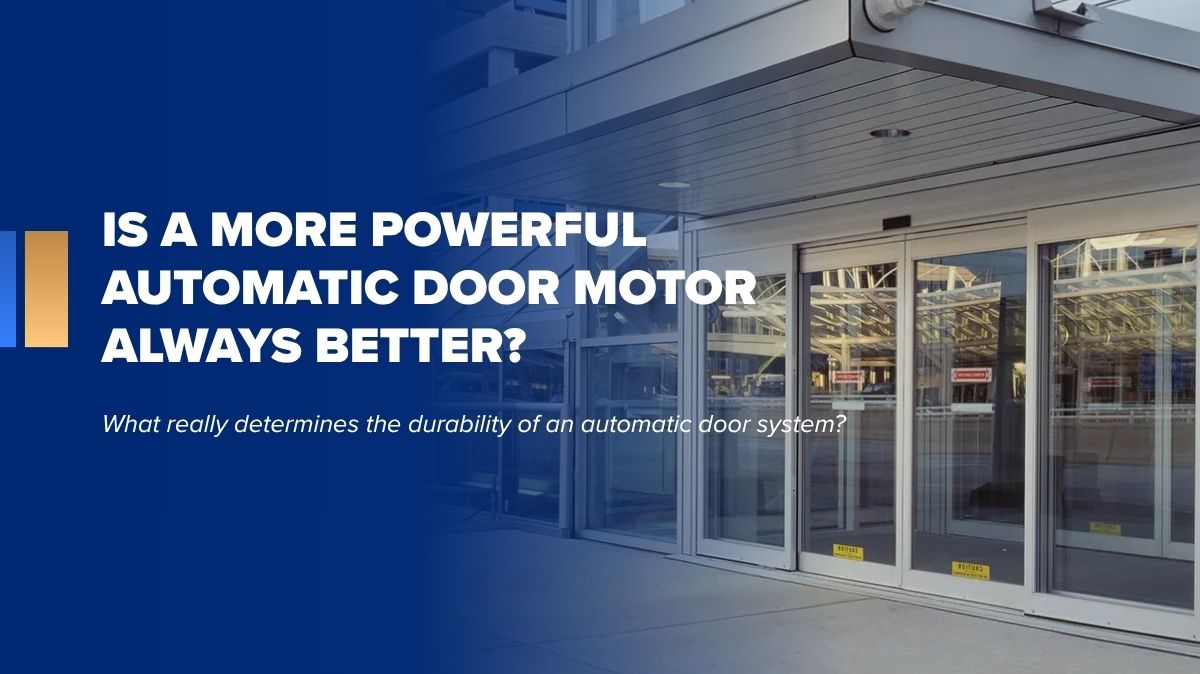
When selecting an automatic door system, many people focus on motor power, assuming that a more powerful motor automatically means greater durability and more reliable operation. But is a more powerful automatic door motor always better? In reality, the performance of an automatic door system is determined by much more than motor output alone. It depends on how well the controller, drive mechanism, sensors, and all other components work together as an integrated system. This article explains why choosing the right motor is always more important than simply choosing the most powerful one.
Is a more powerful automatic door motor always better?
This is one of the most common misconceptions when selecting an automatic door system. From an engineering perspective, however, the answer is no. A high-power motor does not necessarily deliver better performance if it is not matched to the door weight, operating frequency, and the overall drive system.
In practice, the motor is responsible only for generating the driving force. Smooth operation, safety, service life, and overall system efficiency depend equally on the controller, guide rail, rollers, sensors, and how all these components interact. This has been the engineering philosophy behind NABCO for more than 70 years, resulting in over 3 million automatic door operators manufactured worldwide by 2025.
The motor is only one part of the drive system
The motor is often considered the “heart” of an automatic door because it generates the force required to move the door panels. However, even an excellent motor cannot deliver optimum performance if the remaining components are not properly integrated.
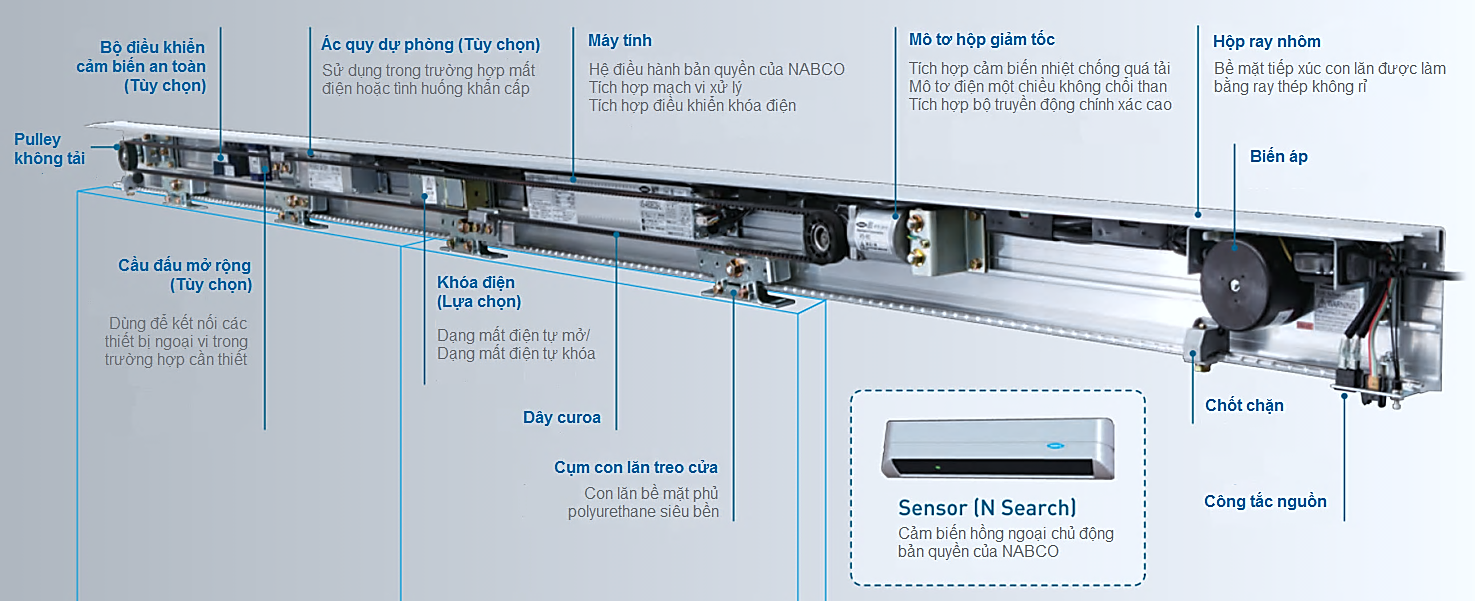
A complete automatic door operator typically consists of:
- Brushless DC motor
- Controller
- Encoder for position and speed detection
- Timing belt
- Pulley
- Guide rail
- Rollers
- Activation and safety sensors
Each component performs a different function, yet they operate as one coordinated system. If any single component fails to perform correctly, the performance of the entire system can be affected.
This also demonstrates why the question “Is a more powerful automatic door motor always better?” is not an appropriate criterion for evaluating an automatic door system. What truly matters is selecting a motor that matches the required door load and is optimized as part of the complete drive system.
The controller is the true “brain” of an automatic door
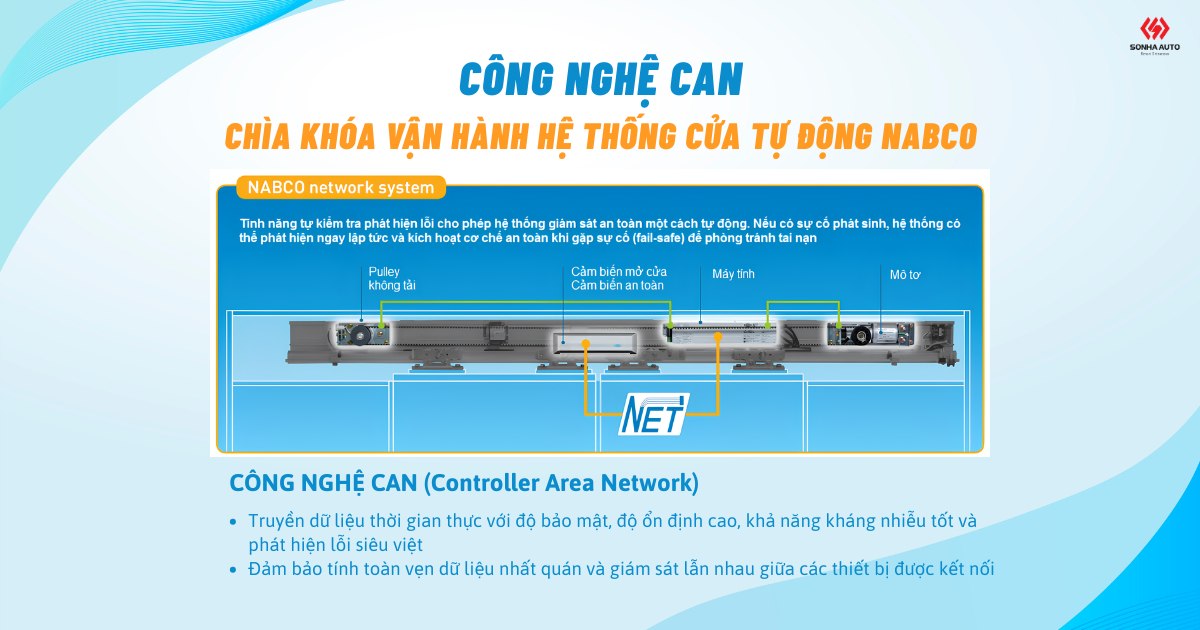
While the motor generates movement, the controller serves as the central processing unit of the entire system. It continuously receives information from the encoder and sensors to calculate operating speed, driving force, door holding time, and the appropriate response whenever an obstacle is detected. As a result, the door accelerates, decelerates, and stops precisely where intended, producing smooth movement while reducing stress on both the motor and the drive mechanism.
In its latest generations of automatic door systems, NABCO incorporates CAN (Controller Area Network) technology, allowing all system devices to exchange information quickly and accurately. This communication network supports self-diagnostics, continuous system monitoring, and enhanced operational reliability, especially in high-traffic facilities.
Guide rails and rollers determine long-term mechanical durability
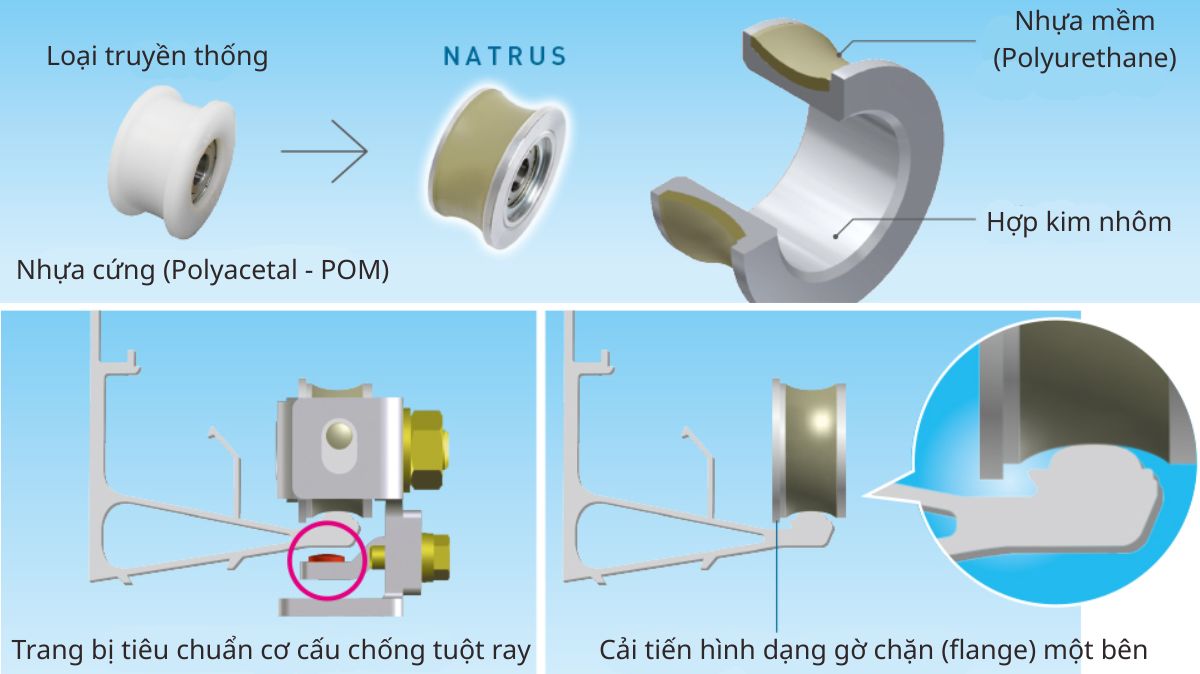
An automatic door operating thousands of cycles every day places most of its mechanical load on the guide rail and rollers. To minimize wear, NABCO uses high-strength aluminum guide rails with stainless-steel contact surfaces, combined with polyurethane rollers that reduce vibration, operating noise, and abrasion. The anti-derailment mechanism also keeps the door panels moving smoothly while preventing them from coming off the track during operation.
Although these components may appear relatively simple, they have a significant impact on the long-term durability of the entire door system, particularly in buildings with heavy pedestrian traffic.
Sensors ensure safe and accurate operation
The safety of an automatic door depends not only on its ability to stop when encountering an obstacle but also on its ability to accurately detect people or objects within the operating area.
Many NABCO automatic door systems utilize multi-zone infrared sensors together with presence sensors to ensure that the door opens only when appropriate while minimizing the risk of collision.
On some of the latest models, the system also performs automatic sensor status checks after every operating cycle, further improving operational reliability. This capability is particularly important in hospitals, cleanrooms, airports, and other facilities with stringent safety requirements.
Every building requires a different drive solution
This is precisely why the question “Is a more powerful automatic door motor always better?” does not have a universal answer.
The objective is not to select the most powerful motor available, but to choose the correct motor capacity, system configuration, and drive solution for the actual operating conditions.
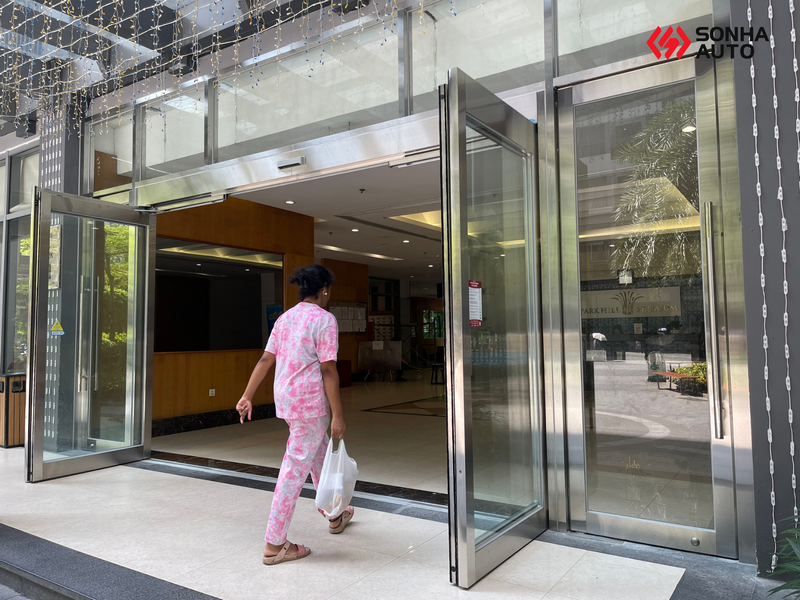
For example, automatic doors in airports and shopping malls must withstand continuous operation with extremely heavy pedestrian traffic. Hospital doors, on the other hand, prioritize infection control, airtight performance, and integration with fire alarm and access control systems.
To meet these diverse requirements, NABCO offers specialized solutions including:
- Automatic sliding doors for shopping malls, airports, hotels, and office buildings
- GT-1175 Breakout automatic sliding doors for high-traffic entrances, providing a wider emergency escape opening during evacuation
- GT-8300 automatic swing door operator for heavy doors, supporting integration with fire alarm systems, access control, and emergency escape functions
- Airtight doors and specialized hospital doors designed to meet stringent requirements for airtightness, infection control, and reliable operation in operating rooms and cleanrooms
Selecting the appropriate solution from the outset allows the entire door system to achieve maximum performance while extending its service life throughout the building lifecycle.
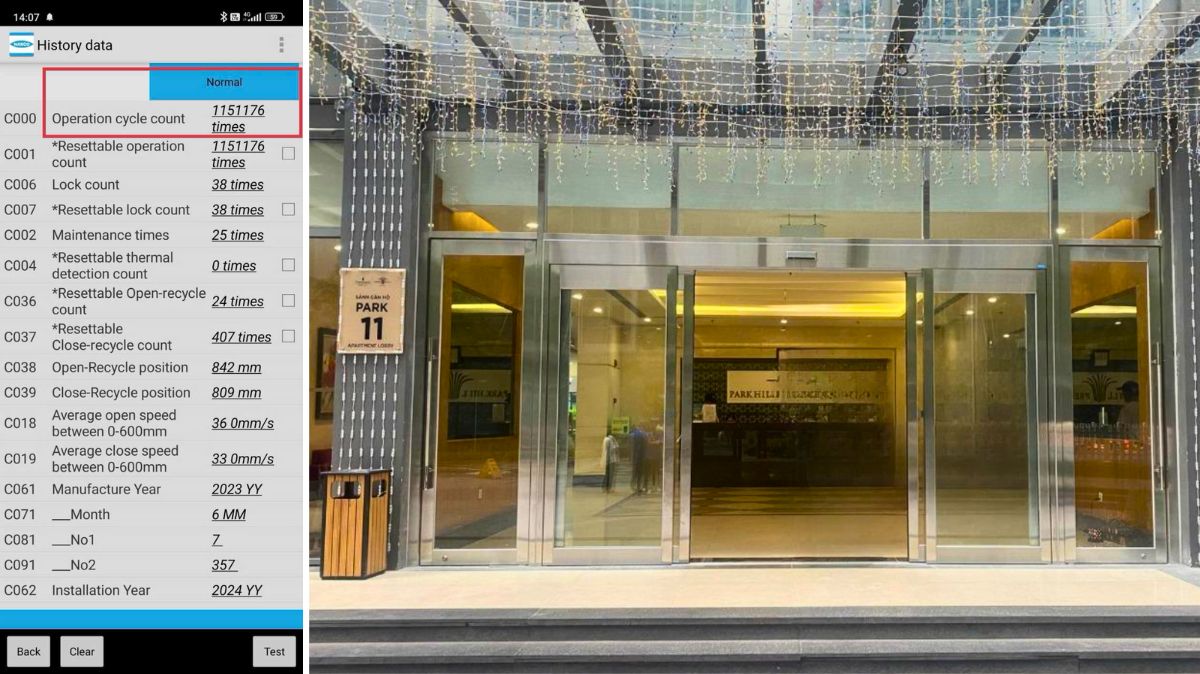
High-quality equipment must be matched with the right solution
Even the highest-quality automatic door system cannot perform optimally if the site survey, system design, and installation are not carried out correctly. Before selecting equipment, factors such as door weight, opening dimensions, operating frequency, environmental conditions, and integration with other building systems should all be carefully evaluated. These considerations determine the most suitable operator model, drive configuration, and safety devices rather than simply choosing the largest automatic door motor available.
As NABCO’s official partner for more than 20 years, Sonha Auto provides not only genuine NABCO products but also professional consultation, installation, and maintenance in accordance with the manufacturer’s standards, ensuring stable performance and maximum long-term value throughout the service life of every automatic door system.
>>> See more: What is a brushless DC motor? Why has it become the standard for modern automatic doors
Conclusion
As discussed above, the belief that a more powerful automatic door motor is always better is a common misconception. The true performance of an automatic door system depends not on maximum motor power but on the proper integration of the motor, controller, drive mechanism, sensors, and the actual operating environment. This integrated engineering philosophy has guided NABCO for more than 70 years. With extensive experience delivering automatic door solutions throughout Vietnam, Sonha Auto focuses on selecting the most appropriate technology for each project rather than simply specifying a higher-powered automatic door motor. Ultimately, the right solution not the most powerful motor—is what delivers long-term reliability, durability, and sustainable value for the entire automatic door system.