When learning about NABCO automatic doors, users often pay attention to visible components such as the motor, sensors, or controller. However, for the door leaf to open and close stably throughout its service life, system performance does not depend solely on these components. One less noticeable component that directly affects the movement of the door leaf is the automatic door rail, where the hanger rollers move during each opening and closing cycle. In many automatic door systems, the hanging rail primarily uses aluminum as its main material. Meanwhile, NABCO developed a rail structure that combines an aluminum core with steel reinforcement and stainless steel ribs to increase rigidity and wear resistance in the guiding area. So, what makes the NABCO reinforced steel rail with stainless steel ribs different? And why can a component located above the door leaf, almost invisible during use, affect the smoothness and stability of the entire system? Let’s explore this in the following article with Sonha Auto.
What makes the NABCO reinforced steel rail with stainless steel ribs different?
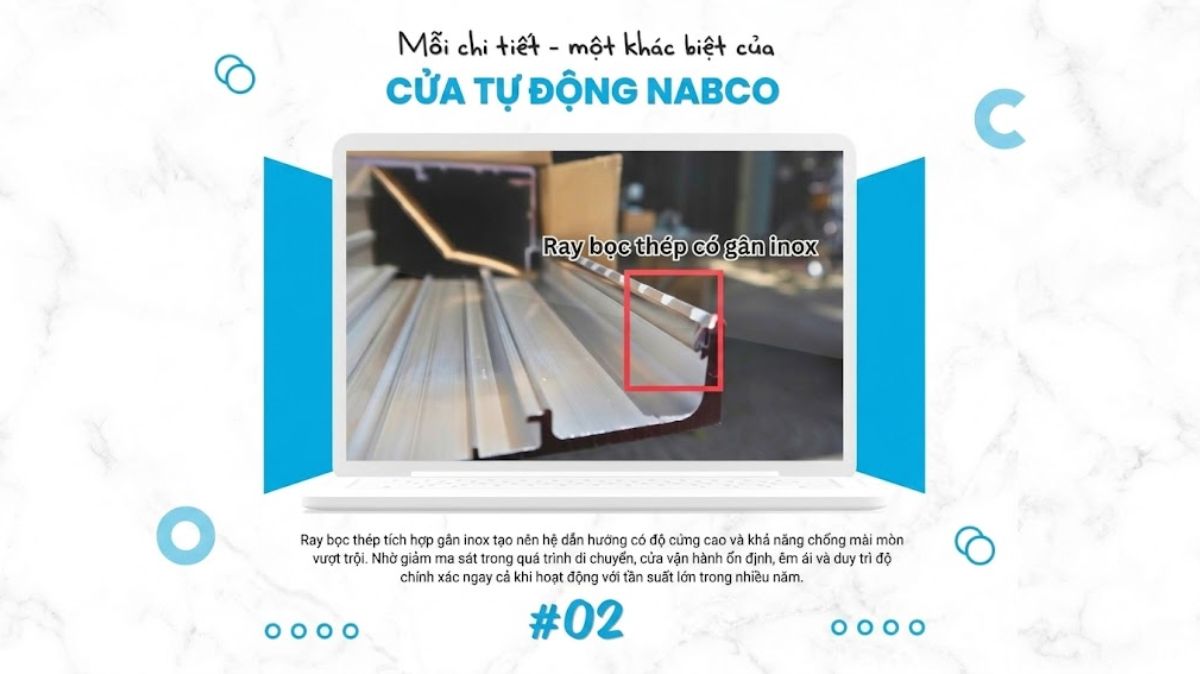
In many automatic door systems, the hanging rail is mainly made of aluminum to reduce weight and meet structural requirements. However, the rail is continuously subjected to forces as the door leaf opens and closes, especially in buildings with high usage frequency. Instead of using a single material, NABCO designed its automatic door rail with a combination of an aluminum core and a reinforced steel outer layer with stainless steel ribs.
Each material serves a specific function:
- Aluminum core: Helps maintain the structure while reducing the overall weight of the rail system.
- Steel outer layer: Increases rigidity and resistance to impact during operation.
- Stainless steel ribbed surface: Enhances wear resistance in the contact and guiding areas.
This combination creates a rail system designed to meet the requirements for structural integrity, durability, and stable operation at the same time.
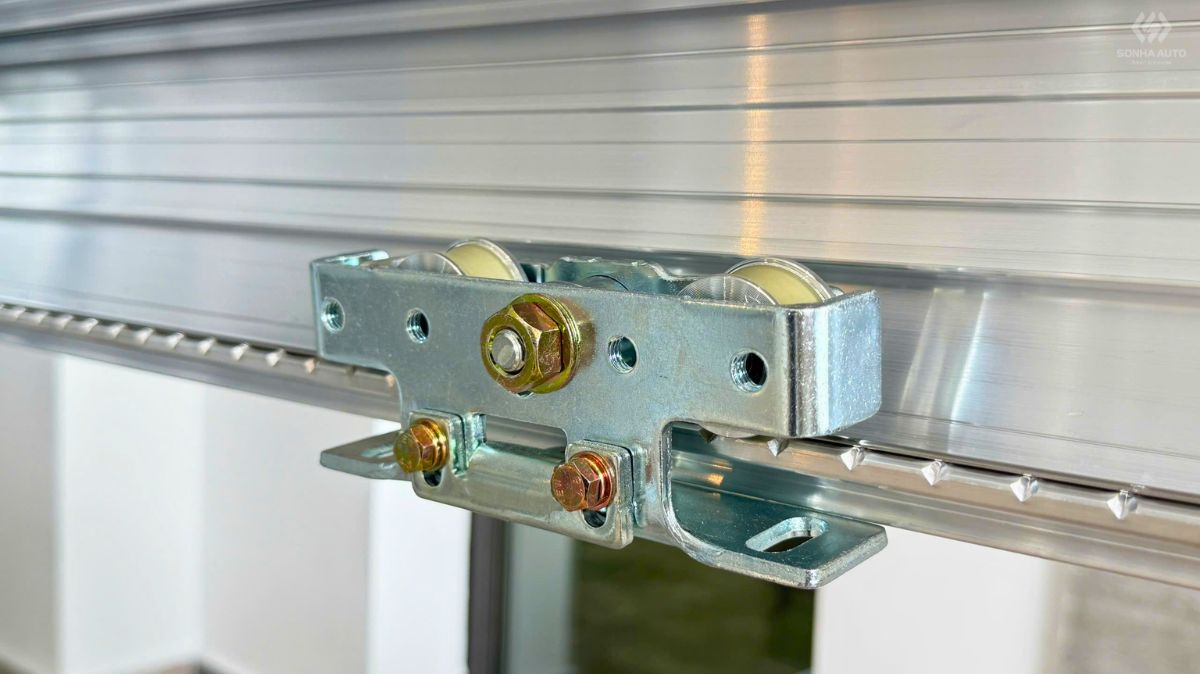
Structure of the NABCO automatic door rail
Aluminum core balances structure and weight
Aluminum offers the advantage of low weight while meeting the structural requirements of the rail. Using an aluminum core helps prevent the rail system from becoming excessively heavy while still providing the support and guidance required for the system’s movement.
This is an internal structural component that is rarely visible to users, yet it plays an important role in the overall design of NABCO automatic doors.
Reinforced steel outer layer with stainless steel ribs increases rigidity and wear resistance
Surrounding the aluminum core is a steel outer layer with a ribbed stainless steel surface. This is what distinguishes the NABCO reinforced steel rail with stainless steel ribs from conventional aluminum rail systems. The reinforced layer increases the rigidity of the guiding system while improving wear resistance in areas subjected to repeated impact during continuous door operation.
For an automatic door system that opens and closes many times a day, controlling wear on mechanical components is important for maintaining long-term operating performance.
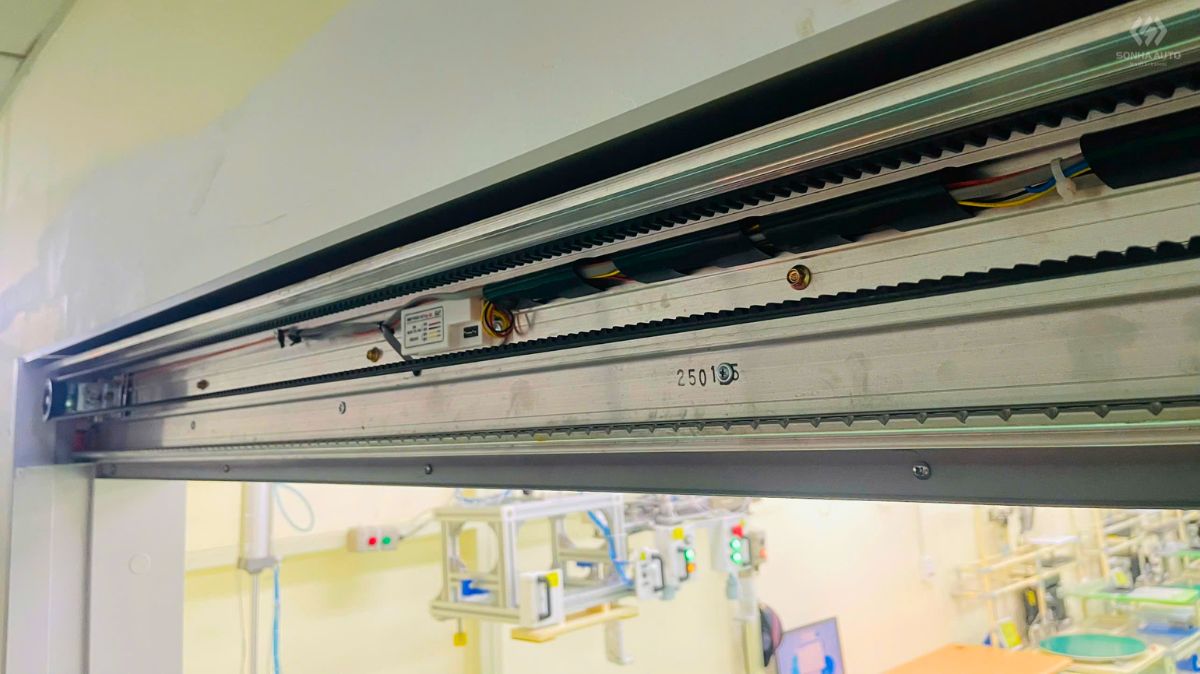
How does the reinforced steel rail with stainless steel ribs help an automatic door operate stably?
The rail is where the hanger rollers move to open and close the door leaf. Therefore, the rigidity and stability of the rail directly affect the smoothness of the door during operation.
With the NABCO reinforced steel rail with stainless steel ribs, the aluminum core balances structure and weight, while the steel reinforcement with stainless steel ribs increases rigidity and wear resistance in the guiding area. When the rail surface remains stable, the rollers can move more smoothly, helping minimize unnecessary friction and vibration.
This is particularly important for automatic sliding doors, where the door leaf continuously travels along the rail during each opening and closing cycle. A properly designed rail system contributes to smoother, more accurate, and more stable door movement during operation.
This is also one of the design principles demonstrated by Japanese automatic doors: not only focusing on visible components such as motors and sensors, but also optimizing internal mechanical components to improve the operating performance of the entire system.
How is the reinforced steel rail with stainless steel ribs different from a conventional aluminum rail?
The difference lies in the approach to material design. Conventional aluminum rail systems primarily use a single material throughout the rail. NABCO, on the other hand, combines multiple materials within a single structure, utilizing the properties of each material to meet different requirements.
| Criteria | Conventional aluminum rail | NABCO reinforced steel rail with stainless steel ribs |
| Structure | Primarily made of aluminum | Combines an aluminum core with a reinforced layer |
| Weight | Advantageous in terms of weight | Balances structural integrity and weight |
| Rigidity | Depends on the design and material | Supported by the reinforcement layer |
| Wear resistance | Depends on the material and construction | Enhanced at the contact surface |
| Operating performance | Depends on the configuration of the entire system | Designed for stability, smoothness, and durability |
It is important to note that rail performance depends not only on the material but also on the overall design, door configuration, installation conditions, and maintenance process.
Why should automatic door rails be given attention?
When choosing an automatic door, users often focus on visible components such as the motor, sensors, controller, and door leaf. However, for the door leaf to open and close smoothly and accurately, the system also depends on a less noticeable component: the automatic door hanging rail.
The rail can be thought of as the “track” along which the door leaf moves. The hanger rollers travel along the rail during every opening and closing cycle, so rail stability directly affects the movement of the door leaf.
When the rail and guiding surface are not in proper condition, resistance during movement may increase. As a result, the door leaf may become heavier to operate, vibrate, produce noise, or no longer move as stably as designed. In such cases, the drive system may also have to work harder to move the door leaf through its full travel path.
Conversely, a properly designed automatic door rail that is properly maintained during use allows the rollers to move stably, minimizes unnecessary friction, and supports smoother operation of the entire system.
Therefore, when evaluating a NABCO automatic sliding door system, it is important not to focus only on easily visible components such as the motor or sensors. Mechanical components located behind the door leaf, although rarely visible, also contribute to the smoothness, stability, and long-term operating performance of the entire system.
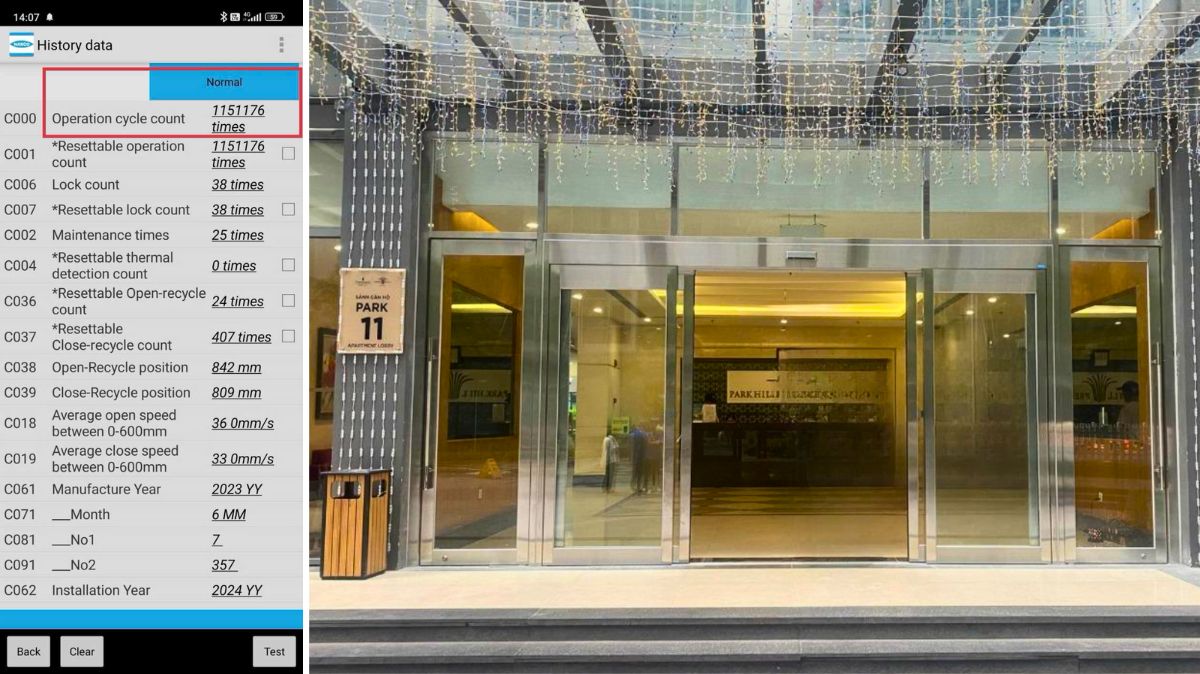
NABCO – Optimizing every detail for automatic doors
The design of the NABCO reinforced steel rail with stainless steel ribs is an example of NABCO’s approach to automatic door development. The brand does not focus only on major components but also pays attention to every detail that affects operation.
An automatic door can be used for a long period and must continuously perform opening and closing cycles under different operating conditions. Therefore, each component must not only meet requirements when the system is first put into operation but also be designed with long-term use in mind. NABCO does not simply design a door system; NABCO designs every detail to help the door system operate more reliably over time. This is also the value behind the components that users rarely see.
Sonha Auto – Official NABCO automatic door distributor in Vietnam
Sonha Auto supplies and implements NABCO automatic door solutions for a wide range of projects, from buildings, hotels, and shopping centers to factories, airports, and facilities with high operating frequency requirements.
With more than 20 years of experience in the automatic door industry, Sonha Auto focuses not only on equipment selection but also on system configuration, operating conditions, and the long-term performance of the door system. The use of appropriately designed components such as the NABCO reinforced steel rail with stainless steel ribs is part of an overall solution aimed at achieving stable, smooth, and durable operation.
If you are researching NABCO automatic doors or need advice on an automatic door solution suitable for your project, contact Sonha Auto for support.
>>> See more: Why do premium automatic doors operate so smoothly? The difference lies in the smallest details
“Every detail – One difference” is a series by Sonha Auto exploring the technologies and technical details behind the quality of NABCO automatic doors. Because for a system designed for long-term operation, quality lies not only in what we can see, but also in the details that are least visible.
Follow Sonha Auto to continue discovering the differences that create Japanese quality in every NABCO door system.