When selecting automatic doors, one should not focus solely on the initial purchase price. What investors need to consider is which system offers more stable operation, fewer faults, and optimal long-term cost efficiency: Japanese automatic doors or Chinese automatic doors. In reality, this is a matter directly related to durability, safety, maintenance costs, and long-term operational efficiency. Chinese automatic doors generally have a price advantage, making them suitable for projects with budget constraints. Meanwhile, Japanese automatic doors are highly regarded for their quality, stability, and lifespan, especially in high-traffic buildings. Therefore, to make the right choice, investors need to consider both practical needs and long-term operational requirements. Sonha Auto will help you analyze each factor clearly to make the most suitable decision.
How are Japanese automatic doors and Chinese automatic doors different?
Currently, the automatic door market in Vietnam is quite diverse, with brands from Japan, Europe, Korea, and China. Among them, Japanese automatic doors and Chinese automatic doors are the most common segments due to their wide range of options and ability to meet different needs.
Japanese automatic doors are developed with a focus on durability, stability, and operational safety. Brands such as NABCO and Panasonic emphasize product lifespan and continuous long-term operation.
Meanwhile, Chinese automatic doors offer advantages in cost and supply diversity, making them suitable for projects with limited budgets.
However, to choose appropriately, investors should also consider durability, technology, operational costs, and actual usage requirements.
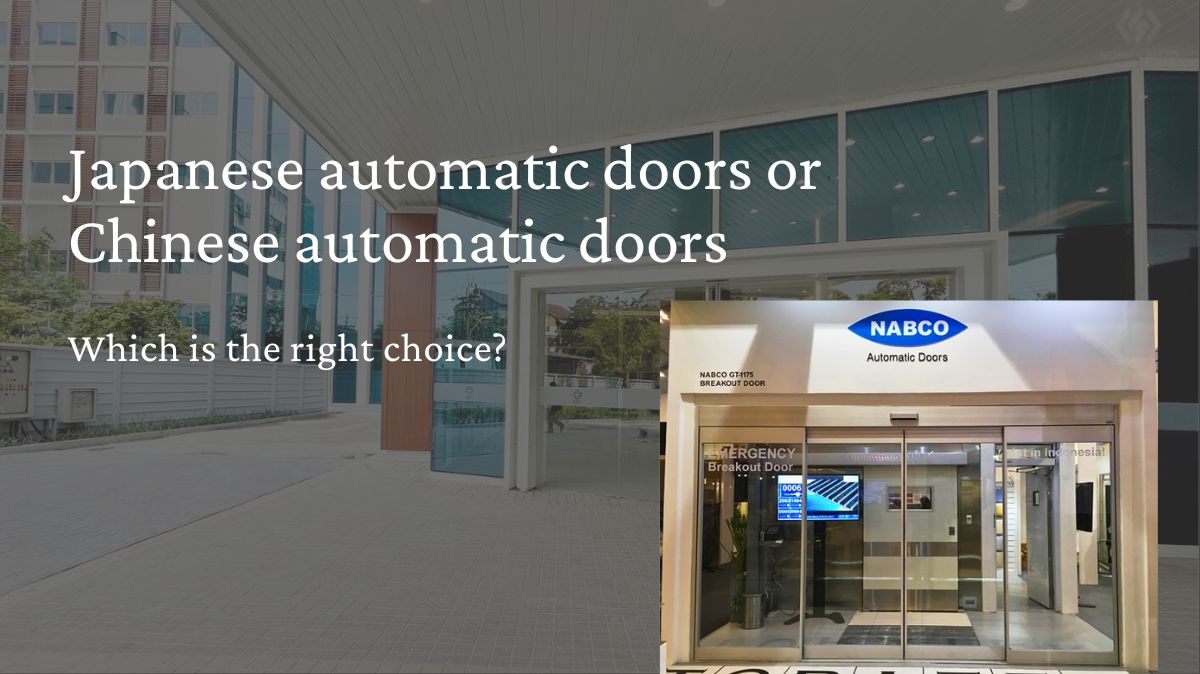
Detailed comparison of Japanese automatic doors and Chinese automatic doors
To provide an overview before going into each criterion, investors can refer to the summary table below:
| Criteria | Japanese automatic doors | Chinese automatic doors |
| Durability | Very high | Medium to good |
| Stability | High | Depends on brand |
| Safety technology | Advanced | Basic to fairly good |
| Investment cost | Higher | Lower |
| Long-term operating cost | Optimized | May be higher |
| Suitable applications | Hospitals, hotels, shopping malls, premium buildings | Small offices, shops, showrooms |
However, each project has different requirements. Therefore, each criterion should be analyzed in detail.
Quality and durability
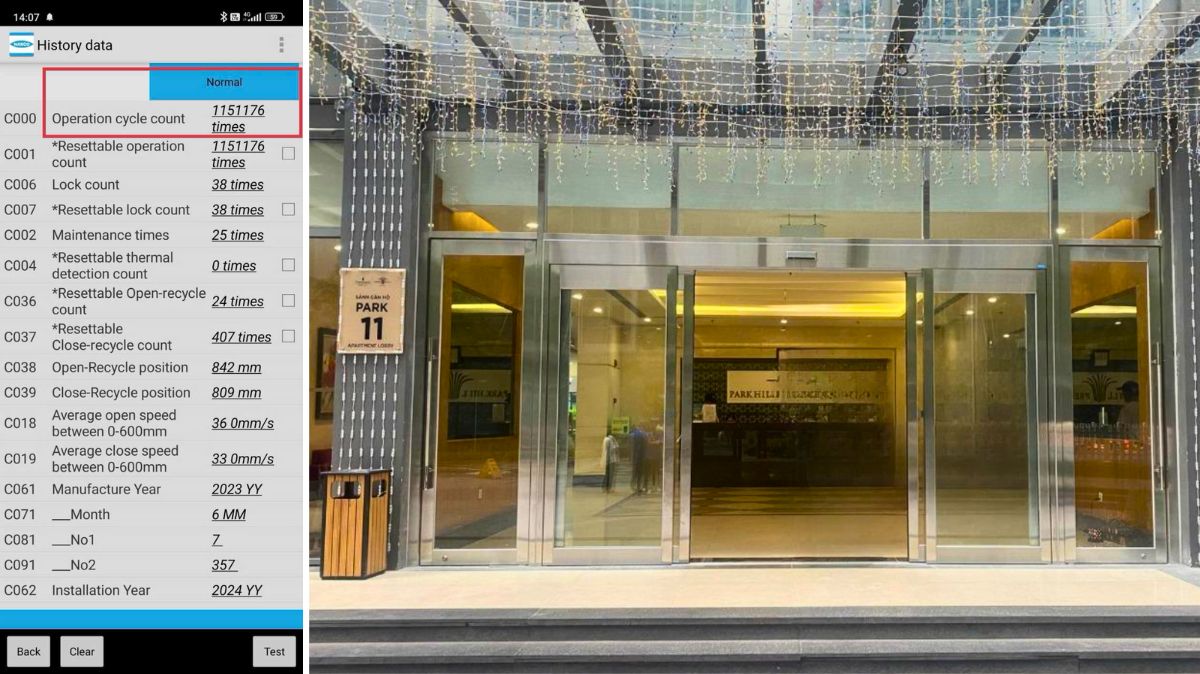
Durability is one of the most important criteria when choosing automatic doors. Japanese brands are well known for strict quality control processes, from motors and sensors to control systems. For example, the NABCO GT-1175 sliding door system at Park 11 Times City operates more than 1 million cycles per year while maintaining high stability and durability.
In contrast, the quality of Chinese automatic doors depends heavily on the manufacturer and product segment. Some high-end lines can still meet operational requirements, but in lower-cost segments, lifespan and stability are often difficult to compare with Japanese brands. In terms of long-term durability, Japanese automatic doors clearly have an advantage.
Operational stability
When comparing Japanese automatic doors and Chinese automatic doors, operational stability is a key factor, especially in high-traffic facilities.
Japanese automatic doors are highly valued for smooth operation, low vibration, and high precision across thousands of daily cycles. This is particularly important for hospitals, airports, hotels, and shopping malls with heavy foot traffic.
In contrast, the performance of Chinese automatic doors depends on the brand and product segment. Some high-end models still perform well, but lower-cost versions may develop noise, vibration, or travel inaccuracies after long-term use.
Technology and safety features
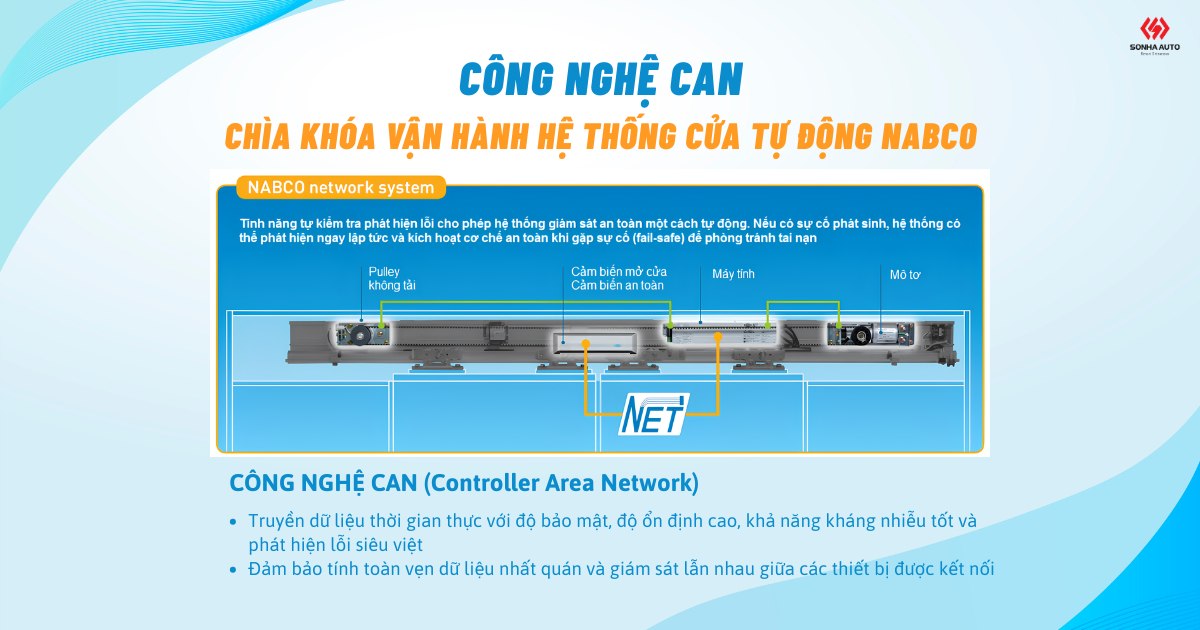
Japanese automatic doors are highly regarded for advanced technology and strict safety standards. NABCO automatic doors, for example, apply CAN communication technology for synchronized system operation and N-search sensors for enhanced detection of people and obstacles. The products also comply with Japan’s JIS A 4722 standard and Europe’s EN 16005 standard, making them suitable for high-reliability projects.
Meanwhile, Chinese automatic doors still meet basic usage requirements, but their technological completeness and system integration depend on each brand.
Investment cost
Chinese automatic doors have a clear advantage in initial investment cost, making them suitable for budget-conscious projects. Japanese automatic doors, on the other hand, are more expensive due to high-quality components and strict manufacturing standards. However, purchase price is only part of the total lifecycle cost.
Maintenance and repair costs
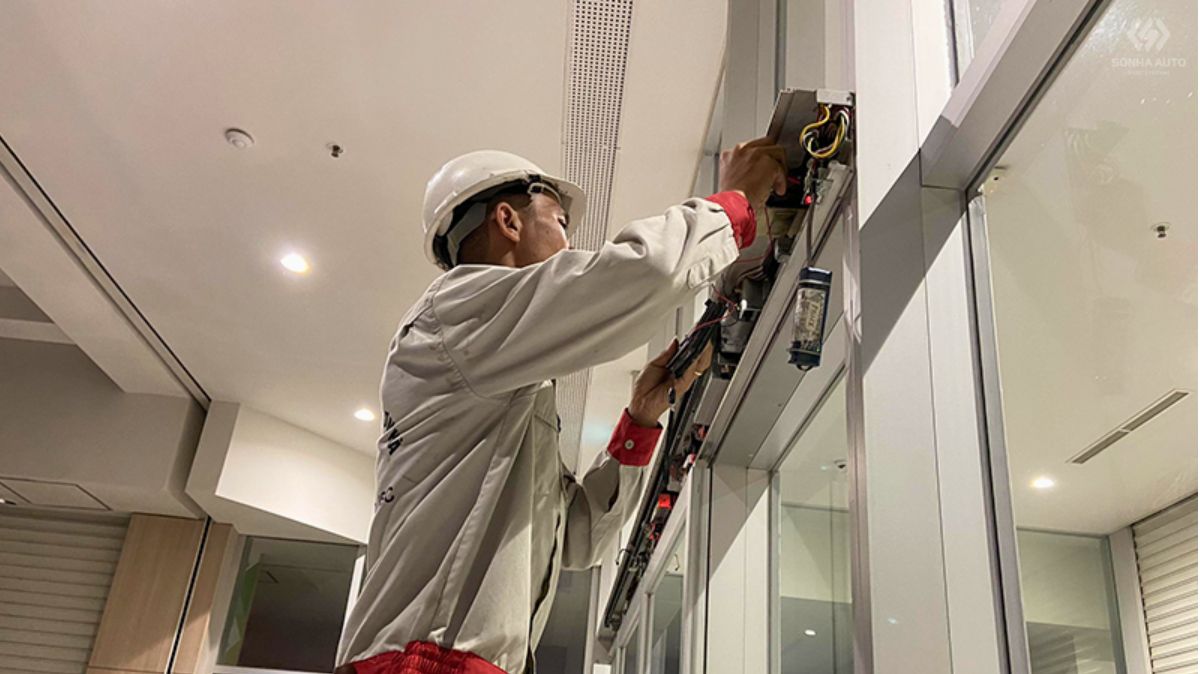
When comparing Japanese automatic doors and Chinese automatic doors, many investors focus only on the purchase price while ignoring total cost of ownership over 5 – 10 years. A low-cost system that frequently fails or requires replacement parts may end up more expensive than a stable system from the beginning.
Thanks to high durability and low failure rates, Japanese automatic doors generally offer better long-term maintenance and operating cost efficiency.
Should you choose Japanese automatic doors or Chinese automatic doors?
Today, automatic doors are no longer just simple opening and closing devices but have become part of modern entrance solutions that enhance user experience and building professionalism. In reality, there is no single best option for all projects. The most suitable product is the one that matches the project’s usage needs and investment capacity.
Chinese automatic doors are a reasonable choice for projects with limited budgets, low traffic, and basic operational requirements.
Meanwhile, Japanese automatic doors are suitable for buildings requiring continuous operation, high stability, and long-term value. They are commonly used in hospitals, hotels, shopping malls, office towers, and modern industrial facilities.
From a long-term investment perspective, Japanese automatic doors often deliver higher economic efficiency by reducing repair costs, minimizing downtime, and extending system lifespan.

Why do many investors choose NABCO automatic doors?
Among Japanese automatic door brands, NABCO is widely trusted by investors, design consultants, and M&E contractors. With a long development history and millions of installed systems worldwide, NABCO is present in key facilities such as hospitals, airports, hotels, shopping malls, and office buildings.
Beyond durability and stable operation, NABCO automatic doors are also highly regarded for their safety-oriented and user-experience-focused technology solutions. The systems are designed for high-frequency continuous operation while optimizing maintenance costs throughout their lifecycle.
For projects requiring high reliability and long-term operational efficiency, NABCO is one of the most recommended choices for automatic door investment.
>>> See more: Automatic sliding door or automatic swing door? 6 key criteria to help project owners make the right choice
Conclusion
Both Japanese automatic doors and Chinese automatic doors have their own advantages. If initial investment cost and basic usage requirements are the priority, Chinese automatic doors are suitable. On the other hand, if durability, stability, safety, and long-term operational efficiency are prioritized, Japanese automatic doors deliver greater value. Therefore, instead of focusing only on the initial purchase price, investors should consider the overall lifecycle, maintenance costs, and actual project requirements. If you need consultation on suitable NABCO automatic door solutions, Sonha Auto is ready to support you from selection to installation and maintenance.