In modern healthcare facilities, hospital door materials not only determine the durability of the door system but also directly affect infection control, hygiene, sound insulation, and airtight performance in different functional areas. From patient rooms and ICUs to operating rooms and isolation wards, each space has its own requirements regarding door materials and construction. So, what are hospital door materials, what types are commonly used, what are their advantages and limitations, and which solutions are best suited for modern healthcare environments? Let’s explore with Sonha Auto in the article below.
Why do hospital door materials require special consideration?
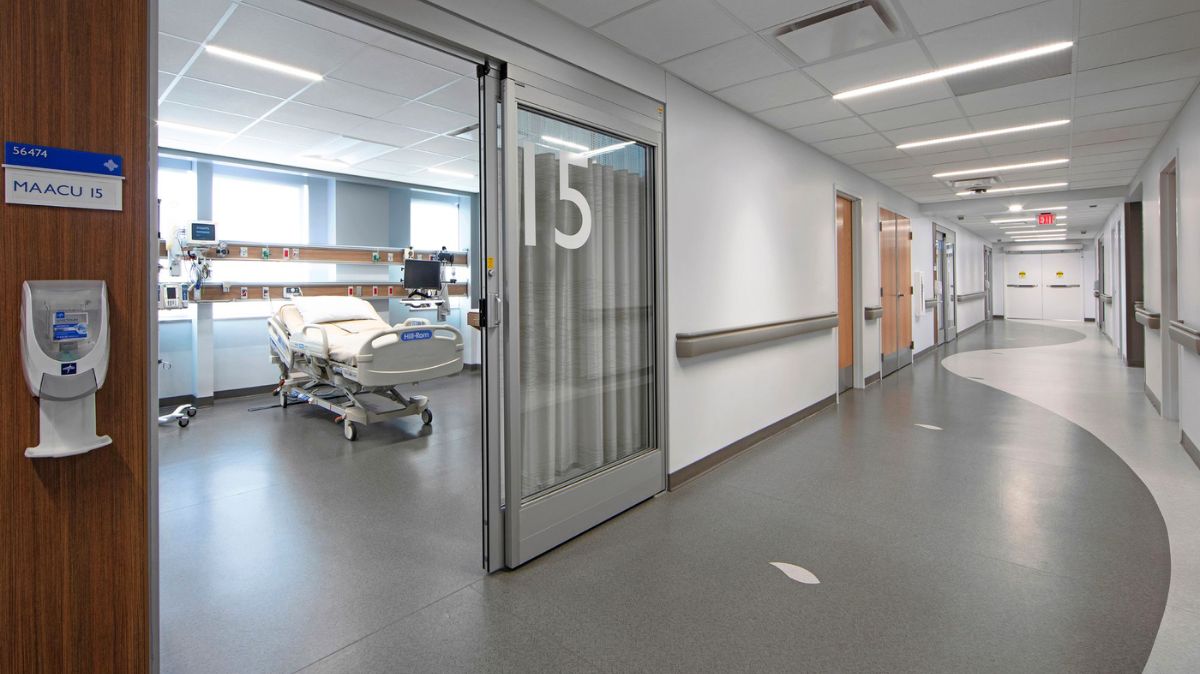
Unlike doors used in residential or office buildings, hospital automatic doors must meet stringent requirements for hygiene, durability, and environmental control.
Door surfaces must be easy to clean, resistant to disinfectants, and designed to minimize dust accumulation in order to support infection control. At the same time, they must withstand frequent impacts from stretchers, wheelchairs, and medical equipment during daily operation.
For areas such as operating rooms, ICUs, and isolation rooms, doors must also provide airtightness, sound insulation, and support room pressure control. Therefore, selecting the right hospital door materials affects not only durability but also the operational efficiency of the healthcare facility.
Common hospital door materials used today
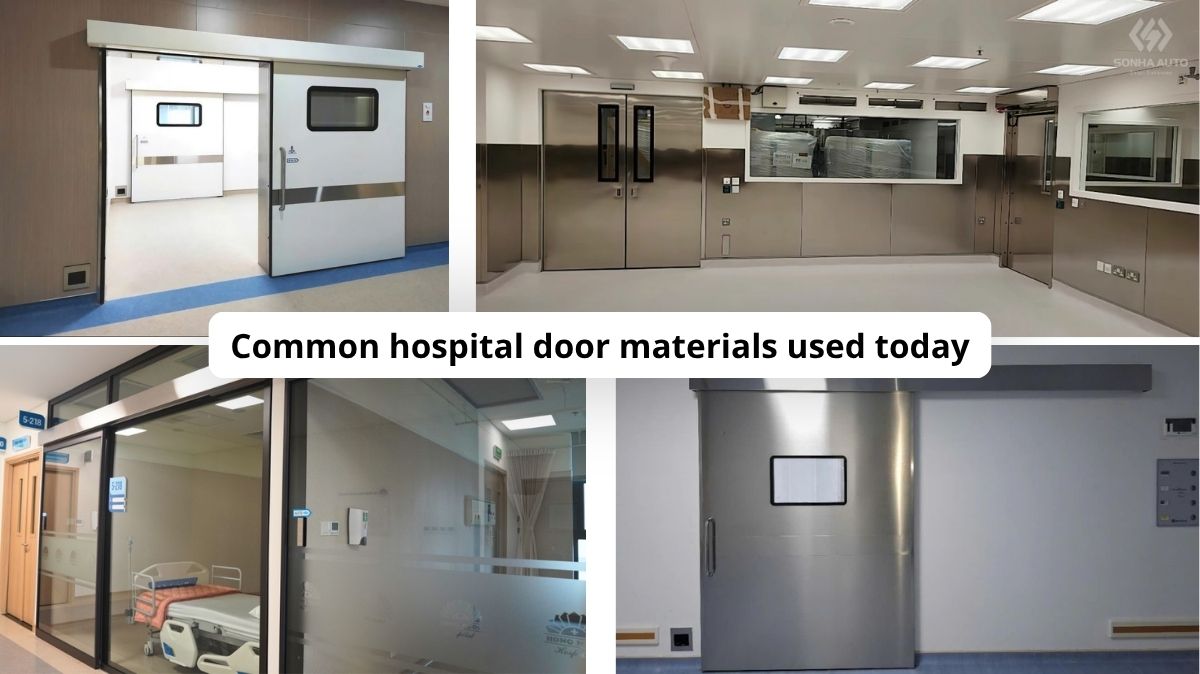
Hospital doors are manufactured from a variety of materials to meet the requirements of different functional areas. Each material offers unique advantages in terms of durability, hygiene, and investment cost.
| Material | Key characteristics | Typical applications |
| Powder-coated steel doors | High durability and impact resistance | Corridors, utility rooms |
| Stainless steel doors | Corrosion-resistant and easy to clean | Clean rooms, laboratories |
| HPL (High Pressure Laminate) doors | Moisture-resistant, scratch-resistant, aesthetically pleasing | Patient rooms,, ICUs |
| Medical glass doors | Enhanced visibility and open-space design | Patient rooms, observation areas |
Among these options, HPL and stainless steel are currently the most widely used materials in modern hospitals due to their excellent hygiene performance, durability, and suitability for environments with continuous usage.
While each material has its own strengths, for high-requirement areas such as operating rooms, ICUs, and isolation wards, the decisive factor is not only the surface material but also the overall door system’s airtightness, sound insulation, and operating technology. This is why specialized hospital door solutions are increasingly preferred in modern healthcare projects.
Which materials are suitable for operating rooms and airtight environments?
Not every material is suitable for operating rooms or pressure-controlled areas. In reality, the door panel material is only one component of a comprehensive solution. To meet the specific requirements of healthcare environments, the door system must also provide airtight performance, minimize air leakage, and ensure long-term operational stability.
Therefore, when selecting doors for operating rooms, ICUs, or isolation rooms, project owners should evaluate not only the finishing material but also the door structure and operating technology. Understanding hospital door materials and the role of each component helps ensure the most appropriate solution is selected for each functional area.
How do NABCO hospital doors utilize materials and technology?
In healthcare environments, materials represent only part of the hospital door solution. To meet requirements for hygiene, infection control, and continuous operation, the system must also provide airtightness, sound insulation, and long-term operational stability.
NABCO hospital doors are developed through the integration of specialized materials and automatic door technology to meet the needs of various healthcare environments, including patient rooms, ICUs, operating rooms, laboratories, and X-ray rooms.

Diverse material options for different healthcare areas
Depending on project requirements, NABCO hospital doors can be finished with a variety of materials, including HPL, stainless steel, aluminum, and glass, allowing them to meet the specific needs of different functional areas.
Among these, HPL is one of the most commonly used materials because of its moisture resistance, scratch resistance, and ease of cleaning with disinfectants. HPL surfaces are available in various colors, enabling consistency with hospital interior designs while maintaining long-term durability and aesthetics.
Airtight design for operating rooms and pressure-controlled areas
For operating rooms, ICUs, and isolation wards, airtight performance is often more critical than the surface material itself. NABCO airtight door systems feature specialized sealing mechanisms that reduce air leakage and help maintain room pressure.
The systems achieve A-4 airtight performance according to JIS A 4702 standards, helping minimize external air infiltration and supporting environmental control in areas requiring strict sterility.

Sound insulation and X-ray protection options
In addition to airtight performance, NABCO hospital doors can be configured with specialized features depending on the application. For ICUs and special treatment areas, the doors can provide T-1 sound insulation performance according to JIS A 4702 standards, helping reduce noise and create a quieter environment for patients.
For X-ray rooms and diagnostic imaging areas, the doors can be equipped with X-ray shielding materials to meet radiation safety requirements.

Automatic operation and reduced physical contact
One of the key advantages of NABCO hospital doors is their ability to operate automatically without physical contact. The systems can be integrated with sensors, touchless switches, and dedicated control devices, helping reduce hand contact during use. This feature is particularly important in healthcare environments where infection control is always a top priority.
In the event of a power outage, the doors can still be opened manually with ease and can be fully opened to ensure the uninterrupted movement of patients, stretchers, and medical equipment when necessary.
Designed for long-term operation
In addition to technical performance requirements, NABCO hospital doors are engineered for durability and long-term operational stability. High-quality mechanical components reduce maintenance requirements while maintaining precise opening and closing performance, even in high-traffic environments such as national referral hospitals and specialized medical centers.

Current trends in hospital door material selection
In the past, hospital door selection focused primarily on material durability. Today, modern healthcare facilities increasingly adopt a more comprehensive approach, combining advanced materials with sophisticated operating technologies.
Modern hospitals prioritize the use of HPL, stainless steel, and glass combined with touchless automatic doors, airtight doors, and infection-control solutions. This approach improves operational efficiency, reduces maintenance costs, and helps meet increasingly demanding healthcare standards.
Rather than selecting materials based solely on durability, today’s project owners evaluate hospital door systems based on hygiene performance, airtightness, sound insulation, and automation capabilities.
>>> See more: Automatic hospital doors vs conventional doors: Which is the right choice for modern hospitals?
Conclusion
Choosing the right hospital door materials is essential for improving durability, hygiene, infection control, and operational efficiency within healthcare facilities. Beyond materials, airtight door systems and automatic doors are becoming increasingly important components of modern hospital design.
With extensive experience implementing NABCO hospital door solutions in Vietnam, Sonha Auto provides professional consultation and customized solutions for operating rooms, ICUs, patient wards, corridors, and many other specialized healthcare environments.