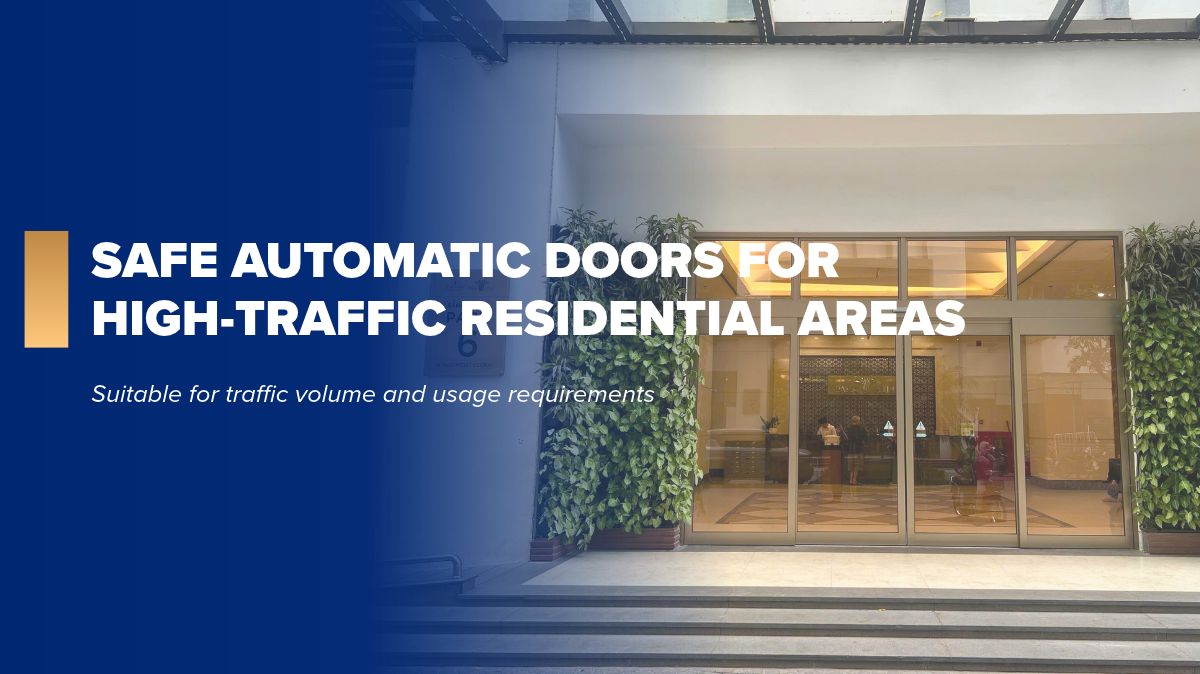
Hospitals are environments where people and equipment move continuously every day. From patients, visitors, and medical staff to wheelchairs, stretchers, and medication carts, all pass through door systems hundreds or even thousands of times daily. Therefore, selecting the right door solution not only affects convenience and accessibility but also directly impacts infection control, safety levels, and the operational efficiency of the entire facility. In recent years, many hospitals and healthcare facilities have gradually shifted from conventional doors to modern automatic door systems. So, when comparing automatic hospital doors vs conventional doors, which solution is more suitable for modern healthcare facilities? Let Sonha Auto explore the answer in the article below.
Key differences between automatic hospital doors vs conventional doors
Although both types of doors serve the same purpose of separating spaces and facilitating movement, there are significant differences in user experience and their ability to meet the operational requirements of healthcare environments.
Accessibility and mobility support
With conventional doors, users must manually pull or push the door each time they pass through. This can be inconvenient for patients undergoing treatment, elderly individuals, wheelchair users, or medical staff transporting stretchers and specialized equipment.
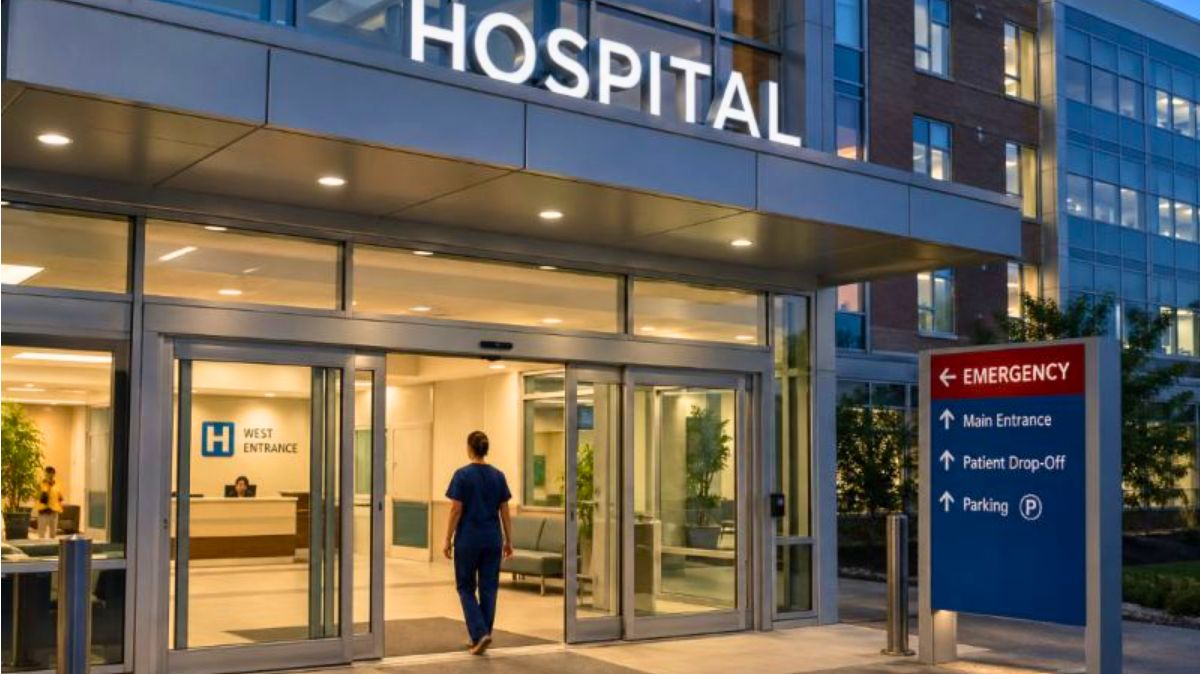
In contrast, automatic hospital doors are activated by sensors or dedicated push-button controls, allowing the door to open automatically when someone approaches. As a result, movement becomes more convenient, especially in high-traffic areas such as main entrances, outpatient departments, emergency rooms, and inpatient wards.
This is one of the reasons why automatic doors are increasingly becoming the preferred hospital entrance solution for healthcare investors and facility managers.
Infection control
Infection control is always a critical requirement in healthcare environments. In hospitals, frequently touched surfaces such as door handles can become transmission points that increase the risk of cross-contamination among users.
With conventional doors, users must physically touch the door handle to open and close the door. By contrast, automatic doors operate through touchless activation using sensors or dedicated switches, significantly reducing contact with door surfaces.
This advantage is especially important in operating rooms, isolation rooms, and intensive care units (ICUs), where minimizing manual contact points helps support more effective infection control procedures and enhances overall hospital safety.
Sealing performance and environmental control
For many hospital areas such as operating rooms, isolation rooms, laboratories, and intensive care units (ICUs), controlling airflow is a critical requirement for maintaining a stable operating environment.
With conventional doors, sealing performance largely depends on usage conditions and installation quality. After prolonged use, gaps may develop or the door’s airtightness may deteriorate, affecting its ability to prevent airflow exchange between different areas.
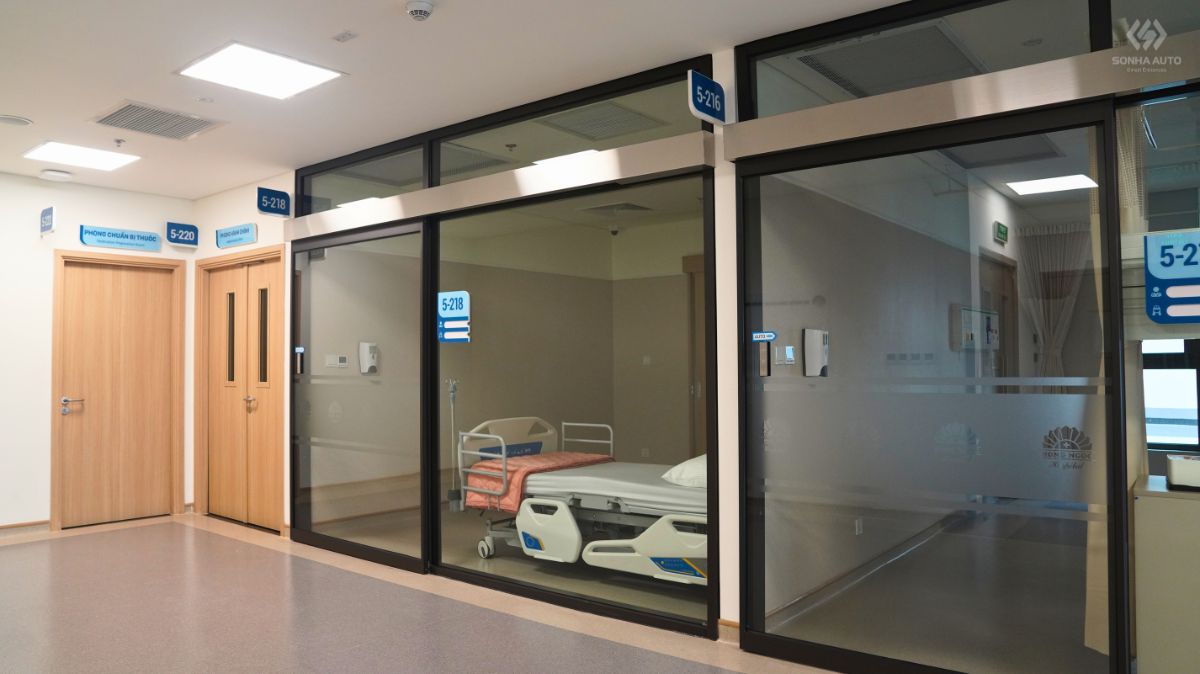
In contrast, automatic hospital sliding doors provide more stable operation and superior sealing performance, helping minimize gaps during daily use. Among these solutions, NABCO automatic sliding doors are widely chosen for healthcare facilities due to their precise operation, high reliability, and ability to meet the demands of continuous use in hospital environments.
This is why automatic sliding doors are increasingly preferred in areas that require strict airflow control, such as operating rooms, isolation rooms, and other healthcare spaces with rigorous operational standards.
Safety during operation
In large hospitals, doorways often experience extremely high pedestrian traffic. When using conventional doors, collisions during opening and closing are difficult to avoid, particularly for patients, children, and individuals with limited mobility.
Modern automatic door systems are equipped with safety sensors that detect people or obstacles within the operating area. When someone is passing through, the door can remain open or temporarily stop closing to prevent collisions.
As a result, automatic doors not only improve user convenience but also contribute to the safety of both patients and healthcare professionals.
Long-term operational efficiency
If only the initial investment cost is considered, conventional doors have an advantage due to their lower installation cost and simpler structure. However, for healthcare facilities with high traffic volumes, the challenge extends beyond installation costs to long-term operational efficiency. Automation optimizes the movement of people and equipment, reduces congestion at doorways, and enhances the professional image of the facility.
For this reason, many investors now consider automatic doors to be an essential component of modern hospital construction rather than simply an optional upgrade.

Comparison table: Automatic hospital doors vs conventional doors
| Criteria | Conventional doors | Automatic hospital doors |
| Operation | Manual push or pull | Automatic opening and closing via sensors |
| Wheelchair and stretcher accessibility | Limited | More convenient |
| Infection control | Direct contact with door handles | Reduced surface contact |
| Operational safety | Depends on user behavior | Equipped with safety sensors |
| High-frequency operation | Not optimized | Designed for hospital environments |
| Aesthetics | Basic | Modern and professional |
Areas where automatic doors should be prioritized in hospitals
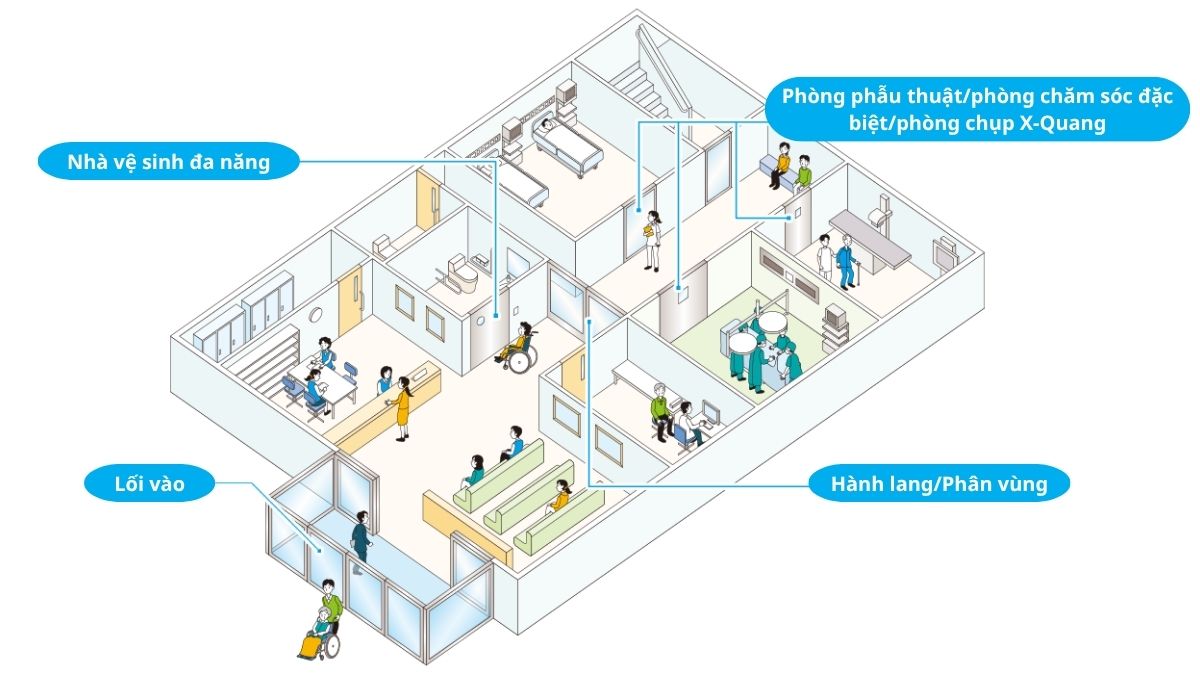
Thanks to their ability to improve circulation, enhance safety, and reduce physical contact, automatic hospital doors are widely used in high-traffic areas and spaces with specialized operational requirements, including:
- Hospital main entrances
- Outpatient departments
- Emergency departments
- Laboratory and diagnostic imaging areas
- Operating rooms
- Isolation rooms
- Intensive Care Units (ICUs)
- Patient stretcher transportation routes
Particularly in areas requiring strict environmental control, such as operating rooms, isolation rooms, and ICUs, automatic doors help optimize operations, support infection control measures, and improve overall efficiency compared with conventional doors. This is also why automatic door solutions are increasingly becoming a standard feature in modern hospitals.
Today, many hospitals and healthcare facilities prioritize NABCO automatic door systems from Japan because of their stable performance, high durability, and ability to meet the specialized requirements of medical environments. Solutions such as NABCO automatic sliding doors, NABCO automatic operating room doors, and NABCO airtight doors have been implemented in numerous hospitals, helping optimize traffic flow, improve safety, and support more effective infection control.
>>> See more: Why choose a reputable hospital automatic door contractor for modern healthcare facilities?
Conclusion
When comparing automatic hospital doors vs conventional doors, automatic doors demonstrate significant advantages in accessibility, infection control, operational safety, and long-term efficiency. This is why an increasing number of hospitals are investing in modern automatic door systems to enhance service quality and create a more professional healthcare environment.
With extensive experience implementing healthcare projects nationwide, Sonha Auto provides NABCO hospital door solutions, including automatic sliding doors, automatic operating room doors, airtight doors, and specialized door systems designed to meet the operational requirements of modern hospitals.
If you need consultation on the most suitable solution for each functional area, contact Sonha Auto for detailed support.