In modern healthcare, efficient and safe operational procedures are essential to ensuring the quality of medical services. With intelligent features and advanced technology, hospital automatic doors are becoming an indispensable solution in medical facilities. Let’s explore with Sonha Auto the benefits and special features, answer the question what functions does a hospital automatic door have, and understand how it contributes to improving hospital operational efficiency.
What functions does a hospital automatic door have?
The increasing flow of people, strict hygiene requirements, and the complexity of medical equipment have driven the rapidly growing demand for automatic doors in hospitals.
Investors and contractors often research what functions does a hospital automatic door have because they need a superior solution compared to conventional doors. The functions of automatic doors in hospitals go far beyond simple opening and closing; they are part of an environmental control system that ensures sterility and uninterrupted movement. Their importance in infection control and modern hospital operation is irreplaceable.
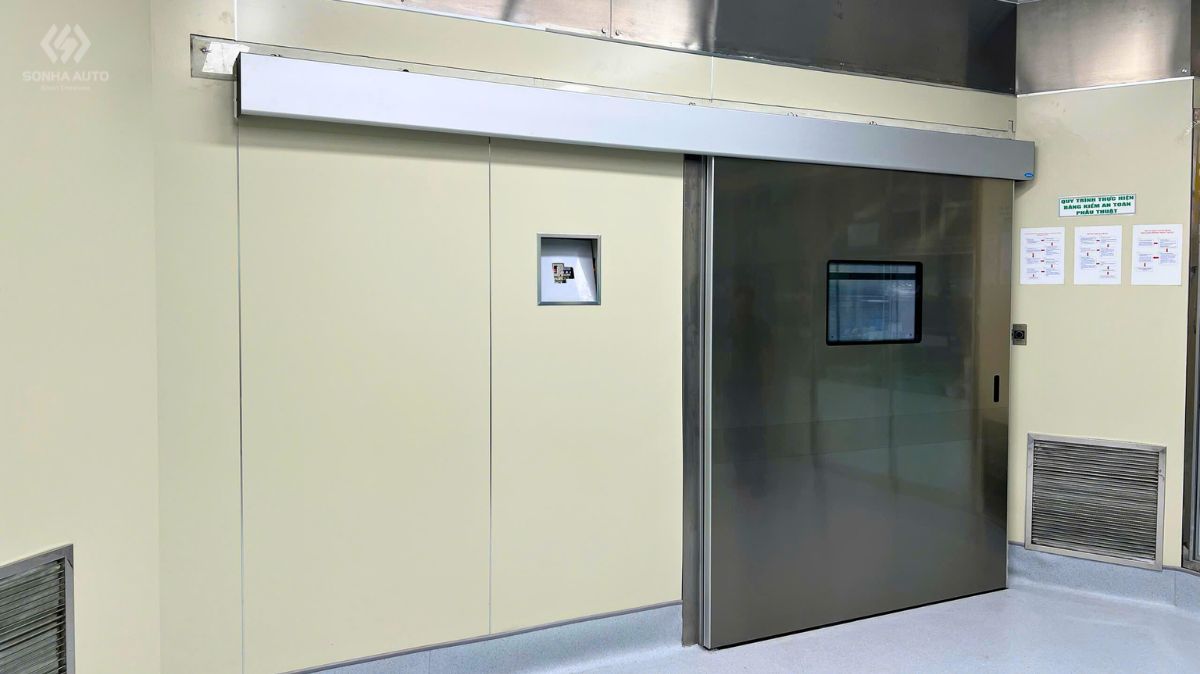
Automatic doors for hospitals are specially designed to meet the strict requirements of the healthcare sector. Below are the reasons why you should implement automatic door solutions for medical facilities:
Infection control and bacteria prevention
This is the most crucial function of hospital automatic doors:
- Reduced hand contact: The door operates via sensors (hand-wave, foot-sensor, or touchless technology) or an automatic motor, eliminating the need to touch door handles. This significantly minimizes cross-contamination between hospital areas.
- Tight sealing capability: Operating room doors or airtight doors feature specialized gaskets that create an airtight seal when closed, preventing dust and bacteria from entering sterile areas.
Creating sterile and clean air environments
In operating rooms, clean rooms, or isolation areas, hospital automatic doors help stabilize air pressure.
- Role in operating rooms and clean rooms: Airtight doors combined with HVAC systems maintain positive pressure (in operating rooms) or negative pressure (in isolation rooms), ensuring controlled air movement and maintaining a sterile environment.
- Function of automatic operating room doors: Ultra-quiet motors and controlled opening/closing speeds help minimize airflow disruption, preserving cleanroom stability.
Optimizing movement of patients and medical equipment
In emergency situations, speed is critical. Hospital automatic doors support efficient movement with quick and precise opening, enabling medical staff and equipment such as stretchers and wheelchairs to move uninterrupted between areas, saving crucial time.
Additionally, automatic sliding doors provide wider openings than swing doors, making it easier to transport beds, wheelchairs, and large medical devices, ensuring safety and convenience in all scenarios.

Safety and collision prevention
Safety is a top priority in hospital operations. These specialized doors are equipped with anti-pinch and anti-collision sensors using multi-point infrared technology, enabling the door to stop or reverse immediately when detecting obstacles such as people, carts, or limbs. This minimizes accidents and protects patients, staff, and medical equipment.
Automatic stopping when encountering obstacles is especially important in hospitals, protecting expensive medical devices and ensuring that operating room doors function safely and effectively.
Enhanced convenience and standardized hospital operation
- Smooth and quiet operation: With high-quality motors, hospital automatic doors and operating room doors open smoothly without loud noise, maintaining a quiet environment for patient recovery.
- Easy to clean and compliant with medical standards: Made from stainless steel or antibacterial powder-coated steel, these doors meet strict hygiene requirements and are easy to sanitize.
Energy efficiency
- Precise opening/closing: Automatic doors close immediately after people pass through, reducing unnecessary open time and improving energy efficiency.
- Reduced cooling loss: Especially important in operating rooms and labs, the doors help reduce HVAC load and electricity costs.
Emergency evacuation support
- Emergency opening: In case of power failure or fire, hospital automatic doors can quickly open via fail-safe mode or manual break-out mechanisms for safe evacuation. The NABCO GT-1175 automatic sliding door is a prime example with a breakout function, allowing rapid evacuation even during power outages.
- Fire alarm integration: Doors can connect with the building’s fire alarm system and automatically open during emergencies, ensuring maximum safety.

Criteria for choosing automatic doors for hospitals
When researching what functions does a hospital automatic door have, product selection must be based on technical and functional standards:
- Airtightness and infection control: Essential for operating rooms and clean rooms—check gasket quality and sealing capability.
- Safe operation: Evaluate motor quality and sensor responsiveness.
- Durability: Choose reputable brands such as NABCO and SWICO for stable 24/7 operation.
- Compliance with hospital standards: Ensure doors meet ISO 14644, WHO, and national fire safety standards.
- Smart system integration: Doors should be compatible with access control or BMS systems for synchronized smart hospital operation
Benefits of installing hospital automatic doors
Installing automatic doors in hospitals provides comprehensive advantages that directly improve medical quality and user experience:
- Improved healthcare service quality: Ensures sterile environments and minimizes infection risks.
- Standardized processes according to international hospital models: A key criterion for certifications such as JCI and ISO.
- Long-term cost savings: Reduces cooling loss, optimizes HVAC energy, and decreases maintenance costs.
- Enhanced patient and staff experience: Quiet, convenient, safe, and professional environments improve satisfaction and operational efficiency.

Sonha Auto – A trusted installer of hospital automatic doors
With over 20 years of experience in automatic doors and gates, Sonha Auto has established itself as a trusted provider of high-quality hospital automatic door solutions. We supply products from world-leading brands such as NABCO (Japan), SWICO (Korea), and Boon Edam (Netherlands), ensuring that smart hospital doors meet safety and technical standards.
Beyond product supply, Sonha Auto offers professional consulting, installation, and maintenance services tailored to hospital needs. We have successfully implemented major hospital projects, including:
- Hong Ngoc Phuc Truong Minh Hospital – 55 specialized hospital door systems
- Central Military Hospital 108 – Automatic doors, revolving doors, and hospital door systems
- Nghe An Oncology Hospital – 16 automatic sliding operating room doors and 16 manual swing doors
- Tam Anh Hospital – Over 40 NABCO doors including sliding and operating room doors
Sonha Auto is proud to contribute to improved operational efficiency, safety, and comfort for patients, staff, and medical facilities nationwide.
>>> See more: What is an airtight door? Structure, operation, and standards in cleanroom environments
Conclusion
What functions does a hospital automatic door have? The answer includes a series of essential functions—from infection control, pressure stabilization in operating rooms, optimized movement, to guaranteed safety. These doors are not just conveniences but critical components in modern hospital entrance solutions. Investing in technically compliant hospital automatic doors means investing in treatment quality and community safety..
👉 Contact Sonha Auto today for expert consultation on international-standard hospital automatic door systems, ensuring safe and efficient operation for your medical facility!