In hospitals, operating theaters, cleanrooms, and pharmaceutical manufacturing facilities, airtightness is one of the most important criteria when selecting a door system. Among various classifications, A-4 airtightness is widely regarded as the benchmark for environments that require strict environmental control. So, what is A-4 airtightness, how is it evaluated, and why do many project owners choose NABCO airtight doors for facilities requiring high airtightness performance? Let’s explore the details with Sonha Auto.
What is A-4 airtightness?
A-4 airtightness is a classification that measures a door’s ability to minimize air leakage when fully closed. This performance is determined through testing under differential pressure conditions on both sides of the door to measure the amount of air passing through gaps and joints. The A-4 classification indicates an extremely low level of air leakage, helping maintain the stability of controlled environments.
Simply put, when a door achieves A-4 airtightness, the amount of air escaping through the door is reduced to a minimum. This is especially important in:
- Hospital operating rooms
- ICUs and isolation rooms
- GMP cleanrooms
- Pharmaceutical manufacturing facilities
- Electronics manufacturing plants
- Laboratories
- Airlock systems
Therefore, when discussing what A-4 airtightness is, it can be understood as a key indicator of a door system’s ability to maintain pressure differentials and support environmental control.
Why is A-4 airtightness important?
In conventional buildings, a small amount of air leakage through doors may have little impact. However, in controlled environments, even minor leakage can directly affect operational performance.
For example, in operating rooms and cleanrooms, HVAC systems are designed to maintain stable pressure levels and controlled airflow patterns. If the door does not provide sufficient airtightness, pressure imbalances may occur, reducing the effectiveness of controlling bacteria, airborne particles, and other contaminants.
As a result, facilities may experience:
- Increased risk of cross-contamination
- Reduced sterility performance
- Loss of clean airflow
- Higher HVAC system loads
- Increased long-term operating costs
This is why airtightness standards have become increasingly important in the design of modern hospitals, pharmaceutical facilities, and cleanrooms.
What requirements must a door meet to achieve A-4 airtightness?
Many people assume that using high-quality materials alone is sufficient to achieve superior airtightness. In reality, airtight performance is the result of an integrated door design system.
To achieve an A-4 airtightness rating, a door system typically requires:
- Precision door leaf construction: The door leaf must be manufactured with high precision to minimize gaps between the door panel and the frame.
- Specialized airtight seals: Dedicated sealing gaskets prevent airflow from passing through the contact points between the door leaf and frame.
- Compression sealing mechanism: This is the most critical feature of specialized airtight doors. When closing, the door panel is compressed tightly against the frame to create an optimal seal, rather than simply sliding into a closed position.
- Stable operational performance: If a door becomes misaligned, the seals wear out, or the closing mechanism loses accuracy over time, airtight performance can decrease significantly.
Therefore, A-4 airtightness depends not only on materials but also on the operating technology and overall design of the door system.

Which areas require doors with A-4 airtightness?
Not every facility requires doors with an A-4 airtightness rating. However, it is considered almost essential for environments with stringent environmental control requirements.
- Operating rooms: Positive pressure must be maintained while minimizing the risk of bacteria entering from adjacent areas.
- ICUs and isolation rooms: Airtightness helps maintain pressure stability and supports infection control measures.
- Pharmaceutical cleanrooms: Compliance with GMP requirements for particle control and manufacturing environments.
- Electronics manufacturing facilities: Protection against fine particles that may affect the production of high-precision electronic components.
- Airlock systems: GMaintaining pressure differentials between controlled areas and transition zones.
Why are NABCO airtight doors suitable for facilities requiring A-4 airtightness?
After understanding what A-4 airtightness is, the next concern for many project owners is how to ensure the door can maintain this level of performance throughout years of operation. This is one of the reasons why NABCO airtight doors are widely used in hospitals, operating rooms, and cleanroom environments.
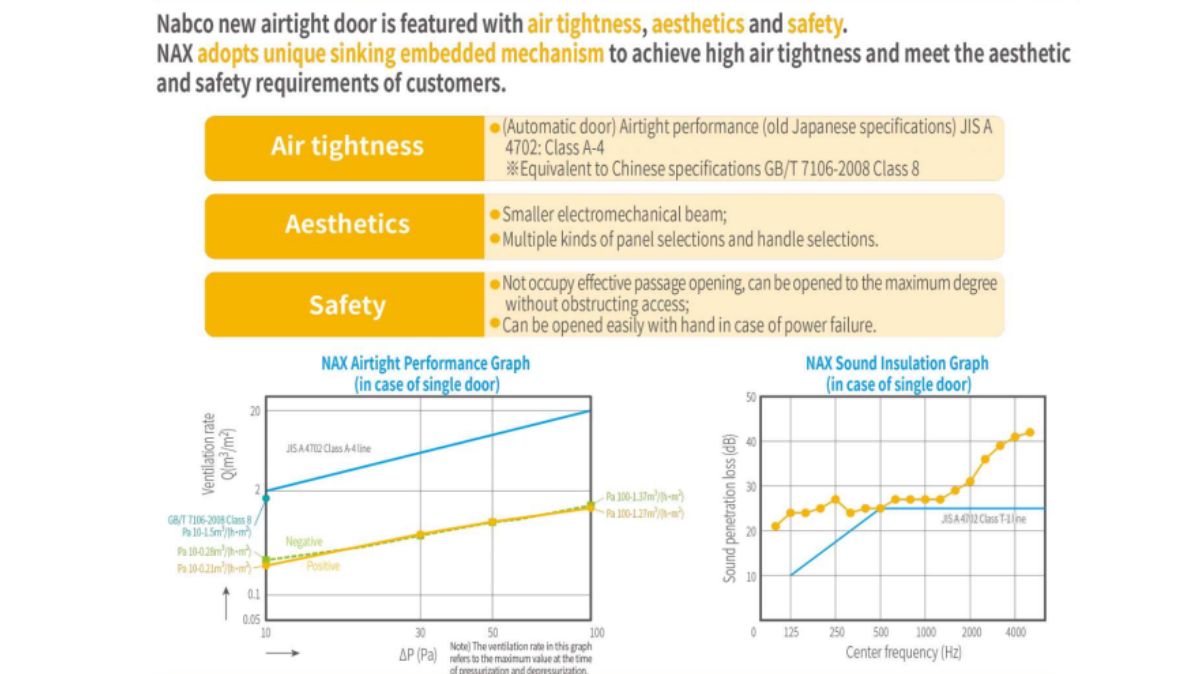
Achieves A-4 airtightness according to JIS A 4702
One of the key advantages of NABCO airtight doors is their ability to achieve A-4 airtightness in accordance with the Japanese JIS A 4702 standard.
This demonstrates that the door’s airtight performance has been verified through actual testing rather than relying solely on theoretical design calculations. For project owners, this provides an important technical basis for evaluating environmental control performance.
Specialized compression sealing technology
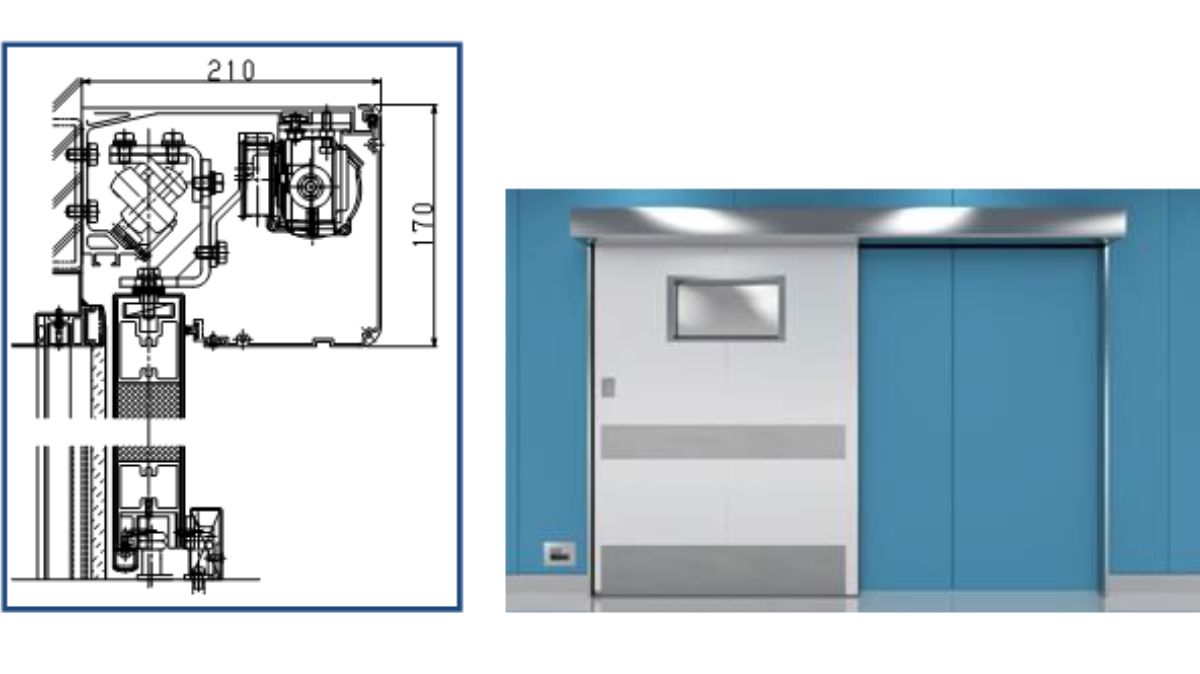
Unlike conventional automatic sliding doors that only move horizontally, NABCO airtight doors incorporate a dedicated compression sealing mechanism. When closing, the door panel not only slides into position but is also pulled tightly against the frame, significantly reducing gaps that could allow air leakage.
This is the core technology that enables high airtightness performance and long-term reliability.
Suitable for Airlock systems
In Airlock applications, doors must do more than provide airtightness; they must also work in conjunction with pressure-control systems. NABCO airtight doors can be integrated with Interlock systems, enabling coordinated operation between two doors and preventing simultaneous opening.
As a result, airflow between adjacent areas remains properly controlled, allowing the Airlock system to function according to its intended design.
Materials suitable for clean environments
NABCO automatic hospital doors offer various material options to meet different project requirements, including:
- Antibacterial HPL panels
- Corrosion-resistant stainless steel
- Vision glass panels
- Powder-coated aluminum
These materials facilitate cleaning, reduce dust accumulation, and support the frequent sanitation procedures required in hospitals and cleanroom facilities.
Reliable long-term operation
A door system is only truly effective if it can maintain airtight performance throughout years of operation.
NABCO airtight doors are specifically engineered for high-frequency usage environments. Thanks to their specialized design and stable operating technology, they deliver long-term performance while helping reduce maintenance costs for facility owners.
What should be considered when selecting an airtight door?
Rather than focusing solely on materials or appearance, project owners should evaluate an airtight door solution based on:
- Verified airtightness performance
- Compression sealing technology
- Ability to maintain room pressure
- Interlock integration capability
- Operational reliability
- Long-term maintenance costs
These factors directly impact the environmental control performance of the entire facility.

>>> See more: What is an Airlock? The role of airlock doors in cleanrooms and NABCO solutions
Conclusion
From the information above, it is clear that understanding what A-4 airtightness is involves more than simply knowing a technical specification. It is a key indicator of a door system’s ability to support environmental control. For operating rooms, ICUs, cleanrooms, pharmaceutical facilities, and Airlock systems, selecting doors with A-4 airtightness helps maintain stable pressure conditions, reduce cross-contamination risks, and improve operational efficiency.
With certified A-4 airtightness according to JIS A 4702, a specialized compression sealing mechanism, Interlock integration capability, and a design optimized for controlled environments, NABCO airtight doors have become a preferred entrance solution for hospitals, cleanrooms, and modern industrial facilities requiring stringent air-control and pressure-management performance.
Contact Sonha Auto for expert consultation on NABCO airtight door solutions tailored to the specific requirements of cleanrooms, operating rooms, and specialized facility applications.