In technical documents related to automatic doors especially hospital doors, operating room doors, and cleanroom doors—you will often encounter specifications such as A-4, T-1, or JIS A 4702. However, many people are unfamiliar with what these ratings mean and how they affect the performance of a door system. So, what is JIS A 4702, what performance criteria does it evaluate, and why is it considered one of the most important standards when selecting automatic doors for facilities requiring high levels of hygiene, airtightness, and environmental control? Let’s explore this topic with Sonha Auto.
What is JIS A 4702?
JIS A 4702 is a standard within the Japanese Industrial Standards (JIS) system, a widely recognized set of industrial standards used throughout Japan in construction and equipment manufacturing.
For pedestrian doors and automatic doors, JIS A 4702 specifies testing methods used to evaluate the actual performance of a door system before it is put into service. The standard assesses not only opening and closing functionality but also important factors such as safety, airtightness, sound insulation, and operational durability.
Simply put, when asking “What is JIS A 4702?”, it is a technical benchmark that enables project owners, consultants, and contractors to evaluate the real performance of a door system rather than relying solely on materials or marketing specifications.
What performance criteria does JIS A 4702 evaluate?
JIS A 4702 covers a variety of performance tests. For hospital doors, operating room doors, and cleanroom doors, the two most important criteria are typically airtightness and sound insulation performance.
| Performance index | Meaning |
| Air Permeability | Airtightness |
| Sound Insulation | Acoustic performance |
| Durability | Operational durability |
| Structural Performance | Structural stability |
| Safety | User safety |
Air permeability (airtightness)
Airtightness refers to a door’s ability to minimize air leakage through gaps when fully closed. This is especially important in operating rooms, ICUs, isolation rooms, laboratories, cleanrooms, and pharmaceutical manufacturing facilities, where air pressure and environmental conditions must be carefully controlled.
Under JIS A 4702, airtightness performance is classified into multiple levels. Among them, A-4 is one of the highest airtightness ratings for specialized door systems. This rating indicates that air leakage through the door is maintained at an extremely low level, helping preserve stable environmental conditions in areas with strict hygiene requirements.

Sound insulation performance
In addition to airtightness, sound insulation is another important performance criterion evaluated under JIS A 4702. Sound insulation measures how effectively a door system reduces sound transmission between spaces. This is particularly important in ICUs, recovery rooms, special treatment areas, and other healthcare environments that require a quiet atmosphere for patients.
Within the JIS A 4702 classification system, T-1 is a commonly specified sound insulation rating for hospital doors and other specialized door systems.

Why is JIS A 4702 important for hospital doors?
Hospital environments require more than reliable door operation. Door systems must also contribute to maintaining the environmental conditions required in different functional areas.
For operating rooms, ICUs, and isolation rooms, airtightness directly affects pressure control and sterile conditions. Meanwhile, sound insulation helps reduce noise, creating a more comfortable environment for patients while supporting medical staff concentration during treatment and procedures.
For this reason, performance ratings verified according to JIS A 4702 are often used as key technical criteria when selecting doors for hospitals, cleanrooms, and facilities with strict environmental control requirements.
Does JIS A 4702 evaluate doors or door materials?
This is one of the most common misunderstandings when people ask “What is JIS A 4702?” In reality, JIS A 4702 does not evaluate individual door materials. Instead, it evaluates the performance of the entire completed door system. This means that even high-quality materials alone cannot guarantee compliance if the door structure, sealing system, or operating mechanism is not properly designed.
Conversely, a door system that integrates suitable materials, door construction, and operating technology can deliver significantly better real-world performance. This is why modern healthcare facilities increasingly evaluate the overall performance of a door system rather than focusing solely on material selection.
How do NABCO automatic doors comply with JIS A 4702?
After understanding what JIS A 4702 is, the next question is how these requirements are applied in practice. As a Japanese automatic door manufacturer, NABCO develops a wide range of specialized solutions for hospitals, operating rooms, cleanrooms, and other facilities requiring strict environmental control. In addition to using materials suitable for healthcare environments, NABCO hospital automatic doors are engineered to meet demanding airtightness, sound insulation, and operational performance requirements in line with JIS A 4702.
A-4 airtightness performance
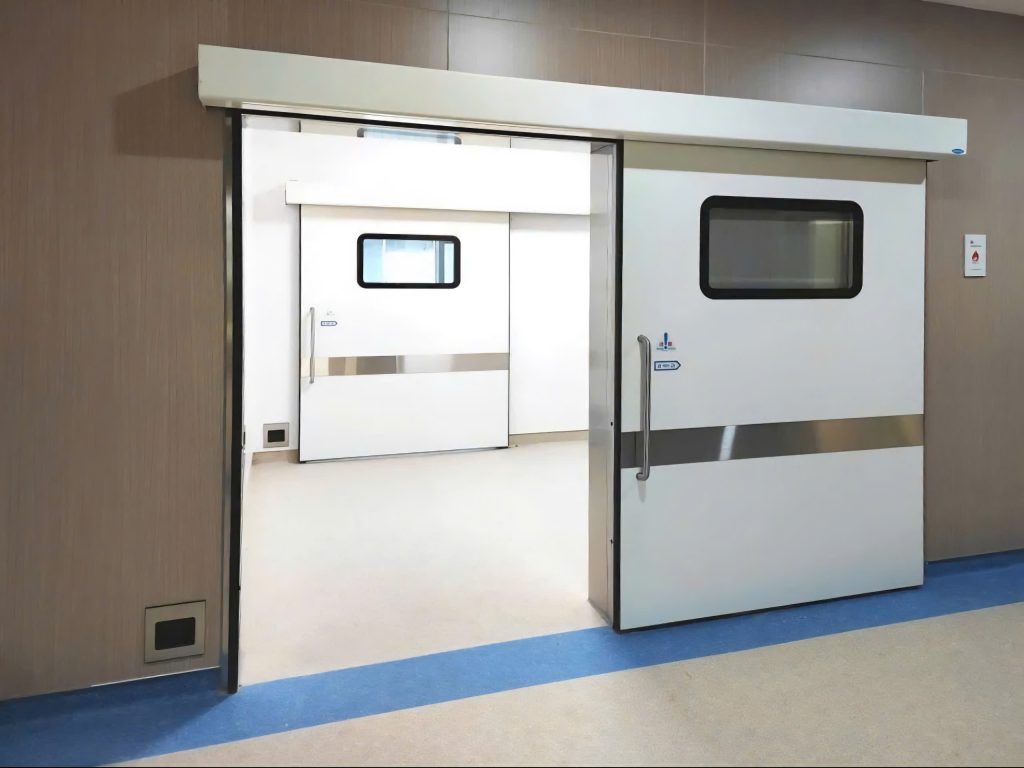
NABCO airtight door systems utilize a specialized sealing mechanism. When the door closes, the leaf not only slides into position but is also pressed tightly against the frame through an airtight gasket system, minimizing gaps and reducing air leakage.
Thanks to this design, many NABCO airtight door models achieve A-4 airtightness performance according to JIS A 4702, making them suitable for operating rooms, ICUs, isolation rooms, and pressure-controlled environments.
T-1 sound insulation performance
In addition to airtightness, selected NABCO door models achieve T-1 sound insulation performance under JIS A 4702, helping reduce sound transmission between spaces and creating a quieter environment for both patients and healthcare professionals.
Materials suitable for healthcare environments
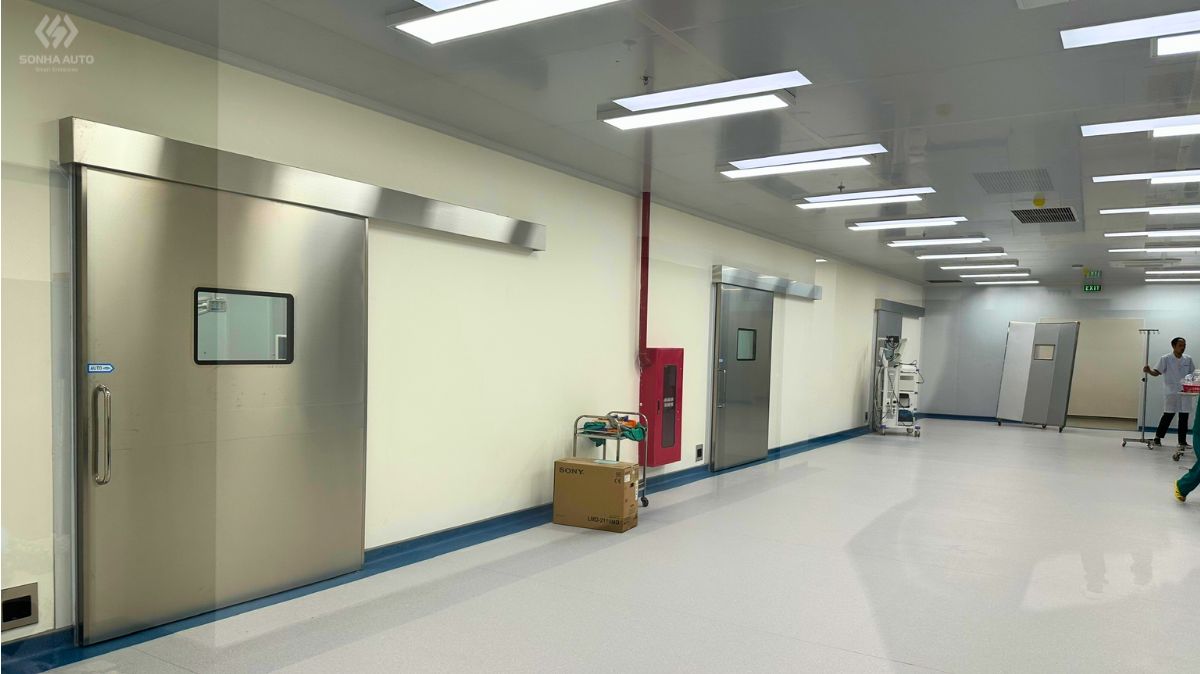
NABCO hospital doors can be finished with various materials, including: HPL (High Pressure Laminate), stainless steel, aluminum, glass. These materials offer excellent durability, hygiene performance, and resistance to frequent cleaning and disinfectant chemicals commonly used in healthcare facilities.
X-ray protection and touchless operation
For diagnostic imaging rooms, NABCO doors can be equipped with X-ray shielding layers to meet radiation safety requirements. In addition, the systems can integrate with sensors, touchless switches, and specialized control devices to minimize hand contact with door surfaces, supporting infection control strategies within healthcare facilities.
Touchless automatic operation
Beyond JIS A 4702 performance criteria, NABCO also provides touchless operating solutions through sensors and dedicated activation devices. Reducing physical contact with door surfaces helps improve infection control and aligns with modern hospital design trends.
>>> See more: What is JIS A 4722? Key safety criteria when selecting automatic doors
Conclusion
As discussed above, understanding what JIS A 4702 is involves more than learning about a technical standard. It is an important benchmark for evaluating airtightness, sound insulation, and the real-world operating performance of door systems. For hospitals, operating rooms, cleanrooms, and other facilities requiring strict environmental control, selecting doors that meet JIS A 4702 criteria can significantly improve operational quality, environmental stability, and overall safety.
Contact Sonha Auto for professional consultation on NABCO automatic door solutions tailored to your specific application requirements.