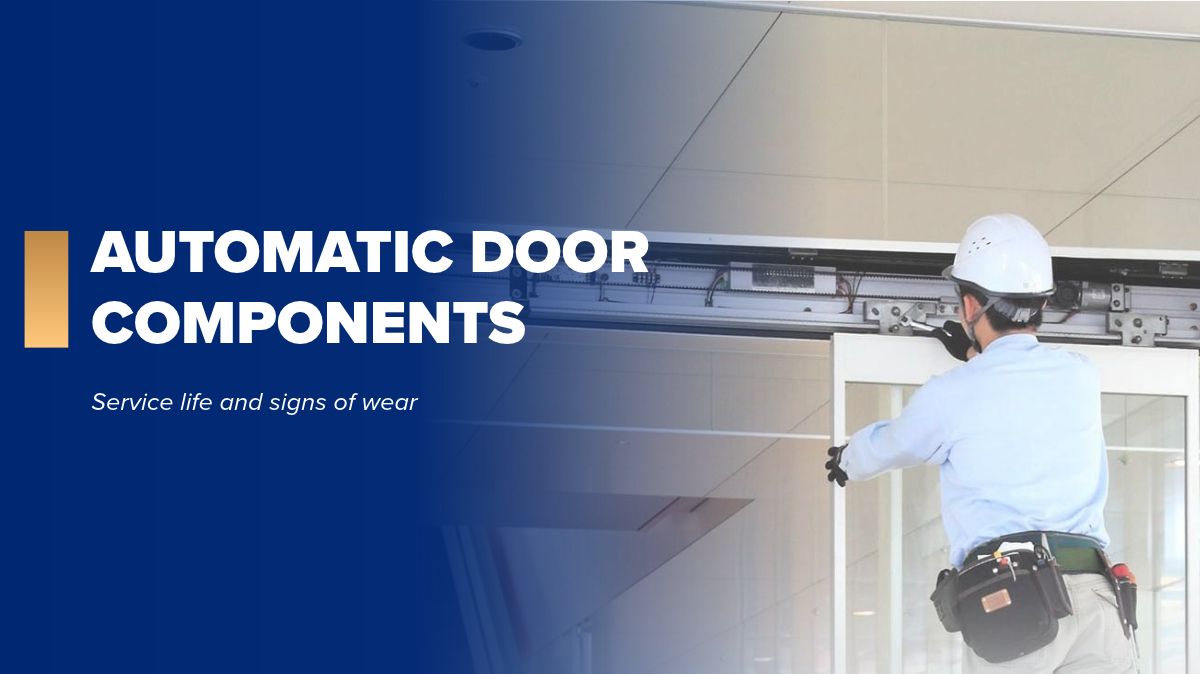
In today’s era of automation, automatic doors have become an essential standard in public buildings such as hospitals, shopping malls, and office complexes. Along with convenience, operational safety is always the top priority. When learning about automatic doors, many people often wonder: what is an automatic door safety sensor and why such a small component plays such an important role? In reality, it serves as the “shield” that protects users and equipment from collisions and accidents. This article explains the definition, working principles, common types of safety sensors, and how to choose the optimal safety solution for automatic doors.
What is an automatic door safety sensor?
Today, automatic doors are increasingly used in high-traffic locations. They offer faster, more hygienic movement—especially in medical environments. However, without a control mechanism and emergency stop function, automatic doors may cause collisions or unintended accidents. That is why understanding what is an automatic door safety sensor is essential for any investor, contractor, or facility manager.
In simple terms, an automatic door safety sensor is an electronic or optical device installed in the operating area of the door. It monitors and detects people or objects passing through, then controls the door’s opening and closing actions. When an obstacle is detected, the sensor immediately sends a signal to the central controller to stop, reverse, or reopen the door to ensure safety and prevent dangerous collisions.
The key role of safety sensors is to guarantee absolute protection for users. They prevent the door from closing when someone or something is standing or moving within the doorway, or trigger an immediate stop or reversal when an obstacle is detected.
Unlike standard activation sensors such as radar—which detect motion from afar to open the door—safety sensors focus primarily on protecting users after the door has opened and before it closes.

How safety sensors work
The basic operating principle is to detect any person or object in the hazardous zone and send a signal to the door controller. The controller then commands the motor to open, stop, or reverse depending on the situation.
- Object or human detection: Sensors use infrared beams, radar waves, or photoelectric light to continuously scan the danger zone.
- Signal transmission: When the beam is blocked or motion is detected, the sensor instantly sends an electrical signal.
- Integrated control system: The signal goes to the motor controller (PLC or dedicated door controller).
- Immediate reaction: The controller processes the signal and orders the motor to stop or reverse. This happens within milliseconds—faster than human movement.
Common types of automatic door safety sensors
To fully understand what is an automatic door safety sensor, here are the most widely used types:
Photoelectric sensors
These use low-mounted light beams to detect obstacles. If the beam is interrupted, the door stops and remains open. They are widely used in hospitals, hallways, and operating rooms due to high precision and stability.
Infrared sensors
Detect heat or nearby motion. Ideal for high-traffic areas such as hospital corridors, office entrances, airports, and malls. They help the door open at the right moment and reduce energy loss.
Radar sensors
Emit radar waves to detect fast or distant movement, unaffected by light or minor obstructions. While mainly used for activation, advanced models can detect fast-moving objects entering the doorway. Suitable for exterior sliding doors or main entrances.
Pressure sensors/safety mats
Installed on the floor. When pressure is detected, the door stops or reverses. Ideal for clean rooms, operating rooms, or environments where optical sensors may be affected (dust, vapor).

Why automatic door safety sensors are essential?
Automatic door safety sensors are indispensable due to the following reasons:
- Prevent collisions: Protect elderly people, children, and wheelchair users from being struck or trapped.
- Protect equipment and property: Prevent damage to doors, medical carts, stretchers, forklifts, or goods.
- Meet international safety standards (EN 16005, TCVN): Many countries legally require compliant safety sensors, especially in public spaces.
- Improve user experience: Doors operate smoothly without causing danger or interruption.
Real-world applications
- Hospitals: Photoelectric and infrared sensors for operating rooms, hallways, and emergency units.
- Offices, malls, airports: Protect door edges and elevator entrances in high-traffic areas.
- Factories & warehouses: Radar and photoelectric sensors for loading docks and workshop doors to protect forklifts and workers.

How to choose the right safety sensor
When evaluating what is an automatic door safety sensor and selecting one, consider:
- Type of door: sliding, swing, or revolving
- Installation environment: indoor, outdoor, clean room, operating room
- Detection distance: must detect people and carts early enough
- Object type: hospital stretchers, wheelchairs, equipment, or crowds
- Safety standards: EN 16005, ISO, TCVN
- Brand & quality: choose reputable suppliers such as Optex or NABCO
Maintenance tips for automatic door safety sensors
To keep sensors operating reliably:
- Regular inspections: Every 6 months to evaluate sensitivity and response time.
- Cleaning: Remove dust, moisture, and dirt to maintain detection accuracy.
- Signal & sensitivity testing: Use professional tools to measure signal strength and response speed.
- Professional servicing: Only certified technicians should perform adjustment or replacement.
>>> See more: What is an automatic window? Operating principle, structure, and popular types in 2025
Conclusion
By understanding what is an automatic door safety sensor, you will see that it is not only a protective device but also a vital component for smart, safe, and professional facility operation. Safety sensors protect people and equipment while ensuring doors meet operational standards under all conditions.
Choosing the right sensor increases door durability, reduces risks, minimizes maintenance costs, and enhances user experience. Investing correctly from the start is the key to achieving optimal performance and safety.
👉 Contact Sonha Auto today for expert consultation on safety sensors and automatic door systems that meet international standards!