In automatic sliding door systems, users often pay more attention to the motor or sensors, while overlooking a seemingly minor component that directly affects smoothness, durability, and operational stability—the door track. In practice, if the track has issues, the entire door system may operate inefficiently, generate noise, or even cause interruptions. So, what is an automatic door track, how is it structured, and when should it be replaced? The following article will help you understand from a technical perspective and provide key considerations when selecting and replacing automatic door components.
What is an automatic door track?
To clearly understand what is an automatic door track, it can be considered the component that guides the entire movement of the door leaf. The track is typically installed inside the header (the technical housing above the door), where rollers move along a fixed path to slide the door panels sideways.
Unlike swing doors, automatic sliding doors require high precision during movement. Therefore, the track is not just a “guide rail” but a critical factor determining smoothness, alignment, and system stability. Within automatic door accessories, the track is one of the core components, directly connected to rollers, belts, and the motor. If the track is of poor quality, even high-end components cannot deliver optimal performance.
Structure of an automatic door track
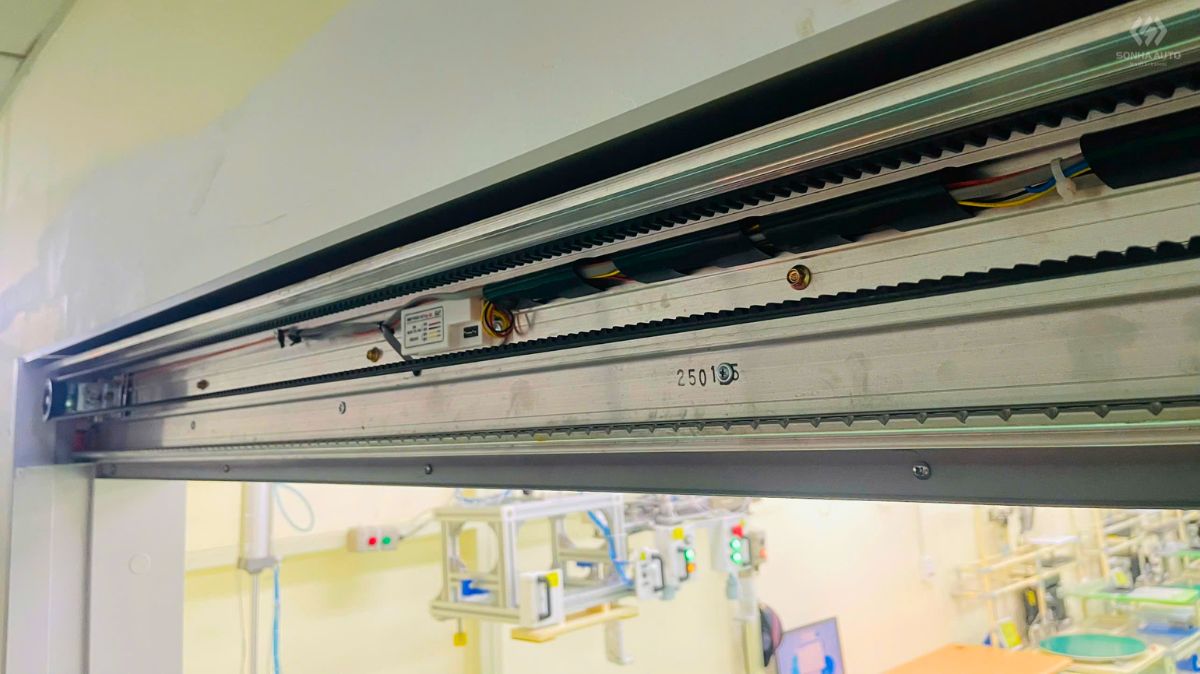
To better understand what is an automatic door track, it is essential to examine its detailed structure within the door system.
A standard track system typically includes the main rail, contact surface, and connection components with the rollers. The rail is usually made from extruded aluminum profiles, offering high rigidity to support the door weight. The contact surface plays a crucial role in ensuring smooth roller movement. In high-end systems, this surface is often coated with stainless steel or anti-wear materials to reduce friction and extend lifespan.
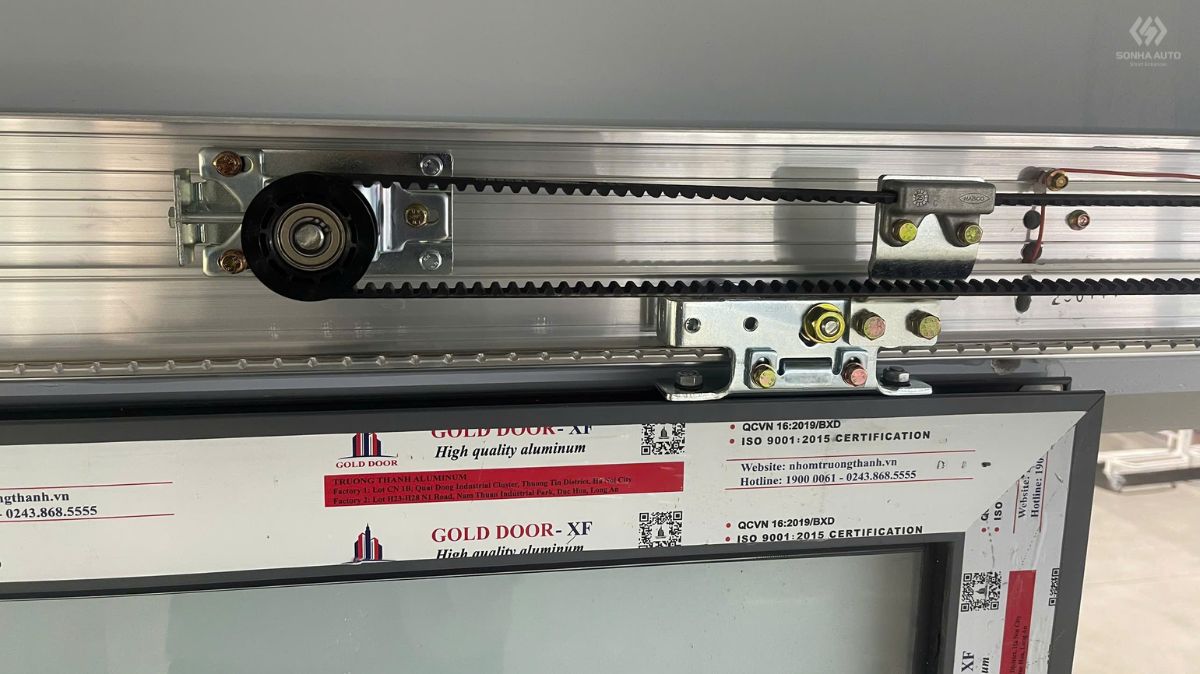
Additionally, the track operates in synchronization with rollers and the drive belt. When the motor transmits motion, the belt pulls the door panels, while the track ensures stable and precise guidance. This coordination enables smooth operation, especially in high-traffic environments such as hospitals, airports, and shopping malls.
Materials of automatic door tracks and their impact on durability
One of the most important factors when evaluating what is an automatic door track lies in its material. The material not only affects durability but also determines operational smoothness.
Currently, tracks are commonly made from extruded aluminum, which is lightweight, rigid, and corrosion-resistant. However, for high-demand projects, tracks are often reinforced with stainless steel layers or anti-wear coatings to enhance durability. In certain cases, full stainless steel tracks are used, particularly in harsh environments or areas requiring high hygiene standards such as hospitals and cleanrooms.
Differences in materials directly impact the lifespan of the door system. High-quality tracks reduce friction, minimize roller wear, and maintain long-term stability. In contrast, low-quality tracks are prone to wear, deformation, and operational issues.
Functions of the track in automatic door systems
So, what is the function of an automatic door track? Within an automatic glass door system, the track performs several critical roles:
- Guiding movement: Ensures the door panels move along the correct path, preventing misalignment or vibration
- Maintaining system stability: Especially important for large or heavy doors, as the track distributes load evenly and reduces stress on the motor and other components
- Reducing friction and noise: A well-finished track surface allows rollers to move smoothly, providing a quieter and more comfortable user experience
In essence, the track is the “backbone” of an automatic sliding door system, directly influencing long-term performance.
Common types of automatic door tracks
Depending on usage requirements, automatic door tracks are available in different types.
- Standard tracks: Suitable for medium-traffic environments such as offices or retail stores
- Heavy-duty tracks: Designed for large door systems or high-frequency usage
In addition, premium tracks often feature anti-wear coatings or specialized materials to extend lifespan. These are ideal for demanding environments such as airports and hospitals.
Selecting the right track not only ensures stable operation but also significantly reduces long-term maintenance costs.

Signs of a damaged automatic door track
Over time, door tracks may deteriorate. Common signs include loud noise during operation, reduced smoothness, or noticeable vibrations. If the door becomes misaligned or fails to close properly, the track may be worn or deformed. These are clear indicators that the system requires inspection and maintenance.
Early detection of track issues helps prevent more serious damage and extends the lifespan of the entire door system.
When should an automatic door track be replaced?
In many cases, maintenance alone is insufficient to address track deterioration. At this point, replacement becomes necessary.
The track should be replaced when the surface is severely worn, warped, or no longer straight. If the door frequently malfunctions despite maintenance, it is also a sign that the track no longer meets operational requirements. Timely replacement not only restores performance but also protects other components such as rollers and motors from damage.
Notes when replacing an automatic door track
When replacing an automatic door track, compatibility with the entire system is critical. Each door type has specific requirements regarding size, load capacity, and track structure. Using an incompatible track may lead to operational issues or reduced lifespan. Therefore, it is recommended to use genuine automatic door components to ensure system synchronization.
In addition, installation should be carried out by experienced technicians to ensure precision and safe operation.

Genuine track and automatic door component solutions
As the demand for automatic doors continues to grow, selecting high-quality components has become increasingly important. Genuine tracks not only ensure durability but also maintain stable operation over time. Professional automatic door providers often offer integrated solutions from tracks and rollers to motors helping optimize performance and reduce maintenance costs.
If your door system is showing signs of instability, inspecting and replacing components with genuine solutions from Sonha Auto is a practical approach to ensure long-term durability and efficiency.
>>> See more: What is an automatic door control board? The role of the control board in an automatic door system
Conclusion
From the analysis above, understanding what is an automatic door track is not just a conceptual question but directly related to the performance of the entire door system. From structure and materials to functionality, the track plays a foundational role in ensuring smooth, stable, and durable operation. Choosing the right track and replacing it at the appropriate time will help optimize costs and minimize operational risks over time.