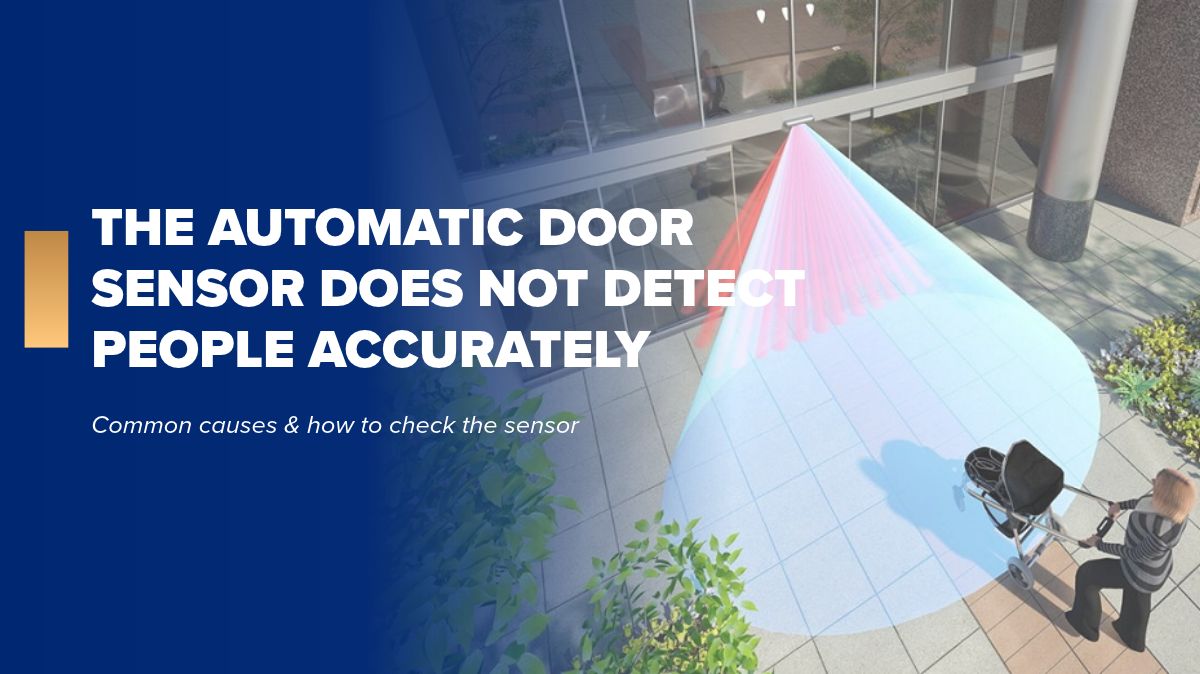
When selecting automatic doors for a project, many investors tend to focus on cost, design, or brand, while overlooking a more critical factor: operational safety. Meanwhile, automatic doors are used continuously every day, directly impacting user experience and safety. Therefore, the question what is JIS A 4722 is receiving increasing attention, especially in modern projects that require high technical and safety standards. So, what role does this standard play in evaluating an automatic door system? Let’s explore the key safety criteria for choosing automatic doors with Sonha Auto in the article below.
What is JIS A 4722?
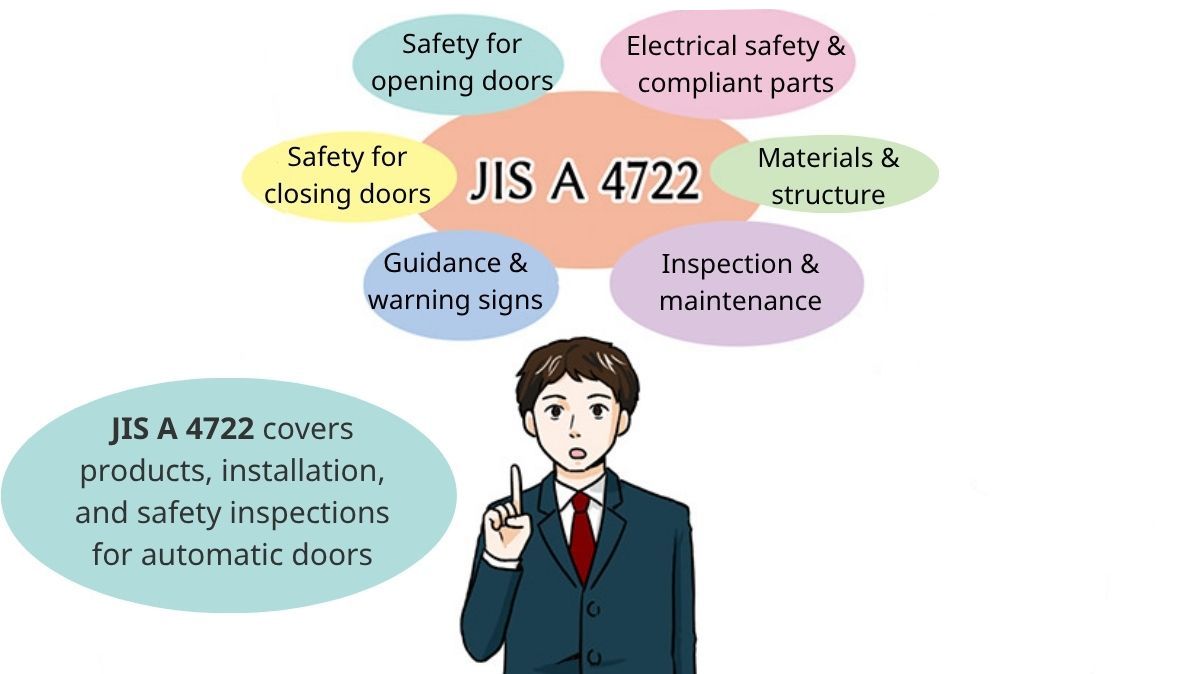
Simply put, JIS A 4722 is Japan’s national safety standard for automatic doors, specifically applied to pedestrian automatic door systems to ensure safe operation in all real-world usage scenarios. This standard is built on the principle that automatic doors must not only function correctly but also minimize risks such as collisions, finger entrapment, or unexpected incidents—especially for vulnerable users like children, the elderly, or people with disabilities.
Understanding what JIS A 4722 is not only helps investors choose the right product but also serves as a foundation to ensure long-term safe and sustainable operation of the project.
Potential risks if automatic doors do not meet safety standards
In today’s market, it is not difficult to find automatic door systems with similar designs. However, the biggest difference between brands lies in their technology and the level of safety each system provides.
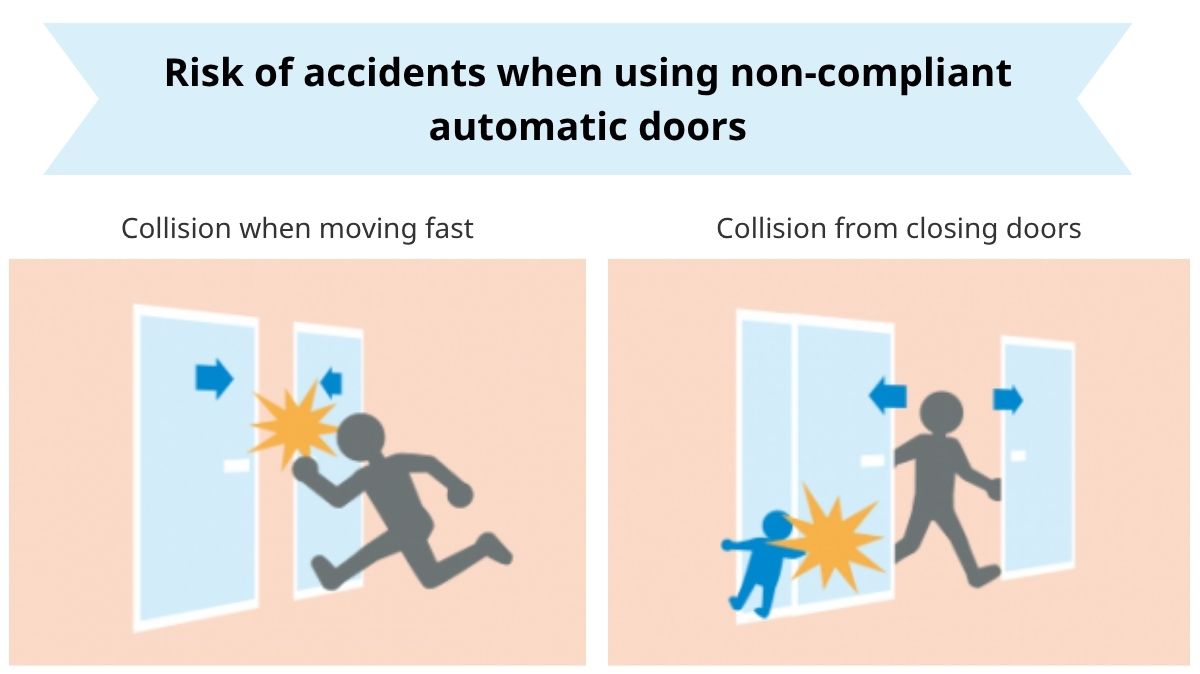
If automatic doors do not meet proper safety standards, risks during operation can occur unexpectedly. These may include finger entrapment at door gaps, collisions during opening/closing, or delayed door response when users move quickly. In high-traffic environments, such incidents are even more likely—especially during crowding or continuous movement. In facilities such as hospitals, shopping centers, airports, or office buildings—where hundreds or thousands of people pass through daily—ensuring automatic door safety is no longer optional, but mandatory.
Therefore, understanding what JIS A 4722 is goes beyond theory; it becomes a crucial factor in evaluating and selecting a truly safe and reliable door system for any project.
JIS A 4722 – The safety foundation for modern automatic door systems
Issued in 2017 in Japan, JIS A 4722 marked a significant milestone in the automatic door industry by standardizing safety requirements into a clear and mandatory framework. The core of this standard is its focus on all user groups in real-world scenarios—from children and the elderly to people with disabilities. This means that a pedestrian automatic door system must not only operate reliably but also ensure safety in even the most unpredictable situations.
JIS A 4722 focuses on three key factors: accurate motion detection, minimizing collisions or entrapment, and maintaining safe operation under all conditions. These elements form the foundation of a truly safe automatic door system—one that not only performs efficiently but also comprehensively protects users.
Core requirements of JIS A 4722
To meet this safety standard, an automatic door system cannot rely on a single factor but must be built with multiple synchronized layers of protection.
First is the control of hazardous points such as door gaps or the interface between the leaf and frame—areas prone to finger entrapment. At the same time, minimizing collisions during opening and closing is essential, especially in crowded environments with continuous movement. However, the most critical component lies in the automatic door sensor system—the “brain” that detects motion and triggers timely responses. A precise sensor system ensures smooth operation and significantly reduces dangerous situations.
In addition, the standard requires doors to handle faults effectively, ensuring the system always returns to a safe state. This shows that automatic door safety standards are not just a set of criteria but a comprehensive control mechanism covering both technology and operation.

NABCO NATRUS automatic door – A solution compliant with JIS A 4722
Among smart entrance solutions on the market, the NABCO NATRUS automatic door stands out as a system designed to fully meet the requirements of JIS A 4722 while enhancing real-world user experience.
The most distinctive feature of NABCO lies in its sensor technology. With a denser array of infrared detection points compared to conventional systems, NATRUS doors can accurately detect movement over a wider area, even in complex situations such as fast-moving users, angled approaches, or children with lower height.
As a result, the system not only meets automatic door safety standards but also provides peace of mind for users in all real-world scenarios. This is why NABCO automatic doors are a top choice for projects with high safety and operational requirements.

Safety self-check mechanism
One of the features that sets NATRUS apart is its ability to perform automatic safety checks during every operation cycle. Each time the door opens or closes, the system scans the status of sensors and related components. If any abnormality is detected, the door immediately switches to a safe mode or stops operating. This mechanism ensures the system always complies with safety standards while minimizing potential risks during use.
As a result, the NABCO NATRUS automatic door is not just a device, but a proactive safety solution capable of self-protection and risk control.
CAN technology
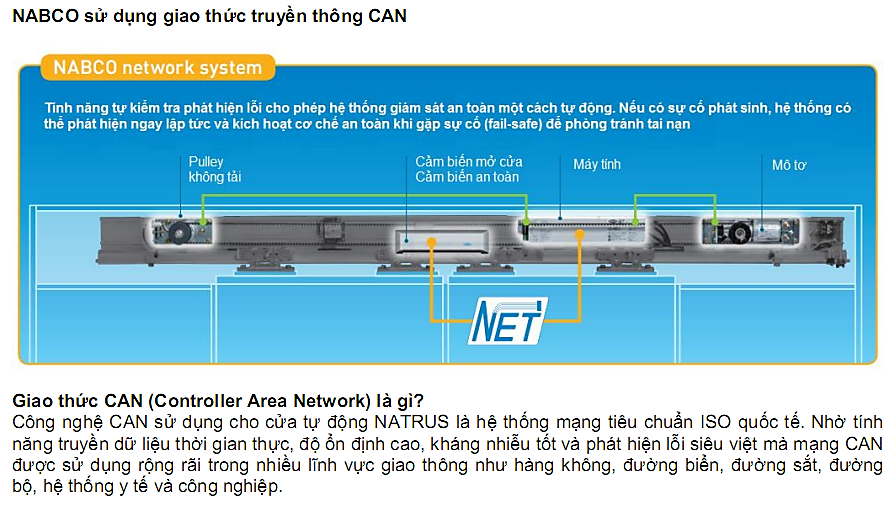
Beyond sensors, NABCO automatic doors are integrated with CAN network technology—a platform widely used in industries requiring high precision and reliability such as automotive, aviation, and medical equipment. With real-time monitoring capabilities, the system can quickly detect faults and activate fail-safe mechanisms immediately. This ensures full control of the door system in all situations, even during unexpected incidents.
With this technological foundation, the automatic door system not only operates reliably but also achieves a higher level of safety, suitable for modern projects.
Mechanical durability
In addition to technology, mechanical factors also play a crucial role in creating a safe automatic door system. NATRUS doors feature improvements such as plastic-coated rollers for smooth operation, anti-derailment guide rails, and high-durability materials that reduce wear over time.
These details not only ensure long-term stable operation but also maintain safety even in cases of impact or unexpected incidents.
Why prioritize automatic doors compliant with JIS A 4722?
Once you understand what JIS A 4722 is, it becomes clear that this is not just a technical benchmark but a decisive factor in the overall quality and safety of an automatic door system. Choosing doors that meet this standard offers clear benefits such as reducing accident risks, ensuring stable operation, and enhancing the overall value of the project.
Especially for projects with strict safety requirements, using the NABCO NATRUS automatic door is not only appropriate but also an optimal long-term solution.
>>> See more: Automatic doors safe for children – An optimal solution with NABCO NATRUS doors
Conclusion
In the context of modern buildings increasingly prioritizing user experience and safety, understanding what JIS A 4722 is helps investors make more informed decisions. Instead of focusing solely on initial costs, investing in a safe automatic door system like the NABCO NATRUS automatic door delivers long-term value—from operational efficiency to user peace of mind.
Contact Sonha Auto today for consultation and implementation of NABCO NATRUS automatic door solutions that meet high safety standards and are optimally suited for your project.