In automatic window systems, the motor determines the opening and closing mechanism and the window’s operating performance. However, different window types have different structures, dimensions, and usage requirements, so not every motor is suitable for every project. What types of automatic window motors are available, and what criteria should be considered when selecting one? In this article, Sonha Auto explores the characteristics of each type and the key technical specifications to consider.
What is an automatic window motor?
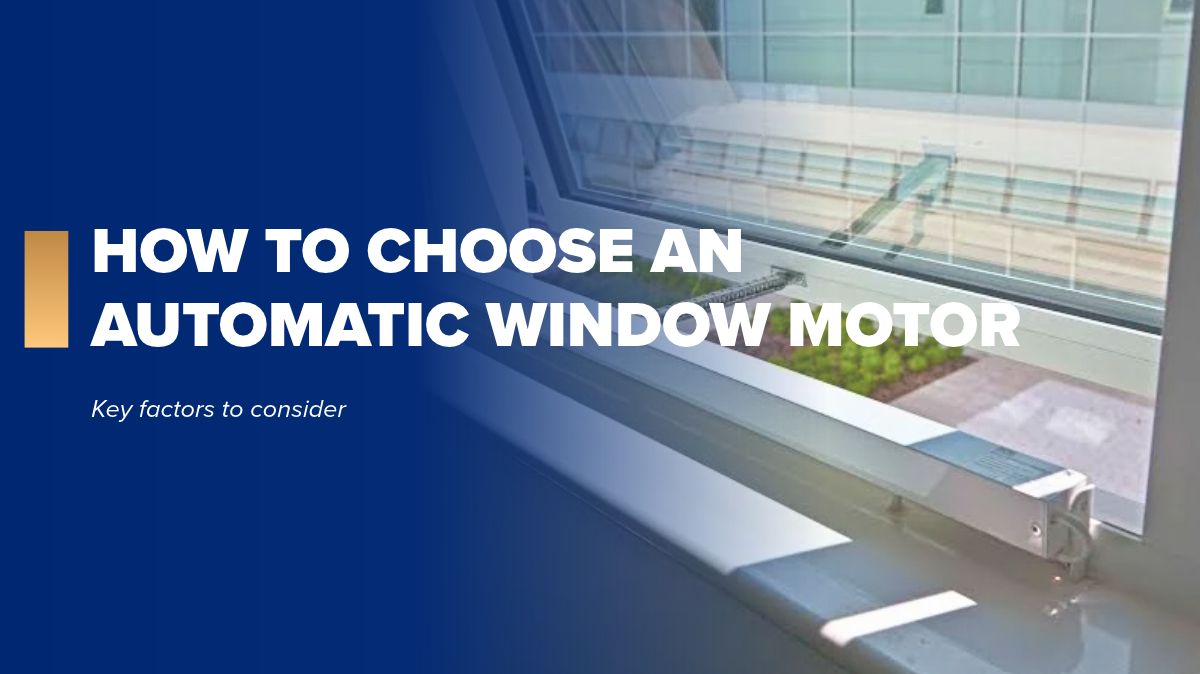
An automatic window motor is an electrically powered device that opens and closes a window through a drive mechanism. Depending on the configuration, the motor can be operated using a switch, a controller, or a central control system.
These devices are used in buildings that require natural ventilation, remote operation of windows installed at height, or automatic smoke ventilation. Depending on the window structure and application requirements, users can choose from different types of motors with different drive mechanisms.
Common types of automatic window motors
Single-chain automatic window motor
The single-chain automatic window motor uses a metal chain to push or pull the window sash. When the window closes, the chain retracts into the motor housing, providing a relatively compact design that is convenient to install on the window frame.
Key features:
- Compact design, suitable for installations with limited space.
- Can be used with top-hung or side-hung windows when compatible with the connecting hardware.
- The thrust force and stroke must be suitable for the window sash dimensions and weight.
This type is commonly considered for windows with suitable loads and frequent opening and closing requirements. For smoke ventilation applications, the selected model must meet the technical requirements of the system.

Double-chain automatic window motor
The double-chain window opener uses two chains to transmit force to the window sash according to the system design. Using two drive connection points can help distribute force across the sash more appropriately for certain window configurations.
Key features:
- May be suitable for larger windows when the motor specifications meet the application requirements.
- Supports force transmission through two connection points, depending on the design.
- Requires correct alignment and synchronized movement in accordance with the manufacturer’s instructions.
When selecting a double-chain automatic window motor, do not assume that it always provides a higher load capacity than a single-chain motor. Operating performance also depends on thrust force, stroke, window construction, and the specifications of the individual model.

Electric push rod window motor
The electric push rod window opener uses a linear drive mechanism to push or pull the window sash. Depending on the design, the mechanism may use a lead screw and push rod to provide the required opening stroke.
Key features:
- Can provide different thrust forces and strokes depending on the model.
- Worth considering for roof windows, skylights, or windows with specialized configurations.
- Dust and water resistance, as well as operating conditions at the installation location, must be checked.
This type of automatic window motor should be selected based on sash load, stroke length, and the arrangement of connection points. Load capacity cannot be determined from the term “push rod” alone.

Swing arm window opener
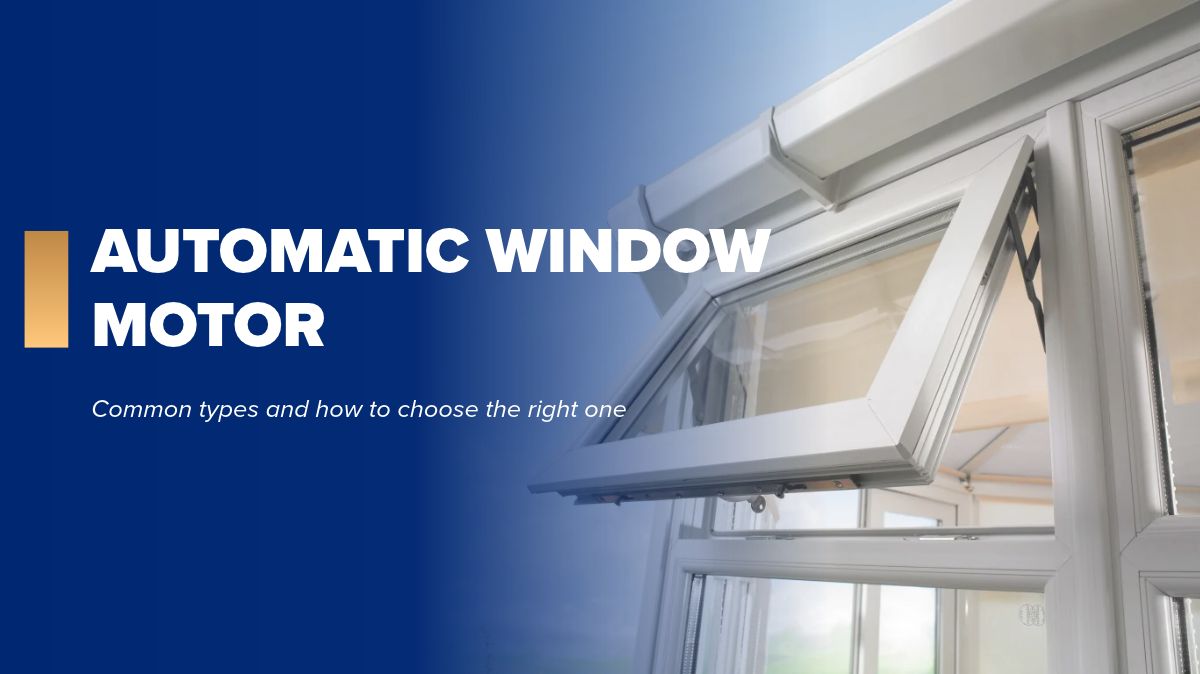
The swing arm window opener uses a linkage arm or joint mechanism to rotate the window sash around its hinges. When the motor operates, the drive mechanism acts on the sash to open or close it to the designed angle.
Key features:
- Suitable for hinged windows with compatible hinge configurations.
- Can accommodate different opening angles depending on the installation configuration.
- Requires consideration of the motor mounting position, the swing arm’s movement clearance, and wind resistance.
This type is worth considering for projects using hinged windows with specific opening-angle requirements. Equipment selection should be based on the installation layout and the manufacturer’s specifications.

How to choose the right automatic window motor
Identify the opening type and window construction
First, determine whether the window is top-hung, side-hung, or a roof window or skylight with a corresponding opening mechanism. Each window type has different connection points and force transmission directions, which determine the type of automatic window motor that can be used.
Check the window sash dimensions and weight
The dimensions and weight of the sash affect the force required to open and close the window. Other factors include hinge position, friction, wind resistance, and actual installation conditions. Do not select a motor based solely on window width or height. For large sashes or installations exposed to strong winds, appropriate calculations are required.
Compare thrust force, pulling force, and stroke
Three important specifications to consider when selecting an automatic window motor are:
- Thrust and pulling force: The force the drive mechanism can generate to open or close the sash.
- Opening stroke: The distance traveled by the drive mechanism, which affects how far the window can open.
- Opening angle: Determined by the window type, motor mounting position, and linkage geometry, rather than by stroke alone.
These specifications must be checked against the technical documentation for each model to ensure that the equipment meets the intended application requirements.
Check the power supply and control system
The supply voltage, compatible controller, and wiring arrangement must be confirmed before installation. Depending on the application, the window system may be operated by a switch or connected to a central control system.
If the motor is used for automatic smoke ventilation, its compatibility with the control panel, fire alarm signals, and the system’s power supply requirements must be verified against the approved design.

Consider installation conditions and maintenance
For roof windows, skylights, or windows installed outdoors, check the equipment’s dust and water resistance, operating temperature range, and corrosion resistance.
In addition, opening and closing frequency, duty cycle, and accessibility for maintenance also affect motor durability. Selecting the right type of automatic window motor from the outset helps reduce the risk of overloading and unstable operation.
It is also important to note that not every automatic window motor is suitable for smoke ventilation applications. In addition to drive force and opening stroke, compatibility with the control panel, fire alarm signals, and the technical requirements applicable to the system must be considered.
Selection must be based on the project’s design documentation and the relevant codes and standards. Compliance with fire prevention and firefighting requirements should not be assessed solely on the basis of motor power or thrust force.
>>> See more: Fire safety standards for smoke exhaust windows and common mistakes during installation
Sonha Auto – Consultation on automatic window motor solutions
Every project has specific requirements for window construction, load, opening stroke, and control methods. Therefore, selecting an automatic window motor requires consideration of the equipment’s technical specifications and the actual installation conditions.
Sonha Auto provides automatic smoke ventilation window solutions featuring single-chain, double-chain, electric push rod, and swing arm window openers. Depending on each project’s requirements, customers can receive advice on selecting equipment suitable for the window construction and intended application.
Contact Sonha Auto for consultation on automatic window solutions that meet your project’s technical requirements.