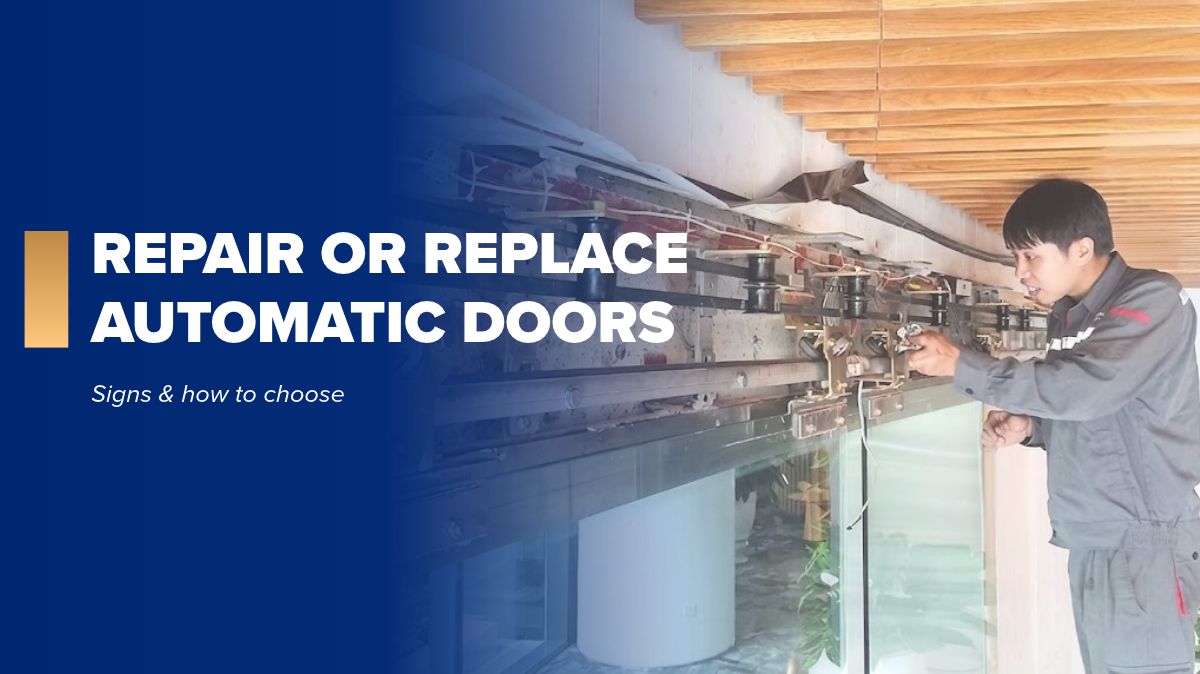
In modern buildings in Vietnam such as shopping malls, hospitals, airports, and office buildings, automatic doors operate at extremely high frequency every day. However, a common reality is that many operators only start paying attention to the door system when failures occur. This not only increases repair costs but also leads to unwanted operational disruptions. Especially under Vietnam’s hot, humid, and rainy climate, with high dust and humidity levels, the lifespan of automatic door components can deteriorate faster than expected if they are not properly maintained and replaced at the right time. Therefore, clearly understanding When should automatic door components be replaced is the key solution to extending equipment lifespan, optimizing maintenance costs, and ensuring absolute safety for users.
Lifespan of automatic doors and key wear stages
A very common misconception is that components only need to be replaced after they fail. However, in engineering—especially for electromechanical systems like automatic doors this mindset carries significant risks.
The lifespan of automatic doors is typically analyzed using the failure rate curve model (Bathtub Curve) to determine the exact timing for intervention. It consists of three distinct stages:
- Initial stage: Failures mainly arise from installation errors or manufacturing defects. This is when adjustments and recalibration are required.
- Stable stage: The system operates smoothly with minimal faults, achieving optimal performance.
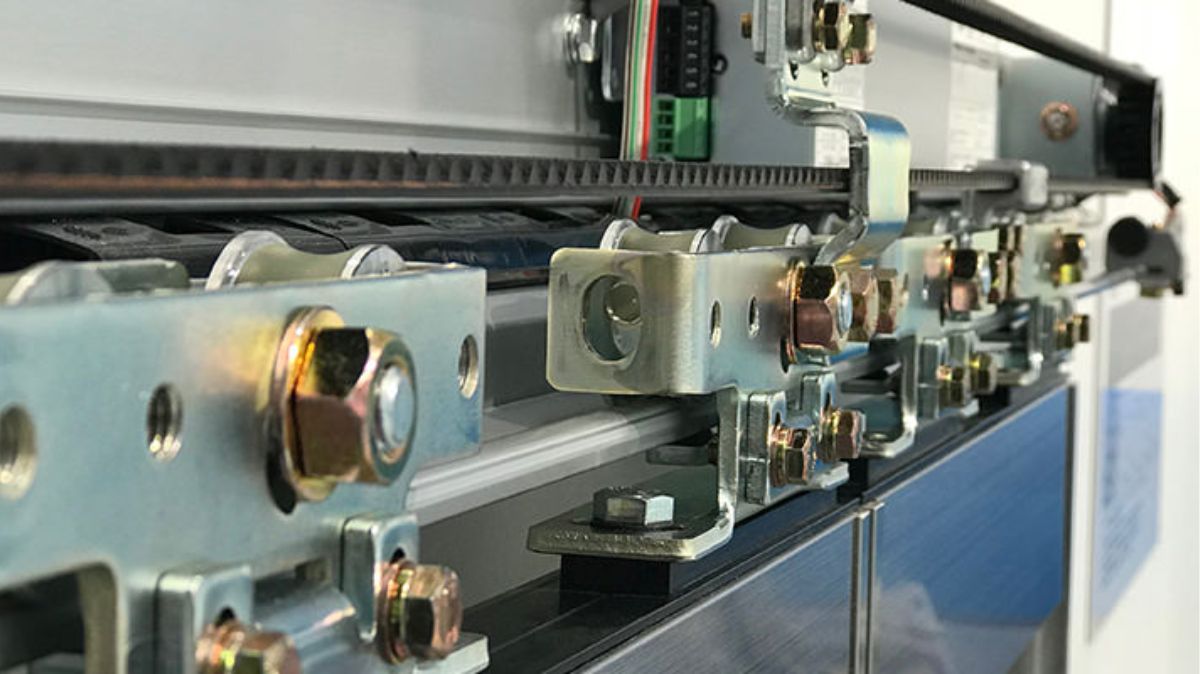
- Wear-out stage: Components (rollers, belts, motors) begin to degrade. Failure frequency increases sharply, noise appears, and safety responsiveness declines.
The key point is not to wait until the door completely stops operating before replacing components. The optimal timing for intervention is at the end of stage 2, just before entering the wear-out stage. This is the approach adopted by high-standard projects where operational stability and safety are top priorities.
Factors directly affecting automatic door lifespan in Vietnam
The lifespan of automatic doors is not a fixed theoretical number—it heavily depends on the operating environment. In Vietnam, several environmental and operational factors can accelerate component degradation:
- High operating frequency: In facilities such as airports, hospitals, and shopping malls, automatic doors may operate continuously with millions of cycles per year. This directly impacts motors, rails, and sensor systems.
- Hot and humid climate: High temperatures, humidity, and fine dust are typical in Vietnam, directly affecting electronic and mechanical components, especially sensors and control boards.
- Specific installation environments: Coastal areas, high-wind zones, or industrial dust environments can accelerate wear of rails, rollers, and moving parts.
- Maintenance practices: Systems that undergo proper periodic maintenance according to standards have significantly longer lifespans than those without regular inspections.
Therefore, determining When should automatic door components be replaced cannot rely solely on years of use but must consider actual operating frequency and environmental conditions.

Recommended timing for replacing automatic door components
Based on real operational data from large-scale automatic door systems, below is the recommended replacement schedule for NABCO NATRUS sliding door systems with key components:
| Component | Service life | Operating cycles |
| Motor (door engine) | 7 years | 3 million cycles |
| Controller | 7 years | – |
| Reflection sensor, photoelectric sensor, touch switch | 5 years | – |
| Door hanger (urethane material) | Depending on condition (reference: 7 years) | Depending on condition (reference: 3 million cycles) |
| Rail (aluminum alloy / stainless steel SUS) | – | Depending on condition |
| Pulley | 7 years | 3 million cycles |
| Belt | 7 years | 5 million cycles |
| Electric lock | 7 years/3 years/5 years | 3M / 1M / 1.5M cycles |
| Emergency power supply | 3 years | – |
However, these figures are determined under standard conditions. In reality, for high-traffic or harsh environments, the replacement timeline may be shorter or longer. Therefore, to accurately determine When should automatic door components be replaced, it is necessary to combine manufacturer recommendations with actual operational data from the project.

Signs that automatic door systems need component replacement
During operation, automatic door systems often show warning signs before serious failures occur. Early detection helps minimize risks:
- Slow or uneven opening and closing
- Unusual noise during operation
- Delayed or inaccurate sensor response
- Door vibration, jerking, or misalignment
- Increasing fault frequency despite maintenance
These signs indicate that the system has entered the wear-out stage. Without timely intervention, risks such as door jamming, unexpected collisions, or complete system shutdown are very high, directly affecting user experience and building safety.
This is the point where component replacement must be seriously considered. Proactive replacement at this stage not only ensures maximum safety but also provides an economic solution to maintain long-term operational efficiency.
If your system is showing these signs, let the technical team at Sonha Auto Vietnam’s leading NABCO specialist inspect and advise on the most optimal replacement solutions.
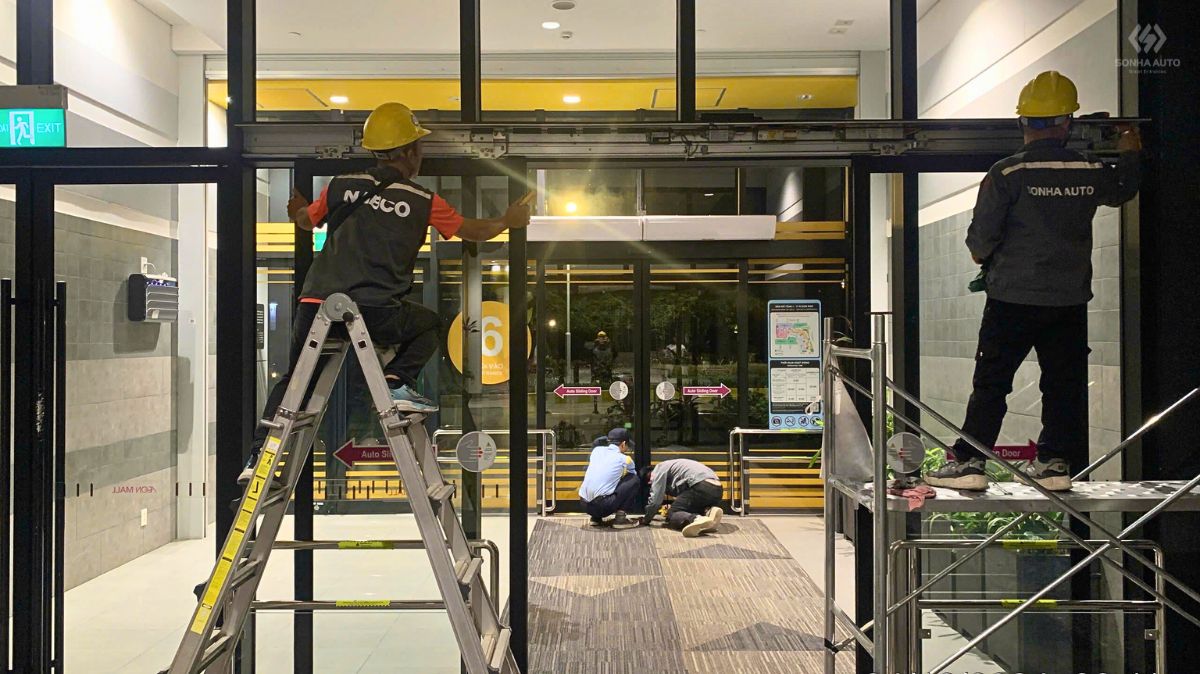
Risks of not replacing components at the right time
Delaying component replacement does not only affect the equipment but also leads to broader operational consequences:
- Safety risks for users, especially in high-traffic areas. Incidents such as door jamming, collisions, or incorrect operation timing may cause accidents.
- Operational disruptions, directly impacting business or service activities. Repair costs are often higher due to damage spreading to other components.
- Budget inefficiency, as poor replacement timing reduces overall system lifespan and significantly increases long-term investment costs.
So, When should automatic door components be replaced? Instead of waiting for failures, Sonha Auto recommends a preventive maintenance strategy to optimize the equipment lifecycle by focusing on:
- Periodic inspection of the entire door system
- Performance evaluation over time
- Planned component replacement before failure
- System upgrades when necessary
This approach not only minimizes risks but also optimizes long-term operating costs. Especially for high-end systems like NABCO, proper maintenance standards significantly enhance performance stability and extend equipment lifespan.
Sonha Auto – Provider of NABCO solutions, maintenance, and genuine components in Vietnam
To ensure the lifespan and performance of automatic door systems, the role of the supplier and maintenance provider is critical. With over 20 years of experience across major projects such as airports, hospitals, and premium office buildings, Sonha Auto has established itself as a strategic partner and the largest NABCO distributor in Asia.
Beyond product supply, Sonha Auto delivers a comprehensive solution ecosystem:
- Japanese-standard maintenance services: Periodic inspections following standardized procedures to detect wear early and provide timely solutions
- Genuine NABCO component replacement: Ensuring full compatibility and optimal system performance
- Experienced technical team: Professionally trained to handle issues quickly and accurately
- Tailored consulting solutions: From determining When should automatic door components be replaced to recommending system upgrades
As a result, projects not only ensure safety but also optimize operational costs throughout their lifecycle.

Why choose solutions from Sonha Auto?
In a competitive market, choosing the right partner is critical for long-term operational efficiency. Sonha Auto is not only a distributor but also a company that deeply understands the operational characteristics of different types of buildings in Vietnam.
The combination of NABCO technology and real-world implementation experience enables Sonha to deliver solutions that meet international standards while adapting to local conditions.
Especially, the use of genuine components and standardized maintenance processes minimizes risks and ensures stable system operation.
>>> See more: Japanese-standard automatic door maintenance steps following a professional technical process
Conclusion
The question When should automatic door components be replaced is not only a technical matter but also a key part of operational management and cost optimization. Proactive maintenance and timely component replacement help ensure user safety, maintain stable system performance, minimize unexpected repair costs, and extend the lifespan of the entire door system. Choosing a reliable partner plays a crucial role in ensuring that all inspection, replacement, and operation processes are carried out according to proper standards.
Contact Sonha Auto today for consultation on genuine NABCO automatic door maintenance and optimized solutions for your project.