In modern facilities such as hospitals, airports, and shopping malls, automatic doors are not merely entryways but an integral part of the overall operational system. However, during use, many units encounter the issue of automatic door does not stop when encountering an obstacle, a seemingly minor fault that actually carries significant risks to safety and user experience. Notably, this issue often does not occur continuously but appears intermittently, causing many to mistakenly assume the door system is functioning normally. Only when a direct collision occurs does the problem truly draw attention. So why does this issue happen, and what are the effective solutions? Let Sonha Auto walk you through the causes and comprehensive solutions in the following article.
When should you be concerned about an automatic door not stopping when encountering an obstacle?
Signs to recognize during operation
Under normal operating conditions, an automatic door must stop immediately when detecting an obstacle. However, if you notice that the door continues closing even when someone is within the doorway zone, or only stops after making contact with an object, this indicates that the safety system is malfunctioning.
In some other cases, delayed response or inconsistent operation are also typical signs of an automatic door does not stop when encountering an obstacle, even though the system may appear to function normally on the surface.
Why does the automatic door fail to detect a person even when they are nearby?
This is a common question in practice. Many assume the issue lies with the motor or door mechanism, but in reality, it often originates from the sensor system. When the automatic door sensor fails to accurately detect presence, the door will not respond at the correct time, leading to closure while someone is still within the danger zone.

Causes of automatic doors not stopping when encountering obstacles
Faults in the automatic door safety sensor
In a standard door system, the automatic door safety sensor is responsible for detecting obstacles and sending an immediate stop signal. When this component does not function properly, the entire safety mechanism is compromised. Causes may include misaligned detection angles, insufficient detection coverage, or blind spots within the doorway area. As a result, the door fails to detect users, especially in slow movement situations or when standing close to the door.
Degraded or unstable automatic door sensors
After a period of use, automatic door sensors may lose sensitivity, leading to inaccurate detection. This is also why many question whether periodic inspections are necessary. In reality, for high-traffic environments, regular inspection of automatic door sensors is essential to maintain stable performance. Otherwise, the issue of automatic door does not stop when encountering an obstacle can occur at any time.
System configuration and calibration errors
Not all issues stem from hardware. In many cases, the door system is not properly configured for real-world usage for example, excessively fast closing speed or suboptimal response timing. This can prevent the door from stopping in time when an obstacle appears.
Initial design and installation flaws
A less noticeable yet highly influential factor lies in the design and installation phase. If sensors are positioned incorrectly or the system is not configured according to actual traffic flow, the likelihood of failure increases from the outset.

Risks when an automatic door does not stop upon encountering an obstacle
Many people assume that a slightly delayed closing or minor collision is not a serious issue. However, in real-world environments especially in high-traffic areas the condition of automatic door does not stop when encountering an obstacle can lead to far more serious risks.
First is the risk of direct collision, particularly for children, the elderly, or individuals carrying bulky items. Just one instance of a door closing onto someone is enough to create a sense of insecurity and negatively impact the overall user experience. In environments such as hospitals, this is also directly related to operational standards and safety compliance.
Additionally, unstable door operation diminishes the professional image of a business. A seemingly small door system can clearly reflect the overall operational quality of an entire facility.
How to check automatic door safety sensors in practice
When detecting abnormalities, many people wonder whether they can perform checks themselves. In fact, you can carry out some basic inspections before calling a technician.
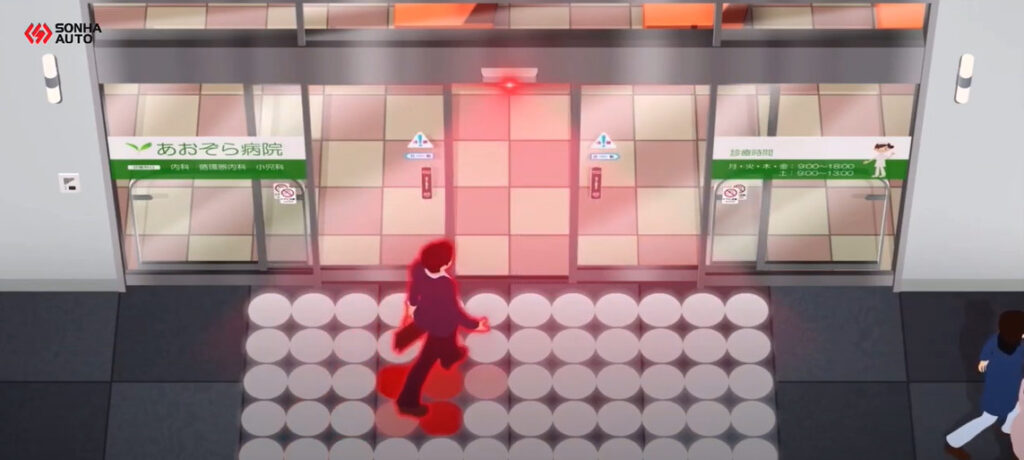
A simple method is to stand within the doorway while the door is closing. If the door does not stop or reacts slowly, the sensor is likely malfunctioning. Additionally, observing the detection zone is crucial. If there are areas where the door does not respond when someone is present, these may be blind spots that need adjustment.
However, for more complex issues especially when sensors operate inconsistently self-repair is not recommended. Many ask, “Should I repair an automatic door myself?” The answer is no, as sensor calibration and configuration require high technical expertise to ensure absolute safety.

Solutions to fix automatic doors not stopping when encountering obstacles
To thoroughly resolve the issue of automatic door does not stop when encountering an obstacle, it is essential to identify the root cause and apply the appropriate solution rather than temporary fixes.
Cleaning and recalibrating sensors
In some cases, cleaning the sensor surface and adjusting the detection angle can significantly improve performance, especially when the issue is caused by dirt or misalignment.
Replacing automatic door safety sensors
When sensors have degraded, replacement is necessary to ensure stable operation. Using high-quality sensors improves both accuracy and durability.
Optimizing system settings and control
Adjusting opening/closing speed and response timing is a key step to ensure the door stops at the right moment. This also helps minimize real-world incidents of doors closing on people.
Upgrading to a multi-layer sensor system
For high-demand environments, using multiple layers of sensors is the optimal solution. Combining activation sensors with safety sensors enhances accuracy and minimizes risks in all scenarios.
Why thorough solutions are better than temporary fixes
In practice, many cases are handled temporarily by adjusting sensors or reducing door speed. However, for the issue of automatic door does not stop when encountering an obstacle, this approach only addresses the symptoms, not the root cause. The system may operate stably for a short time, but the risk of recurrence remains, especially when usage conditions change. In the long term, this not only affects user experience but also increases maintenance and repair costs.

Comprehensive troubleshooting solutions and operational optimization from Sonha Auto
To ensure safe and stable door operation, choosing a professional provider is critical. As a strategic partner of NABCO in Vietnam, Sonha Auto not only supplies equipment but also delivers comprehensive automatic door repair solutions.
Instead of addressing issues individually, Sonha Auto follows a systematic process—from on-site surveys and detailed inspection of automatic door sensor systems to root cause analysis and optimal solution proposals. As a result, the door system is not only repaired but also fully optimized for performance.
With over 20 years of experience, Sonha Auto’s technical team understands the specific requirements of various facility types, from hospitals and airports to shopping malls. This ensures that every solution is tailored to real-world usage, minimizing future risks.
>>> See more: Top 10 common automatic door problems and effective solutions
Conclusion
The condition of automatic door does not stop when encountering an obstacle is not merely a technical fault but a warning sign of a compromised safety system. Early detection, proper inspection, and thorough resolution are essential to ensure user safety and maintain the operational efficiency of the entire facility.
Contact Sonha Auto for a comprehensive inspection and solution to ensure your door system operates safely, accurately, and reliably in the long term.