In an automatic door system, the motor and sensors are often the most discussed components. However, there is a critical part that directly determines operational stability and lifespan, yet is frequently overlooked: the NABCO automatic door rail. In practice, most common issues such as noise, vibration, or door leaf jamming originate from wear and tear of the rail and rollers over time. Therefore, selecting the right rail system from the beginning not only optimizes performance but also directly impacts long-term maintenance costs. Among current solutions, the NABCO automatic door rail, with its steel-reinforced design, is considered one of the leading durability standards on the market. So what makes this rail system different? And why is it regarded as a core factor in enhancing NABCO door durability in real-world operation? Let’s explore in detail below.
NABCO steel-reinforced rail – An upgrade driven by real-world operation
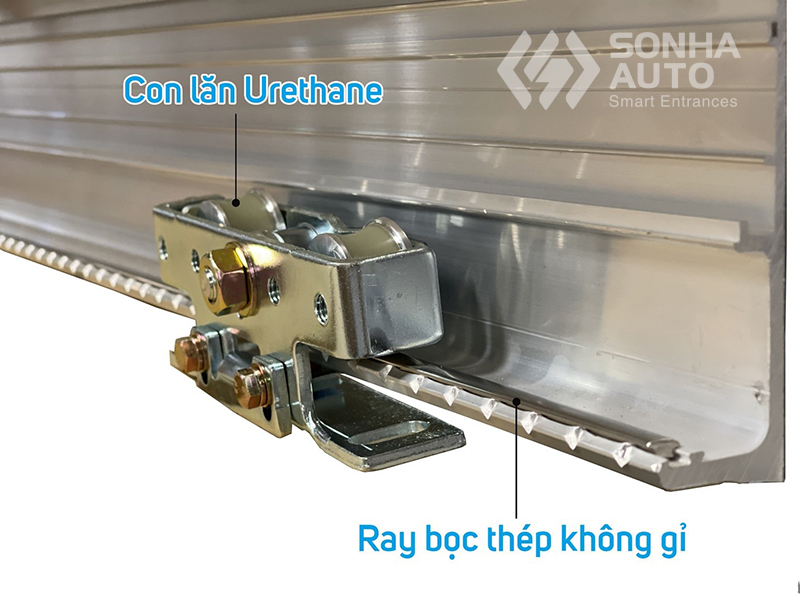
Unlike conventional aluminum rails, NABCO has developed a solution by pressing a layer of stainless steel onto the surface of the aluminum rail. This is not merely a material upgrade, but a direct enhancement of the contact surface—the key factor determining the performance of the entire door system. The steel layer is significantly harder than aluminum, greatly reducing wear during operation. As rollers move along the steel surface, friction is better controlled, minimizing noise and maintaining smooth, stable movement over time.
Thanks to this structure, the NABCO automatic door rail not only improves the durability of the rail itself but also helps protect related components such as rollers, motors, and the control system. This is the core factor that defines NABCO door durability—one of the most highly regarded criteria in the market.
Structure of the NABCO automatic door rail
To better understand the effectiveness of the NABCO rail, it is necessary to look at its overall structure. Instead of using a single material, NABCO designs the rail as a combination of an aluminum core and a steel surface layer. The aluminum core ensures structural integrity and reduces weight, while the stainless steel layer is directly responsible for the sliding surface.
This functional separation allows the rail to be both cost-efficient and highly durable in operation. The steel surface keeps the roller moving smoothly, while the aluminum base maintains the overall structural rigidity of the rail system. When combined with NABCO’s polyurethane rollers with an aluminum alloy core, friction at the contact point is significantly reduced, helping to minimize wear on both the rail and the rollers during operation. This is an optimized design that balances performance, durability, and cost something that conventional aluminum rail systems can hardly achieve simultaneously.
Comparison between standard aluminum rails and NABCO steel-reinforced rails
At the initial stage of operation, the differences between rail types may not be obvious. However, in long-term operation, the gap becomes increasingly evident.
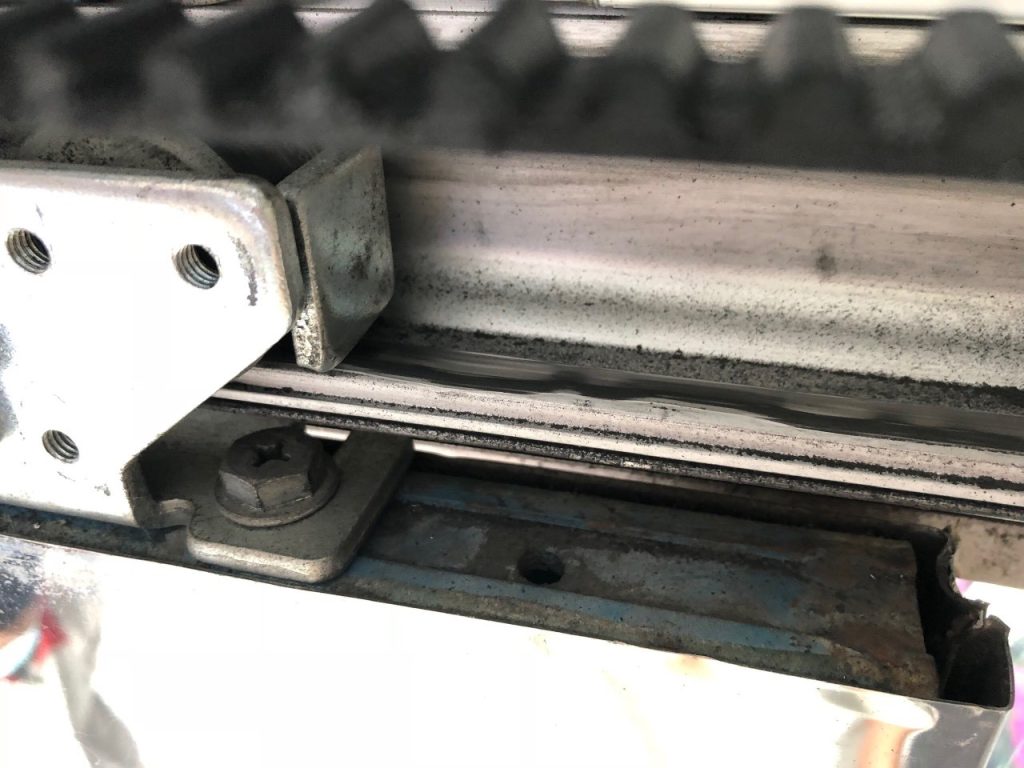
With standard aluminum rails, the softer contact surface leads to continuous wear with each opening and closing cycle. As the rail surface becomes uneven, rollers can no longer move smoothly, resulting in increased friction and noise. Over time, this affects the entire door system, reducing performance and increasing maintenance costs.
In contrast, NABCO steel-reinforced rails maintain a stable contact surface throughout their lifecycle. Rollers consistently operate under optimal rolling conditions, reducing load on the motor and minimizing negative impacts on the system.
The key difference lies in the fact that conventional aluminum rails degrade over time, while NABCO rails are engineered to maintain near-stable operating conditions throughout the product lifecycle.
Why does the rail directly impact NABCO door durability?
In an automatic sliding door system, all movement occurs through the interaction between rollers and the rail. This is the point subjected to constant friction and the most susceptible to wear.
In facilities such as airports or shopping malls, doors can operate thousands of cycles per day. Within a short period, total cycles can reach millions. If the rail surface is not sufficiently durable, minor impacts in each cycle accumulate into major damage. Once the rail wears out, rollers lose stability, leading to increased friction and load. This forces the motor to work harder and reduces the lifespan of other components in the system.
Conversely, when the rail maintains stability, the entire system operates under optimal conditions. This is why the rail is considered the foundational factor directly affecting NABCO door durability in real-world applications.

Durability of NABCO automatic door rails proven in real projects
Beyond theory, the NABCO automatic door rail has been validated in numerous high-traffic projects. At AEON Mall Long Bien, after nearly 10 years of operation, the rail system remains stable with almost no significant signs of wear. This demonstrates the effectiveness of the steel protective layer in maintaining surface quality.
At Noi Bai International Airport, NABCO sliding doors recorded over 3.63 million opening and closing cycles at the time of maintenance inspection, yet continued to operate reliably. This figure reflects not only the durability of the rail but also the overall system’s ability to perform consistently in demanding environments.
These real-world data points clearly demonstrate that NABCO rails are durable not only over time but also across intensive operational cycles.
Maintenance of NABCO automatic door rails
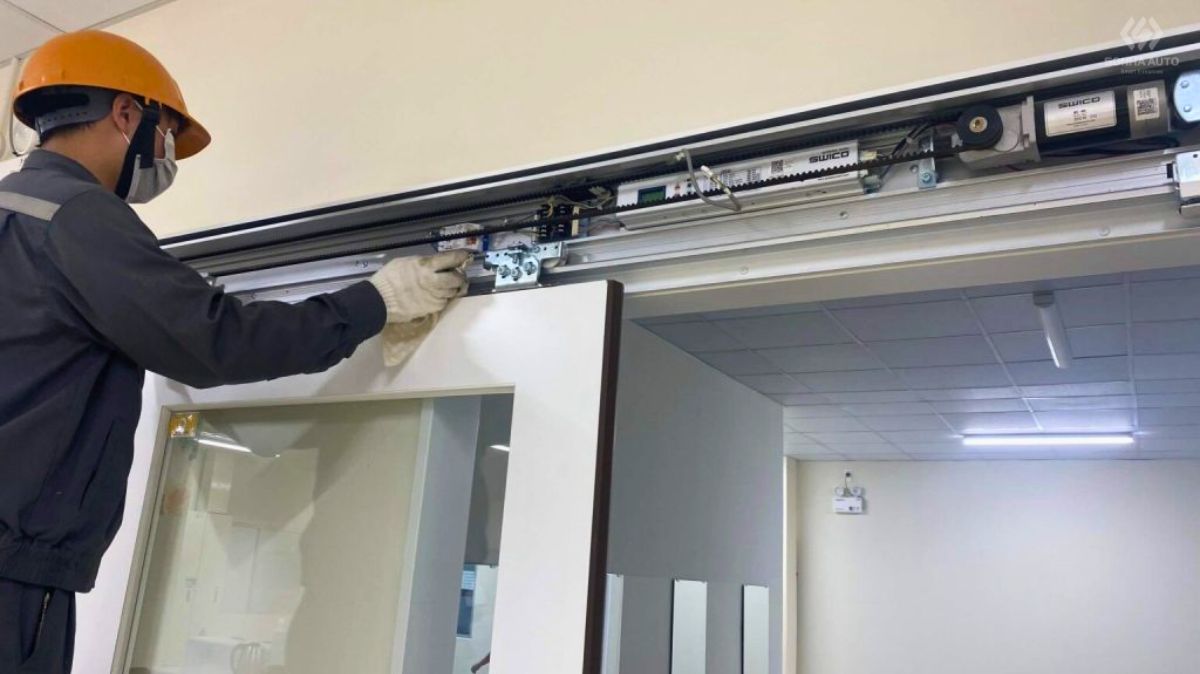
One of the most noticeable benefits of using NABCO rails is the significant reduction in replacement requirements during operation. However, to maintain stable performance, periodic maintenance remains essential.
Unlike conventional aluminum rail systems that often require frequent replacement of rails or rollers, maintenance of NABCO rails mainly focuses on surface cleaning and roller condition checks. As a result, long-term operational costs are significantly optimized while minimizing unexpected disruptions. Unlike conventional rails, where maintenance is reactive to damage, NABCO rail maintenance is proactive—aimed at preserving optimal operating conditions from the start.
Why has the NABCO automatic door rail become a standard in the industry?
It is no coincidence that the NABCO automatic door rail is considered a benchmark in the industry, especially for high-demand projects such as airports, hospitals, and shopping centers. Behind every material and design improvement lies a foundation of advanced technology and accumulated R&D capabilities.
As the world’s leading automatic door brand with approximately 27% global market share (according to IHS), NABCO not only offers a comprehensive product ecosystem but also operates a global network with subsidiaries in the United States (NABCO Entrance), Switzerland (Gilgen Door), and China (NABCO Beijing), along with distribution in over 70 countries. This scale allows NABCO to continuously collect real-world operational data across diverse environments, optimizing products for durability and adaptability.
Additionally, NABCO leads in applying core technologies such as microcontrollers, remote programming, brushless motors, and CAN-based control systems—ensuring precise, synchronized, and stable long-term operation. More importantly, NABCO pioneered automatic doors in Japan in 1956, laying the foundation for the entire industry.
This combination of technological expertise, practical experience, and user-centric philosophy has enabled innovations like the steel-reinforced rail. Beyond solving wear issues, the NABCO automatic door rail reflects the company’s approach: optimizing even the smallest details to enhance overall system performance.
Therefore, when discussing durability standards in automatic doors, the NABCO automatic door rail is not just a technical solution, but the result of a globally validated technology ecosystem.
>>> See more: How many kilograms can an automatic door track support? How to choose NABCO doors for high-traffic projects
Conclusion
In an automatic door system, the rail is not merely a guiding component but a decisive factor in overall performance and operational lifespan. What may seem like a minor difference in materials and design can lead to significant disparities after millions of operating cycles. With its steel-reinforced solution optimized for friction control and high-frequency operation, the NABCO automatic door rail not only enhances the durability of individual components but also ensures long-term stability for the entire system. This is the foundation that allows NABCO doors to consistently deliver superior performance and remain the preferred choice for demanding projects.