When selecting automatic doors for a project, one of the most common concerns is: how many kilograms can an automatic door track support? This is not merely a technical parameter—it directly determines the durability, safety, and overall operational stability of the entire system. In practice, many investors focus on design or cost while underestimating the role of the track, which is the primary load-bearing component in automatic sliding doors. Especially for large glass door systems or high-traffic environments, choosing the wrong load capacity can lead to serious issues during operation.
So, how much load can an automatic door track actually handle, and what is the optimal solution for different types of projects? Let’s explore in detail with Sonha Auto below.
What is an automatic door track and how does it affect load capacity
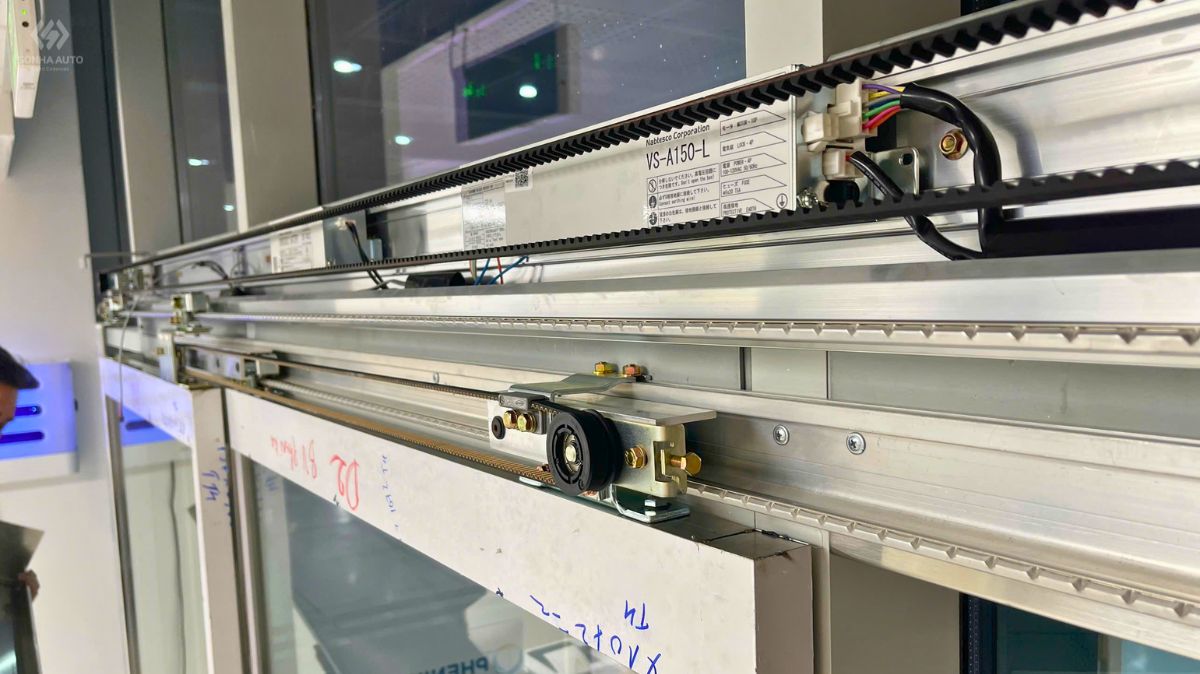
In an automatic sliding door system, the track acts as the “backbone” that supports the entire weight of the door leaf. It works in conjunction with rollers, the motor, and automatic door sensors to ensure smooth, stable, and safe operation. The load-bearing capacity of the track depends not only on materials such as aluminum alloy or reinforced steel, but also on the overall system design. A high-quality track helps distribute force evenly, reduce friction, and minimize wear over time.
Therefore, when asking how many kilograms an automatic door track can support, it is important to understand that this figure is not fixed but depends on the technical configuration of each system.
Automatic door load capacity
What is automatic door load capacity?
Automatic door load capacity refers to the total weight that the door system—including the track, rollers, and motor—can handle during operation. This parameter is typically calculated in kilograms per door leaf.
For automatic glass doors, the load is usually higher due to the heavier weight of glass. Meanwhile, lighter systems such as aluminum or composite doors require lower load capacity.
How many kilograms can an automatic door track support in reality?
On the current market, typical load ranges for automatic sliding doors are as follows:
- Standard doors: approximately 60 – 120 kg/leaf
- Medium-duty doors: 120 – 200 kg/leaf
- Heavy-duty automatic doors: 200 – 300 kg/leaf
- Special systems (airports, terminals): over 300 kg/leaf
However, these figures are for reference only. The key is selecting a system with load capacity that matches real usage conditions, especially in high-traffic automatic door environments.
Common mistakes when choosing the wrong track load capacity
One of the biggest mistakes many investors make is ignoring the load-bearing capacity (kg) of the track system. Installing a door system that cannot handle the actual weight leads to costly consequences:
- Noisy, unstable operation: Overloaded tracks cause metal friction noises and vibrations during opening/closing.
- Track deformation and rapid wear: Excessive pressure can warp or misalign the track, leading to permanent mechanical damage.
- Increased maintenance costs: Frequent replacement of rollers, belts, or even motor burnout due to overload.
- Safety risks: Reduced accuracy in operation can delay safety features like reversal mechanisms, posing risks to users.
Choosing the correct load capacity from the beginning is not just a technical decision—it is a smart economic strategy to ensure long-term system performance.

Reference load capacity table by application
To provide a clearer picture, below is a reference table of common load capacities:
| Door type | Load per leaf | Application |
| Standard door | 60 – 120kg | Small office buildings, supermarkets |
| Medium-duty door | 120 – 300kg | Medium-duty door |
| Heavy-duty automatic door | 200 – 300kg | Hospitals, malls, airports, terminals |
When reviewing this table, note that load capacity depends not only on door weight but also on usage frequency. Systems with continuous operation require higher specifications for durability. This is why the question how many kilograms can an automatic door track support must always be evaluated in the context of real project conditions.

When should heavy-duty automatic doors be used?
Not every project requires heavy-duty automatic doors, but in certain cases, they are essential. These include environments with extremely high traffic such as shopping malls, airports, and hospitals. Such spaces demand continuous, high-frequency operation while still ensuring smooth and safe performance.
Additionally, large-sized glass doors or specially designed systems require higher load capacity to maintain stability. In these cases, choosing the right load is not only a technical requirement but also part of a smart entrance solution to optimize user experience and operational efficiency.
NABCO automatic sliding door solutions
When it comes to systems that excel in both load capacity and durability, NABCO automatic sliding doors are among the top choices on the market, offering several key advantages:
Optimized design for multiple load capacities
NABCO automatic door models are engineered with high-strength tracks, combined with high-quality rollers and powerful motors. This effectively solves the question of how many kilograms an automatic door track can support for each project—from standard glass doors to ultra-heavy industrial systems—ensuring stable operation throughout the product lifecycle.

Suitable for high-traffic environments
One of NABCO’s strongest advantages is its ability to operate reliably in high-traffic environments such as international airports, busy shopping centers, and major hospitals. Designed for continuous high-frequency operation, these systems minimize mechanical wear while ensuring smooth and safe movement for users.
Smart and sustainable entrance solutions
Beyond load capacity, NABCO automatic sliding doors offer smart entrance solutions that optimize operation and energy efficiency. The system features self-diagnostic capabilities and seamless integration with smart building ecosystems, ensuring maximum safety. The combination of robust mechanics and Japanese technology enables NABCO to meet the strictest standards of modern architecture.
Important notes when selecting an automatic door track
To ensure long-term durability and avoid unnecessary costs, consider the following technical principles:
- Avoid operating at maximum load: Never choose a track with capacity exactly equal to the door weight. Always allow a 20–30% safety margin to ensure optimal motor performance.
- Evaluate real usage frequency: A low-traffic office door differs significantly from a residential lobby or hospital entrance. Higher frequency requires stronger, more wear-resistant tracks.
- Invest in reputable brands: Brands like NABCO provide not just doors but reliability, with internationally standardized track systems that eliminate future maintenance issues.
Understanding load capacity and choosing an appropriate safety margin is the smartest way to protect both your budget and the long-term performance of your project.

>>> See more: How long does an automatic door motor last? How to extend its lifespan and when to replace it
Conclusion
Determining how many kilograms an automatic door track can support is not just a technical step—it is a critical factor that affects the durability and safety of the entire system. Especially in high-traffic environments, choosing the right solution such as NABCO automatic doors helps optimize performance, minimize risks, and enhance user experience.
Contact Sonha Auto today for consultation on NABCO sliding door solutions tailored to your project’s load requirements and actual usage needs.