In modern buildings such as shopping malls, hospitals, airports, and office towers, automatic doors not only provide convenience but also play a crucial role in access control and security. Especially at night, when pedestrian traffic decreases but asset protection requirements increase, Automatic door safety at night becomes a key factor ensuring stable system operation. In practice, many incidents such as unintended door opening, incorrect sensor triggering, or malfunctioning electromagnetic locks often originate from incorrect configuration of operating modes. Therefore, understanding automatic door modes correctly and setting them appropriately for each time period is essential to improve nighttime automatic door safety and reduce operational risks.
Why is nighttime automatic door safety increasingly important?
Nighttime is a period when building activity decreases but security requirements increase. It is also the time when risks such as unauthorized intrusion, uncontrolled door opening, or system signal errors are more likely to occur.
Many buildings still keep doors in Auto mode after operating hours, causing doors to continue responding to all motion within the detection zone. Even slight lighting changes, minor vibrations, or overly sensitive sensors can trigger unintended opening. This directly affects Automatic door safety at night, while also causing energy loss and reducing equipment lifespan.
In addition, confusion between Auto, One Way, and Lock modes leads to incorrect system operation, reducing overall security control effectiveness.
How do automatic door modes affect nighttime safety?
Auto mode – flexible but not suitable for nighttime use
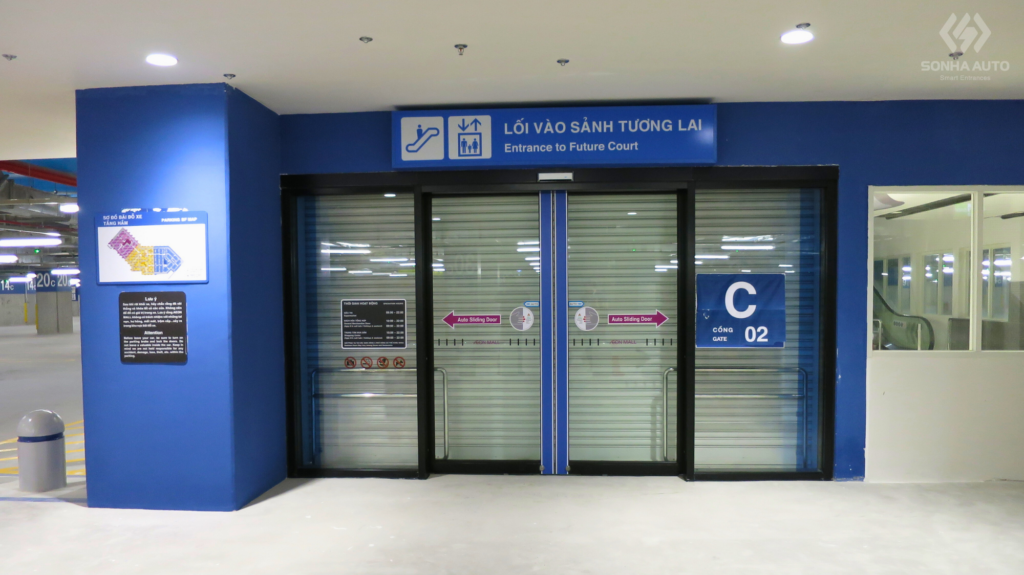
Auto is the most common automatic door mode. In this mode, the door responds to sensor signals and automatically opens when motion is detected within the scanning zone.
During normal operating hours, Auto mode optimizes traffic flow and improves user experience. However, if maintained at night, the door may open unintentionally due to lighting changes, environmental movement, insects, or overly sensitive sensors. This not only affects security but also increases energy loss and mechanical wear.
Therefore, Auto mode should only be used during official operating hours, not as a nighttime door mode.
One Way mode – effective one-direction control
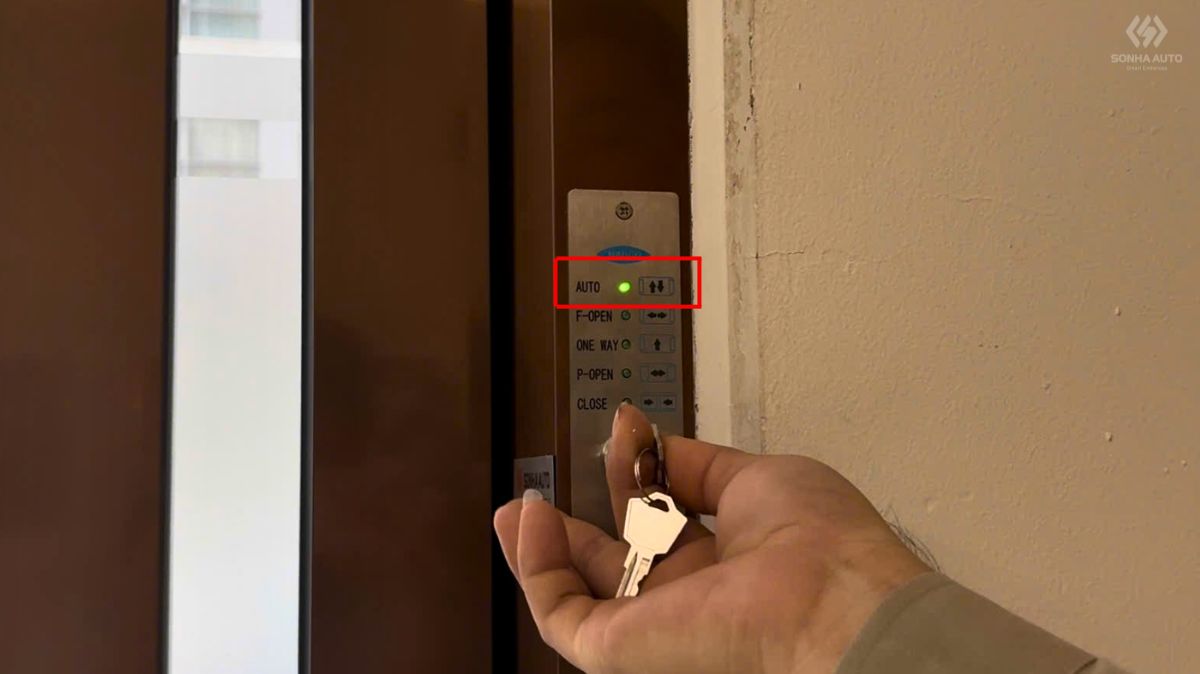
Among automatic door modes, One Way is widely used in offices, shopping malls, and hospitals after closing hours.
When activated, the interior sensor remains active to allow exit from inside, while the exterior sensor is disabled to prevent entry from outside. This ensures safe evacuation while maintaining building security. One Way mode is suitable for areas requiring controlled one-way traffic after operating hours without fully locking the system.
Lock mode – nighttime security standard
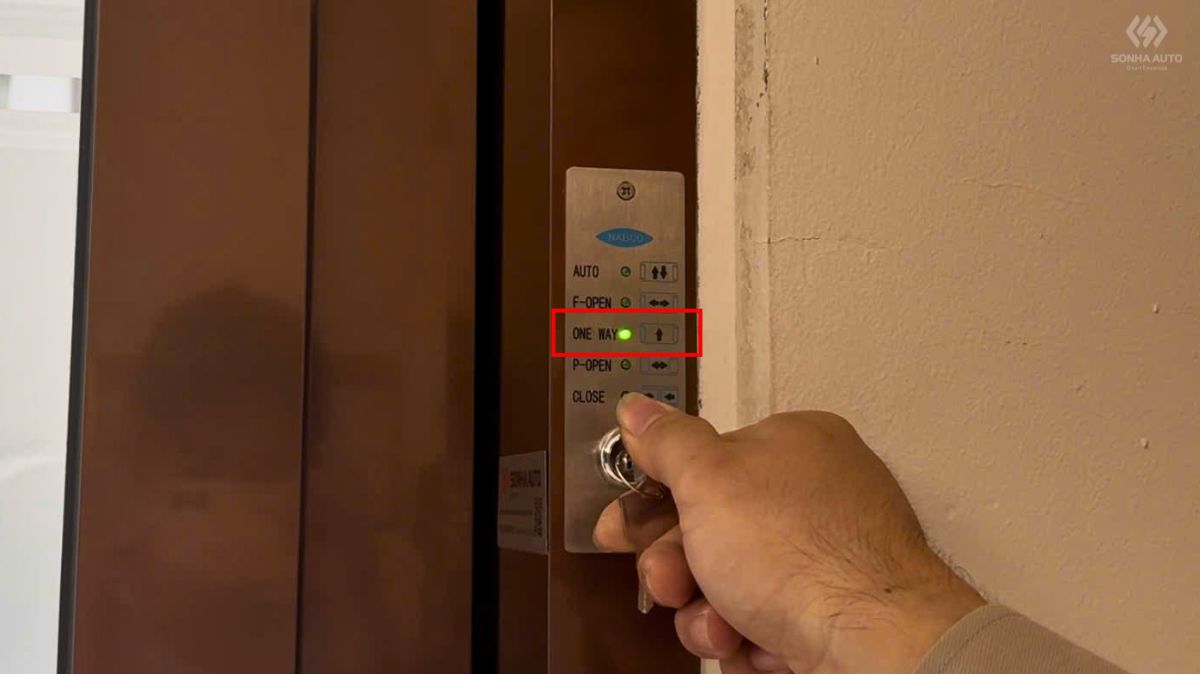
Among operating modes, Lock (Close) mode is the most important solution at night. When activated, sensors stop triggering door opening and the electromagnetic lock system is engaged. At this time, the door can only be opened via access cards, push buttons, keys, or access control systems such as Face ID and smart entry management.
For high-security facilities such as airports, hospitals, data centers, or large office buildings, Lock mode is almost mandatory to ensure the highest level of Automatic door safety at night.
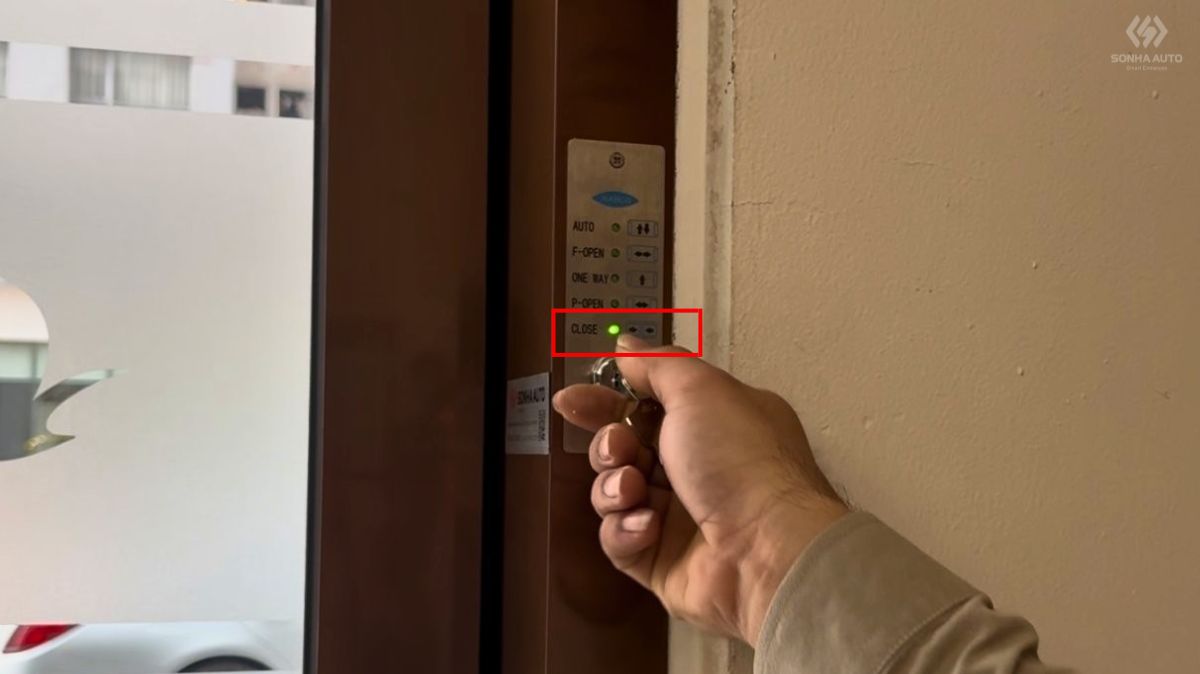
Partial open mode – flexible but requires strict control
Some buildings use Partial Open mode at night to reduce energy loss or maintain limited traffic after operating hours. However, when using this mode, it must be synchronized with surveillance cameras, high-precision sensors, and access control systems to avoid increasing security risks in lobby areas.
Common risks caused by incorrect night mode configuration
One of the main causes of unsafe automatic door operation at night is incorrect mode configuration. This can lead to common issues such as:
- Forgetting to switch to Lock mode
- Confusing Auto and One Way modes
- Overly sensitive sensors
- Unstable electromagnetic locks
- UPS failure to maintain lock status during power loss
In practice, many buildings still operate in Auto mode after hours, causing doors to open continuously due to lighting or environmental movement. Facility managers often assume technical faults, while the real cause is incorrect mode selection.
In addition, lack of synchronization between electromagnetic locks and backup power systems can prevent the door from maintaining a safe state during power failures.
Factors determining nighttime automatic door safety
Automatic door sensors and detection accuracy
Automatic door sensors directly affect opening and closing control. Poor-quality or incorrectly installed sensors may detect false movement, causing unintended door opening or unstable responses at night. Therefore, proper calibration of detection zones and the use of high-quality sensors are essential for ensuring safe operation.
Access control systems and electromagnetic locks
Electromagnetic locks are essential in night mode operation. Today, many buildings integrate automatic doors with access control systems, card readers, Face ID, or BMS systems to enhance entry control and prevent unauthorized access. For high-security facilities, synchronization between locks and central control systems is critical to maintaining system safety.
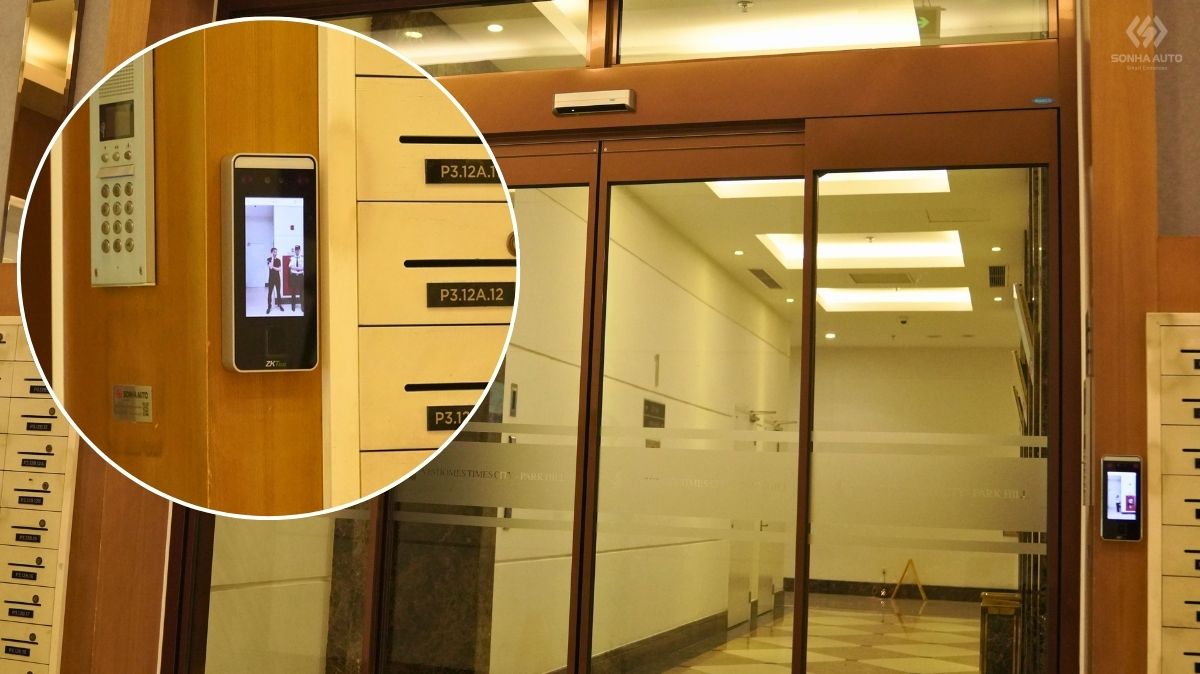
Backup power system and security during power failure
UPS systems help maintain safe door status during power outages. This is particularly important for hospitals, airports, data centers, or 24/7 facilities. When properly configured, UPS ensures lock continuity, supports emergency evacuation, and prevents uncontrolled door opening during power failure.
Periodic automatic door maintenance
Regular maintenance helps detect early issues affecting nighttime safety such as incorrect sensor zones, unstable electromagnetic locks, or delayed controller response. Maintenance typically includes checking sensors, locks, motors, control boards, and recalibrating operating modes to ensure long-term system stability.
Why are NABCO automatic doors highly regarded for nighttime safety?
In many large-scale projects, NABCO automatic doors are highly valued for their stable operation and optimized security performance.
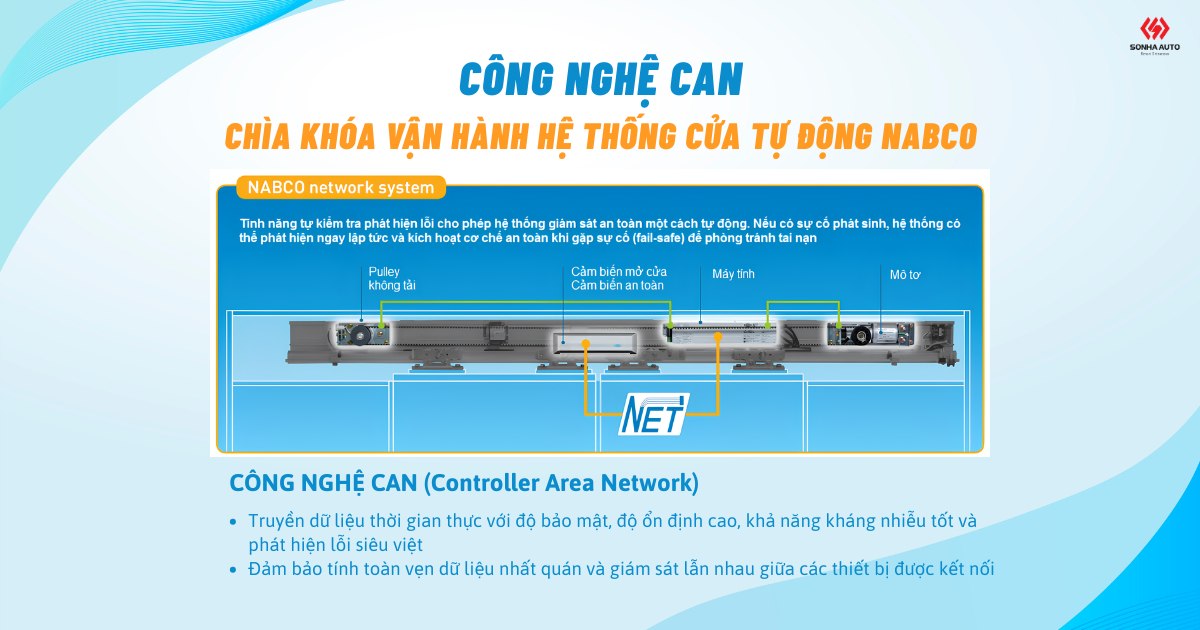
Unlike systems that only focus on opening and closing, NABCO is designed with a fully synchronized system including sensors, controllers, electromagnetic locks, access control, and building management systems. This allows more accurate response and reduces signal errors at night.
In particular, CAN technology in the NET-DS controller enables real-time data exchange between system components. This ensures stable operation, reduces communication errors, and improves accuracy in door status control.
As a result, NABCO automatic doors are widely used in major facilities such as Noi Bai Airport, AEON Mall, Hospital 108, as well as shopping centers and office buildings requiring strict nighttime security control.
Sonha Auto – Safe automatic door solutions for buildings
Beyond equipment supply, Sonha Auto focuses on complete operational solutions to ensure automatic doors remain safe at all operating hours.
Sonha Auto’s technical team is trained directly by Japanese experts and has extensive experience in configuring Lock modes, calibrating sensors, synchronizing electromagnetic locks, and integrating access control systems according to building standards.
With experience in airports, hospitals, shopping malls, and large office buildings, Sonha Auto helps optimize nighttime security control while maintaining stable and durable door operation.
>>> See more: Why does an automatic door does not stop when encountering an obstacle? Safe and thorough solutions
Conclusion
Automatic door safety at night does not depend on a single device but on the synchronized interaction between operating modes, sensors, electromagnetic locks, and overall control systems. Proper configuration of Auto, One Way, and especially Lock mode helps reduce risks, enhance security, and optimize long-term performance.
Contact Sonha Auto for expert consultation on the most suitable solution for your project!