When designing or renovating a building, many investors find themselves deciding between an automatic sliding door or an automatic swing door. Both solutions provide convenience, enhance the professional image of a facility, and help improve access control. However, each option is suited to different installation conditions and operational requirements. Choosing the right solution from the beginning not only optimizes investment costs but also helps avoid future complications related to operation, maintenance, and upgrades. So, should you choose an automatic sliding door or an automatic swing door for your project? This is a common question among project owners, contractors, and design consultants when developing new projects or upgrading existing facilities.
Overview of automatic sliding doors and automatic swing doors
To determine whether an automatic sliding door or an automatic swing door is more suitable, several factors should be considered, including installation space, traffic volume, accessibility requirements, investment costs, and operational objectives.
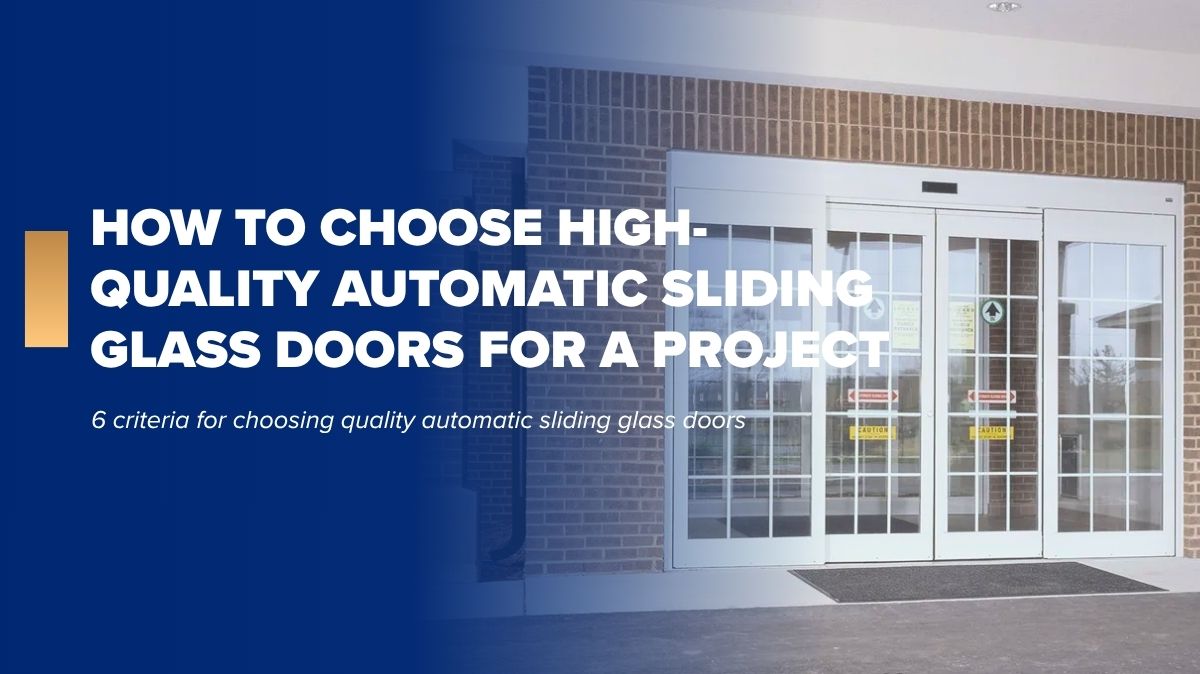
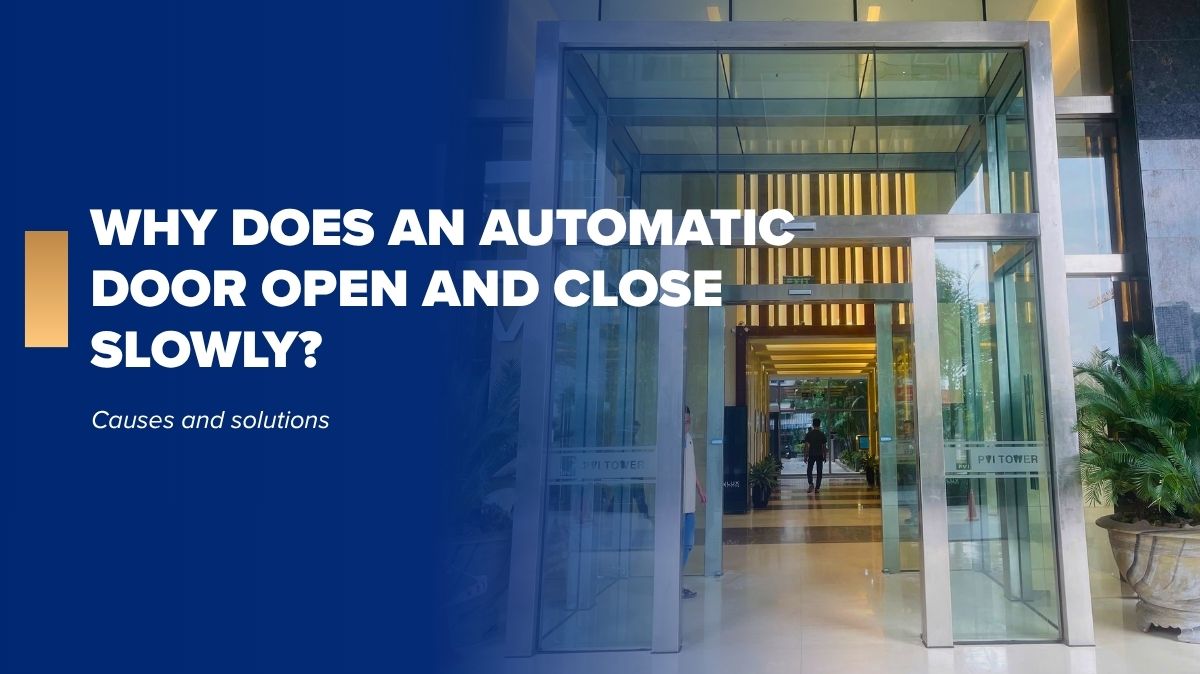
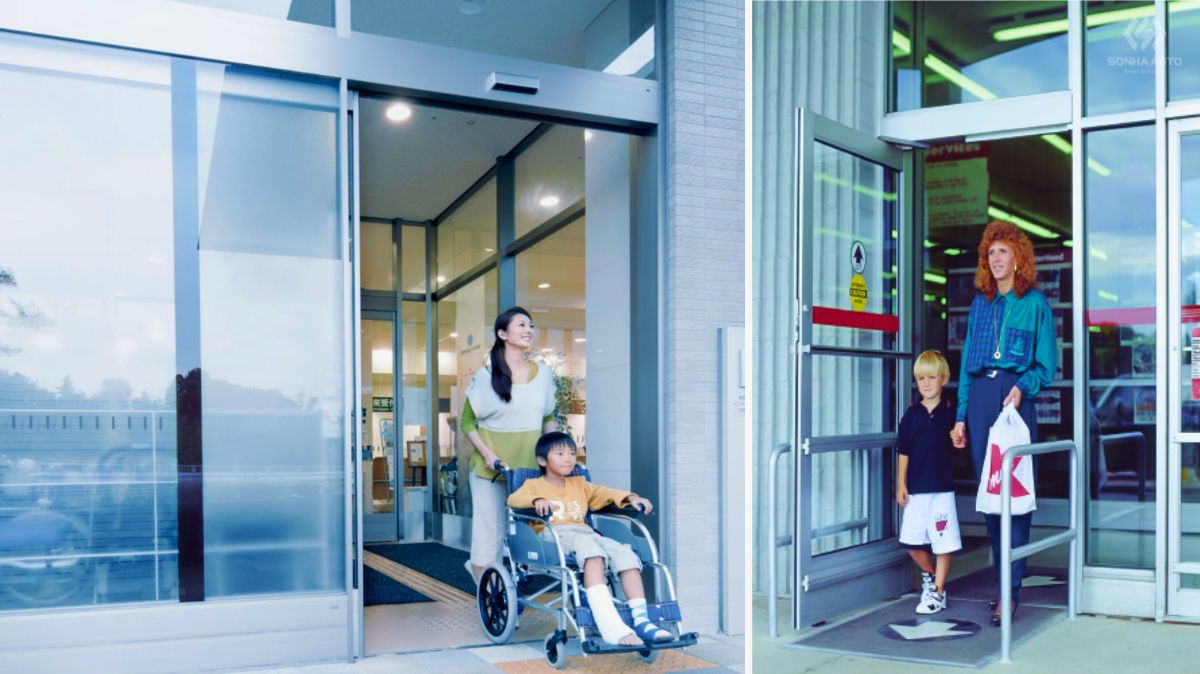
An automatic sliding door operates with door panels that move horizontally along a track using a motor and automatic controller. It is a popular solution for modern buildings with high pedestrian traffic, such as hospitals, hotels, shopping centers, airports, and office buildings.
An automatic swing door, on the other hand, uses an automatic operator to open and close the door leaf through a predefined angle. This solution is often selected for renovation projects or locations where existing doors can be retained while upgrading to automatic operation.
Although both systems aim to improve user experience, they offer distinct advantages in terms of installation requirements, operational performance, and return on investment.
Comparing automatic sliding doors and automatic swing doors based on key criteria
Installation space: Which option optimizes space more effectively?
Available space is one of the most important factors when selecting an automatic door. Because automatic sliding doors open by moving sideways, they do not create a swing area in front of or behind the doorway. This keeps the passage clear and maximizes usable space. As a result, they are commonly installed at main entrances, corridors, and high-traffic areas.
In contrast, automatic swing doors require sufficient clearance for the door leaf to rotate during operation. However, in locations where there is not enough wall space for sliding panels, swing doors can be a more practical and flexible solution.
Conclusion: If maximizing usable space and maintaining a clear passage are priorities, automatic sliding doors offer a significant advantage. Automatic swing doors are often better suited to locations with installation constraints.

Pedestrian traffic volume
This is one of the most significant differences between the two systems. Thanks to their wide opening capacity and the absence of swinging door leaves, automatic sliding doors allow multiple people to pass through simultaneously with ease. This is particularly important in high-traffic environments such as hospitals, shopping centers, airports, railway stations, and large office buildings.
Automatic swing doors are generally more suitable for moderate-traffic areas such as meeting rooms, internal offices, clinics, and controlled-access zones.
For entrances that must operate continuously throughout the day, automatic sliding doors typically provide a smoother user experience while reducing congestion during peak hours.
Conclusion: For facilities with heavy pedestrian traffic, automatic sliding doors are almost always the preferred choice.

Accessibility
Accessibility has become an essential requirement in modern building design, particularly in hospitals, healthcare facilities, and public buildings.
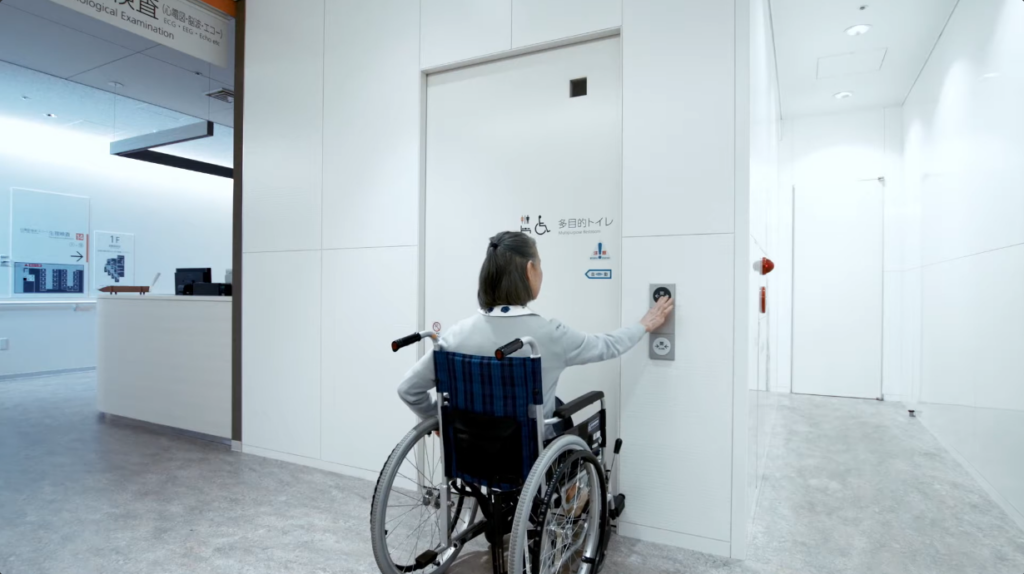
Because there is no swing area, automatic sliding doors make it easier for wheelchair users, people pushing carts, strollers, or patient beds to move through the entrance. Users do not need to consider the direction of door movement, making access more convenient and intuitive.
Automatic swing doors can also provide excellent accessibility when designed according to appropriate standards. However, users must remain aware of the door swing area, especially in crowded environments. This is one reason why most hospitals choose automatic sliding doors for main entrances and treatment areas.
Conclusion: In terms of convenience and user experience, automatic sliding doors offer greater advantages for public-use facilities.
Operational safety
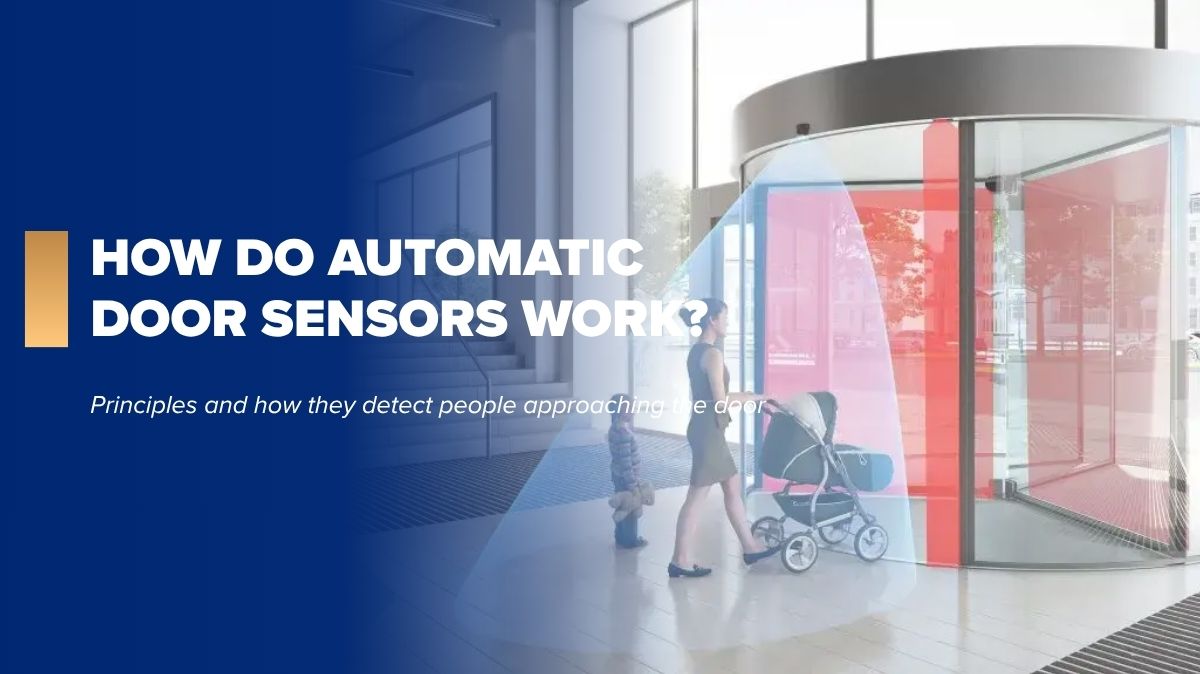
Safety is always a key consideration for building owners and facility managers when selecting automatic door systems. Today, both automatic sliding doors and automatic swing doors are equipped with safety sensors that detect people and obstacles within the operating area. Advanced systems such as NABCO automatic sliding doors also incorporate anti-entrapment technology, obstacle detection functions, and automatic movement adjustment to enhance user safety.
However, from a mechanical standpoint, automatic sliding doors have a simpler operating principle because they do not create a swinging door path. This helps reduce the risk of accidental contact in high-traffic areas.
For automatic swing doors, properly positioned safety sensors in front of and behind the door leaf are essential to ensure safe operation.
Conclusion: Both systems can meet current safety standards. However, automatic sliding doors are generally considered more suitable for crowded public environments.

Investment cost and long-term operational efficiency
Many people assume that automatic swing doors are always less expensive than automatic sliding doors. In reality, this is only true in certain situations.
For renovation projects where existing doors can be retained, automatic swing doors often reduce investment costs because they require fewer structural modifications and shorter installation times.
For new construction projects, however, the cost difference between the two solutions is often relatively small when compared to the overall project budget.
More importantly, the initial investment is only part of the equation. In high-usage locations, automatic sliding doors often provide better long-term value due to their operational efficiency and suitability for continuous traffic.
Conclusion: If minimizing renovation costs is the priority, automatic swing doors offer an advantage. If long-term operational performance is the primary goal, automatic sliding doors are often the more attractive option.
Architectural aesthetics and building image
Automatic doors are more than functional equipment they also contribute to the architectural identity and brand image of a building.
With their sleek, modern, and elegant appearance, automatic sliding doors are commonly selected for hotels, shopping centers, showrooms, office towers, and facilities seeking a professional image.
Automatic swing doors offer the advantage of preserving the original architectural design. This makes them an ideal solution for renovation projects or buildings that wish to maintain a traditional aesthetic.
Conclusion: If creating a modern and professional appearance is a priority, automatic sliding doors are generally favored.

Should you choose an automatic sliding door or an automatic swing door?
After comparing the key criteria, it becomes clear that there is no universal answer to the question of automatic sliding door or automatic swing door. Each solution offers distinct advantages depending on the specific application.
- Automatic sliding doors are ideal for hospitals, hotels, shopping centers, office buildings, and other facilities with high pedestrian traffic.
- Automatic swing doors are better suited for renovation projects, internal office spaces, meeting rooms, or locations where there is insufficient space to install a sliding door system.
In practice, many modern buildings choose to combine both solutions to optimize functionality and operational efficiency across different areas of the facility.
>>> See more: Are automatic doors safe? Insights into NABCO’s technology and safety standards
Conclusion
When evaluating an automatic sliding door or automatic swing door, project owners should consider installation conditions, traffic volume, safety requirements, and long-term operational objectives. If efficient traffic flow, space optimization, and a modern appearance are priorities, automatic sliding doors are often the preferred solution. Meanwhile, automatic swing doors provide an effective option for renovation projects and locations with unique installation constraints. To identify the most suitable solution for a specific project, investors and contractors should carefully assess available space, expected traffic volume, and operational requirements.
Sonha Auto, the strategic NABCO distribution partner in Vietnam, is ready to provide expert consultation and recommend the most appropriate automatic door solution for every project.