Automatic sliding glass doors are currently a popular entrance solution for the lobbies of modern offices, hotels, shopping malls, hospitals, and showrooms. Compared with traditional manually operated doors, automatic door systems not only make access more convenient but can also be easily integrated with smart security control devices. However, choosing quality automatic sliding glass doors is not simply about glass thickness or exterior appearance. To ensure smooth and durable operation for decades, the door leaves, load capacity, operator, sensors, opening dimensions, and actual site conditions need to be properly matched as a complete system.
What components make up an automatic sliding glass door?
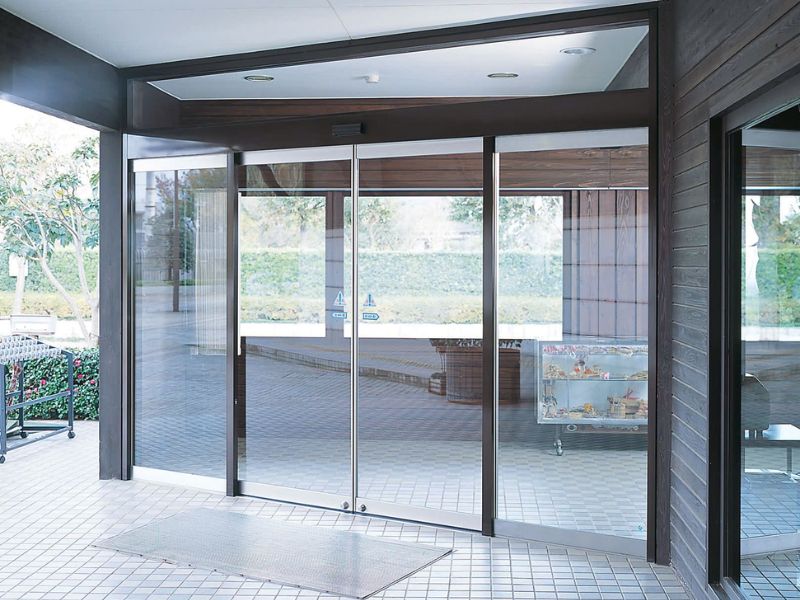
Automatic sliding glass doors are door systems that combine glass panels with an automatic operator and sensor system to perform opening and closing without requiring users to directly operate the door leaves.
Basically, an automatic sliding door system consists of main components such as glass door leaves, frames and fittings, an operator, track, rollers, controller, and sensors. The sensors detect people or objects in the door area and send signals to the controller. The controller processes these signals and operates the motor to open or close the door.
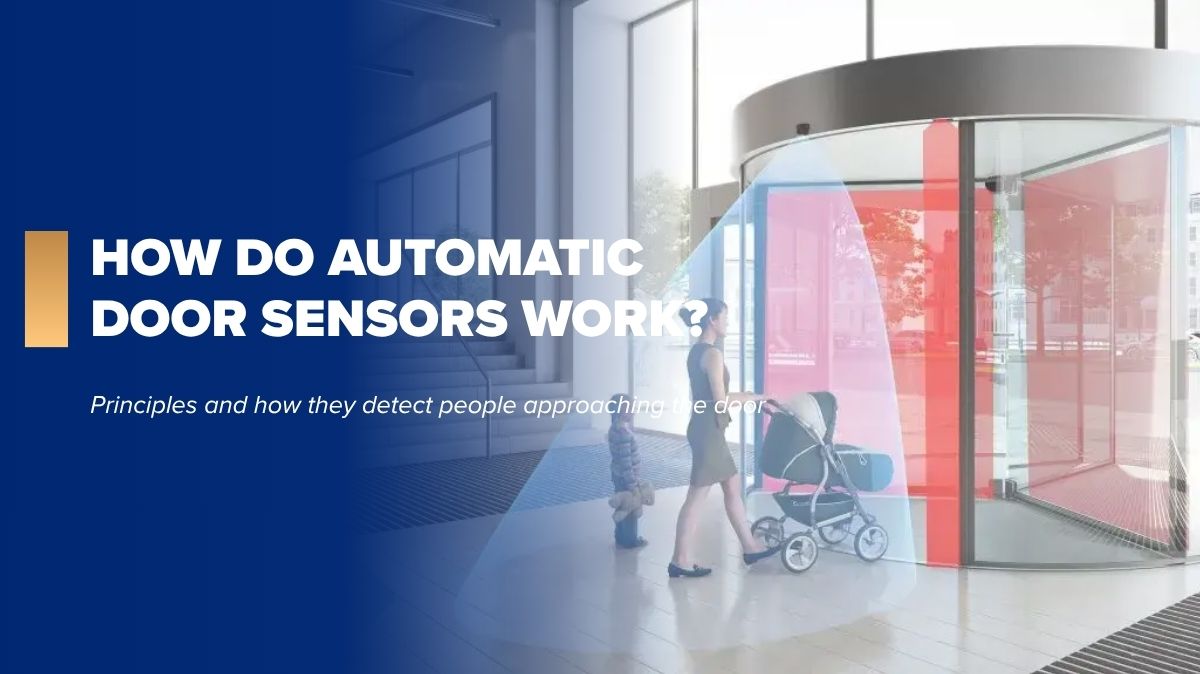
When a person approaches the door area, the activation sensor detects the person and sends a signal to the system to open the door. After the person has passed through and there is no longer an activation signal for the preset period, the controller commands the door to close. In addition to activation sensors, automatic doors can also use safety sensors to detect people or objects within the movement area of the door leaves, helping control the opening and closing process.
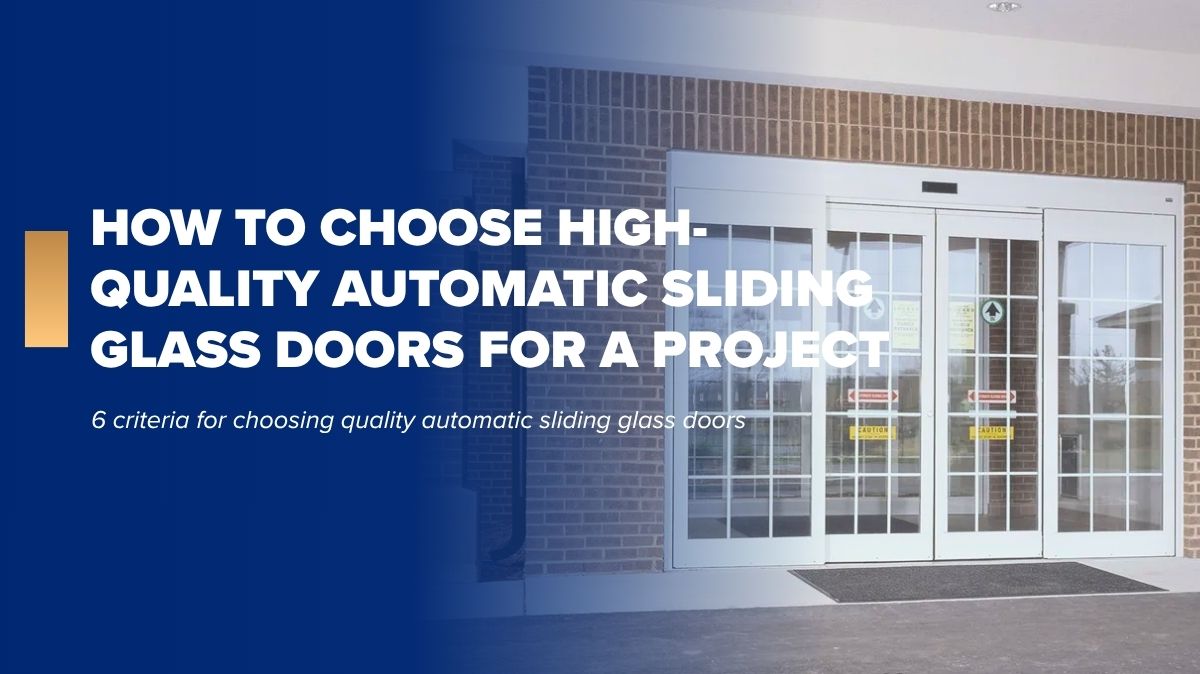
6 criteria for choosing high-quality automatic sliding glass doors
To choose quality automatic sliding glass doors suitable for a specific project, both the glass door and the operating system should be evaluated rather than considering only an individual component. The following are 6 key criteria to consider.
Choose the right type of glass for the project
Glass is the largest component of the door and should therefore be selected based on usage requirements, door leaf dimensions, and the project’s design. Glass types commonly used for automatic doors may include tempered glass or laminated safety glass, depending on the configuration. When selecting glass, it is important to consider its thickness, dimensions, and weight rather than choosing based solely on aesthetics.
In particular, the weight of the glass door leaf must be checked against the load capacity of the operator. The applicable load capacity is specified for each door series. If the door weight exceeds the permitted specifications, operating performance may be affected and could result in damage or safety risks.
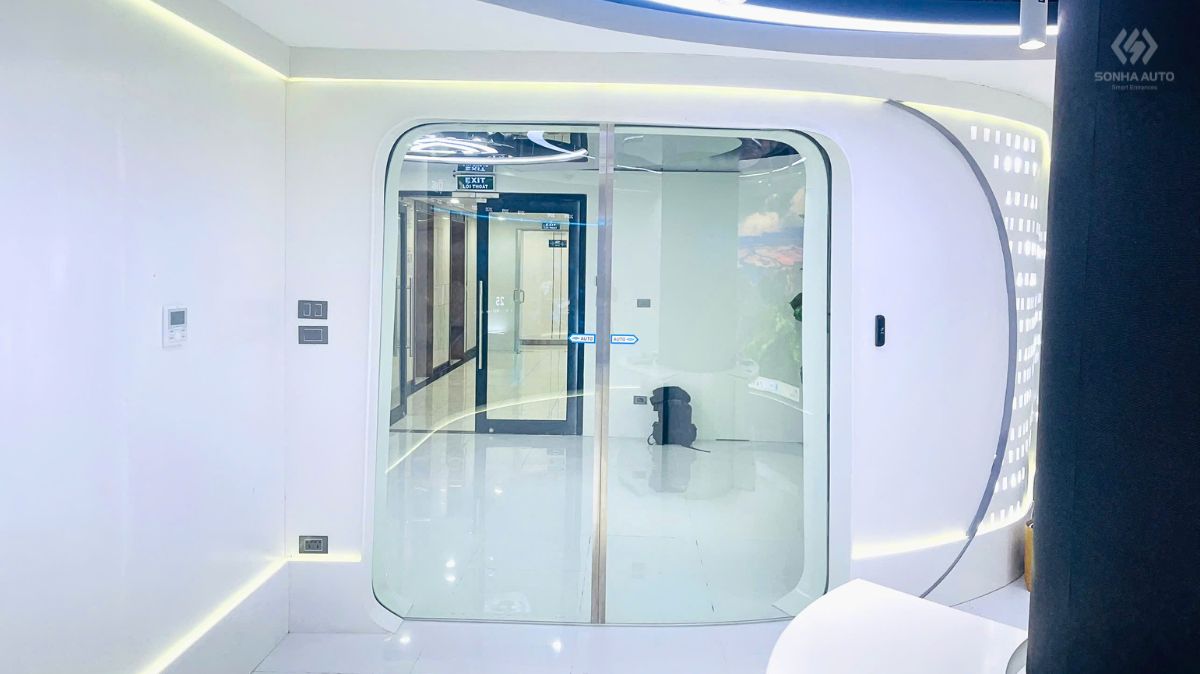
Determine the door leaf load capacity and dimensions
This is an important criterion when selecting an automatic glass door system. Two door systems with the same entrance dimensions may have different loads depending on the type of glass, number of leaves, and door construction. Therefore, the following factors need to be determined:
- Door leaf width and height.
- Number of door leaves.
- Weight of each door leaf.
- Single-slide or bi-parting configuration.
- Space available for the door system.
These specifications provide the basis for determining an operator suitable for the actual door load.
Choose the operator based on opening frequency
Not all projects have the same door usage frequency. The traffic volume at a small showroom differs from that at the main entrance of a hospital, hotel, or shopping mall. Therefore, operator selection should take into account usage intensity, number of opening and closing cycles, and the operating requirements of each area. Using an operator that is not suitable for the actual door load or operating frequency may affect system performance and stability.

Evaluate activation and safety sensors
Activation sensors and safety sensors perform different functions in an automatic door system. An activation sensor detects people or objects approaching the door and sends a signal to open it, while a safety sensor helps detect people or objects within the movement area of the door leaves.
When selecting sensors, factors such as the approach direction, pedestrian traffic, space in front of the door, surrounding area, and operating requirements should be considered. Depending on the site conditions, different sensor technologies can be used to meet the intended application.

Check the actual site conditions and installation space
Automatic glass doors need to be compatible with the actual dimensions and structural conditions of the building. Before making a selection, the entrance width, door height, location of the technical box, space required for sliding door leaves, and related structural elements should be surveyed.
For projects where the available side space is limited but a large clear opening is required, a Telescopic sliding door may be considered. By stacking the door leaves when opening, this type of door can provide a larger opening width than a conventional sliding door under the same site conditions.
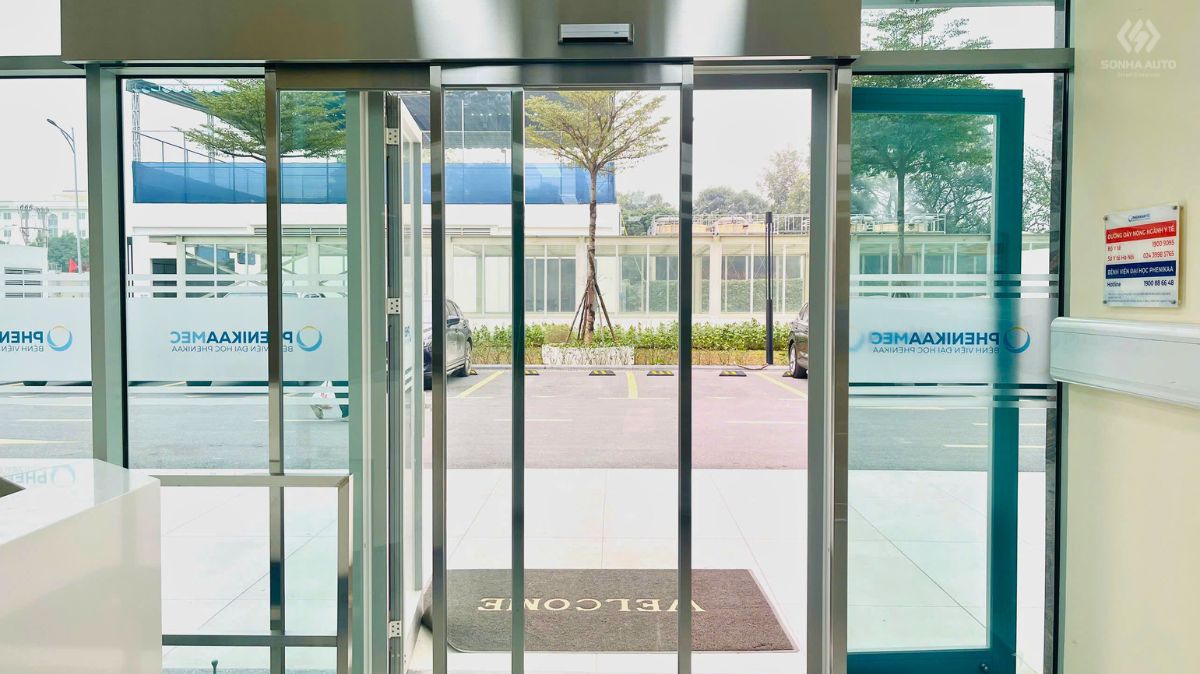
Choose a reputable brand and professional installation contractor
An automatic door system should not only be evaluated at the time of installation but also throughout its operation and maintenance. Therefore, it is advisable to choose a provider capable of handling the entire process, from site survey to commissioning and system maintenance.
Key aspects to consider include:
- Surveying existing site conditions and actual dimensions.
- Calculating the door leaf load.
- Recommending a suitable operator.
- Selecting sensors according to the operating environment.
- Installing and adjusting the system.
- Checking operation after installation.
- Maintaining the system and troubleshooting potential issues.
For projects with specific operational requirements, conducting a site survey before providing a quotation is just as important as selecting the brand.
Featured NABCO automatic sliding door series
After the above criteria have been identified, choosing quality automatic sliding glass doors can be further specified based on the load capacity, opening configuration, and installation conditions of each product series.
NABCO develops various automatic sliding door series with different configurations in terms of load capacity, dimensions, opening types, and operating conditions. Therefore, rather than selecting one fixed model for every project, the actual specifications of the door system should be matched with the product configuration.
NABCO V-60SL – automatic sliding door for light loads
V-60SL is an automatic sliding door series designed for relatively light door loads. NABCO developed this product series with a computerized controller and various adjustable functions.
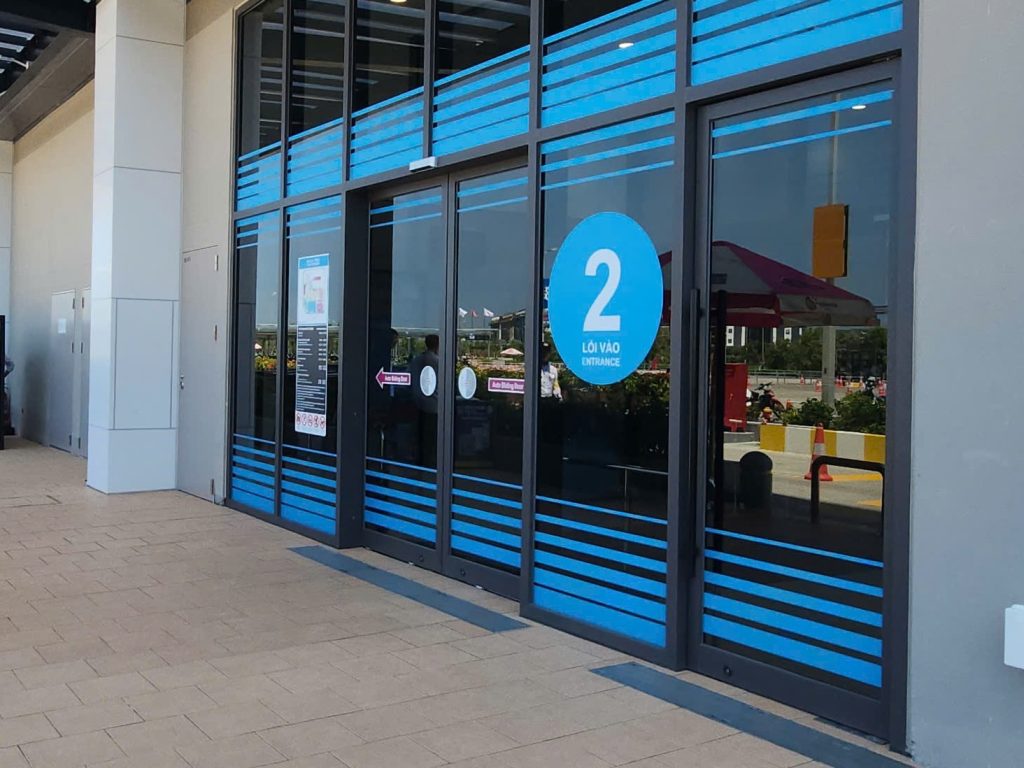
NABCO V-85SL – for medium-duty automatic doors
V-85SL is designed for medium-duty automatic doors, with NABCO positioning the series for use in office buildings. This model can be applied to doors with a load of 85 kg × 2 leaves.
This product series can be considered for office and commercial entrances, as well as projects requiring frequent operation when the door load falls within the applicable range.
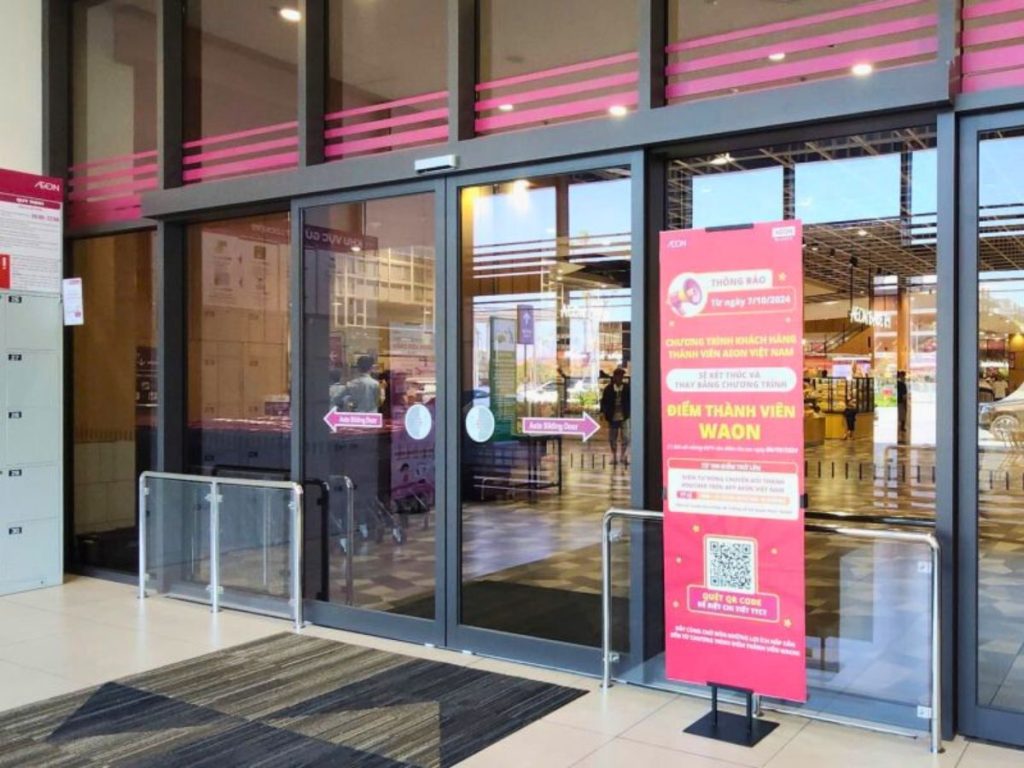
NABCO V-150SL – for large building entrances
V-150SL belongs to the higher-load automatic sliding door category and was developed by NABCO for entrances to large buildings. The V-150SL version can accommodate doors weighing up to 150 kg according to the standard product configuration.
Sonha Auto currently supplies both the V-150SL and V-150SL-HM versions. The V-150SL-HM features a surface-mounted technical box approximately 100 mm high, making it suitable for projects where a more compact appearance at the top of the door is desired.
NABCO V-250SL – for high-load doors
V-250SL is designed for high-load doors and special door designs. According to the product configuration, this series can accommodate a two-leaf door with a total weight of up to 250 kg or a single-leaf door weighing up to 500 kg.
For projects using large or high-load door leaves, this operator series should be considered based on the actual door leaf weight and the technical specifications of the system.
NABCO Telescopic – telescopic sliding door system
Telescopic sliding doors use a mechanism in which the door leaves stack behind one another when opening. This configuration is suitable for sites with limited sliding space on both sides while still requiring a large clear opening.
NABCO offers various Telescopic configurations, including V-60TL, V-85TL and V-150TL, allowing selection based on the load capacity and requirements of each door system.
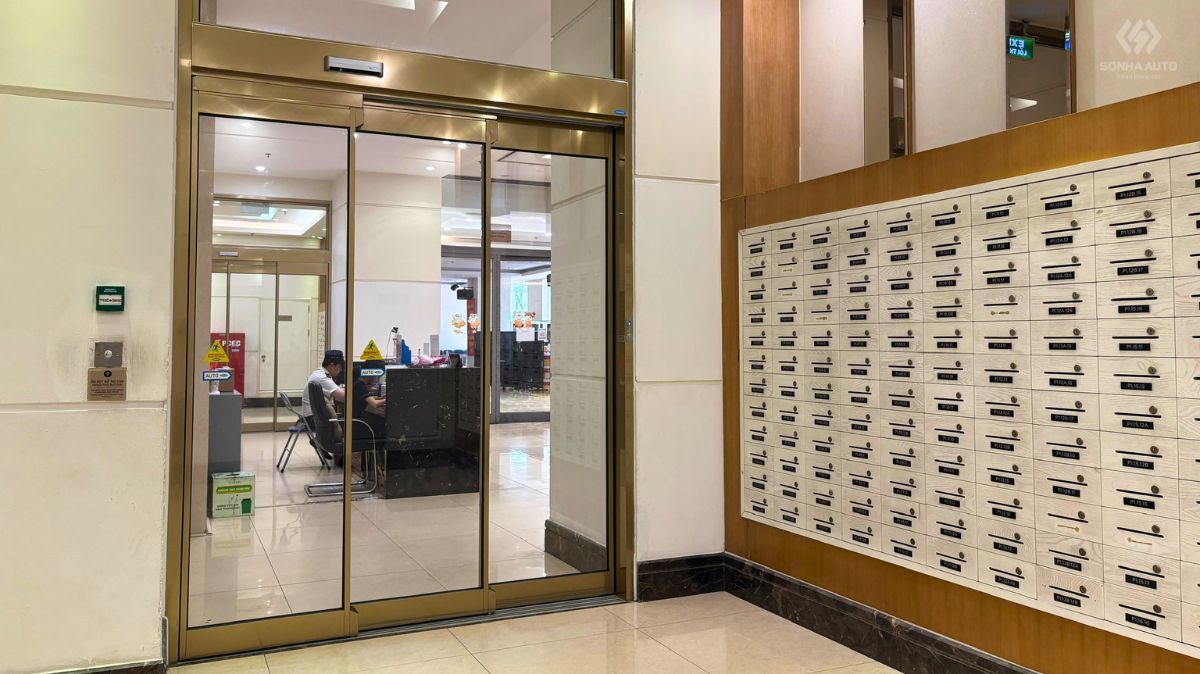
NABCO GT-1175 – sliding door with Breakout emergency opening
GT-1175 is an automatic sliding door series incorporating a Breakout emergency opening mechanism. Under normal operating conditions, the door functions as a sliding door system. When necessary, the door leaves can be opened using the Breakout mechanism to create a wider passage.
This door series is suitable for projects with specific requirements for emergency door opening or where a larger opening width is required in certain situations.
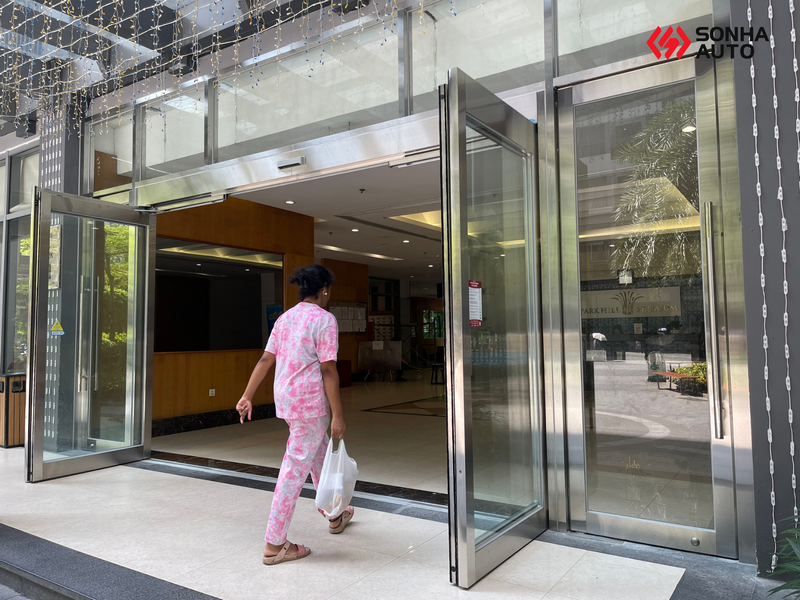
NABCO NLC and NAL – sliding doors for design and structural requirements
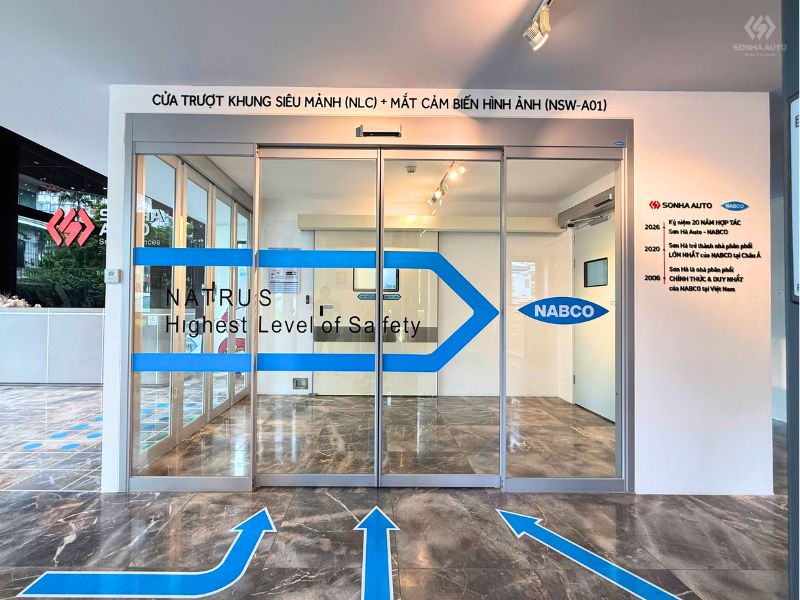
In addition to the V-Series operators, NABCO also offers complete sliding door systems such as NLC and NAL. NLC is a slim-frame sliding door series suitable for projects that emphasize a streamlined appearance and the aesthetics of the door system. Meanwhile, NAL is a reinforced-frame sliding door series designed for projects requiring a more robust door structure.
>>> See more: What makes NABCO automatic doors different from conventional automatic doors? An analysis from technology to operation
Sonha Auto – consulting and installation solutions for genuine NABCO automatic doors
Choosing quality automatic sliding glass doors should begin with the characteristics and actual requirements of the project rather than simply comparing prices or appearance. Glass type, door leaf dimensions and load, operator, sensors, usage frequency, and installation space all need to be considered together. Once these specifications have been identified, the installation provider can recommend a door series and configuration that matches the actual site conditions.
Sonha Auto provides NABCO automatic door solutions and carries out site surveys, consultation, installation, maintenance, and replacement of automatic door systems for various types of projects.
Contact Sonha Auto for a site survey and consultation on an automatic sliding glass door configuration suitable for your project’s operational requirements.