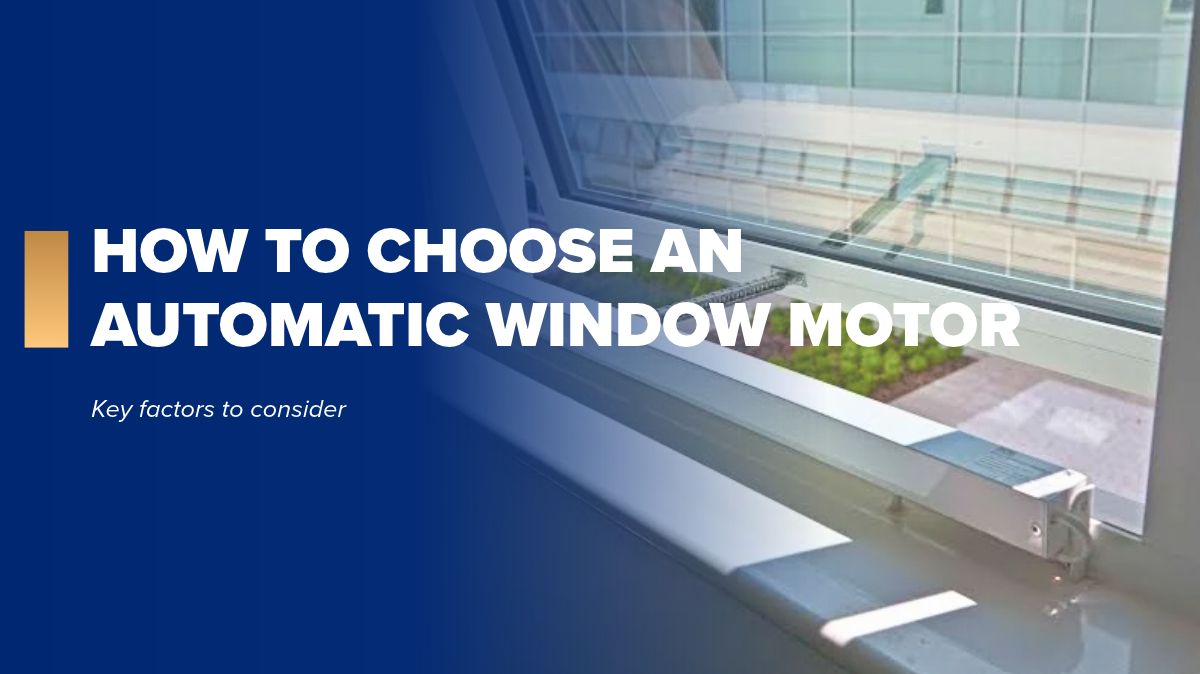
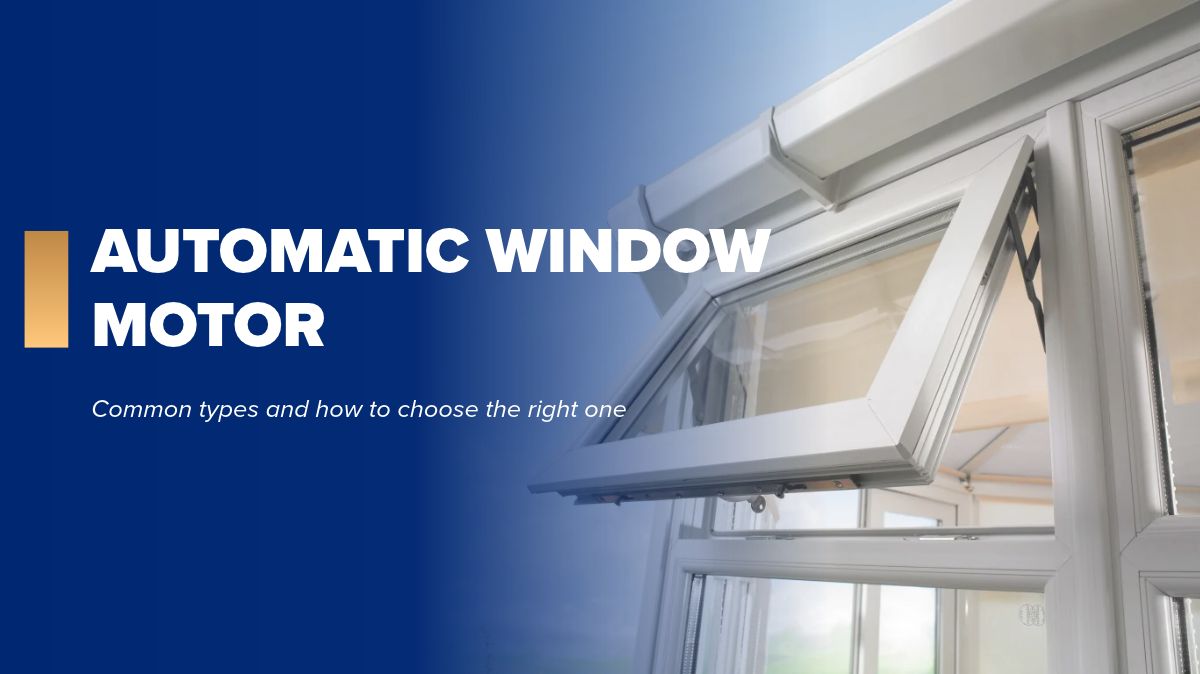
Choosing an automatic window motor involves more than simply considering the window’s dimensions or weight. To ensure stable operation, the motor must also meet requirements for drive force, opening stroke, linkage mechanism, and actual installation conditions. An unsuitable choice may prevent the window from opening to the desired position, result in unstable operation, or place inappropriate loads on the motor and related components. So, how to choose an automatic window motor that meets operational requirements and helps minimize problems during use? In this article, Sonha Auto explores the key criteria to consider before selecting the equipment.
Why shouldn’t you choose a window motor based on window dimensions alone?
Window dimensions provide an initial indication of the overall size of the window assembly, but they are not sufficient to determine the appropriate motor. Windows of the same size may differ in weight, construction, and movement, resulting in different drive requirements.
Therefore, three groups of factors should be considered together:
- Window characteristics: Dimensions, weight, materials, and sash construction.
- Operating requirements: Opening type, stroke, and required opening angle.
- Installation conditions: Motor mounting position, operating environment, and control system.
Assessing all these factors helps narrow down the options and avoids selecting equipment based on a single specification.

Specifications to determine when choosing an automatic window motor
Window dimensions and sash weight
Before selecting a motor, measure the window’s width and height and determine the actual weight of the sash. The materials, frame construction, and operating condition should also be assessed if the window is already installed.
These details provide a basis for evaluating the load and identifying a suitable drive solution. For large windows, windows with special constructions, or windows installed in wind-exposed locations, additional factors affecting the sash should be assessed rather than relying on weight alone.
Motor drive force
Depending on the equipment type, manufacturers may specify thrust force, pulling force, or other relevant drive parameters. These specifications help determine whether the motor can meet the operating requirements of the window assembly.
A motor with a higher force rating is not necessarily more suitable for a heavier window. The required force also depends on the opening type, installation position, linkage mechanism, and loads acting on the sash. If the force is insufficient, the window may not complete its opening stroke. Conversely, an incompatible mechanism may place excessive stress on the hinges, window frame, and connection points.
Therefore, how to choose an automatic window motor depends on matching the equipment specifications to the actual window construction and operating conditions, rather than considering sash weight alone.
Stroke and opening angle
The stroke is the distance traveled by the drive mechanism, while the opening angle indicates how far the window sash opens. Both specifications must be compatible with the window design and the motor installation arrangement.
When selecting a window motor, determine the desired opening angle, check the motor stroke, and ensure that the mechanism can move freely throughout the opening and closing cycle. The sash must also return to its fully closed position as designed.

How to choose an automatic window motor based on window opening type
In addition to dimensions and weight, the opening type determines which drive mechanism is suitable. Therefore, how to choose an automatic window motor should be based on the window construction, opening stroke, and motor mounting position to ensure stable operation.
Top-hung windows
Top-hung windows are typically hinged along the top edge, allowing the sash to tilt open as designed. A single-chain window opener or double-chain window opener may be considered depending on sash weight, drive force, stroke, and linkage arrangement.
When selecting a motor, consider:
- The sash weight and width.
- The desired opening angle and required stroke.
- The motor mounting position relative to the hinges.
- The load-bearing capacity of the window frame and connection points.
Not every top-hung window can use the same type of motor. The equipment specifications must be checked against the window construction and installation conditions to determine the appropriate solution.
Side-hung windows
Side-hung windows rotate around hinges mounted along one side. Because their opening direction and force transmission differ from those of top-hung windows, the motor must be compatible with the window construction and linkage mechanism.
Depending on the design, a swing arm window opener or another drive mechanism approved by the manufacturer may be suitable. When selecting a motor, check whether the window opens inward or outward, the required opening angle, the motor mounting position, and the loads acting on the sash, particularly for large windows or installations exposed to wind.

Roof windows and skylights
Roof windows and skylights are often exposed to rain, wind, and outdoor temperature fluctuations. The motor must therefore meet both the drive requirements and the environmental conditions at the installation location.
Depending on the window construction, a chain window motor, electric push rod window motor, or specialized drive mechanism may be considered. Key selection criteria include:
- Sufficient drive force for the design load and wind conditions.
- A stroke that meets the required opening angle.
- Suitability for the environmental conditions at the installation location.
- Appropriate power supply, control, and maintenance arrangements for the project.
For large roof windows or those with special constructions, a site survey is recommended to determine the appropriate motor type and installation method.
Technical considerations before installing an automatic window motor
- Power supply and control system: Check the voltage, power rating, wiring method, and compatibility with the controller. For automatic smoke ventilation windows, connections to the control panel, fire alarm signals, and power supply must comply with the system design requirements.
- Environmental conditions and installation location: Check the motor’s ingress protection rating and operating temperature limits against the intended environment. Ensure that the mounting position does not obstruct sash movement and allows convenient inspection and maintenance.
- Maintenance accessibility and window condition: Choose an installation arrangement that facilitates inspection, repair, and equipment replacement. For existing windows, inspect the hinges, frame, locking mechanism, and smoothness of operation. Any sticking, sash sagging, or abnormal resistance should be addressed before installing the motor.

>>> See more: What is a fire-linked window? A safe smoke exhaust solution for buildings
Sonha Auto – Automatic window solutions tailored to project requirements
Sonha Auto provides automatic smoke ventilation window solutions featuring single-chain, double-chain, electric push rod, and swing arm window openers. The options can be selected according to the window construction and operating requirements of each installation.
Selecting the right equipment requires evaluating the motor specifications alongside the actual window characteristics and control system. Learn more about Sonha Auto’s automatic smoke ventilation window solutions, or call 0934 546 008 for advice tailored to your project requirements.