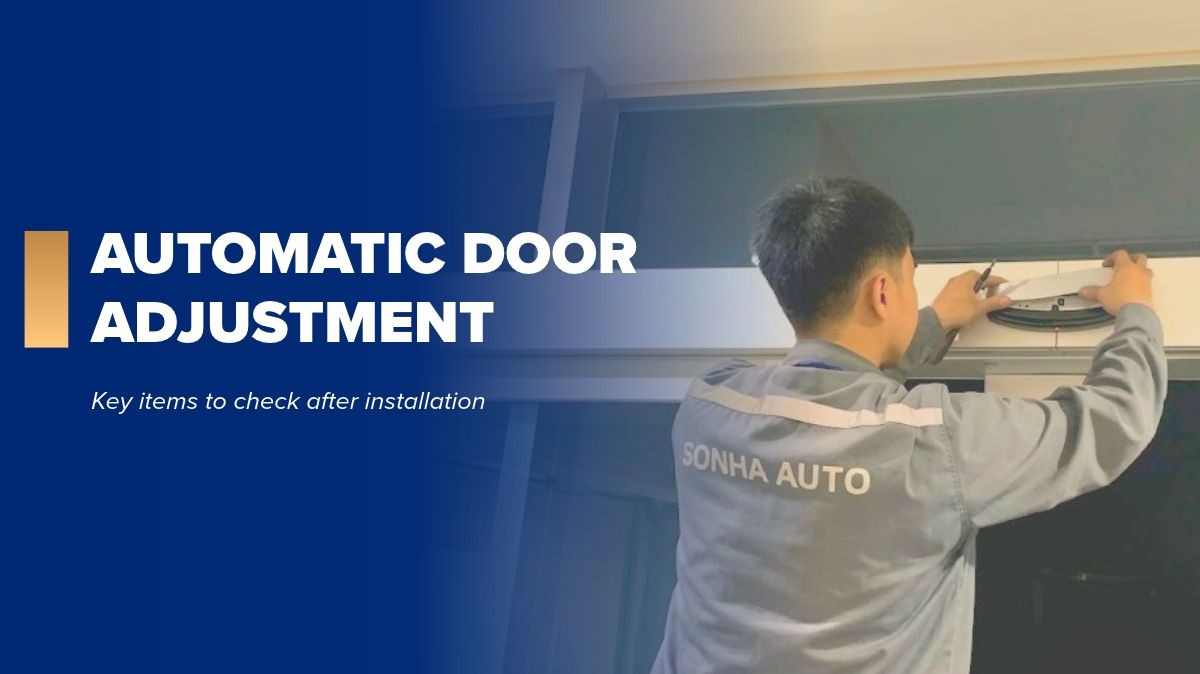
After installation is complete, automatic doors must be inspected and adjusted before being put into operation. Automatic door adjustment helps ensure that all components work in sync, the door leaves move along the correct travel path, sensors detect accurately, and the system operates reliably and safely. So, what does the adjustment process involve, and how should it be carried out? Find out more with Sonha Auto in the article below.
Why is automatic door adjustment necessary after installation?
Automatic doors are systems comprising multiple interconnected components, including guide rails, motors, controllers, door leaves, and sensors. Even if just one component is installed incorrectly or its settings are unsuitable, the door’s operating performance can be significantly affected.
Therefore, automatic door adjustment immediately after installation plays a crucial role in:
- Ensuring that the door leaves move along the correct travel path, minimizing misalignment and impact.
- Setting opening and closing speeds appropriate to the door structure and operating conditions.
- Adjusting the hold-open time according to pedestrian traffic.
- Checking sensor detection accuracy and the system’s response.
- Ensuring that safety functions operate as designed.
This is an essential technical finishing step that helps identify misalignment early and prevent operational problems from developing later.
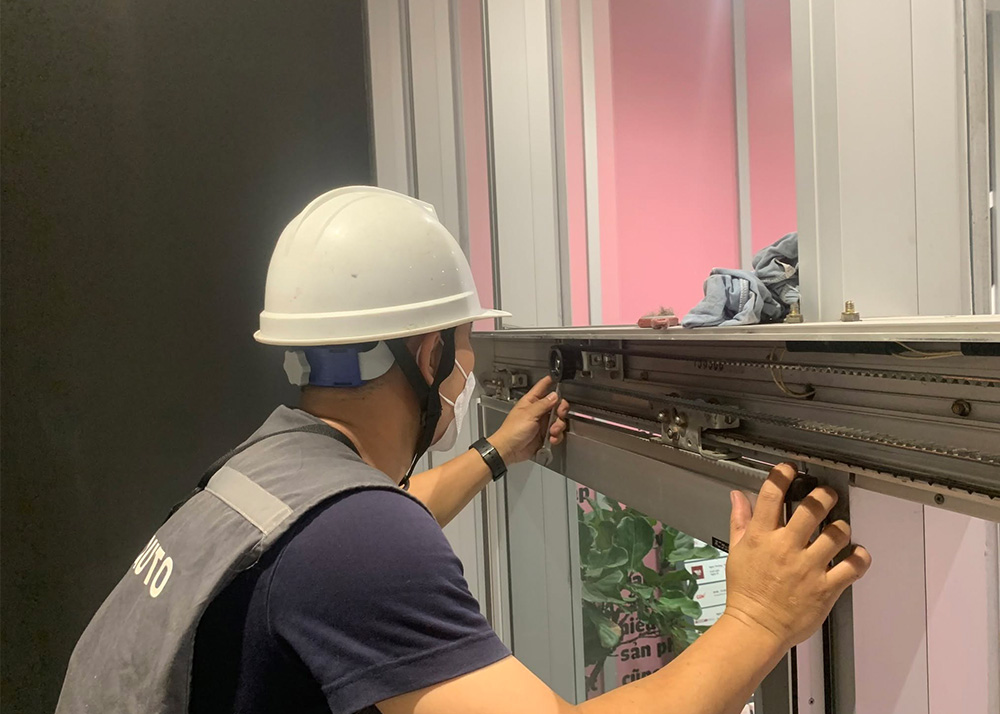
Key items to check when adjusting automatic doors after installation
Depending on the equipment type (sliding doors, swing doors, or revolving doors), technicians will carry out adjustments according to the relevant technical standards. For common automatic sliding door systems, the process focuses on the following key items:
Checking the guide rails and door leaf alignment
The guide rails and door hanger assemblies determine the stability of the door during movement. Technicians need to check the straightness and secure installation of the rails, roller positions, door leaf alignment, and clearances between the door leaves and surrounding components. If a door leaf is misaligned, rubbing against other components, or moving unevenly, the underlying mechanical cause must be identified and corrected before adjusting the operating parameters.
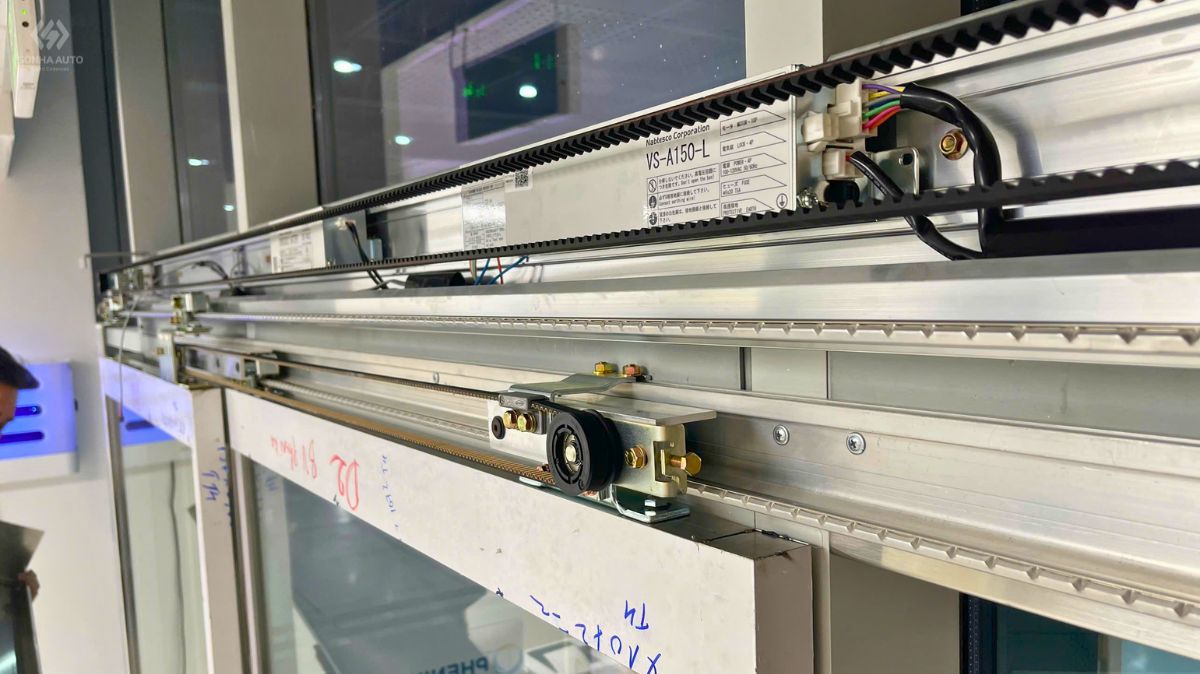
Checking the motor and drive system
The motor generates the driving force that moves the door leaves through components such as the drive belt and pulleys. These components need to be checked for correct installation, belt tension, connections, and power transmission performance. Technicians also observe the motor’s noise, vibration, and operating performance to identify any signs of abnormality. All adjustments must comply with the technical requirements of the specific equipment model.
Adjusting opening and closing speeds
Opening and closing speeds must be appropriate for the door leaf load, equipment configuration, and the building’s actual usage conditions. Technicians check the opening speed, closing speed, acceleration and deceleration (if available), and the stopping positions at the end of each travel cycle. The aim is to ensure smooth door movement without sudden starts or stops while meeting actual pedestrian traffic requirements.
Setting the hold-open time
The hold-open time is the waiting period before an automatic door closes after the activation signal is no longer detected. This parameter should be adjusted according to the intended use. For example, automatic doors in hospitals need to remain open long enough for patients and wheelchair users to pass through, while doors in office buildings must accommodate pedestrian traffic during peak hours.
Setting an appropriate hold-open time helps prevent doors from closing too early or remaining open longer than necessary.
Adjusting the sensor detection zone
Sensors detect approaching people and help protect the area in which the door leaves move. Depending on the system configuration, the system may include activation sensors and safety sensors.
Technicians need to check the installation position, scanning angle, and detection range to ensure that sensors accurately detect people within the intended operating area. They must also check the coordination between the sensors and the controller to prevent situations in which the door fails to open when someone approaches or closes while someone is still within the protected area.
Changes to sensor positions and detection zones must be carried out by qualified personnel in accordance with the manufacturer’s instructions.
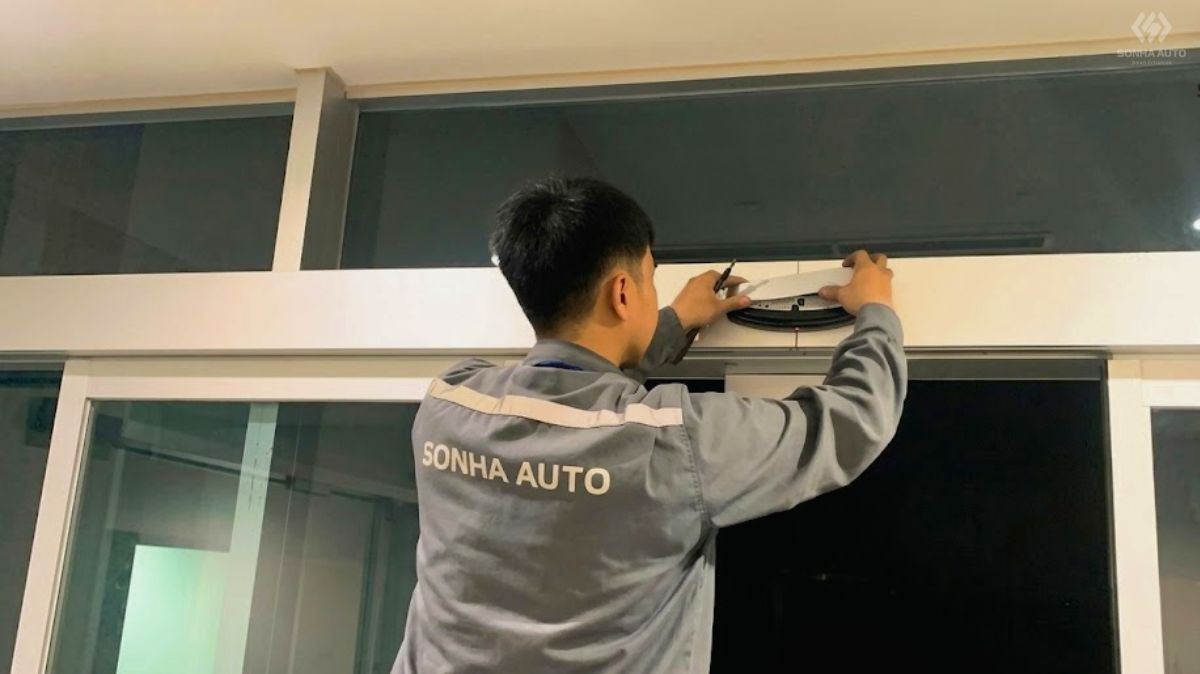
Checking safety functions
Before commissioning, the automatic reversal function must be tested to ensure that the door reverses when an obstruction is detected during closing. Safety sensors must also be tested to ensure that the door does not close while someone is standing in the doorway.
Automatic door adjustment procedure after installation
To avoid overlooking any details, automatic door adjustment should be carried out systematically in the following steps:
- Step 1: Overall inspection: Check the guide rails, door leaves, hanger assemblies, motor, drive belt, controller, sensors, and connection points.
- Step 2: Check mechanical movement: Assess door leaf alignment, movement, and any signs of rubbing. Correct mechanical misalignment before adjusting the operating parameters.
- Step 3: Adjust operating parameters: Set the opening and closing speeds, hold-open time, and other necessary operating modes according to the equipment configuration, manufacturer’s requirements, and site conditions.
- Step 4: Check sensors and safety functions: Test the detection performance of activation sensors and safety sensors, as well as the door’s response under appropriate operating conditions.
- Step 5: Test operation and commission the system: Operate the door repeatedly to assess its stability, opening and closing travel, stopping positions, hold-open time, and safety functions. If any abnormalities are detected, they must be addressed and the system retested before handover.
- Step 6: Handover and user instructions: Provide information about the equipment, operating modes, safety precautions, and recommended automatic door maintenance to help the facility management team operate the system correctly.

When do automatic doors need readjustment?
After a period of operation, factors such as opening and closing frequency and environmental conditions may cause the system to develop issues that require readjustment. Common signs include:
- Door leaves move unevenly, open or close slowly, or fail to follow the correct travel path.
- The door produces unusual noise or vibration.
- The door opens at the wrong time or activates unexpectedly on a frequent basis.
- The door closes while someone is still within the protected area.
- The door leaves do not close completely or stop in the wrong position.
However, automatic door malfunctions are not always caused by incorrect adjustment settings. The underlying causes may be related to dust, obstructions, worn components, sensors, or the controller. Therefore, the entire system should be inspected to identify the actual cause before any corrective action is taken.
Should you adjust automatic doors yourself on site?
Users should limit their involvement to cleaning the surface of the sliding rails, checking for debris or obstructions in the doorway, and observing the door’s operating condition. Working on the control circuit, changing sensor scanning angles, or adjusting motor driving force requires specialized measuring equipment and technical expertise.
According to recommendations from NABCO, incorrect control board settings or improper sensor wiring can damage the control board and create safety risks for people passing through the doorway. If the system makes unusual noises, emits a burning smell, or develops a fault, switch off the power at the circuit breaker and contact a professional automatic door maintenance provider immediately.
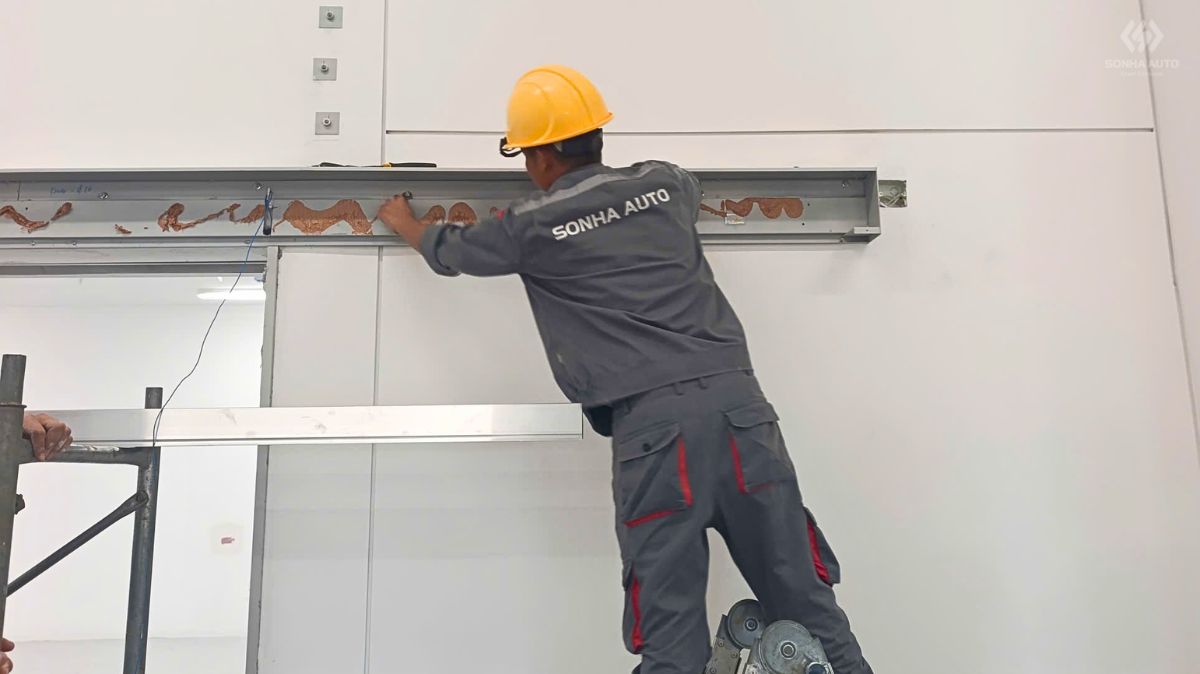
Sonha Auto – Professional automatic door services
Automatic door adjustment requires a high level of precision to ensure reliable operation over millions of cycles. In addition to component quality, installation standards and technicians’ adjustment skills are key factors determining the system’s service life.
As the official distributor of NABCO (Japan) automatic doors in Vietnam since 2006, Sonha Auto provides comprehensive solutions, from consultation and installation to professional automatic door maintenance services for shopping malls, office buildings, hospitals, and factories.
Sonha Auto’s engineering team follows a rigorous inspection procedure and accurately adjusts operating parameters in accordance with the manufacturer’s recommendations before handing over each project.
Contact Sonha Auto for consultation on automatic door installation, adjustment, and maintenance solutions suited to your project.
Hotline: 0934 546 008