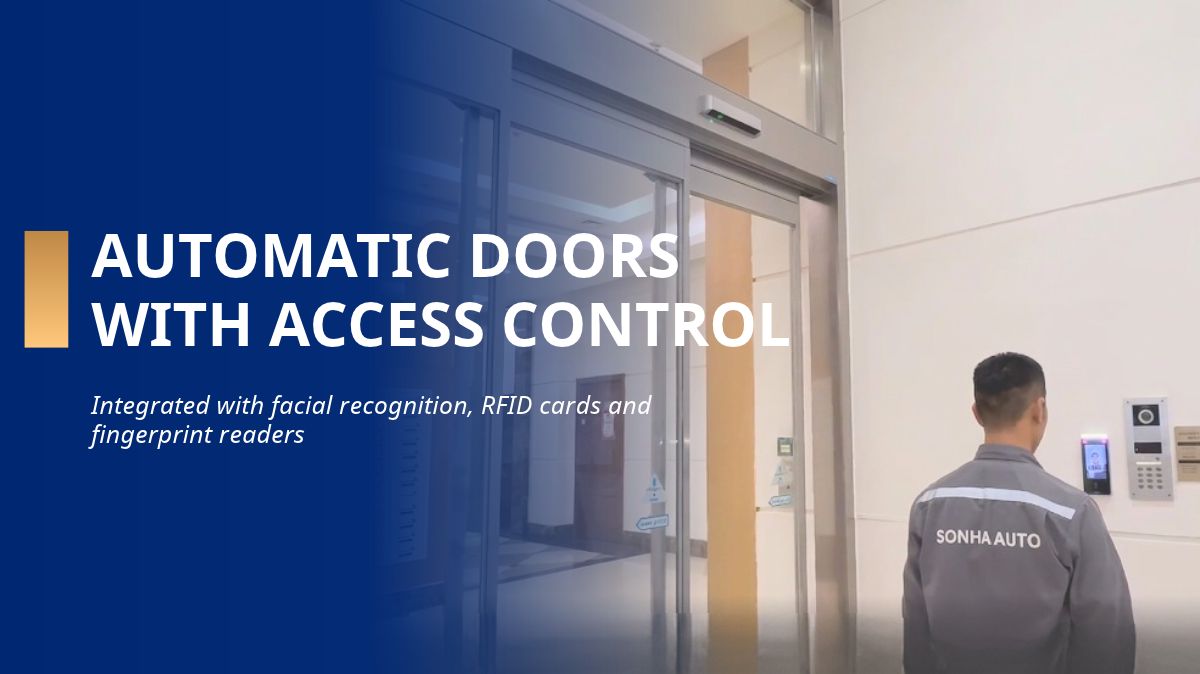
In office buildings, high-end residential complexes and restricted-access areas, automatic doors do more than simply open and close entrances. They can also be integrated with access control systems to verify users before allowing entry, while maintaining automatic opening on the exit side for convenient passage. A typical system of automatic doors integrated with access control combines the door assembly, identification devices or card readers, an access control controller and operating sensors. Depending on the project’s requirements, the system can control each direction of movement independently, meeting security requirements while maintaining convenient pedestrian flow. How does this integration work, and what should be considered during implementation? In this article, Sonha Auto explains the operating principles and practical applications of this solution.
How do automatic doors integrated with access control work?
An Access Control system determines whether a user is authorized to pass through a particular area. When connected to automatic doors, the identification device sends user information to the access control controller. If the credentials are valid, the system sends an authorization signal to open the door.
A basic system typically consists of the following components:
- Automatic door assembly: Opens and closes in response to control signals.
- Identification device: May include an RFID card reader, fingerprint reader or facial recognition camera.
- Access control controller: Receives identification information, verifies access permissions and sends the door-opening authorization signal.
- Door controller and sensors: Receive opening signals, control the drive mechanism and detect pedestrian movement to ensure appropriate door operation.
The operating sequence can be summarized as follows: the user authenticates their identity → the system verifies access permissions → an opening authorization signal is sent to the door → the door opens automatically → sensors support pedestrian passage and trigger door closing after the user has passed through.
Common access control methods for automatic doors
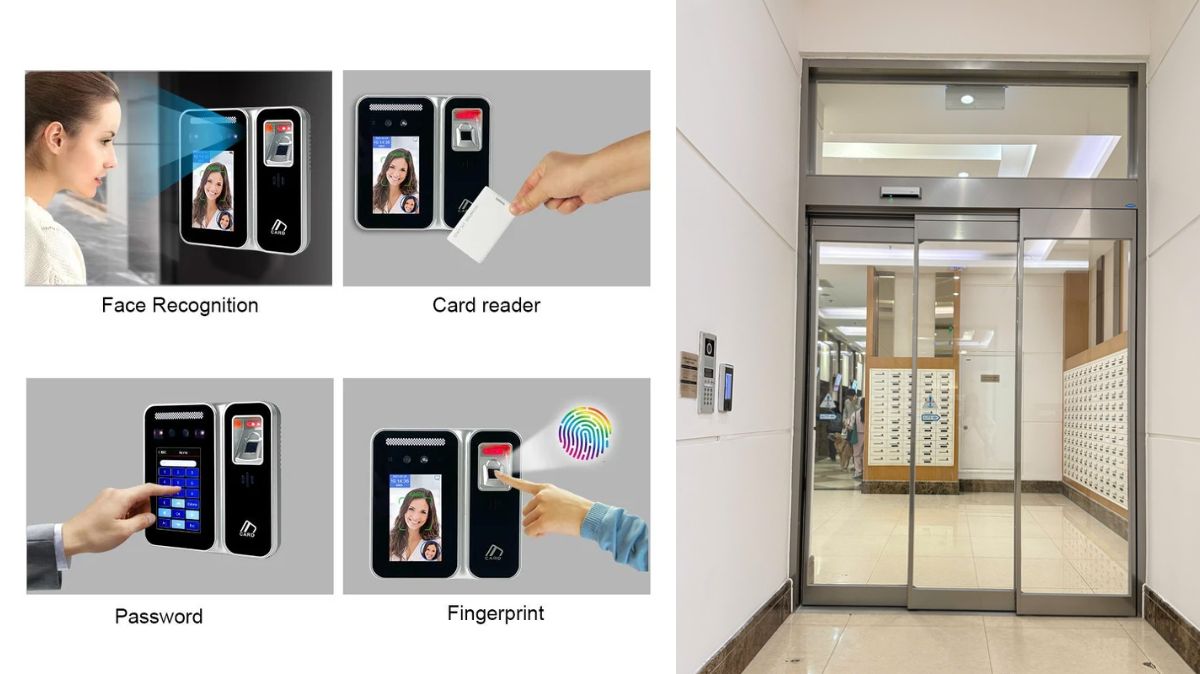
For automatic doors integrated with access control, the authentication method can be selected according to the security level, scale and usage requirements of each area. Three common methods are:
RFID card access control
Users hold their cards near the reader. Once the information has been checked and access permission confirmed, the system sends an authorization signal to open the door. This method is suitable for offices, buildings and areas with a relatively stable number of users. Building management can issue, revoke or modify access permissions for individual cards.
Fingerprint access control
A fingerprint reader verifies the user’s biometric characteristics before granting access. This method is commonly used in technical rooms, internal work areas or locations where access needs to be restricted to authorized personnel.
Facial recognition access control
A facial recognition camera captures the face of the approaching user and compares it with registered data. Once authentication is successful, the system sends a door-opening signal without requiring the user to present a card or touch the reader. This is a convenient option for entrances with high usage frequency, particularly when a building needs to control entry while maintaining fast and convenient passage.
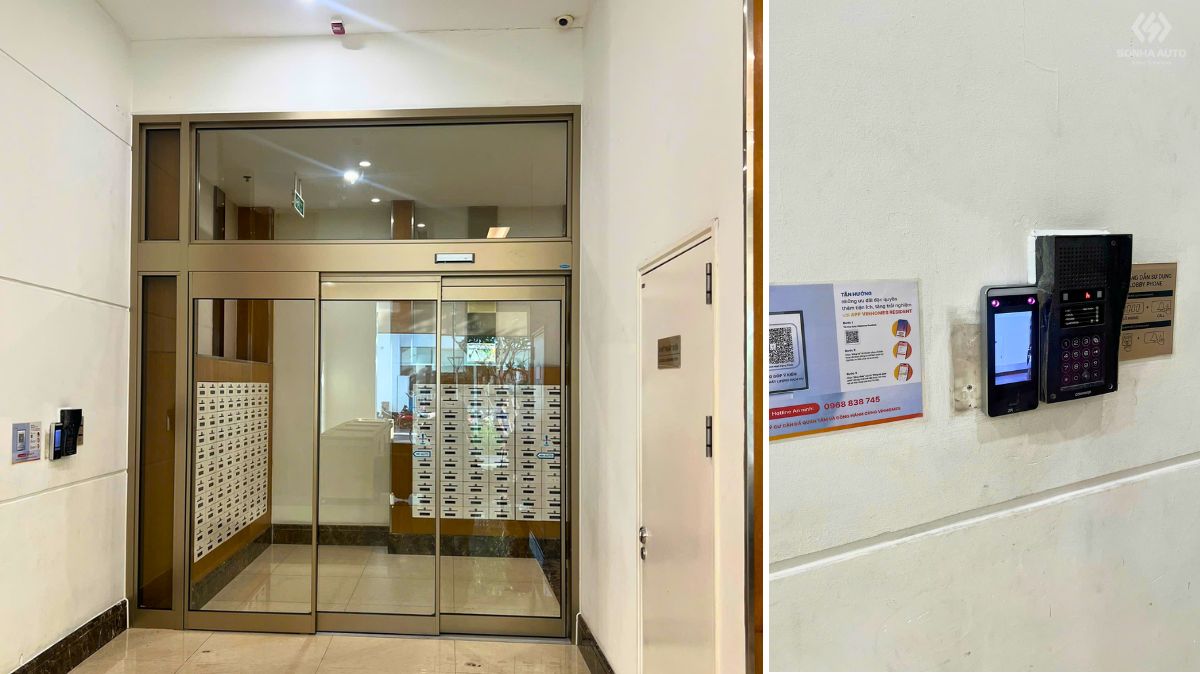
Automatic doors integrated with facial recognition at Park 8, Vinhomes Times City
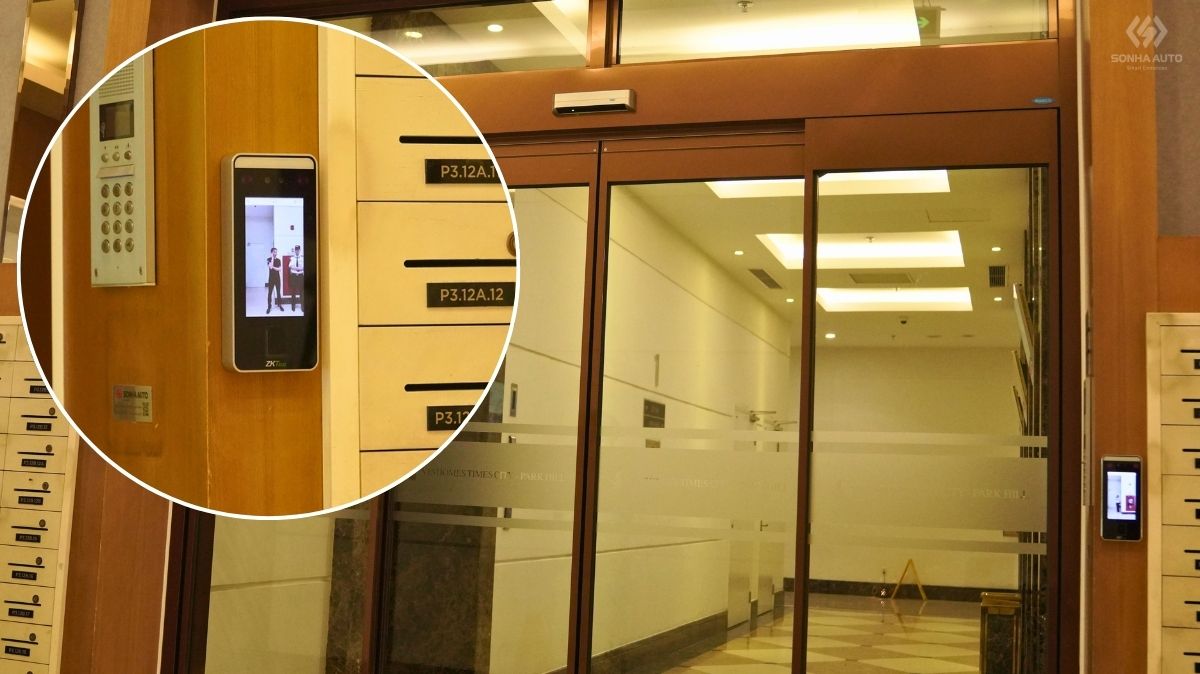
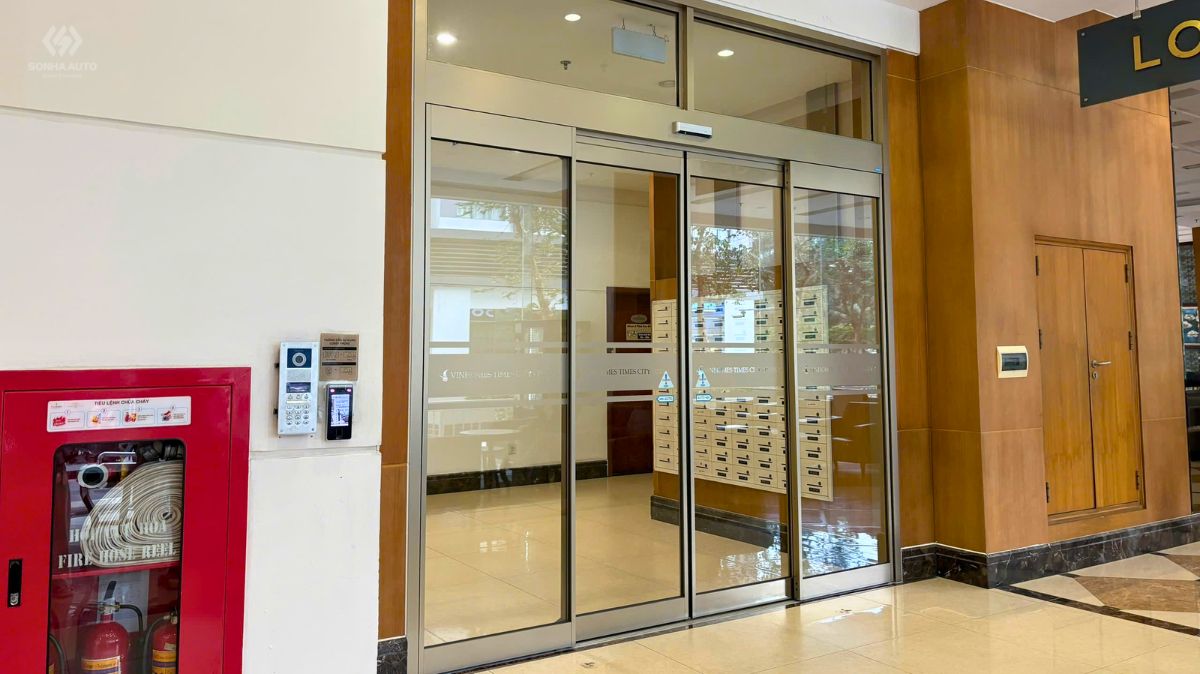
At Park 8, Vinhomes Times City in Hanoi, Sonha Auto installed 03 sets of NABCO GT-1175 breakout sliding doors, including 02 sets of bi-parting doors in the inner lobby integrated with facial recognition technology. This is a practical application of automatic doors integrated with access control, using authentication on the entry side and conventional sensors on the exit side.
Facial recognition for entry: Controlling access to the lobby
When residents approach the doors from outside the inner lobby, the facial recognition system verifies their identity. If authentication is successful, an opening signal is sent to the door controller to activate the doors. This allows users to enter without presenting an RFID card or performing any manual operation.
On the exit side, the NABCO automatic door system uses conventional sensors to detect movement and open automatically, without requiring further authentication. This arrangement controls access into the inner lobby while allowing residents to leave the area conveniently.
NABCO GT-1175 breakout sliding doors integrated with facial recognition at Park 8, Vinhomes Times City
Independently adjusting sensor detection zones to suit the floor layout
At the inner lobby of Park 8, storage lockers are installed on both sides of the doors. People standing nearby to collect or deposit belongings may enter the sensors’ detection zones even when they do not intend to pass through the doors. This could cause unintended door activation if the detection zones are not configured appropriately. To address this issue, Sonha Auto technicians independently adjusted the sensor detection zones on the NABCO automatic doors, helping prevent movements unrelated to pedestrian passage from triggering the doors.
This practical example shows that sensor detection zones can be adjusted individually to suit each location and its specific usage conditions, allowing the system to operate more appropriately within the building layout.
Key considerations when selecting automatic doors with access control
To ensure stable operation and meet the intended requirements, the entire system needs to be considered as an integrated solution, from the authentication devices to the door assembly and operating configuration. Key factors include:
Clearly define the direction of access control: Determine whether authentication is required in one or both directions, and whether the exit side will use sensors or a separate authentication device.
- Check system compatibility: The identification device, access control controller and door controller must support compatible communication interfaces.
- Configure pedestrian detection zones: The installation positions of cameras, readers and sensors should suit the approach direction to prevent unintended recognition or door activation.
- Ensure operational safety: Safety sensors, power failure scenarios, fire alarm signals and emergency escape arrangements should be considered in accordance with the project’s design requirements.
- Conduct a site survey before installation: Pedestrian traffic, entrance structure and activities around the doors all affect how the system should be configured.
In particular, when implementing automatic doors integrated with access control, equipment should not be selected solely on the basis of individual features. The coordination between the access control equipment and the automatic door system is what determines whether the overall solution can operate according to the project’s requirements.
>>> See more: Automatic door modes and operation guidelines based on real-world standards
Sonha Auto – Automatic door solutions integrated with access control
With experience in delivering automatic door solutions for residential complexes, buildings and commercial projects, Sonha Auto places particular emphasis on site surveys to recommend solutions that meet each project’s access control and pedestrian flow requirements. From selecting the door system and connecting facial recognition or RFID card readers to positioning sensors and configuring opening and closing modes, all components need to be coordinated from the design and installation stages.
The Park 8, Vinhomes Times City project demonstrates that the effectiveness of this solution depends not only on connecting access control devices but also on configuring operating modes and adjusting sensors to suit the actual site layout.
Sonha Auto is ready to provide consultation on smart entrance solutions tailored to the layout, pedestrian traffic and specific requirements of each project.