For doors with large or heavy panels, choosing a motor for a heavy-duty automatic door cannot be based solely on the door dimensions. Panel weight, number of panels, opening and closing frequency, and installation conditions are also factors that affect the system’s operating performance. In particular, for heavy-duty automatic doors, the motor must be capable of generating sufficient force to move the door panels while effectively controlling acceleration, deceleration, and stopping. Therefore, when choosing a heavy-duty sliding door, not only the motor but also the rail, rollers, belt, pulleys, and control system need to be appropriately calculated and configured. So, how should you choose a motor for a heavy-duty automatic door to meet the actual requirements of the project? Let’s explore the 6 key factors to consider with Sonha Auto.
What type of motor is suitable for a heavy-duty automatic door?
In an automatic door system, the motor does not operate independently but works together with the controller and transmission components to open and close the door panels. For heavy doors, the motor needs to generate sufficient force to move the panels while controlling the speed during acceleration, deceleration, and stopping.
If the motor is not suitable for the door load or operating conditions, the door may not operate stably, while also increasing stress on mechanical components such as the rail, rollers, and belt.
However, a heavier door does not simply mean that a higher-powered motor should be selected. The selection needs to be based on multiple specifications of the entire door system.

How should you choose a motor for a heavy-duty automatic door?
Actual door panel weight
There is no single motor suitable for every door system. To answer the question of how should you choose a motor for a heavy-duty automatic door, the first step is to determine the actual load, dimensions, configuration, and operating conditions of the door system. Each equipment series is designed for a specific load range. For example, NABCO states that the V-250SL can operate door panels weighing up to 250 kg for a two-panel door and 500 kg for a single-panel door. Therefore, the first step is to accurately determine the door panel weight and then compare it with the equipment’s technical specifications. This is an important basis for selecting a suitable motor.
Number of panels and door configuration
Even with the same total weight, single-panel and two-panel doors distribute the load differently. Therefore, the load capacity needs to be considered according to the actual door configuration.
In addition to the number of panels, the passageway dimensions and door configuration also affect the selection. Therefore, the motor and operator should be determined together with the door design from the outset.

Door panel dimensions and installation conditions
Weight is not the only factor that determines the type of motor required. The door panel dimensions also affect the force required to move the door, particularly for large door panels installed in areas directly exposed to the outside. In such cases, wind can increase resistance during the opening and closing process.
Therefore, when selecting a heavy-duty automatic door motor, the door width, height, panel proportions, and installation location should all be considered together. These specifications need to be compared with the technical limits of each motor series to determine the appropriate configuration.
Opening and closing frequency per day
An automatic door used a few dozen times a day will have different requirements from one that opens and closes continuously. This is particularly important in factories, industrial facilities, or areas operating across multiple shifts. The door may need to serve a large number of employees, carts, or goods over extended periods.
Therefore, the expected usage volume, peak traffic periods, and opening and closing frequency should be determined. This information helps in selecting a system suited to the actual operating intensity.
Environmental conditions and wind exposure
The same type of door may have different requirements depending on its installation location. A door installed indoors, between two production areas, or directly adjacent to the exterior will operate under different conditions. For large doors, wind exposure also needs to be considered because it can increase resistance as the panels move. In addition, temperature, humidity, dust, and hygiene requirements at the installation area should be assessed if they may affect the equipment. Therefore, an actual site survey is an essential step before determining the door type and operator.
Integration of the entire door system
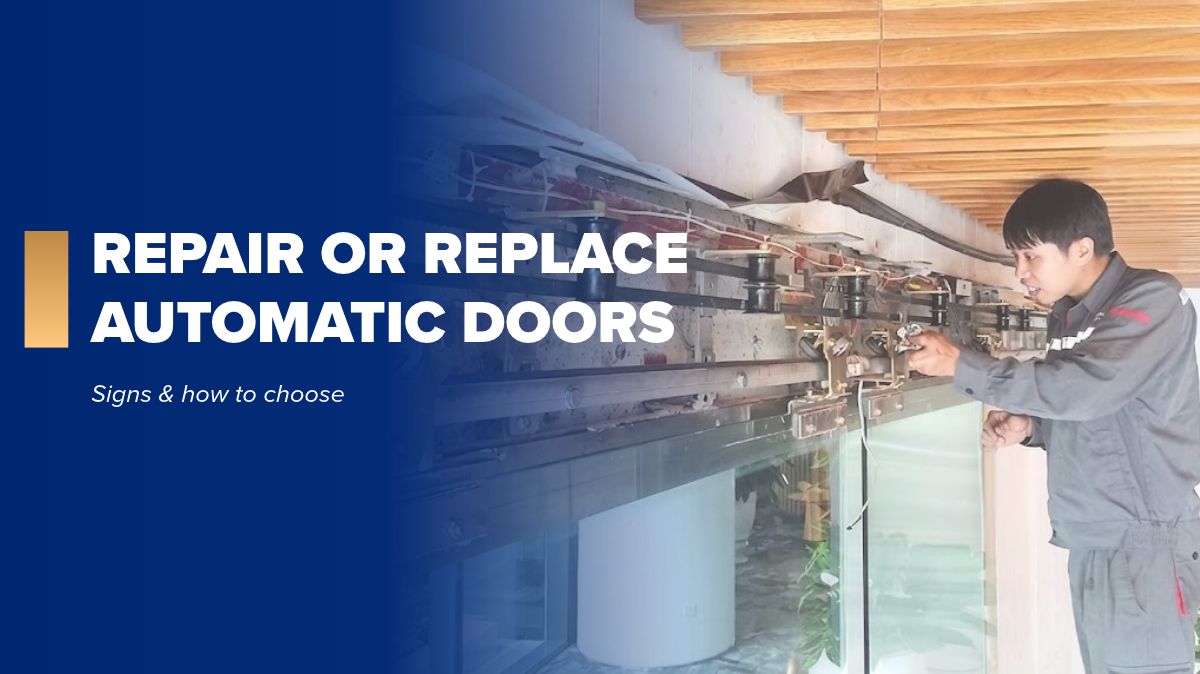
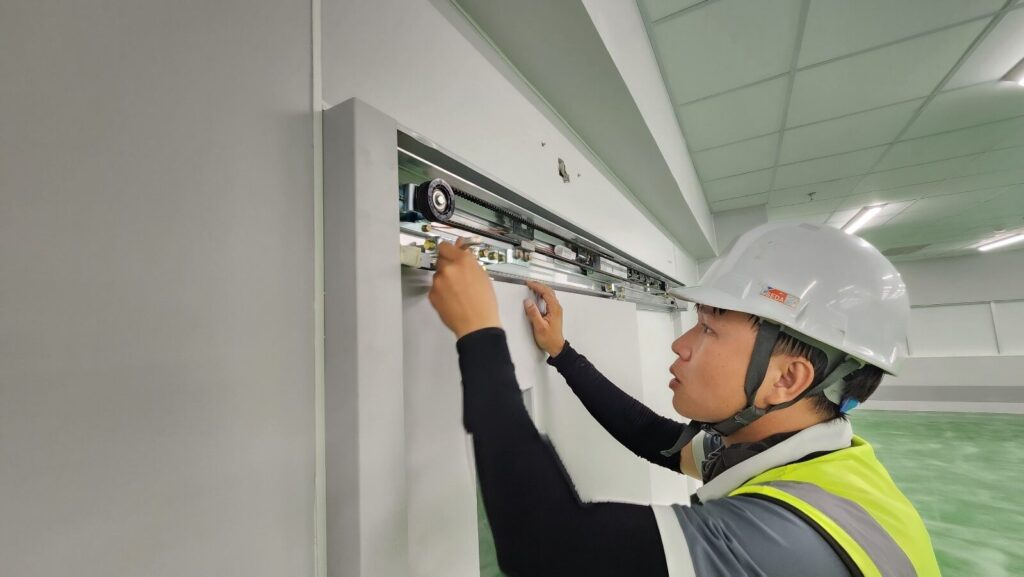
A motor with an appropriate load capacity alone is not enough to ensure good door operation. Door movement also depends on the coordinated operation of components such as rails, rollers, belts, and pulleys.
During operation, the operator transfers movement through the belt and pulley to move the door panels along the rail system. Rollers and guide components support stable panel movement throughout the travel cycle.
Therefore, when selecting a heavy-duty sliding door, all components need to be considered as an integrated system rather than focusing only on the motor. This is also why determining how should you choose a motor for a heavy-duty automatic door needs to be based on the entire door system rather than simply looking at the motor’s power or maximum load capacity. Appropriate coordination between components helps the door operate stably and reduces unnecessary stress on the system.
Some NABCO operator series for heavy-duty doors
NABCO develops operator series for various load capacities and door configurations. For example, the NABCO V-250SL is designed for heavy-duty door systems and special configurations. According to the specifications published by NABCO, the equipment can operate doors weighing up to 250 kg for two-panel doors and 500 kg for single-panel doors.
Meanwhile, the V-500SL is introduced by NABCO for large and heavy door panels, including applications in factories. This series can be considered for projects with high requirements for door dimensions and load capacity.
However, selection should not be based solely on the model name or maximum load capacity. Actual weight, dimensions, number of panels, and operating conditions are the basis for determining the appropriate equipment.

When should you use a heavy-duty sliding door?
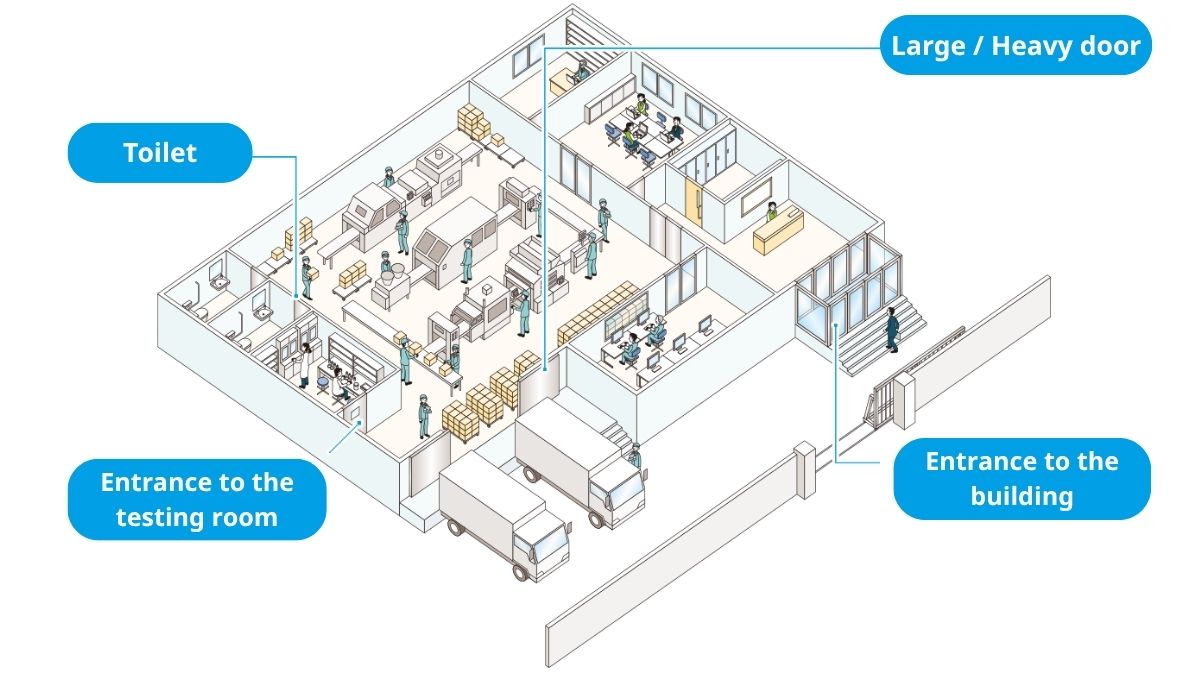
Heavy-duty automatic sliding doors are generally selected when the door panels have dimensions or weights beyond the suitable capacity of standard door series. In factories and industrial facilities, this solution is suitable for areas with large doors, frequent transportation of goods or equipment, or high opening and closing frequencies. This is also one of the application groups that NABCO classifies separately within its automatic door solutions for factories.
Choosing solely based on door dimensions is one of the most common mistakes. Width and height do not indicate exactly how much the door panel weighs. Conversely, considering only the weight is also insufficient. The number of panels, dimensions, opening and closing frequency, and installation conditions can all affect the system requirements. Therefore, when asking how should you choose a motor for a heavy-duty automatic door, the answer should not simply be to select a motor with a higher load capacity, but to consider the overall operating conditions.
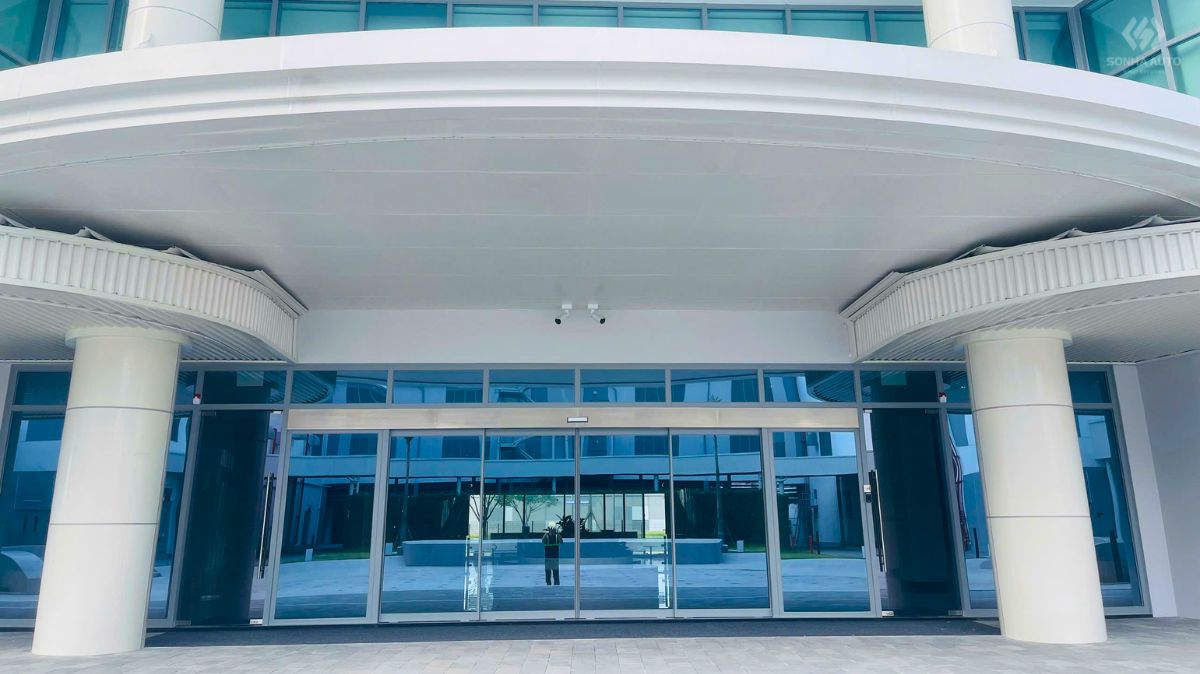
Outside industrial environments, heavy-duty doors can also be used in projects with large entrances or special door panel designs. However, each project has different conditions. Selection should be based on an actual site assessment rather than determined solely by door weight.
Common mistakes when choosing a motor for a heavy-duty automatic door
Choosing solely based on door dimensions is one of the most common mistakes. Width and height do not indicate exactly how much the door panel weighs. Conversely, considering only the weight is also insufficient. The number of panels, dimensions, opening and closing frequency, and installation conditions can all affect the system requirements. Therefore, when asking how should you choose a motor for a heavy-duty automatic door, the answer should not simply be to select a motor with a higher load capacity, but to consider the overall operating conditions.
Another mistake is selecting equipment close to its maximum load limit without considering the intensity of use. A door operating continuously in a factory needs to be evaluated differently from one used only a few times a day.
Finally, the motor should not be considered in isolation while overlooking the components that support door movement. Rails, rollers, belts, and pulleys all directly affect the ability of the door panels to move.
NABCO also recommends that automatic doors be operated within the specified weight limits and technical specifications. Exceeding these limits may affect the equipment and operating safety.
>>> See more: What should you consider when choosing automatic doors for factories? A guide to selecting the right solution
Sonha Auto – Consulting on heavy-duty automatic doors based on actual project conditions
For projects using heavy-duty automatic doors, Sonha Auto does not select equipment based solely on door panel weight. The technical team simultaneously considers dimensions, number of panels, opening and closing frequency, usage volume, installation conditions, and operating requirements for each area.
In addition to consultation and installation, Sonha Auto also provides maintenance, repair, and component replacement services throughout the system’s service life. Regular inspection helps identify wear at an early stage and maintain stable system operation.
This is particularly important for factories, where doors may operate across multiple shifts and at high frequencies. Selecting the right configuration from the outset can help the system better meet long-term operating requirements.
If your project requires heavy-duty sliding doors for a factory, industrial facility, or large entrance, contact Sonha Auto for an actual site assessment and consultation on a NABCO configuration suited to the project’s requirements.