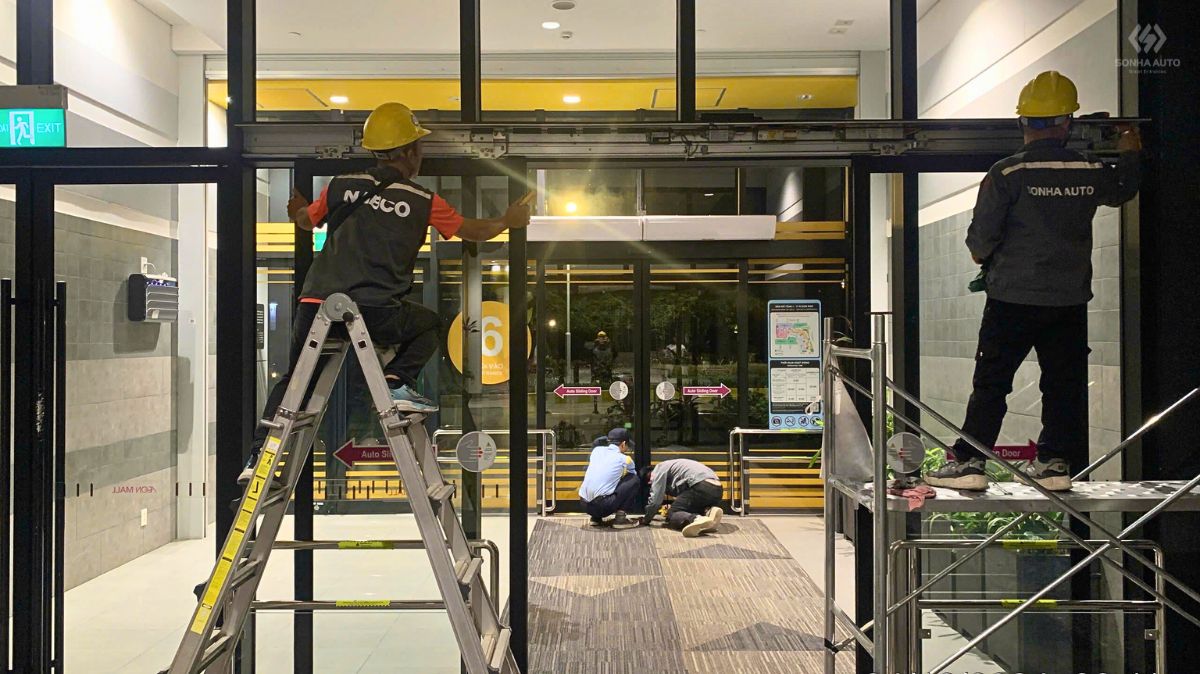
In modern architectural projects such as hospitals, office buildings, shopping malls, and airports, automatic doors have become an indispensable standard. The convenience, professional image, and energy-saving benefits they provide are significant. However, due to their nature of continuous, high-intensity operation, technical issues are inevitable over time. Early identification of common automatic door problems not only helps operators manage systems proactively but also prevents safety risks and significantly reduces repair costs. This article provides a comprehensive overview of symptoms, causes, and effective solutions for each specific issue.
Why do automatic doors tend to develop problems after a period of use?
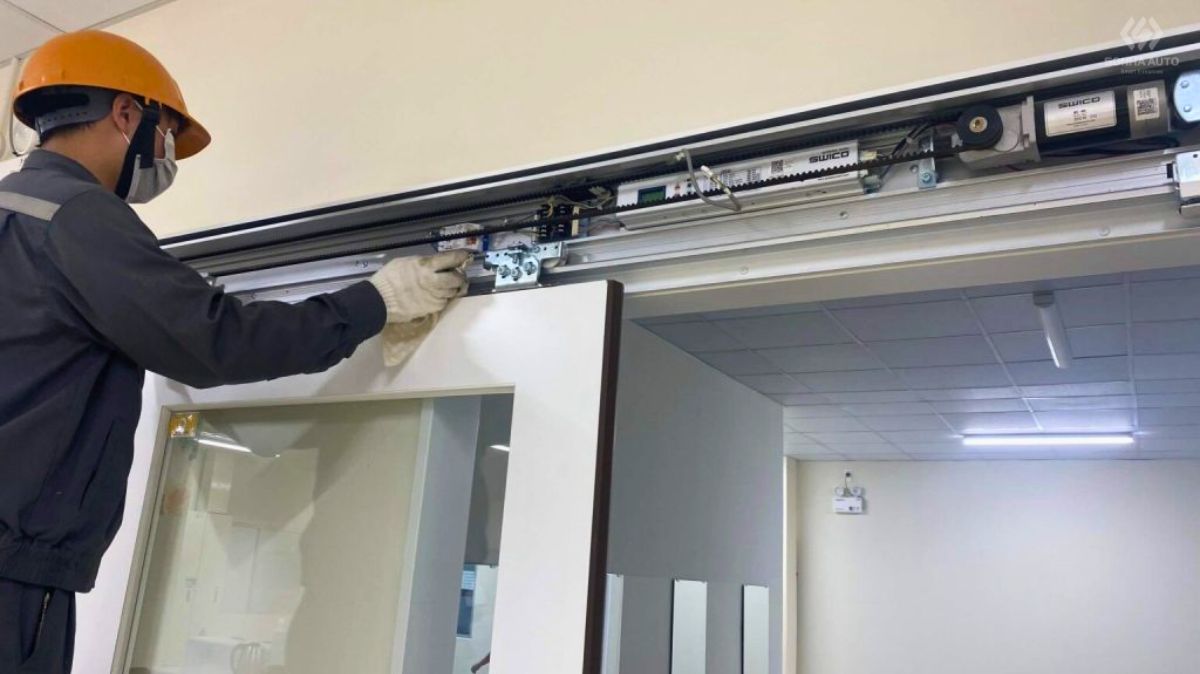
Before analyzing individual failures, it is important to understand that an automatic door is a complex mechanical–electrical–electronic system, consisting of multiple components operating simultaneously, including: the central control unit, automatic door motor, sensor system (motion sensors, radar, safety sensors), guide rails, rollers, belts, and the electrical system with push buttons and remote controls.
If just one component malfunctions, the entire automatic door system may operate unstably or stop working completely. In practice, common causes of failures include:
- High-frequency operation without regular maintenance
- Component deterioration over time due to dust, humidity, or high-temperature environments
- Automatic door sensors being misaligned, contaminated with dust, or affected by signal interference
- Motor overload leading to mechanical wear
- Improper initial installation or non-optimized system settings
Understanding these causes allows users to take a more proactive approach to automatic door maintenance and repair, minimizing failures and ensuring long-term safe, stable, and durable operation.
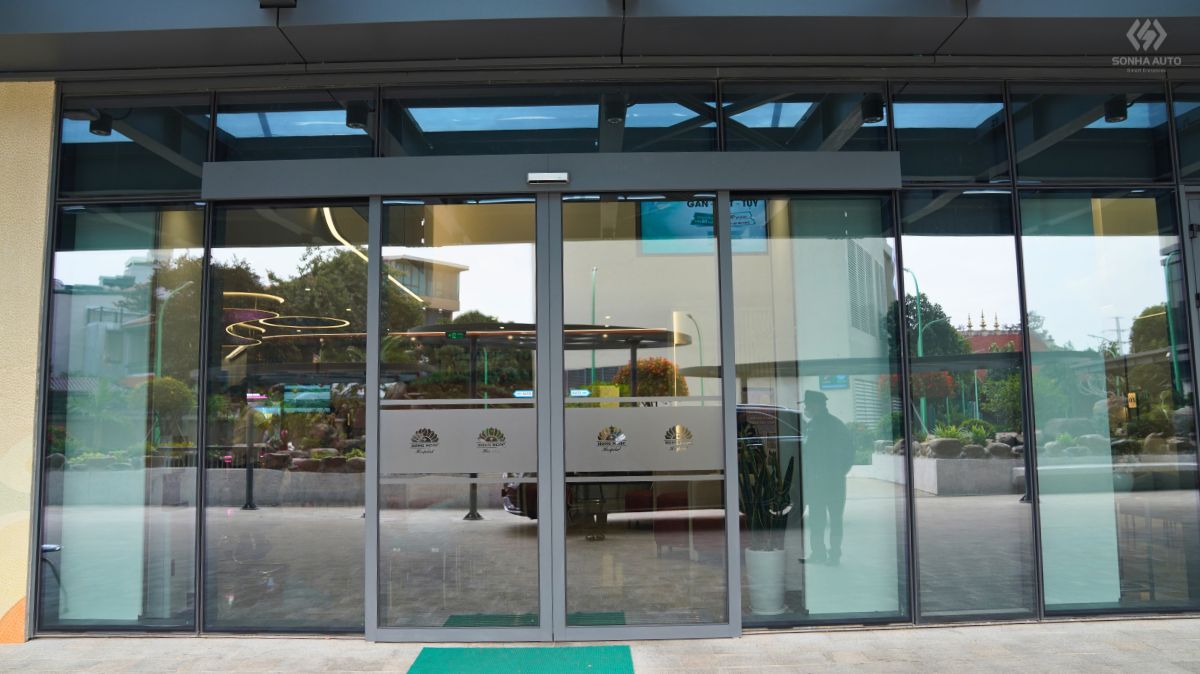
Common automatic door problems and how to fix them
During operation, automatic doors may encounter various issues due to high usage frequency, dusty environments, or aging components. Below are the most common problems faced by building owners and technical teams, along with their causes and recommended solutions.
Automatic door gets stuck while opening or closing
This is one of the most disruptive issues, as it directly affects pedestrian flow.
Symptoms: The door moves slowly, stops midway, does not open despite having power, or does not respond when the wall-mounted push button is pressed.
Common causes:
- Automatic door motor failure or overload
- Blown fuse or unstable power supply
- Dust or foreign objects on the guide rail
- Worn rollers or misaligned tracks
- Loose drive belt or sensor not sending signals to the controller
Solution: Check the power supply and fuses, clean the sensors and guide rails. If the issue persists, inspect the control board and reset or replace it if necessary.
Automatic door does not open when someone stands in front
Causes:
- Sensor fails to detect movement
- Motion sensor is dirty or incorrectly angled
- Signal cable between the sensor and controller is damaged
Solution: Clean the sensor, check the power supply and signal cables, recalibrate the detection angle, or replace the sensor if required.

Automatic door remains completely stationary
Symptoms: The door does not respond and shows no movement.
Possible causes:
- Power failure
- Control board malfunction
- Automatic door motor coil burnout or shaft seizure
Solution: A technician should inspect the entire electrical and control system. In severe cases, replacing genuine automatic door components is recommended to ensure long-term durability.
Glass door does not operate automatically and must be opened manually
This issue is often overlooked, as users may think the door is still usable, but it can lead to more serious damage.
Causes:
- Sensor is turned off or faulty
- Controller switched to manual mode
- Signal connection failure
Recommendation: Avoid prolonged manual operation, as it may damage the rollers and motor.
Automatic door does not open when the push button is pressed
Symptoms: The push button has no effect and the door does not respond.
Causes:
- Faulty push button or broken wiring
- Signal transmission failure
- Control board not receiving commands
Solution: Inspect the control system and replace the push button or signal cables if necessary.

Automatic door opens and closes repeatedly without control
This is a potentially dangerous issue, especially in high-traffic areas.
Causes:
- Sensor signal interference
- Objects within the detection zone
- Malfunctioning safety sensor
Solution: Recalibrate the detection area, inspect the surrounding environment, or replace the sensor with a higher-quality model.
Automatic door produces abnormal noise during operation
Common causes:
- Dry or unlubricated guide rails
- Worn rollers
- Automatic door motor operating under excessive load
Solution: Lubricate mechanical components and check door weight. If noise persists, inspect and consider replacing the motor.
Glass doors collide forcefully when closing
Symptoms: The door closes too quickly with excessive force, causing loud impact noises.
Causes:
- Incorrect opening/closing speed settings
- Safety sensor malfunction
- Control unit failure
Solution: A technician should recalibrate the operating parameters to ensure user safety.
Automatic door does not receive signals from the sensor
Causes:
- Sensor failure
- Broken signal cable
- Electromagnetic interference
Recommendation: Replace the sensor with a genuine, controller-compatible automatic door sensor to ensure system stability.

Automatic door does not open during peak hours
This issue typically occurs under continuous, high-frequency operation.
Causes:
- Motor overload due to heavy usage
- Control board temporarily shuts down to protect the system
Solution: Reduce load, review technical specifications, perform regular maintenance, or upgrade the motor if necessary.
Sonha Auto – A professional and reliable automatic door repair and maintenance provider
When automatic doors encounter complex issues such as failure to open, unstable operation, or the need for genuine component replacement, choosing a highly specialized service provider is essential to ensure long-term safety and durability.
With over 20 years of experience in the automatic door industry, Sonha Auto specializes in supplying, installing, repairing, and maintaining automatic doors for residential and commercial projects nationwide. Sonha Auto’s technical team is capable of accurately diagnosing common automatic door problems, including sensor, motor, controller, and mechanical issues such as rails, rollers, and belts, across systems from Japan, Korea, and Europe.

Sonha Auto maintains a ready stock of genuine components, including motors, sensors, controllers, and accessories from reputable brands such as NABCO, SWICO, KBB, Boon Edam, ensuring fast, technically correct repairs and stable operation after handover.
In addition to repair services, Sonha Auto also provides maintenance and system calibration according to safety standards, as well as consultation on system upgrades and operational optimization. These services are particularly suitable for high-requirement facilities such as hospitals, high-rise buildings, and shopping centers. On-site services are available in Hanoi, Da Nang, Ho Chi Minh City, and surrounding areas, with transparent pricing and clear warranty policies, giving customers complete peace of mind.
>>> See more: Japanese-standard automatic door maintenance steps following a professional technical process
Conclusion
If common automatic door problems are not handled properly, they can disrupt operations, compromise safety, and lead to significant costs. Understanding the causes, recognizing early warning signs, and selecting a reputable repair provider are key to ensuring long-term, stable system performance.
If you are experiencing issues such as an automatic door getting stuck, not operating, failing to open, or opening and closing repeatedly, contacting Sonha Auto for timely inspection and consultation is a safe and cost-effective long-term solution.