In modern buildings, accessibility has become an increasingly important consideration alongside aesthetics and functionality. Especially in hospitals, airports, shopping malls, hotels, and office buildings, entrance systems must ensure that all users can access facilities conveniently, safely, and equally. This is why ADA standards for automatic doors are receiving growing attention during the design and selection of entrance solutions. So, what is ADA, what requirements must automatic doors meet, and why are NABCO automatic door solutions considered well suited to modern accessible design trends?
What is ADA?
ADA (Americans with Disabilities Act) is a U.S. law enacted to ensure equal access to public facilities, services, and shared-use spaces for people with disabilities.
In the construction industry, ADA establishes various requirements related to pathways, elevators, restrooms, entrances, and accessibility support systems. The goal is to help people with disabilities, elderly individuals, wheelchair users, and people with limited mobility access buildings safely and conveniently.
Although ADA is a U.S. standard, its design principles have become a widely referenced framework for hospitals, airports, hotels, shopping centers, and public facilities worldwide.
Why are ADA standards becoming increasingly important for automatic doors?
The entrance system is the first point of interaction between users and a building. If a door is difficult to open, closes too quickly, or does not provide adequate safety features, users may encounter challenges during entry and exit.
For wheelchair users, elderly individuals, children, or people carrying luggage, having to exert force to open a door or operate a handle can become a significant barrier.
As a result, automatic doors are increasingly viewed as an essential solution for improving accessibility while enhancing the overall user experience for all visitors.
Key requirements of ADA standards for automatic doors
To comply with the accessibility principles outlined in ADA standards for automatic doors, door systems should be designed to be safe, convenient, and easy to use.
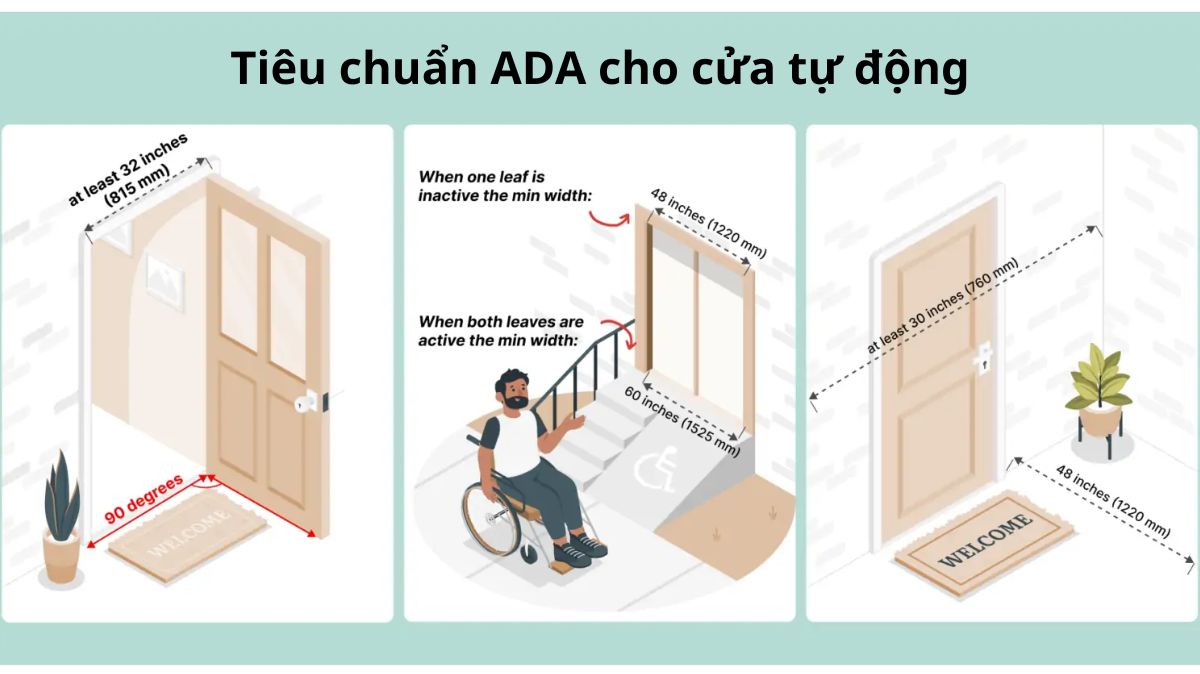
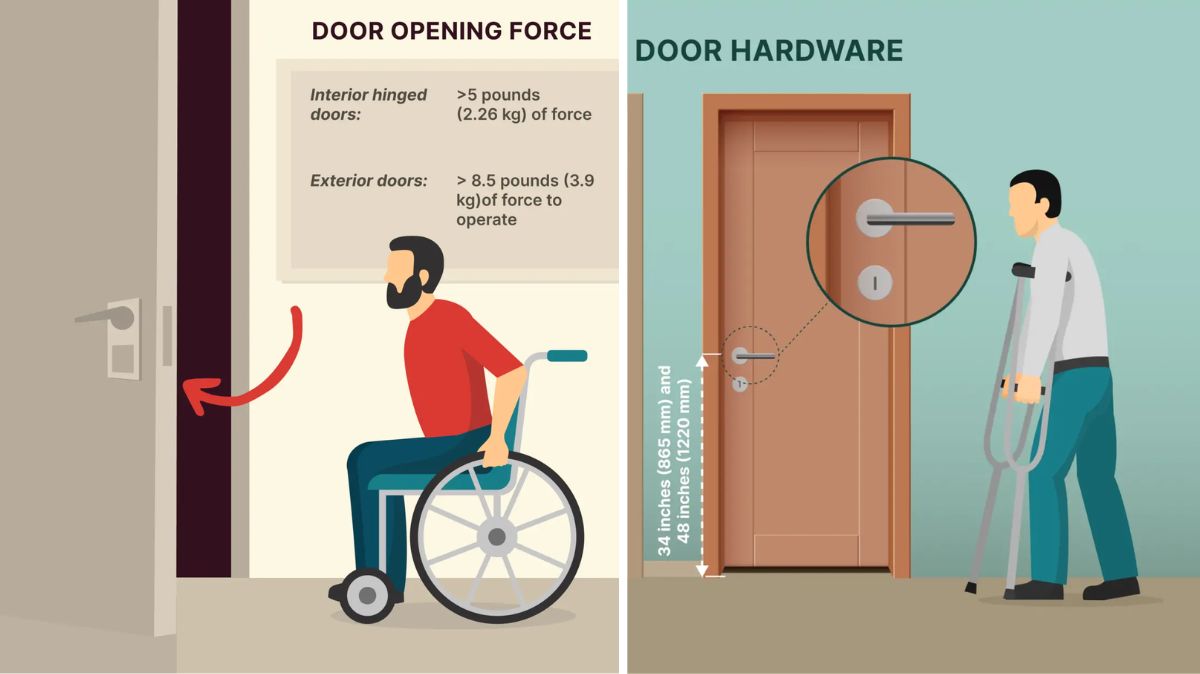
First, doors must provide sufficient clear opening width to allow wheelchair users and mobility aids to pass through comfortably without obstruction. In addition, users should not be required to exert excessive force or perform complicated operations to open a door. This is one of the reasons automatic doors are increasingly preferred in accessibility-focused projects.
ADA also places particular emphasis on door operating speed. Doors should not close too quickly, which could create difficulties for elderly users, people with disabilities, or individuals who require more time to pass through the opening. Furthermore, automatic doors should be equipped with safety sensors capable of detecting people and obstacles within the operating area, helping reduce the risk of collisions and accidents.
When push buttons or activation devices are used, their installation positions should also be accessible to wheelchair users and people with limited mobility.
How do NABCO automatic doors support ADA standards?
As a Japanese automatic door brand with decades of experience in entrance solutions, NABCO focuses not only on operational performance but also on accessibility and user experience for all individuals.
Automatic operation reduces accessibility barriers
One of the core principles of ADA is minimizing barriers to access. With NABCO automatic doors, users do not need to apply force to open the door. Simply entering the sensor detection zone triggers the door to open automatically. This solution is especially beneficial for wheelchair users, elderly people, individuals with mobility impairments, children, and visitors carrying luggage, making access safer and more convenient.

Intelligent sensor technology enhances safety
Another reason NABCO automatic doors align well with ADA standards for automatic doors is their advanced safety sensor technology designed for high-traffic environments. Many NABCO automatic door systems utilize the latest-generation NABCO NSW-A01 sensor, combining image-sensing technology with infrared detection.
Rather than merely detecting movement, the system accurately identifies the presence of people within the door’s operating area. As a result, the door opens at the appropriate moment, minimizes unintended activations, and remains open while users are still passing through.
For wheelchair users, elderly individuals, and children, this precise presence detection helps reduce the risk of premature door closing and improves overall safety.
NABCO NSW-A01 sensor combines image and infrared technologies to accurately detect users
Flexible adjustment for different operational requirements
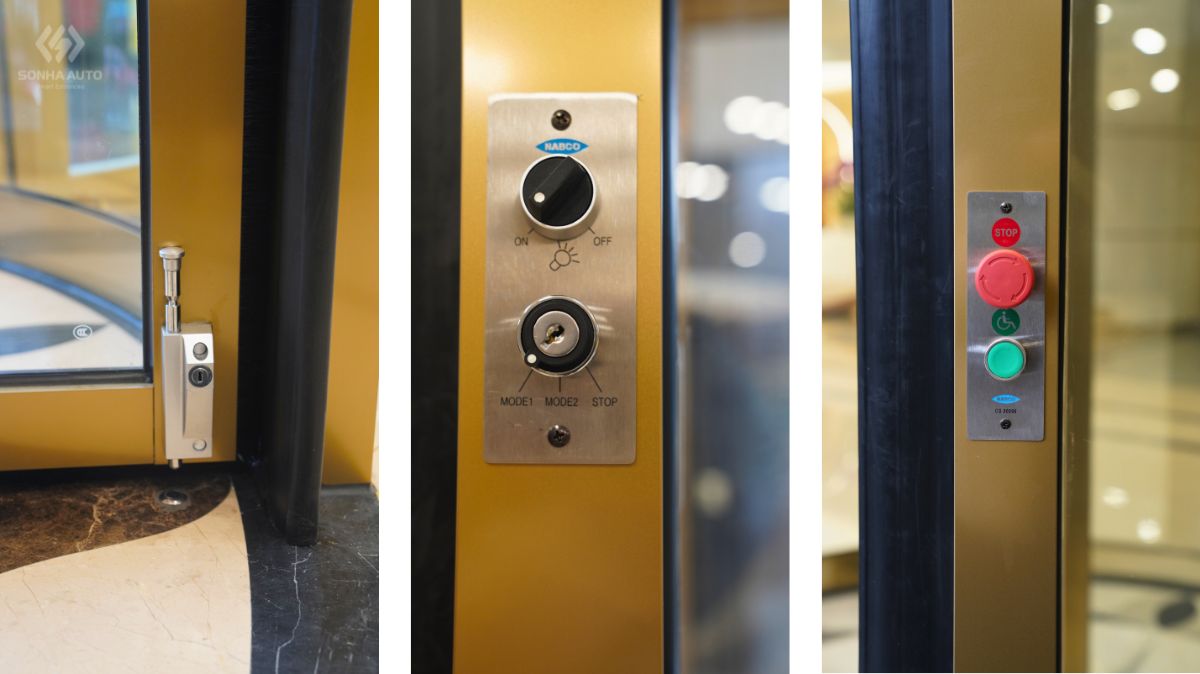
NABCO control systems allow operators to adjust various settings, including opening and closing speed, hold-open time, sensor detection area, and operating modes to suit specific building requirements.
This flexibility enables doors to accommodate users who move more slowly or require additional time to pass through, aligning with ADA accessibility objectives.
Support for touchless activation solutions
NABCO offers a variety of contactless activation options, including motion sensors, radar sensors, and specialized activation devices. Reducing the need for physical contact not only improves accessibility but also enhances hygiene and minimizes touchpoints in public areas, particularly in hospitals and healthcare facilities.
Universal Design – The value that sets NABCO apart
While ADA focuses on removing accessibility barriers for people with disabilities, Universal Design aims for a broader goal: creating products that can be easily used by everyone from the outset, without requiring specialized adaptations.
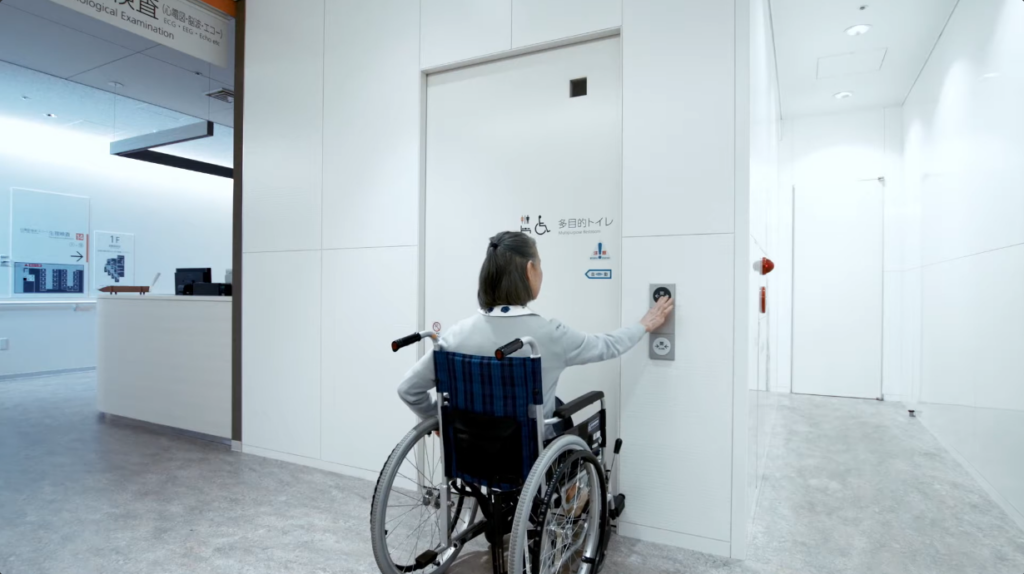
This philosophy is deeply embedded in NABCO’s product development approach. The principles of Universal Design can be seen across many NABCO solutions, including the NABCO HDS-4P multipurpose restroom switch, HDS-A5 control systems, hospital automatic doors, operating room doors, and accessibility solutions for wheelchair users.
These products feature intuitive interfaces, status indicators, voice guidance, large push buttons, and user-friendly operation suitable for a wide range of users. This approach is increasingly adopted in modern building design to improve the experience for everyone.
Suitable for a wide range of modern buildings
Thanks to their safe operation, flexibility, and user-friendly design, NABCO automatic door solutions are widely used in hospitals, airports, railway stations, shopping centers, hotels, schools, and public facilities with high accessibility requirements.
Although ADA is a U.S. standard, its core principles of safety, accessibility, and user experience are becoming increasingly relevant worldwide. With intelligent sensor technology, flexible operation, and a strong commitment to Universal Design, NABCO automatic doors provide an ideal entrance solution for projects seeking to meet accessibility standards similar to ADA.

>>> See more: What is JIS A 4722? Key safety criteria when selecting automatic doors
Conclusion
ADA standards for automatic doors represent more than accessibility requirements—they reflect the future direction of modern building design. With advanced sensor technology and a Universal Design philosophy, NABCO automatic doors offer an ideal entrance solution for a wide variety of building types. Sonha Auto supplies and implements NABCO automatic door solutions, helping project owners create safe, modern, and user-friendly entrance systems.
Contact Sonha Auto for consultation on NABCO automatic door solutions tailored to your operational requirements and accessibility goals.