Why does an automatic door open and close slowly? This is one of the most common automatic door problems after a period of use, particularly in areas with high opening and closing frequency. The door may move slowly from the beginning of the opening cycle, take longer to close, or no longer operate at a stable speed as before. This condition does not necessarily indicate a serious failure. Door movement speed is affected by various factors, from software settings and safety mechanisms to door leaf load, sensors, and the condition of the sliding rail and drive system. Identifying the exact cause will help determine the appropriate solution and avoid damage caused by unauthorized adjustments.
WARRANTY & MAINTENANCE SERVICES HOTLINE: 0934 546 008
Why does an automatic door open and close slowly?
There are several common reasons why an automatic door may operate more slowly than normal. Identifying the correct cause of an automatic door problem helps determine the appropriate solution rather than adjusting the door speed without first identifying the underlying issue. Below are 6 common causes:
The door speed is set too low
Automatic doors allow users to adjust the opening speed, closing speed, and hold-open time depending on the door type and the building’s usage requirements. If the initial settings are configured at a low level, the door will take longer to complete an opening and closing cycle.
For systems that previously operated normally but suddenly slow down, technicians should check the controller to determine whether any parameters have shifted or changed.
The door leaf has a heavy load or an incorrect configuration
Load and door leaf dimensions directly affect the motor. For heavy tempered glass door leaves or metal-framed doors, the motor must provide greater pulling force to move the door along the sliding rail.
If the equipment configuration selected initially is not compatible with the actual door leaf weight, the system will operate under excessive load, resulting in slow door movement, particularly during the initial acceleration phase or when reaching the final deceleration point.
The sliding rail is dirty or obstructed
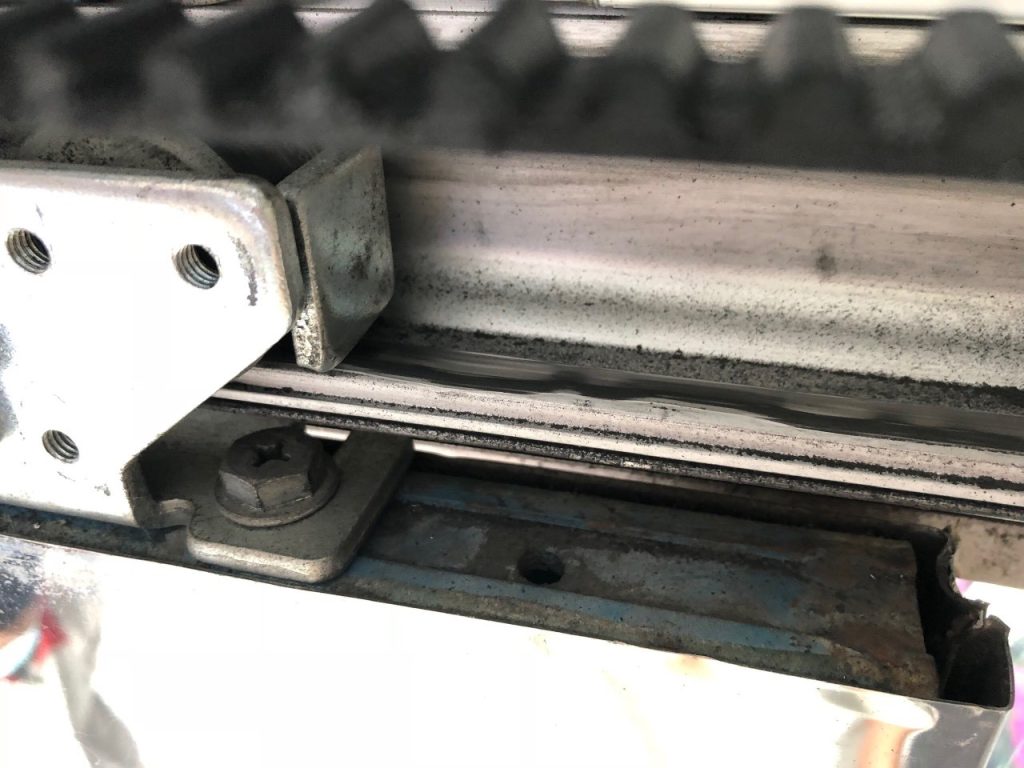
For automatic sliding doors, the door leaves move along a rail and roller system. Dust, objects trapped in the moving area, or unfavorable rail conditions can increase resistance as the door moves.
This is a relatively easy cause to check. If the door feels heavy, moves unevenly, or produces unusual noises, the rail area and related components should be inspected.
Rollers, belts, or drive components are worn
After a long period of continuous opening and closing, the mechanical components of an automatic door naturally deteriorate:
- Rollers: One side may become worn flat or the bearing may become seized.
- Drive belt: The belt may become stretched, loose, or slack around the gears, resulting in belt slippage.
- Pulley: The pulley may become misaligned or develop worn grooves.
When transmission efficiency decreases, the motor’s force is no longer fully transferred to the door leaf, making the opening and closing cycle heavier and slower.
The sensor operates unstably or has an inaccurate detection area
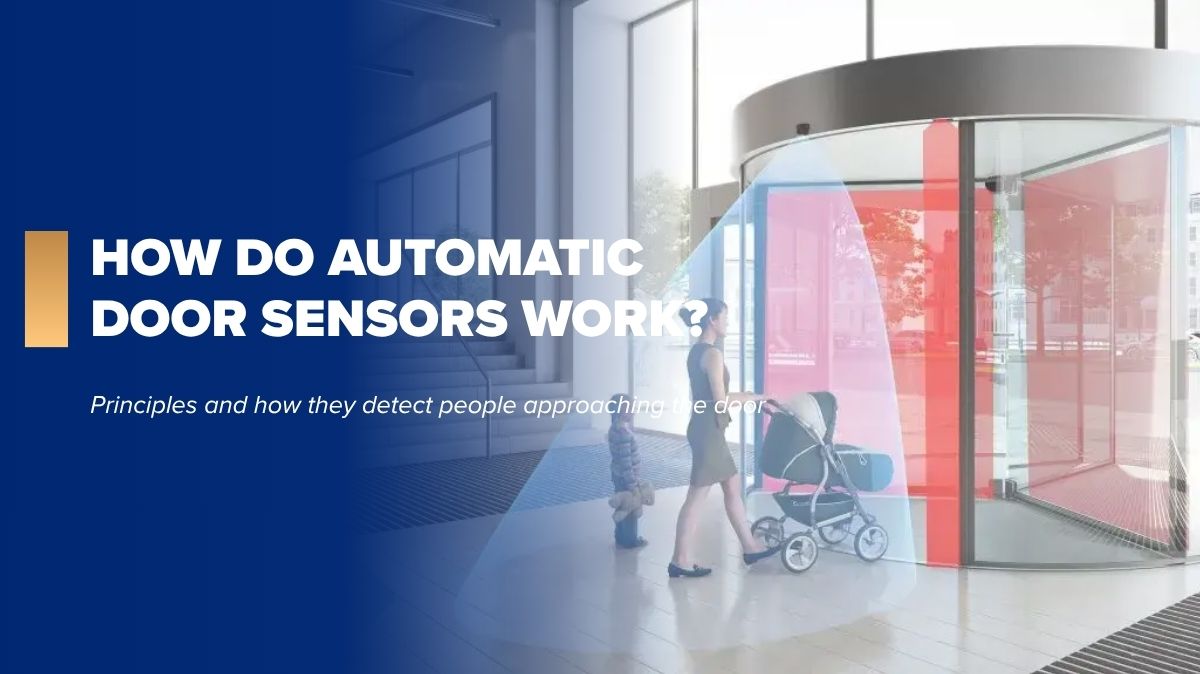
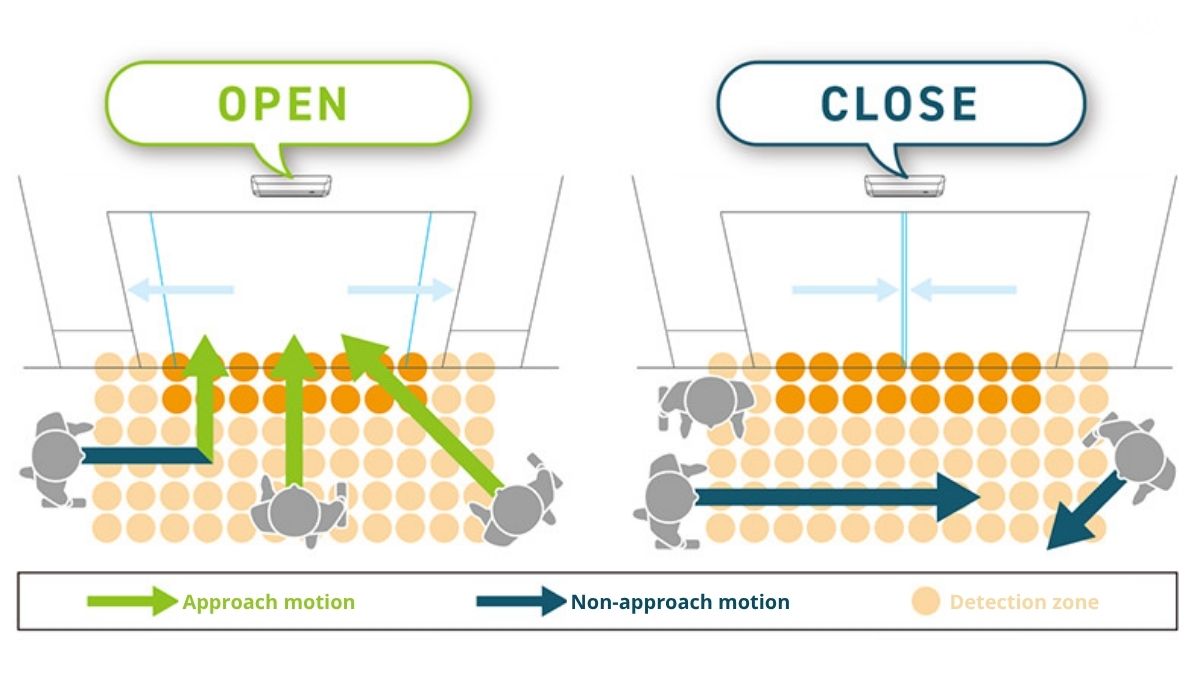
The automatic door sensor detects people or objects in the doorway area and sends signals to the controller. If the sensor is dirty, the detection area has shifted, or the signal is unstable, the door’s opening and closing cycle may also be affected.
However, it is important to distinguish between a door that actually moves slowly due to mechanical resistance, where the door leaf moves heavily, and a door that remains open for too long because the sensor continuously receives false signals or the hold-open time is set too long.
The safety slow-down mechanism (Slow Stop/Safety Delay) is activated
This is an intelligent feature available on premium automatic door systems such as NABCO. When the safety sensor (Micro-scan) detects a person or object remaining in the danger zone, or when the door repeatedly encounters a minor obstruction, the controller automatically switches the door to a slow-speed mode to ensure safety and prevent collisions.
Users without technical experience can easily mistake this active protection feature for a mechanical failure.
How to perform an initial check when an automatic door opens and closes slowly
When experiencing why an automatic door opens and closes slowly, users should not focus only on increasing the door speed. The cause should be identified before contacting a technician:
- Is the door slow during both opening and closing, or only in one direction?
- Has the door speed changed compared with before?
- Does the door leaf move heavily or unevenly?
- Is there dust or any obstruction around the sliding rail?
- Does the door produce unusual noises during operation?
- Does the sensor detect people consistently?
- Does the issue occur continuously or only at certain times?
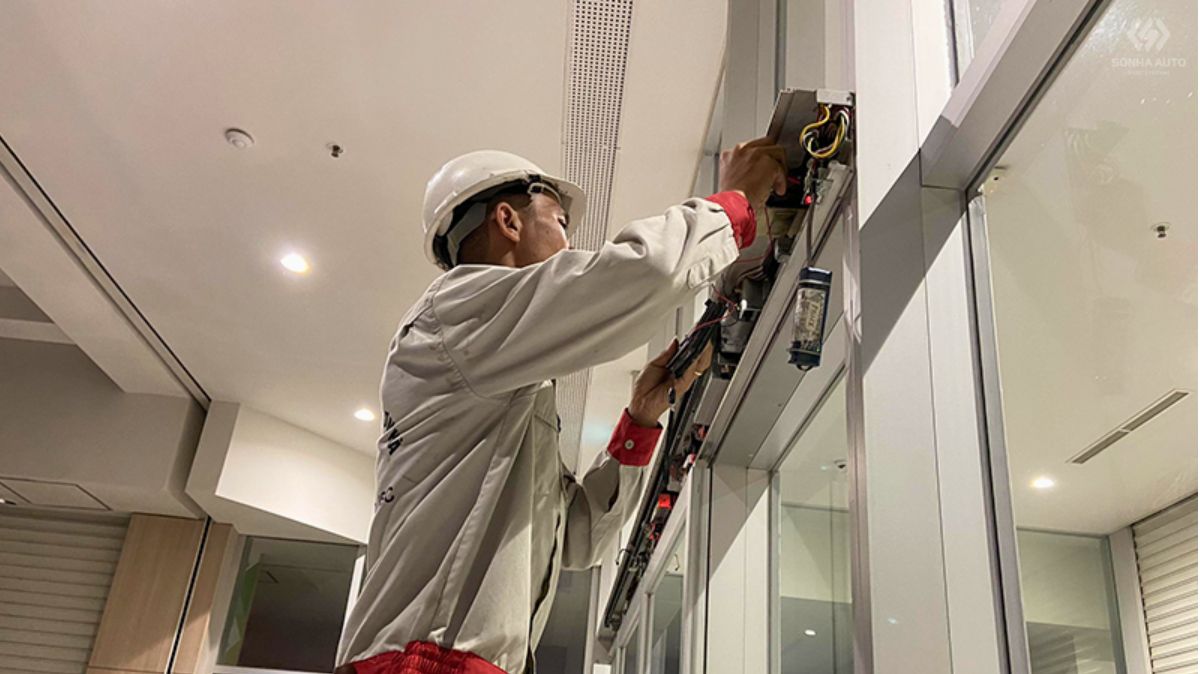
This information helps technicians narrow down the cause more quickly. Do not manually push the door leaf forcefully or open the technical housing to adjust controller parameters without the necessary expertise. Incorrect adjustments may damage the circuit board or compromise the safety of people passing through the doorway.
When does an automatic door system need maintenance or upgrading?
If the door is only slightly slow due to dust on the rail or sensor, a technician may only need to clean the system, apply specialized grease, and readjust the settings to restore smooth operation.
On the other hand, if the door has been in use for a long time and simultaneously shows multiple signs such as slow opening and closing, uneven movement, unusual noise, or worn mechanical components, the entire system should be inspected to determine whether maintenance or replacement is required.
This is particularly important in office buildings, shopping malls, hospitals, and facilities with high pedestrian traffic, where addressing abnormal signs early can help prevent operational disruptions or fire safety incidents.
NABCO automatic doors – A durable solution for high-frequency operation
For buildings where automatic doors need to operate frequently, selecting the equipment brand from the initial stage is a key factor in minimizing the risk of reduced door speed or premature deterioration after a period of use.
NABCO is a Japanese automatic door brand known for high mechanical durability, smooth CAN-bus communication technology, and strong load-bearing capability. NABCO develops various automatic door models for different building types and usage requirements. Among them, the NABCO V-150SL-HM is a heavy-duty automatic sliding door designed for entrances of large buildings, with the ability to operate door leaves weighing up to 120 kg. This version uses an approximately 100 mm-high operator housing, giving the top of the door a more compact design.
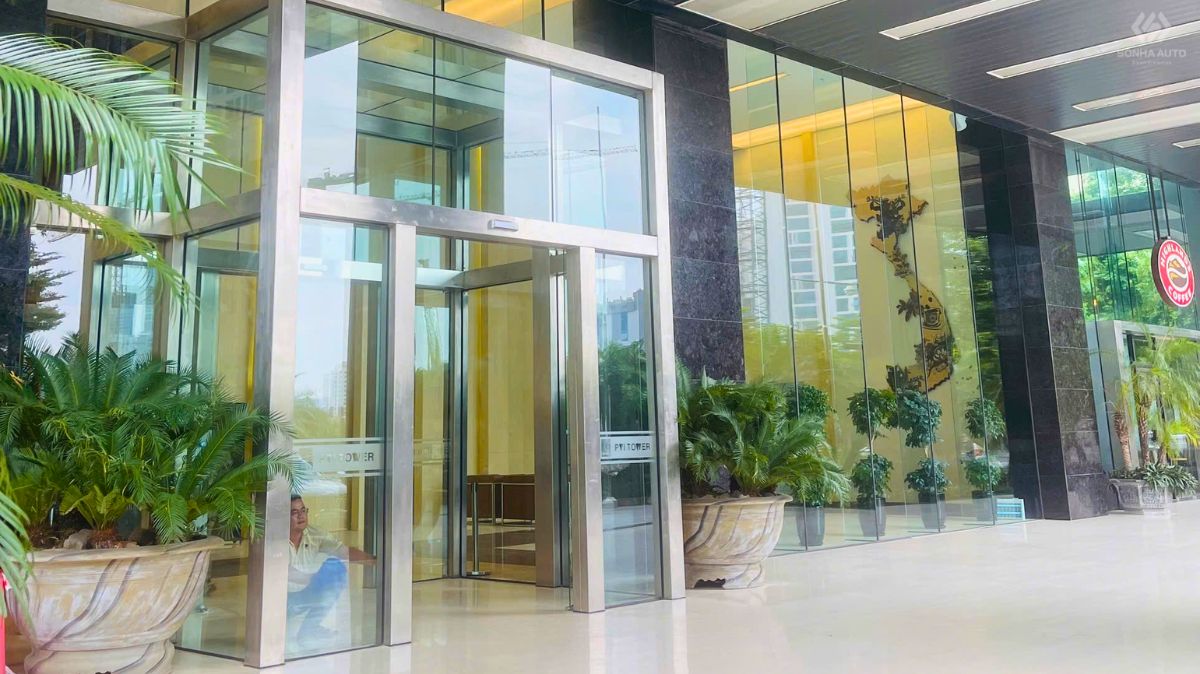
In addition to standard automatic sliding door models, NABCO also offers the GT-1175 with a Breakout emergency opening mechanism. In daily operation, the door functions as an automatic sliding door system. When an emergency egress route needs to be created or the passageway needs to be widened in special situations, the door leaves and side screens can be opened to a 90° angle like hinged doors. For the GT-1175BO-FO version, this mechanism is activated with a pushing force of 110N.
The NABCO GT-1175 is suitable for buildings with high pedestrian traffic where emergency egress or the need to widen the passageway in special situations must be taken into consideration. This door series offers multiple configurations, including two-panel and single-panel sliding doors, as well as different design versions to meet specific entrance requirements.
Therefore, when an automatic door opens and closes slowly, troubleshooting should not focus solely on increasing the door speed. For an existing system, the cause should first be identified to determine whether cleaning, adjustment, maintenance, or replacement is the appropriate solution. For new installations, selecting the model based on door load, usage frequency, and operating requirements from the outset can also help minimize problems during operation.
The NABCO GT-1175 sliding door with Breakout emergency opening mechanism
Sonha Auto – Professional automatic door consultation, maintenance, and repair services
If your building’s automatic door system is experiencing slow opening and closing, unstable operation, or requires upgrading, Sonha Auto is ready to provide support.
As the official distributor of NABCO in Vietnam, Sonha Auto provides a comprehensive service process: Site survey – Accurate diagnosis of the cause – Optimal solution proposal – Maintenance/replacement with genuine equipment.
Contact Sonha Auto now to receive consultation and an on-site survey from our technical team!