In an automatic door system, durability does not only come from a powerful motor or high-quality mechanical materials but also depends heavily on the system’s ability to connect and control all components during operation. This is also why many major facilities prioritize choosing NABCO automatic doors, a brand renowned for stable performance in high-traffic environments such as airports, hospitals, and shopping malls. One of the factors creating this difference is automatic door CAN technology — an internal communication platform that enables the entire door system to operate synchronously and respond accurately in real time. NABCO is also one of the pioneers in applying CAN technology to the NET-DS controller, creating a major advantage in operational stability, control capability, and long-term durability for automatic door systems.
What is CAN technology?
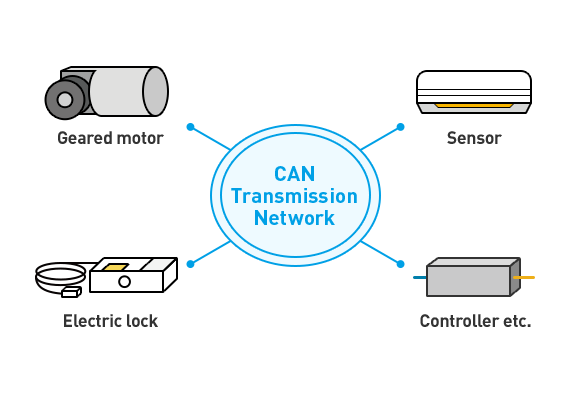
CAN (Controller Area Network) is an internal communication protocol that allows multiple devices within the same system to connect and exchange data directly with one another through a shared transmission line.
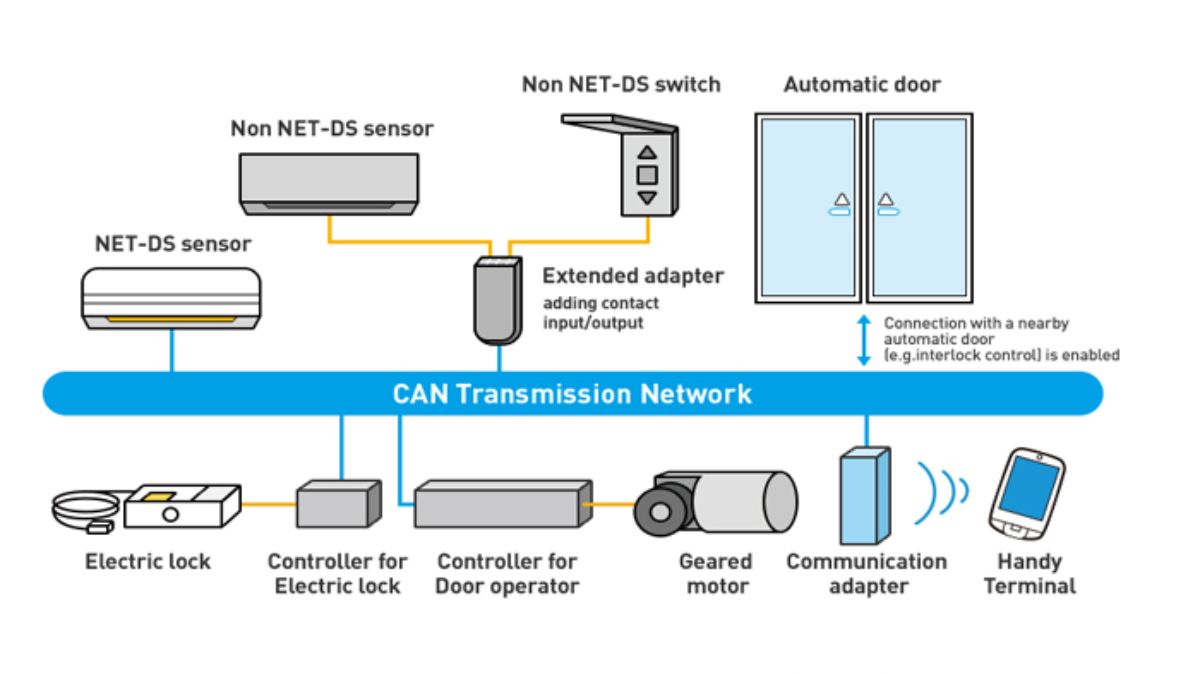
In an automatic door system, devices such as the NABCO automatic door motor, automatic door sensors, controllers, and signal modules do not operate independently but continuously “communicate” and update their operating status with each other in real time.
This allows the system to respond more accurately to actual movement while ensuring all devices operate synchronously instead of processing signals separately like many conventional door systems. This is also the foundation behind the stable operational performance characteristic of NABCO automatic doors at facilities with heavy pedestrian traffic.
Why does CAN technology make NABCO automatic doors more durable?
One of the factors that differentiates NABCO automatic doors is the company’s early application of automatic door CAN technology into its operating control system. This platform allows devices such as the NABCO automatic door motor, automatic door sensors, controllers, and signal modules to connect and continuously exchange data within the same system.
NABCO is one of the first companies to apply CAN technology to the NET-DS controller, enabling the entire door system to operate synchronously in real time instead of functioning separately like many conventional door systems. When a sensor detects movement, the signal is processed and transmitted to the motor more quickly and accurately, helping the door open and close more smoothly, minimizing delays, and reducing unnecessary movement during operation.
This is also one of the reasons NABCO automatic doors are highly regarded for durability and operational stability. Thanks to continuous data synchronization, the system can minimize vibration, reduce pressure on the drive mechanism, and decrease mechanical wear during long-term high-frequency operation. In addition to improving operational stability, CAN technology also contributes to the solid, smooth, and precise opening and closing feel – a defining characteristic of premium Japanese automatic door systems used in airports, hospitals, hotels, and major shopping malls.
How does automatic door CAN technology help maintain stable system operation?
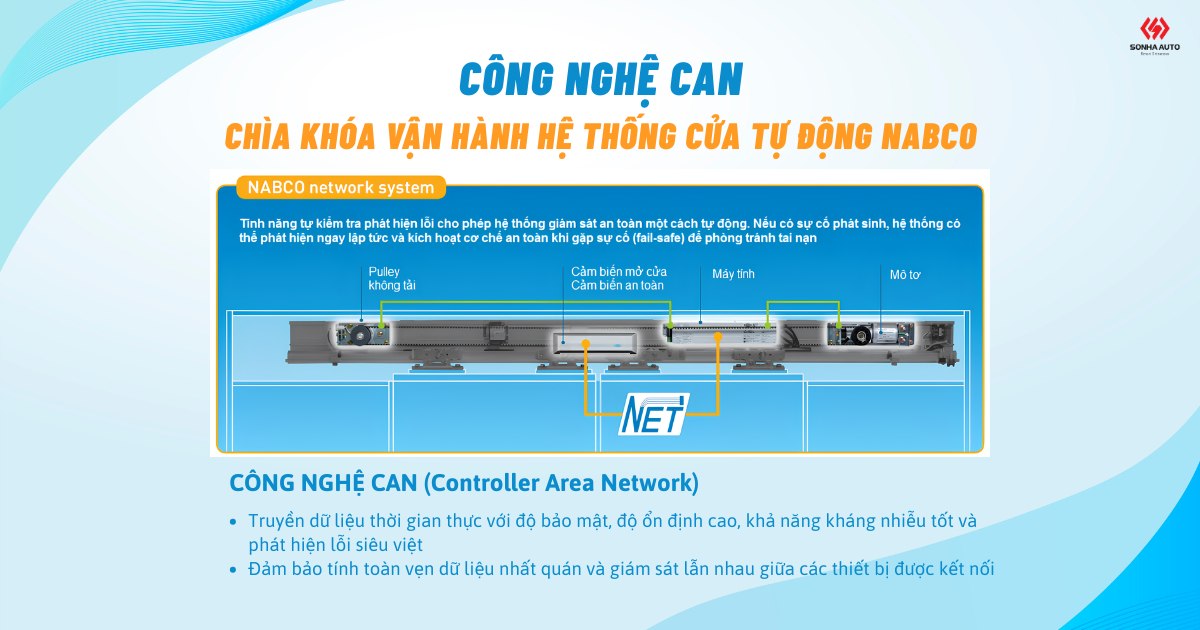
One of the major advantages of automatic door CAN technology is its ability to maintain stability for the entire automatic door system. When devices within the system can continuously communicate with each other, the controller can easily detect abnormal deviations during operation and handle them promptly.
For example, if an automatic door sensor detects an abnormal signal or the motor operates outside its standard condition, the system can quickly make adjustments to prevent faults from spreading to other components. This is especially important for modern facilities because an unstable door system not only affects user experience but also leads to higher maintenance costs over the long term.
In addition, thanks to real-time data synchronization, NABCO automatic doors maintain a more solid, smooth, and stable operating feel compared to many conventional door systems.
Why do many major facilities choose NABCO automatic doors?
It is no coincidence that NABCO automatic doors are widely used in facilities requiring high operational stability such as airports, hospitals, hotels, and major shopping malls.
In addition to durable mechanical components, the control system utilizing automatic door CAN technology is one of the core foundations that enables stable long-term operation. Continuous communication between devices helps minimize system errors, reduce vibration, and maintain accurate responses even under intensive daily operation.
This is also why many project owners consider NABCO automatic doors durable not only in terms of materials or motors but also in the entire internal operating system.
Sonha Auto – Official NABCO automatic door provider
With more than 20 years of partnership with NABCO, Sonha Auto not only provides automatic door solutions but also directly handles installation, maintenance, and technical support for many major projects in Vietnam.
Sonha Auto chooses NABCO automatic doors not only because of the Japanese brand reputation but also because of the actual operational quality created by core technologies such as automatic door CAN technology, the NET-DS controller, and the synchronization capability between the motor, sensors, and the entire operating system. These are also the factors that help NABCO doors maintain high stability and durability in high-frequency operating environments.
In addition, Sonha Auto’s technical team is trained by Japanese experts and has in-depth knowledge of the structure and operating principles of each NABCO door system, from motors and sensors to the CAN technology-based control system. As a result, installation, inspection, and maintenance are always carried out according to the manufacturer’s technical standards, ensuring stable, synchronized, and durable door operation over the long term.
>>> See more: NABCO automatic door roller – The secret behind the outstanding durability of Japanese automatic doors
Conclusion
The durability of an automatic door system does not only depend on mechanical components but also relies heavily on the connection and operational control capability of the entire system. With automatic door CAN technology, devices within the door system can continuously communicate and synchronize data in real time, helping the door operate more stably, respond more accurately, and minimize wear during long-term use. This is also one of the key factors that creates the distinctive quality of NABCO automatic doors – durability, stability, and optimization for modern facilities with high operating frequency.