An international airport can serve tens of thousands to hundreds of thousands of passengers every day. This means that automatic door systems throughout the terminal areas must operate almost 24/7, completing millions of opening and closing cycles over the building’s service life. In such a demanding operating environment, the requirements go beyond stable operation immediately after installation. The system must maintain its performance after years of use, minimize failures, and avoid disrupting passenger flows. Therefore, when selecting automatic door solutions for airports, airport developers and operators often prioritize brands with proven performance in real-world projects. One of them is NABCO, a Japanese automatic door brand currently used at 5 of the 10 world’s best airports according to the Skytrax World Airport Awards ranking.
Why do airports have stringent requirements for automatic door systems?
Unlike office buildings or shopping malls, automatic doors at airports must operate under near-continuous operating conditions. Every day, these door systems serve thousands of passengers across various areas, including departure halls, arrival halls, terminal connections, security checkpoints, and VIP lounges.
Every opening and closing cycle is a working cycle for the motor, controller, guide rail, drive belt, sensors, and safety devices. As the number of cycles reaches millions over many years, every component is subjected to loads, friction, and environmental conditions.
Therefore, automatic door solutions for airports need to meet multiple criteria simultaneously:
- Stable operation at very high frequencies.
- High durability and a long service life.
- Fast opening and closing while ensuring safety.
- Easy integration with access control, fire alarm, and BMS systems.
- Optimized maintenance costs throughout the building’s lifecycle.
These requirements are also why international airports tend to choose brands with extensive long-term implementation experience rather than simply comparing initial investment costs.
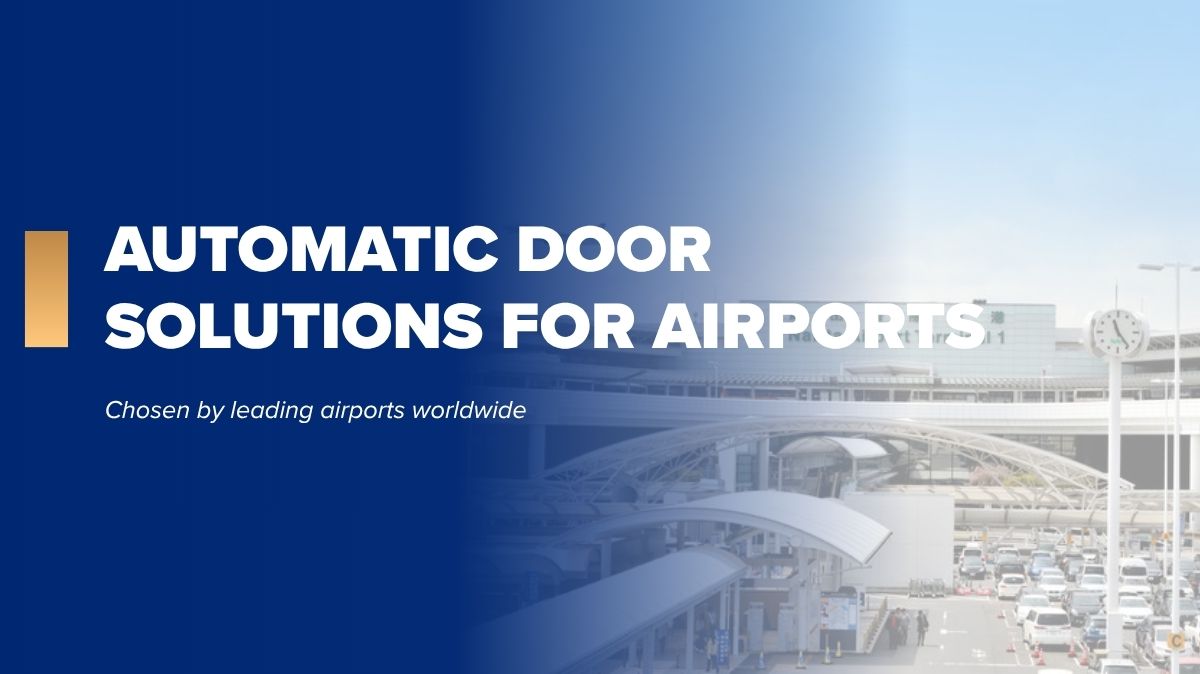
5 of the world’s top 10 airports choose NABCO automatic sliding doors
According to the 2020 Skytrax World Airport Awards ranking, 8 Asian airports were among the Top 10 best airports in the world. Notably, 5 of them use NABCO automatic door solutions for airports.
These are all airports with extremely high passenger volumes, where door systems must operate continuously for many years while maintaining passenger flow, safety, and operational stability. NABCO’s selection for these projects demonstrates that the brand has been proven in some of the most demanding operating environments in the aviation industry.
Tokyo Haneda Airport (Japan) – Top 2 (520 sets)
Tokyo Haneda International Airport (HND) is one of Japan’s most important airports and has consistently ranked among the world’s Top 3–5 airports according to Skytrax. It is also the busiest airport in Japan, serving hundreds of thousands of passengers every day with extremely high traffic volumes, particularly on domestic and short-haul international routes.
Haneda is known for its modern terminal facilities, optimized operational processes, and ability to handle passengers efficiently. Thanks to its well-planned passenger flows, the airport maintains high processing and passenger movement speeds even during peak hours.
According to NABCO data, approximately 520 sets of NABCO automatic doors have been installed across various terminal areas, including departure halls, arrival halls, security control areas, and internal connecting passages. These door systems play an important role in maintaining continuous passenger flow, reducing congestion, and providing a seamless passenger experience throughout the terminal.

Incheon International Airport (South Korea) – Top 4 (400 sets)
Incheon International Airport (ICN) is the largest airport in South Korea, consistently ranking among the world’s Top 3–5 airports according to Skytrax. It is also a major transit hub in the Asia-Pacific region. Incheon is recognized for its high service quality and impressive operational efficiency, having received numerous awards such as “World’s Cleanest Airport” and “Best Airport for Transit Services.” Some notable indicators include:
- Extremely low baggage mishandling rate (~0.0001%).
- Fast processing time: 12–19 minutes.
- A wide range of amenities, including spas, golf courses, hotels, museums, and duty-free shopping areas.
- A diverse selection of dining options within the terminal.
With stringent operational standards, the airport has selected more than 400 sets of NABCO automatic doors for key areas, ensuring continuous and stable passenger flow in a high-traffic environment. NABCO’s door systems at Incheon continue to operate reliably, contributing to the airport’s reputation as one of the world’s most modern and efficient airports.

Narita International Airport (Tokyo, Japan) – Top 7 (814 sets)
Narita International Airport (NRT) is an important international aviation gateway to Japan, located in Chiba, east of the Greater Tokyo Area. It primarily serves long-haul international flights and is one of Asia’s major transit hubs. The airport handles high passenger volumes and is regularly ranked among the world’s Top 10 – 20 busiest airports, playing an important role in connecting Asia with Europe and the Americas.
According to NABCO data, Narita is the airport with the largest number of NABCO automatic doors in Japan, with approximately 814 sets installed throughout passenger terminals, immigration and customs areas, and service areas. This demonstrates the system’s ability to meet high-intensity operational demands in an international airport environment.

Chubu Centrair International Airport (Nagoya, Japan) – Top 8 (177 sets)
Chubu Centrair International Airport in Nagoya is located on an artificial island in Ise Bay, in Tokoname, Aichi Prefecture, south of Nagoya. With its location between Tokyo and Osaka, it serves as an important aviation gateway to the Chubu region. From the airport, passengers can conveniently travel to destinations such as Takayama, Shirakawa, Nagoya, Legoland, and Nabana no Sato Flower Park.
One of Centrair’s highlights is its more than 100-meter-long fourth-floor Sky Deck, which provides a direct view of aircraft takeoffs and landings. The terminal system uses 177 sets of NABCO automatic sliding doors across both Terminal 1 and Terminal 2. These systems have been in operation since 2000, ensuring stable and safe passenger flow.

Kansai International Airport (Osaka, Nhật Bản) – Top10 (374 bộ)
Kansai International Airport is one of Japan’s largest international airports. It was built on an artificial island in Osaka Bay, offshore from Honshu. The airport officially began operations in 1994 to relieve congestion at Osaka Airport, which now primarily serves domestic flights.
Kansai International Airport is an iconic project in Japan’s aviation industry, not only because of its scale but also because of the challenging engineering involved in constructing an airport at sea.
Although the airport began operations in the 1990s, it was equipped with modern systems from the outset, including 374 sets of NABCO automatic doors installed and operated throughout the terminals. These systems help ensure the airport’s ability to handle high daily passenger volumes while maintaining operational stability in the continuous-use environment of a major international airport.
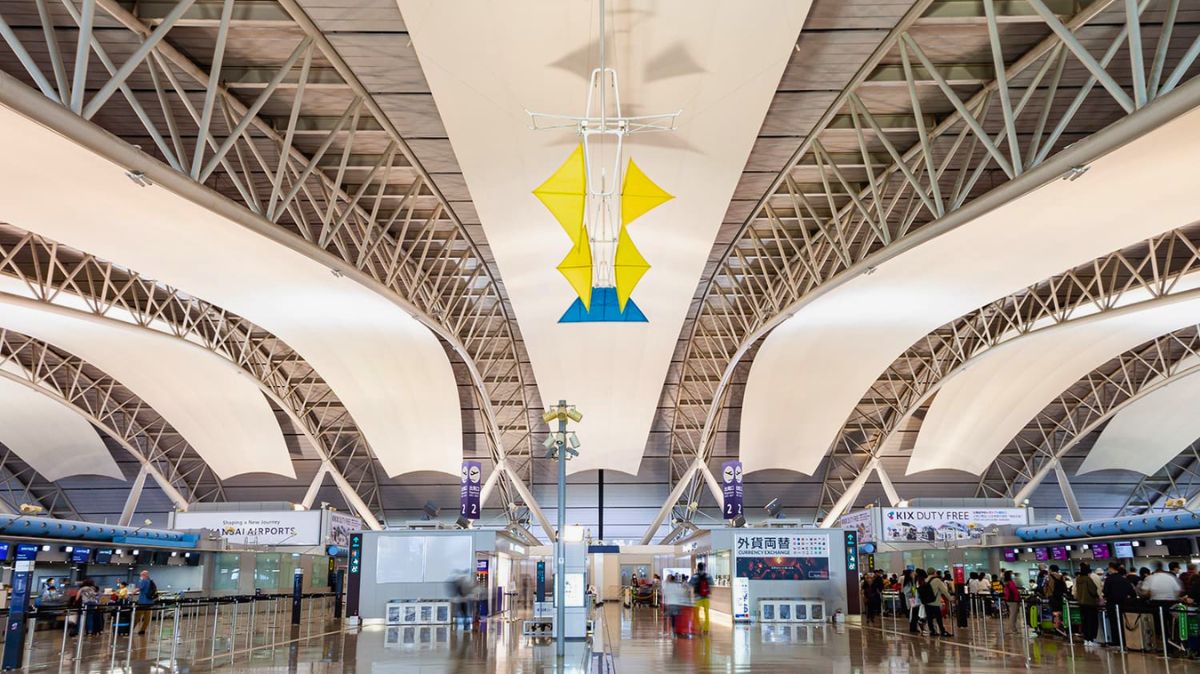
Automatic door solutions for airports in Vietnam
In addition to being used at leading international airports, NABCO’s automatic door solutions for airports are also deployed at major airports in Vietnam, including Noi Bai, Tan Son Nhat, Da Nang, Cam Ranh, Vinh, Pleiku, Thanh Hoa, and Hai Phong.
At Noi Bai International Airport’s Terminal 2, Sonha Auto currently provides periodic maintenance for more than 100 NABCO door sets. Data from PDA devices shows that many door systems have exceeded 3 million opening and closing cycles while still maintaining stable operation. This result demonstrates the effectiveness of selecting the right equipment configuration combined with maintenance procedures in accordance with the manufacturer’s standards. This is also why many project owners evaluate automatic door solutions for airports based on the total cost of ownership and long-term operational performance, rather than focusing solely on the initial investment cost.
>>> See more: What makes NABCO automatic doors for large-scale projects special that leads investors to prioritize them?
Conclusion
An automatic door solution for airports must not only meet current operational requirements but also ensure durability after millions of opening and closing cycles and many years of continuous operation. The fact that 5 of the world’s Top 10 airports, along with numerous international airports in Vietnam, have chosen NABCO automatic sliding doors is clear evidence of the system’s stable operation, reliability, and long-term operational efficiency.
Contact Sonha Auto for a site survey and consultation on suitable automatic door solutions for airports, terminals, and other high-traffic facilities.