As building operating costs continue to rise particularly electricity consumption for air-conditioning and ventilation systems—modern buildings are increasingly shifting toward solutions that improve energy efficiency. Among these solutions, energy-efficient automatic door technology is no longer simply an opening and closing device but has become an important part of an overall energy management strategy. Instead of focusing solely on the electricity consumption of the motor, modern automatic doors are designed to reduce thermal loss, optimize airflow, and operate intelligently. This is the key factor that helps many buildings, shopping malls, and hospitals significantly reduce electricity costs over the long term.
What is energy-efficient automatic door technology?
In its full sense, energy-efficient automatic door technology is a combination of multiple technical components designed to optimize the entire door operation process, thereby minimizing unnecessary energy consumption. Contrary to the common perception that automatic doors mainly consume electricity through the motor, the actual energy consumption of the motor is relatively small. The real value lies in the door’s ability to control opening and closing time and reduce the loss of conditioned air.
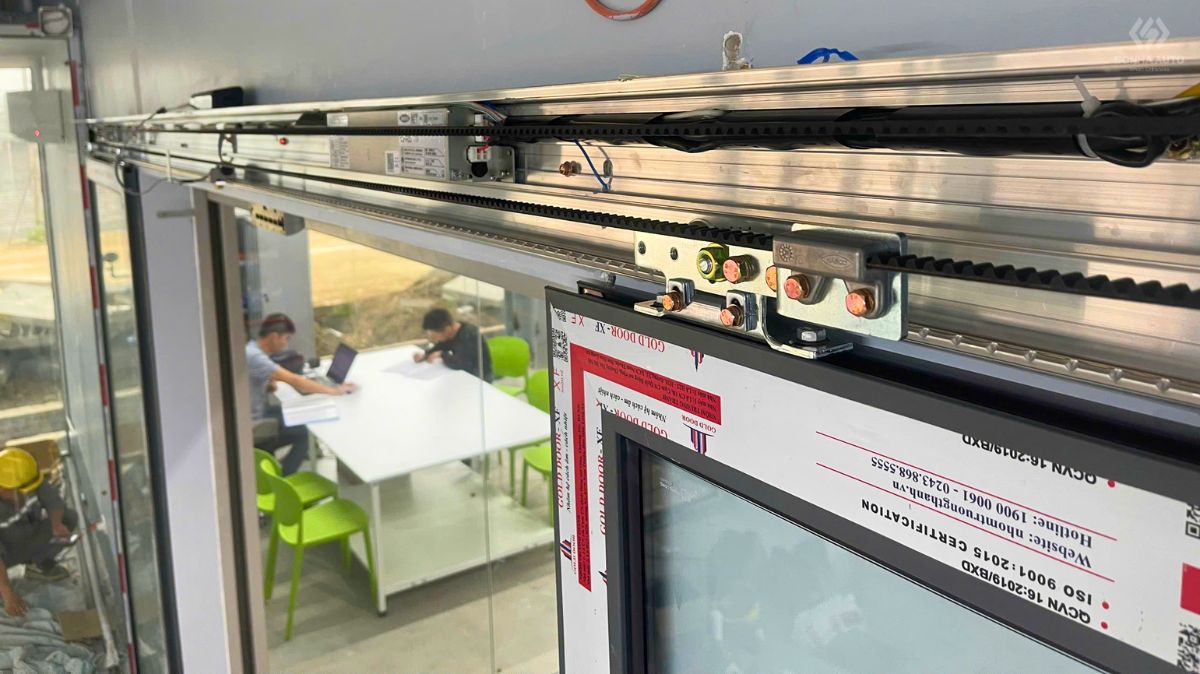
A standard automatic door system typically includes the following components:
- High-efficiency motor
- Intelligent sensor system
- Operation-optimizing controller
- System synchronization capability
When these elements work together seamlessly, the door not only operates smoothly but also becomes an effective energy control point at the building entrance.
Do automatic doors really save electricity?
This is a common question when investors are considering smart entrance solutions. If we only look at the electricity consumed by the motor, the answer may seem unclear. However, when considering the overall operation of the building, the energy-saving benefits become much more significant.
In practice, the electricity consumption of an automatic door system is relatively low. However, in buildings that use centralized air-conditioning, energy loss caused by doors remaining open is the real concern.
When a door stays open longer, it means:
- Cold air escapes outside
- Hot air enters the building
- The air-conditioning system has to work harder
In contrast, automatic doors help to:
- Open only when necessary
- Close quickly when no one is passing through
- Maintain a stable indoor environment
Therefore, the energy-saving efficiency does not lie in the door itself, but in its ability to control airflow and temperature inside the space.

Technological factors that help automatic doors save energy
High-efficiency motor for stable operation
One of the most important elements of energy-efficient automatic door technology is the motor—especially brushless motors. With a design that minimizes mechanical friction, this type of motor reduces wear and lowers energy consumption during operation.
In addition to saving energy, high-efficiency motors allow doors to operate reliably over long periods, reducing malfunctions and maintenance costs. This is a crucial factor for buildings with high usage frequency.
Intelligent sensor system
Sensors play a direct role in determining whether the door should open. A high-quality sensor system enables the door to respond accurately to user movement, preventing unnecessary or premature opening.
This is especially important for energy efficiency, because every unnecessary opening allows a large amount of conditioned air to escape. When sensors operate accurately, the door opens only when truly needed, significantly reducing energy loss.
Intelligent controller
If the motor is the “heart,” the controller is the “brain” of the door system. Through control algorithms, the system can adjust opening speed, door hold time, and closing timing appropriately.
This directly affects energy efficiency. An optimally configured system can:
- Reduce unnecessary door opening time
- Close quickly while maintaining safety
- Adapt to actual traffic flow
System synchronization technology
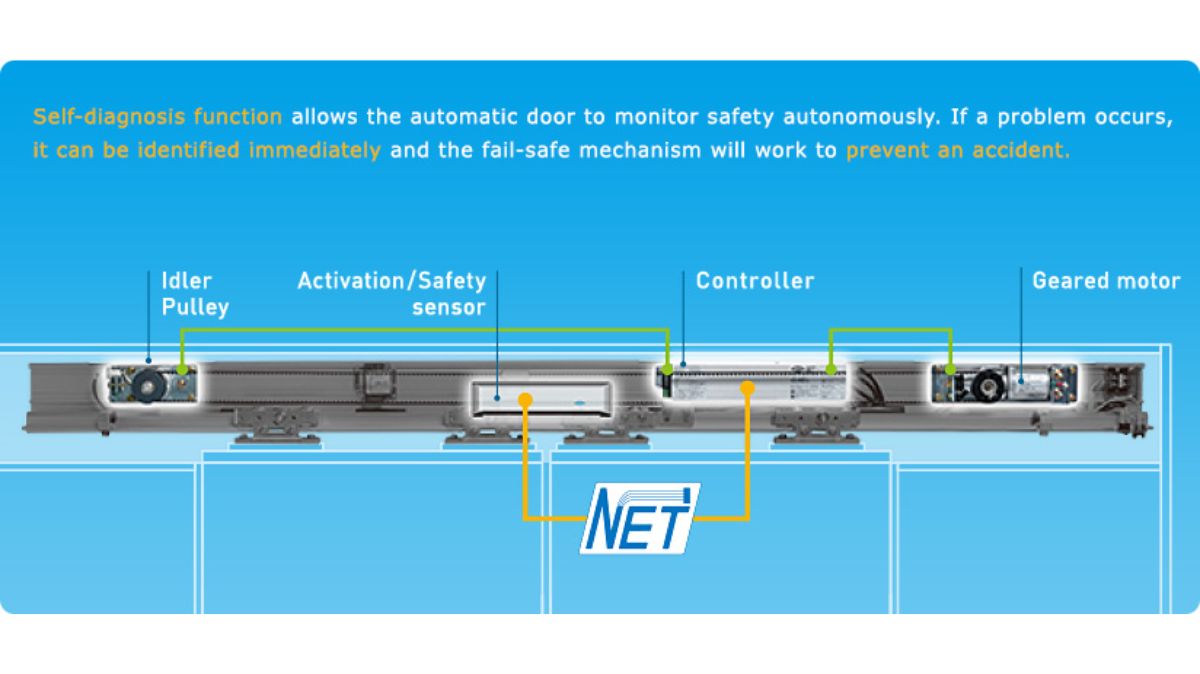
In modern door systems, communication technologies allow components such as the motor, sensors, and controller to operate synchronously. This minimizes operational errors such as opening at the wrong time, incomplete closing, or slow response. When the system operates accurately and consistently, energy consumption is also optimized.
How do automatic doors reduce thermal loss?
In buildings with air-conditioning systems, thermal loss through doorways is one of the main causes of increased electricity costs. When a door opens, the temperature difference between indoor and outdoor environments creates continuous air exchange.
Automatic doors control this process by:
- Reducing door opening time
- Closing quickly and tightly
- Minimizing uncontrolled airflow
Compared with manual doors, the difference is very clear. Particularly in spaces such as shopping malls or hotels—where entrances are used continuously—automatic doors can significantly reduce electricity consumption for air-conditioning systems.
Applications of energy-efficient automatic doors in real buildings
In practice, the effectiveness of energy-efficient automatic door technology is most evident in buildings with high pedestrian traffic and strict environmental control requirements.
In office buildings, automatic doors help maintain stable temperatures in the lobby area, where people frequently enter and exit. This reduces the load on HVAC systems and optimizes operating costs.

For shopping malls, where visitor traffic is large and continuous, automatic doors not only ensure smooth movement but also play a key role in maintaining indoor temperature throughout the building.
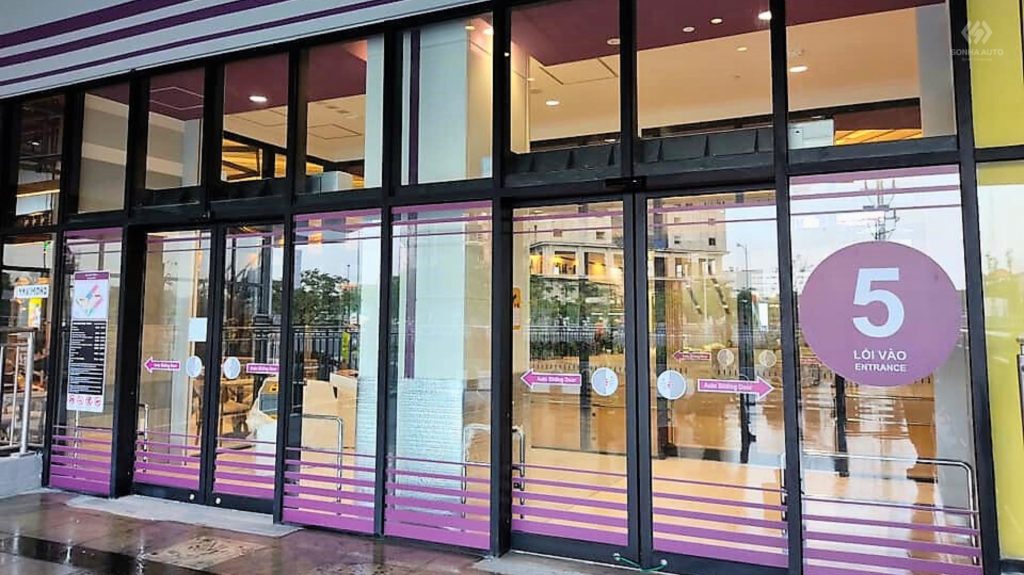
In hospitals, automatic doors help control the environment while reducing direct contact, contributing to higher hygiene standards and energy efficiency.

At airports, where door systems operate almost 24/7, optimizing energy consumption is not only an economic matter but also affects overall operational efficiency.

NABCO energy-efficient automatic door solutions for modern buildings
Among current automatic door systems, solutions from Japan—particularly NABCO automatic door technology—are highly regarded not only for durability but also for their ability to optimize energy efficiency in real-world operation. This is not the result of a single improvement, but of a fully integrated system designed from mechanical components to control systems.
The core of this smart entrance solution lies in combining multiple technologies to precisely control every door movement, thereby minimizing unnecessary energy consumption.
First, the system uses high-efficiency motors, typically based on brushless technology. By reducing friction and improving energy conversion efficiency, these motors operate smoothly over long periods while maintaining low power consumption. This is especially important in buildings with continuous usage such as airports and shopping malls.
In addition, the intelligent control system with self-learning capability allows the door to adapt to real operating conditions. Instead of functioning under a fixed configuration, the system can record door load, usage frequency, and environmental conditions to optimize opening speed, closing speed, and door hold time. As a result, the door always operates at maximum efficiency without wasting energy.
Another essential component is the high-precision sensor system. With the ability to detect real movement while minimizing interference signals, the door opens only when necessary. This significantly reduces unnecessary openings—the main cause of thermal loss in air-conditioned spaces.
Notably, CAN communication technology is applied in the system, enabling components such as motors, sensors, and controllers to communicate reliably and synchronously. This ensures smooth system operation, minimizes errors, and prevents energy loss caused by improper operation.
With the combination of these technologies, NABCO automatic door solutions are not only suitable for premium buildings but also deliver clear long-term benefits. The system can maintain high stability for many years, reduce maintenance costs, and most importantly optimize electricity consumption—an increasingly important factor for building investors.
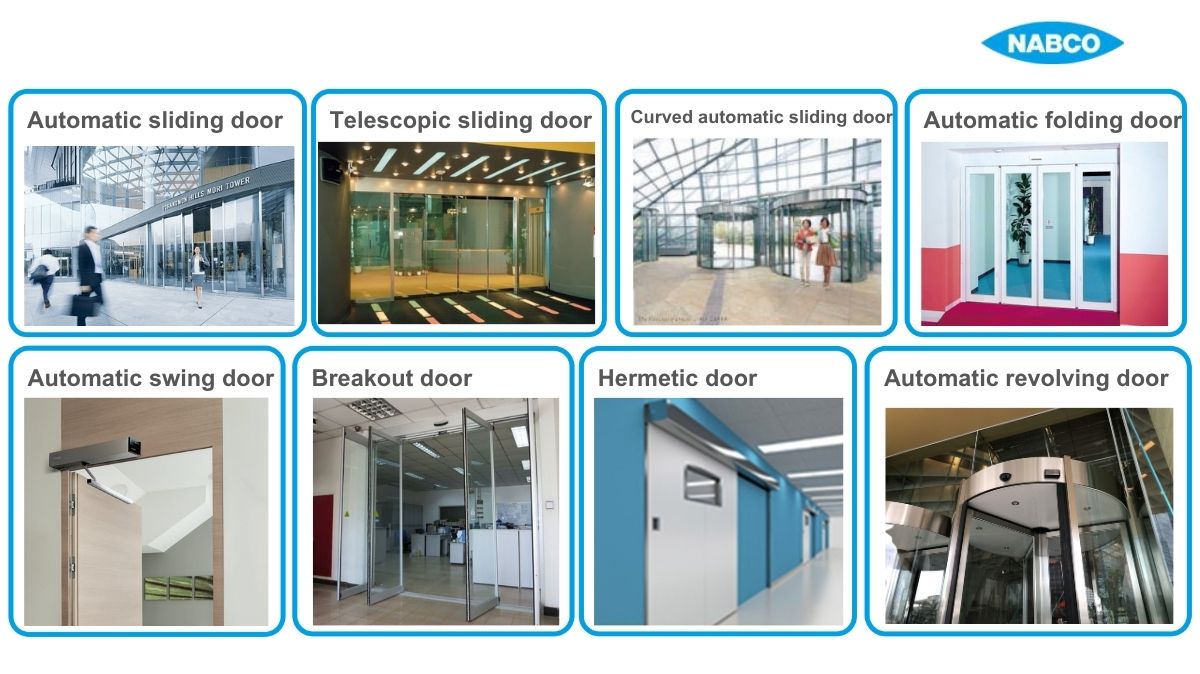
When should you invest in energy-efficient automatic doors?
Not every building requires this solution. However, investing in energy-efficient automatic doors is particularly effective in the following cases:
- Buildings using centralized air-conditioning systems
- Areas with high pedestrian traffic
- Spaces requiring stable temperature control
- Facilities operating continuously for long periods
On the other hand, in smaller spaces with low traffic, the energy-saving benefits may not be as significant.
Important notes to ensure automatic doors truly save energy
An automatic door system only achieves maximum efficiency when it is properly designed and operated. Choosing the right equipment is only the first step—the configuration and operation are equally important.
The following factors should be properly adjusted:
- Appropriate door hold time
- Suitable closing speed
- Accurate sensor sensitivity
In addition, regular maintenance is essential. A smoothly operating system helps maintain performance and prevents unnecessary energy consumption.
>>> See more: Cửa Hermetic NABCO – Giải pháp cửa phòng mổ kín khí đạt chuẩn cho bệnh viện
Conclusion
Energy-efficient automatic door technology is not simply about reducing the electricity consumption of the motor. Instead, it is the result of the synchronized integration of multiple technical elements designed to optimize the entire operational process. From high-efficiency motors and intelligent sensors to precise control systems, every component contributes to making automatic doors an effective energy management solution at building entrances. As modern buildings increasingly focus on sustainability and cost optimization, automatic doors are no longer just a premium feature—they are gradually becoming a new standard in modern architectural design.