Safe automatic door usage depends not only on technology but also on how users interact with the system during operation. Although modern automatic doors are equipped with safety sensors, anti-collision mechanisms, and intelligent control systems, unexpected incidents can still occur if the doors are used improperly. So, what should users pay attention to in order to ensure safe automatic door usage? What practices help protect children, elderly individuals, wheelchair users, and people using strollers? Let’s explore the answers below.
Are automatic doors really safe?
Modern automatic doors are designed with multiple layers of protection to minimize the risk of collisions during operation. Motion detection sensors, safety sensors for obstacle monitoring, intelligent controllers, and automatic stop functions all contribute to improving user safety.
However, like elevators and escalators, the safety of an automatic door depends not only on the equipment itself but also on how it is used in practice. Actions such as running through the doorway, standing for extended periods within the sensor zone, leaning against the door panels, or allowing children to play near the opening and closing area can increase the risk of unexpected incidents.
Therefore, understanding how automatic doors work and following safety guidelines are essential for safe automatic door usage and for maximizing user protection.
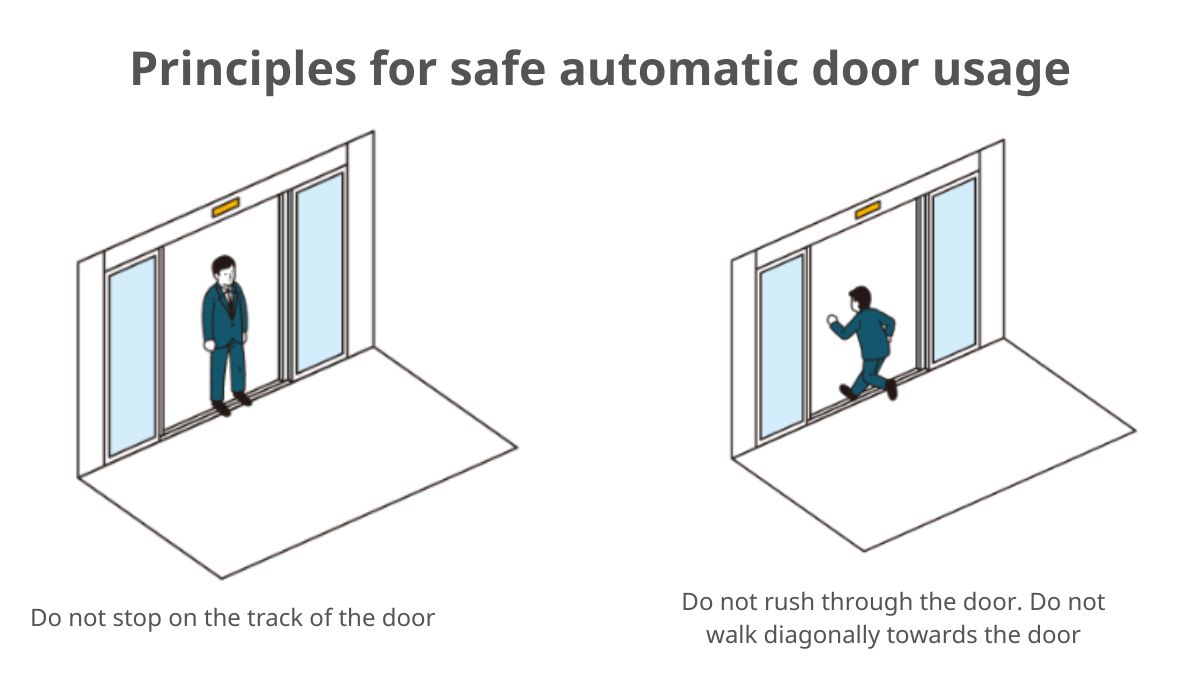
Principles for safe automatic door usage
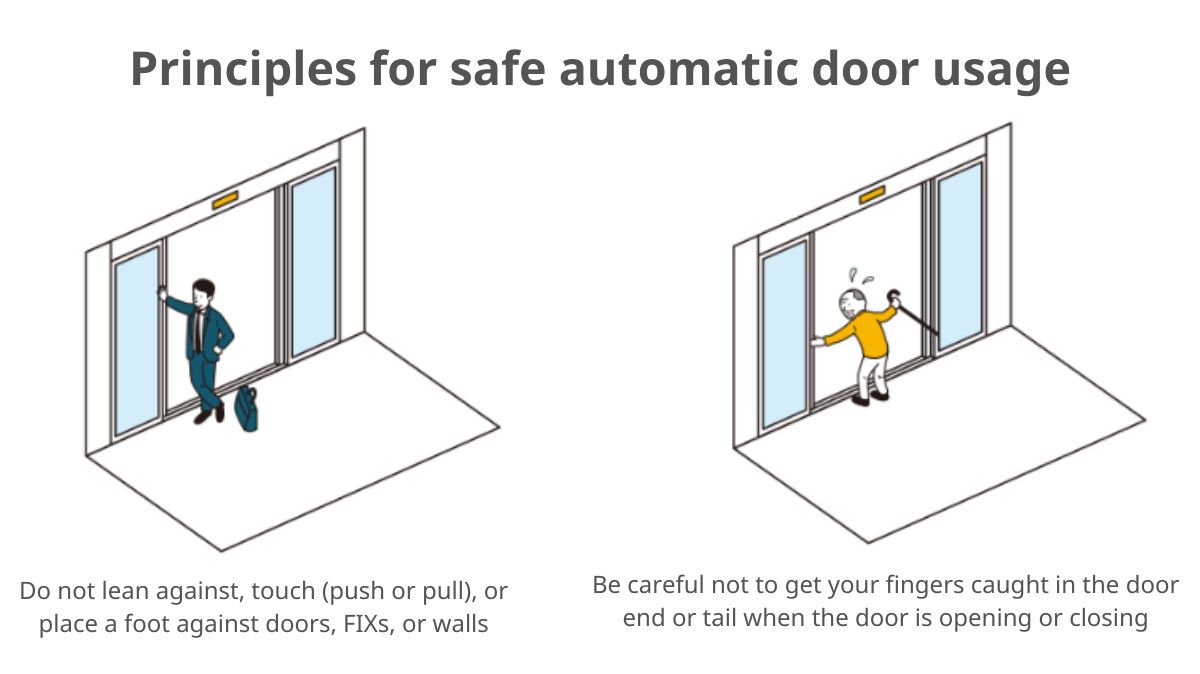
To ensure safe automatic door usage, users should avoid common behaviors such as running through the doorway, lingering within the sensor zone, or applying force to the door panels while the system is operating.
Do not run or rush through the doorway
Although automatic doors can detect fast-moving objects, walking at a normal pace remains the safest approach. This allows the system sufficient time to detect users and respond accurately, especially in crowded locations such as airports, hospitals, and shopping centers.
Do not remain in the operating zone for extended periods
The sensor area is continuously monitored to detect people and objects. Standing within this zone for too long may cause the door to remain open unnecessarily or repeatedly perform opening and closing cycles, affecting traffic flow efficiency and increasing system operating frequency.
After passing through the doorway, users should continue moving to keep the passage clear.
Do not lean on or push the door panels
Some users tend to push the door manually or lean against the panels while the system is operating. This may affect the accuracy of the drive mechanism, cause panel misalignment, or reduce the lifespan of mechanical components.
Proper usage not only improves safety but also helps maintain the stability and durability of the system over time.
Important considerations for children, elderly users, and wheelchair users
One of the key advantages of automatic doors is their ability to provide convenient access for all users. However, certain user groups require additional attention.
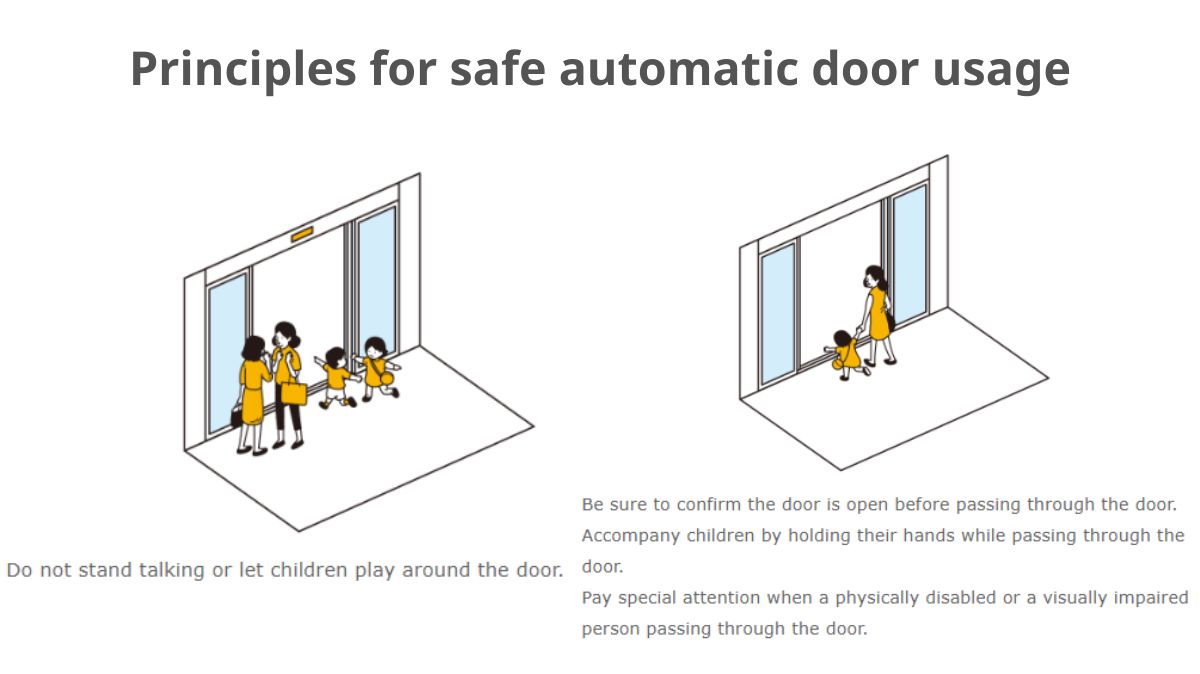
For children, parents or guardians should accompany them when passing through the doorway and prevent them from running ahead or playing near the opening and closing area. Many modern automatic door systems are designed with advanced safety features that improve the detection of people and obstacles. Nevertheless, adult supervision remains essential to ensure automatic door safety for children.
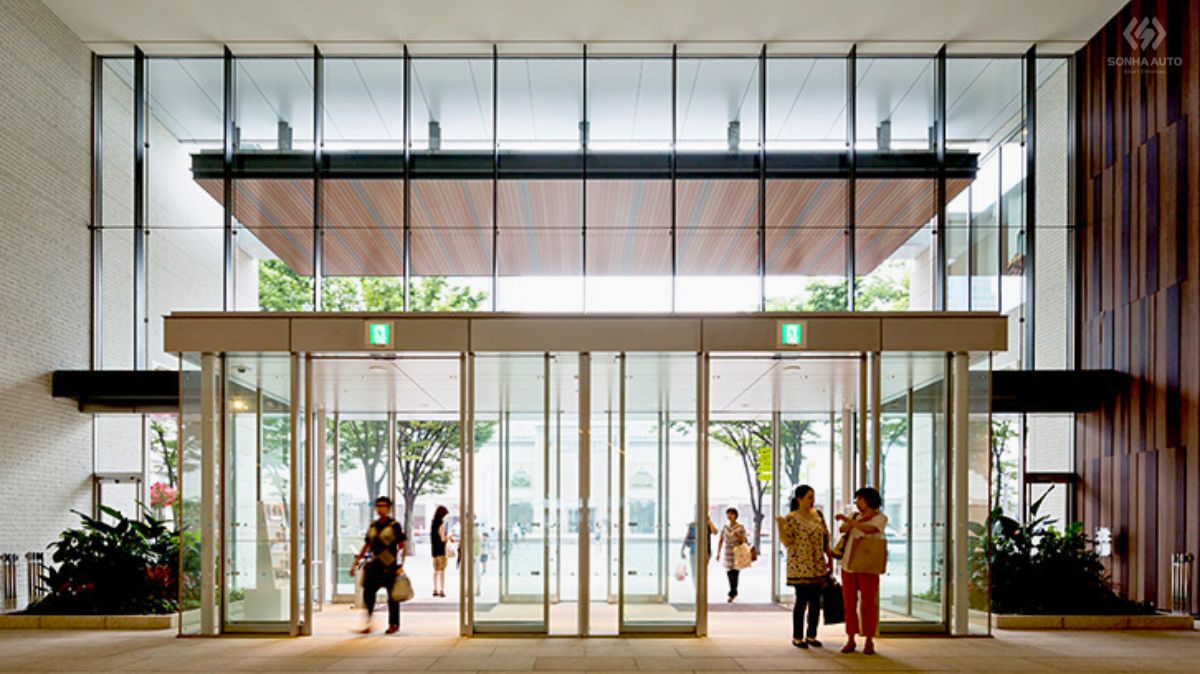
For elderly users, wheelchair users, individuals pushing strollers, or those carrying large luggage, it is recommended to move at a steady pace and ensure that the entire wheelchair, stroller, or luggage has entered the open doorway before proceeding. This helps minimize collision risks and improves traffic flow around the entrance.
Users should also pay attention to safety labels installed on the door system. According to NABCO recommendations, warning labels help identify automatic doors, indicate operating zones, and provide important usage instructions.
Following these recommendations is one of the most important aspects of safe automatic door usage, helping reduce operational risks and improve safety for all users.
Technologies that help NABCO automatic doors operate safely
In addition to proper user behavior, integrated safety technologies play a critical role in reducing risks. This is why facilities such as hospitals, airports, railway stations, and shopping centers often prioritize brands with stringent engineering standards like NABCO.
N-search multi-zone safety sensor system
N-search is NABCO’s advanced safety sensor system designed to enhance the detection of people and obstacles around the doorway. The system continuously monitors multiple detection zones throughout the opening and closing cycle, enabling accurate identification of moving objects while minimizing collision risks.
In addition, the sensor includes self-diagnostic functions and fault notifications, helping maintain operational stability and safety.

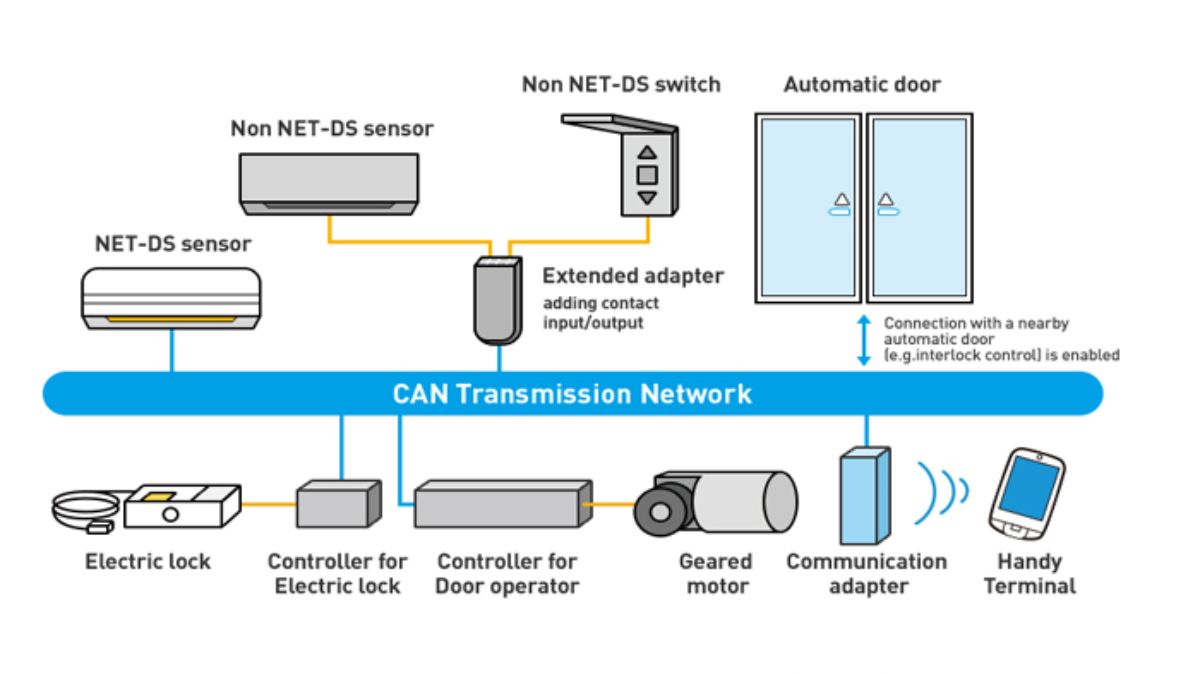
Intelligent controller with CAN technology
NABCO is a pioneer in applying CAN communication technology to automatic door controllers. The system continuously monitors operating conditions and automatically optimizes operational parameters in real time. This enables more precise door movement, reduces vibration, and maintains stable performance over long periods of operation.
Compliance with international automatic door safety standards
One of the most important criteria for evaluating automatic door safety is compliance with international technical standards. NABCO products are developed in accordance with JIS A 4722 in Japan and comply with EN 16005 in Europe. These recognized automatic door safety standards establish strict requirements regarding obstacle detection, opening and closing speed, operational stability, and user safety.
This is one of the reasons why NABCO is frequently selected for facilities with demanding safety requirements, including children’s hospitals, schools, and buildings regularly used by young children, where automatic door safety for children is a particularly important consideration.
Regular maintenance to maintain safety
In addition to proper operation, safe automatic door usage also depends on regular inspection and maintenance to ensure stable system performance. Depending on usage frequency, maintenance should generally be performed every three to six months or according to the manufacturer’s recommendations.
Inspection of sensors, guide rails, motors, controllers, and mechanical components helps identify potential issues before they affect system safety.
Signs such as slow door movement, inaccurate sensor response, vibration, or unusual noise indicate that the system should be inspected and serviced promptly to prevent unexpected failures.

>>> See more: Automatic doors for people with disabilities: An accessible solution for wheelchair users
Conclusion
Safe automatic door usage depends not only on advanced technology but also on proper user awareness and an appropriate maintenance program. When users understand how the system works, follow safety guidelines, and choose a high-quality solution, automatic doors can deliver maximum operational efficiency while providing effective user protection. Guided by the philosophy of “Safety and Comfort for Everyone,” NABCO combines advanced N-search multi-zone sensing technology, intelligent CAN-based controllers, and compliance with stringent Japanese and European automatic door safety standards to provide a modern, safe, and reliable entrance solution for a wide range of building applications.
Contact Sonha Auto, the strategic distributor of NABCO in Vietnam, for consultation on genuine automatic door solutions tailored to your operational requirements and project standards.