A smooth-operating automatic door system does not necessarily mean it is a safe one. To minimize the risk of collisions, entrapment, and other accidents while ensuring reliable performance throughout its service life, manufacturers and installers must comply with strict technical requirements. Among these, EN 16005 is recognized as one of the most important safety standards for pedestrian automatic door systems. So, what does EN 16005 specify? Why has it become widely adopted around the world? And how do modern automatic door solutions meet these safety requirements? Join Sonha Auto as we explore these questions in the article below.
What is EN 16005?
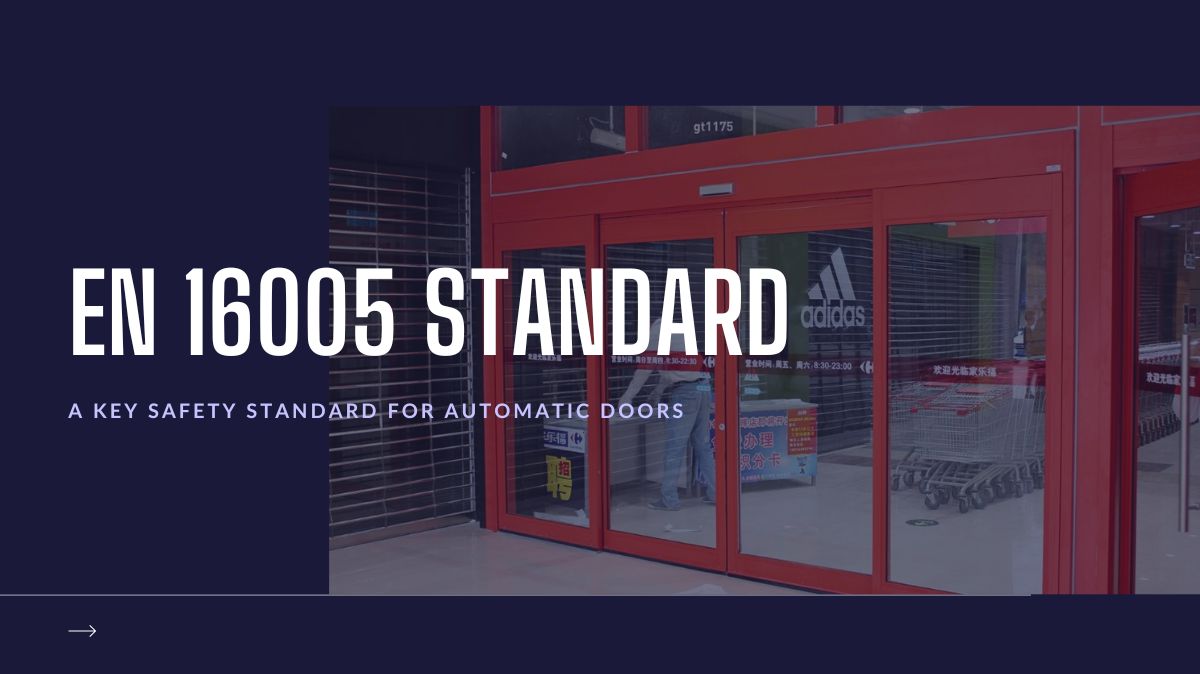
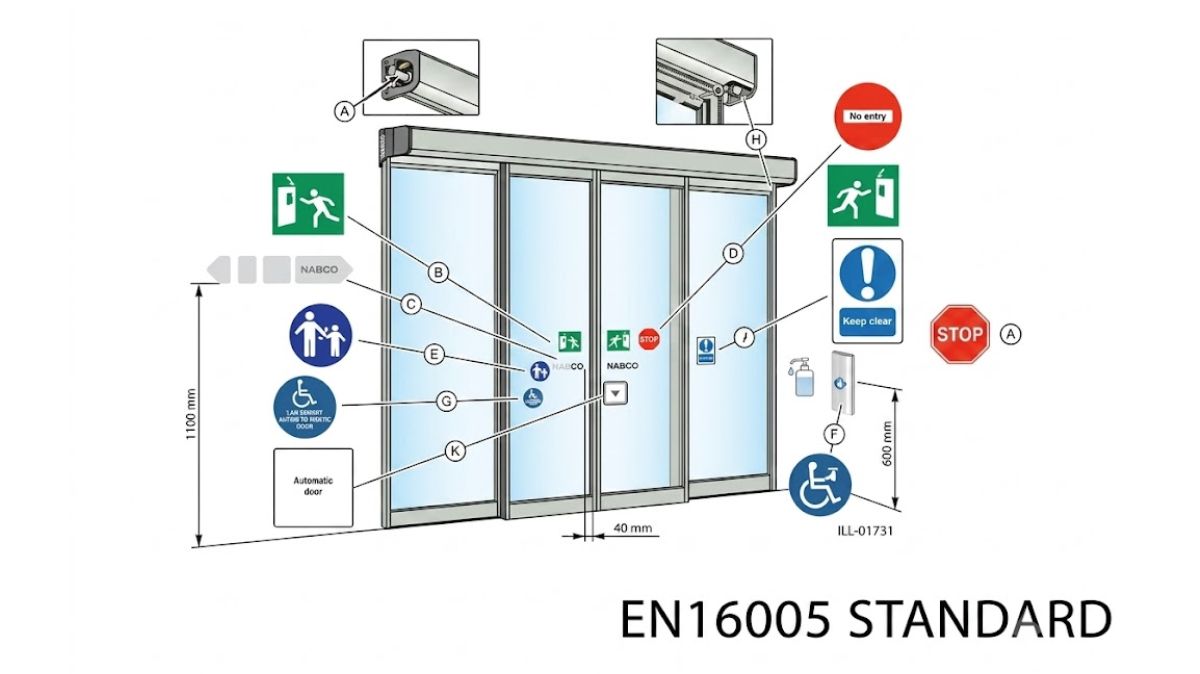
A modern automatic door system must provide more than smooth operation—it must also ensure the safety of every user. This is why EN 16005 was developed and has become one of Europe’s most important technical standards for pedestrian automatic doors.
Published by the European Committee for Standardization (CEN) and officially effective since April 2013, EN 16005 specifies requirements for the design, installation, operation, inspection, and maintenance of automatic pedestrian doors to minimize the risk of collisions, entrapment, and other accidents during use.
Today, EN 16005 is applied not only throughout Europe but is also widely referenced by automatic door manufacturers worldwide when developing products and safety solutions.
Why is EN 16005 important?
In facilities such as airports, hospitals, shopping malls, and office buildings, automatic doors may perform thousands of opening and closing cycles every day. Without proper design and control, risks such as doors closing while pedestrians are passing through, collisions with children or elderly users, or excessive closing force can occur.
EN 16005 addresses these risks by defining specific requirements for:
- Pedestrian and obstacle detection
- Opening and closing force and speed control
- Automatic stopping or reversing when an obstacle is detected
- Emergency escape capability
- Periodic inspection and maintenance to maintain safety throughout the system’s service life
Simply put, EN 16005 does not evaluate how fast a door opens, but rather how safely it operates.

Key safety requirements of EN 16005
Accurate pedestrian and obstacle detection
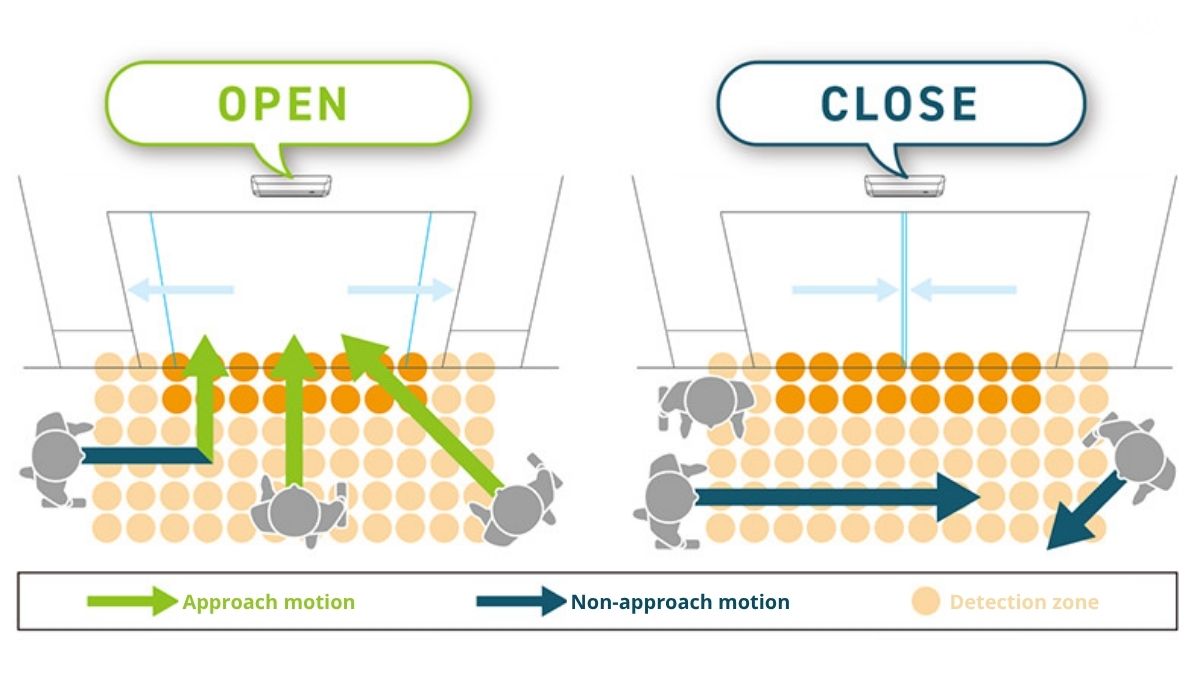
One of the most critical requirements of EN 16005 is that the door system must reliably detect people within hazardous areas. Therefore, modern automatic doors are typically equipped with activation sensors and safety sensors that continuously monitor the areas in front of and behind the door leaves. When a pedestrian or obstacle is detected, the system keeps the door open or prevents it from closing, significantly reducing the risk of impact.
Control of opening and closing force and speed
EN 16005 requires automatic doors to be configured with appropriate operating speeds and closing forces according to the door type, leaf weight, and installation environment. This requirement is particularly important in hospitals, schools, and shopping malls where children, elderly people, and wheelchair users are frequently present.
Modern automatic door operators combine electric motors with electronic controllers to precisely regulate acceleration, deceleration, and operating force throughout each opening and closing cycle, ensuring both smooth operation and user safety.
Automatic stop or reverse upon obstacle detection
If an obstacle is detected while the door is closing, the system must immediately stop or reverse direction to prevent entrapment or collision. This is one of the most important safety functions of modern automatic door systems and is essential for buildings with high pedestrian traffic.
Ensuring emergency egress
For public buildings, EN 16005 also requires automatic door systems to support safe evacuation during emergencies in accordance with the building’s emergency escape strategy.
Depending on the door type and application, NABCO provides various evacuation solutions. For the NABCO GT-8300 automatic swing door, the system can be equipped with the Panic Breakout function, allowing the door leaf to swing open in both directions when sufficient force is applied, creating a wider escape route during emergencies.
Meanwhile, the NABCO GT-1175 Breakout automatic sliding door is designed so that both the sliding panel and fixed sidelight can swing outward 90° under an applied force of approximately 110 N, nearly doubling the clear opening width compared to a conventional sliding door. This significantly improves evacuation efficiency and facilitates the movement of stretchers, wheelchairs, and bulky equipment.
Thanks to these solutions, the GT-8300 and GT-1175 are frequently selected for airports, hospitals, railway stations, shopping malls, exhibition centers, and other facilities where high safety standards and heavy pedestrian traffic are required.
The Breakout function expands the emergency escape opening on the NABCO GT-1175 automatic door
Periodic inspection and maintenance
The safety of an automatic door depends not only on the quality of its components but also on regular inspection and maintenance. EN 16005 recommends periodic inspections to ensure that sensors, motors, controllers, and safety devices continue to perform according to their design specifications.
For high-traffic facilities such as airports and hospitals, scheduled maintenance also extends equipment lifespan while minimizing operational downtime.
What components are required for an EN 16005-compliant automatic door system?
To satisfy EN 16005 safety requirements, a modern automatic door system consists of more than just an operator. It includes:
- Automatic door operator
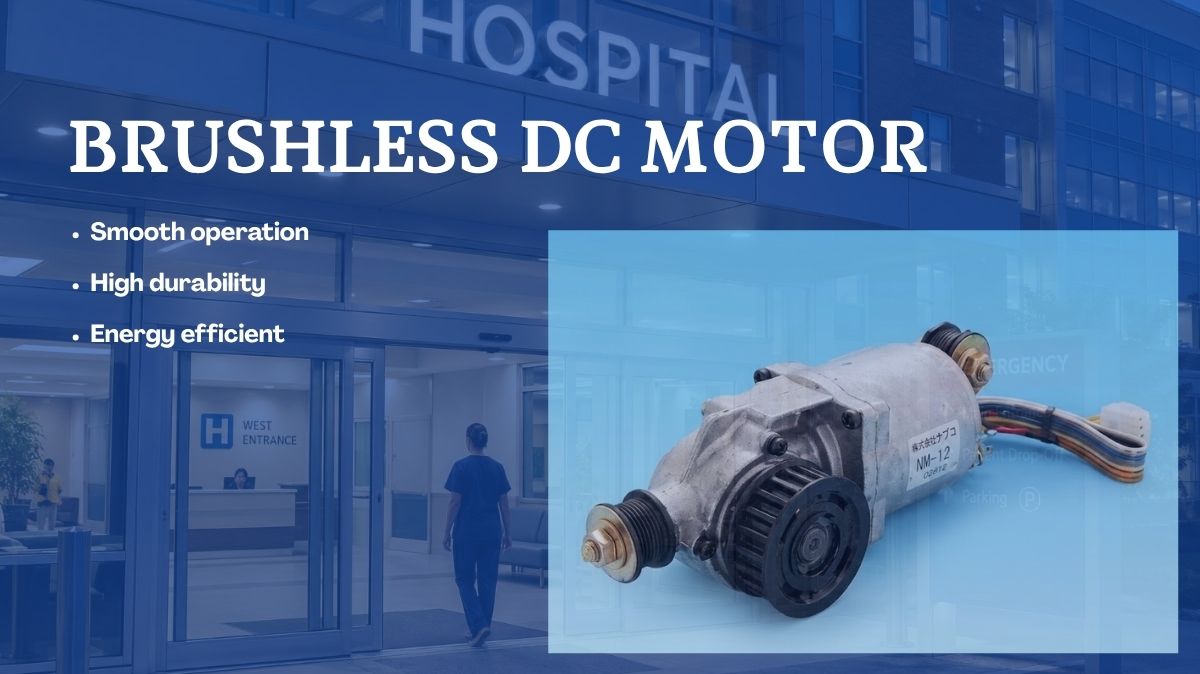
- Electric motor and gearbox
- Electronic controller
- Motion monitoring encoder
- Activation sensors
- Safety sensors
- Electric lock (where required)
- Backup power supply or battery backup, depending on project requirements
- Access control devices and fire alarm interfaces where integration is required
All of these components must be properly selected, configured, and calibrated to ensure the door operates in accordance with safety requirements.
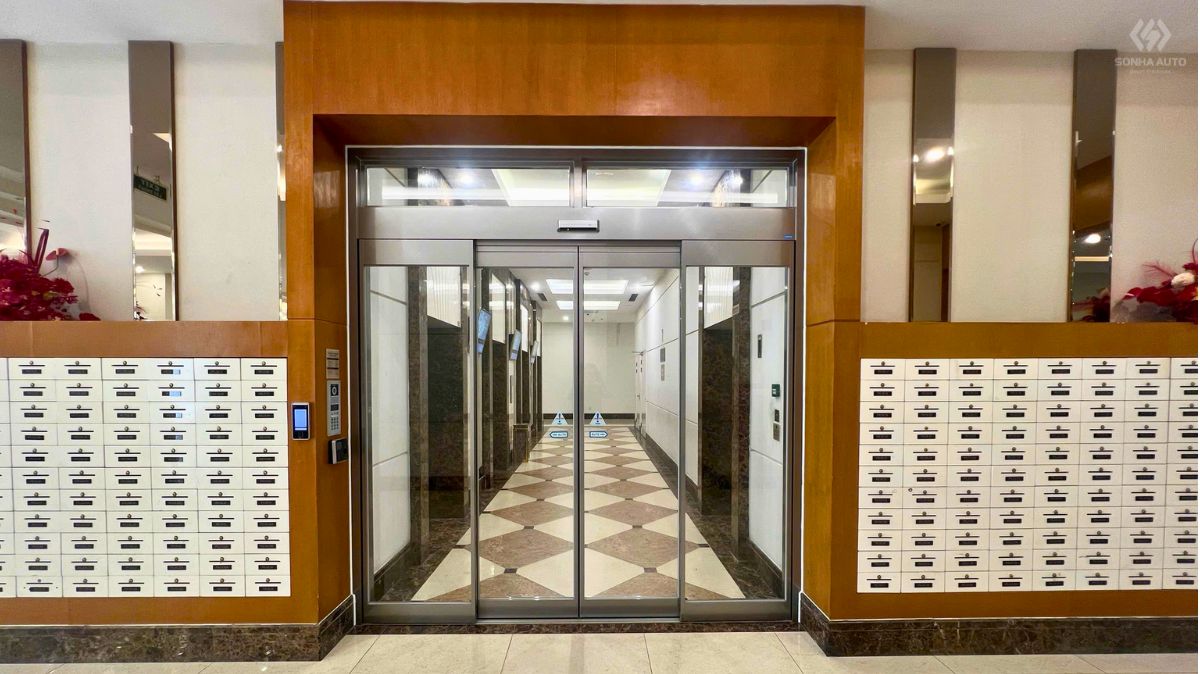
NABCO technology is designed to meet international safety standards
As a Japanese automatic door manufacturer with more than 70 years of experience, NABCO has continuously enhanced safety through technological innovation across successive product generations. Many NABCO entrance solutions are developed in accordance with international technical standards such as JIS (Japan) while also incorporating safety principles widely referenced in standards such as EN 16005.
Technologies including brushless DC motors, microprocessor-based controllers, CAN communication systems, safety sensors, and advanced user protection functions enable NABCO automatic doors to operate reliably even in high-traffic environments such as airports, hospitals, shopping malls, and office buildings.
With more than 20 years of partnership with NABCO, Sonha Auto not only supplies genuine equipment and replacement parts but also provides professional consultation, installation, and maintenance in accordance with the manufacturer’s recommendations, helping project owners maximize both system performance and operational safety.
>>> See more: What is JIS A 4722? Key safety criteria when selecting automatic doors
Conclusion
EN 16005 is one of the most important standards for ensuring that automatic doors operate safely, reliably, and appropriately within their intended environments. Beyond selecting high-quality equipment, project owners should also consider the complete solution—from sensors and controllers to professional installation and ongoing maintenance. With extensive experience installing thousands of automatic door systems across Vietnam, Sonha Auto is committed to delivering solutions that meet the technical and safety requirements of modern buildings, providing durable, efficient, and reliable automatic entrance systems throughout their service life.