In recent years, automatic sliding doors have become a popular solution in modern buildings such as hospitals, hotels, offices, shopping centers, and convenience stores. The convenience, safety, and stable operation make this product line increasingly applied. Among them, the two product groups that users are most interested in and compare are Japanese automatic sliding doors and Korean automatic sliding doors. The following article will delve into the comparison of Japanese and Korean automatic sliding doors, giving you a comprehensive view of these two door lines, thereby helping you choose the optimal solution for your project.
General Introduction to Japanese and Korean automatic sliding doors
Japan and Korea are two countries famous for high-tech products and electromechanical equipment. Automatic sliding doors from these two markets have been present in Vietnam for over 15 years and are highly valued by users for their durability, stability, and quiet operation..
- Japanese automatic sliding doors (Representative brands: NABCO, Dream): Built on the “kaizen” philosophy (continuous improvement), focusing on the perfection of mechanics and electronics. These products are famous for their super-quiet operation, outstanding durability, and extended lifespan, suitable for large-scale, high-frequency projects.
- Korean automatic sliding doors (Representative brands: SWICO, Kocom, DNG): Focus on balancing performance and cost. Korean automatic glass doors provide stable quality and full features at a more accessible price, making them an ideal choice for the mid-range segment.

Why do users often compare Japanese and Korean doors?
Both countries are industrial powers in asia with high production standards. Therefore, they represent the two clearest segments of quality and price, making it easy for users to classify and choose. This is why a detailed comparison of the two product lines is very necessary.
Comparison of Japanese and Korean automatic sliding doors
Difference in Production Philosophy
| Criterion | Japanese automatic sliding doors | Korean automatic sliding doors |
| Philosophy | Product perfection, absolute durability, no compromise. | Balancing performance/price, flexible application. |
| Priority | Quietness, lifespan, superior safety features. | Reasonable cost, good stability, easy maintenance. |
Detailed Comparison of Structure and Component Quality
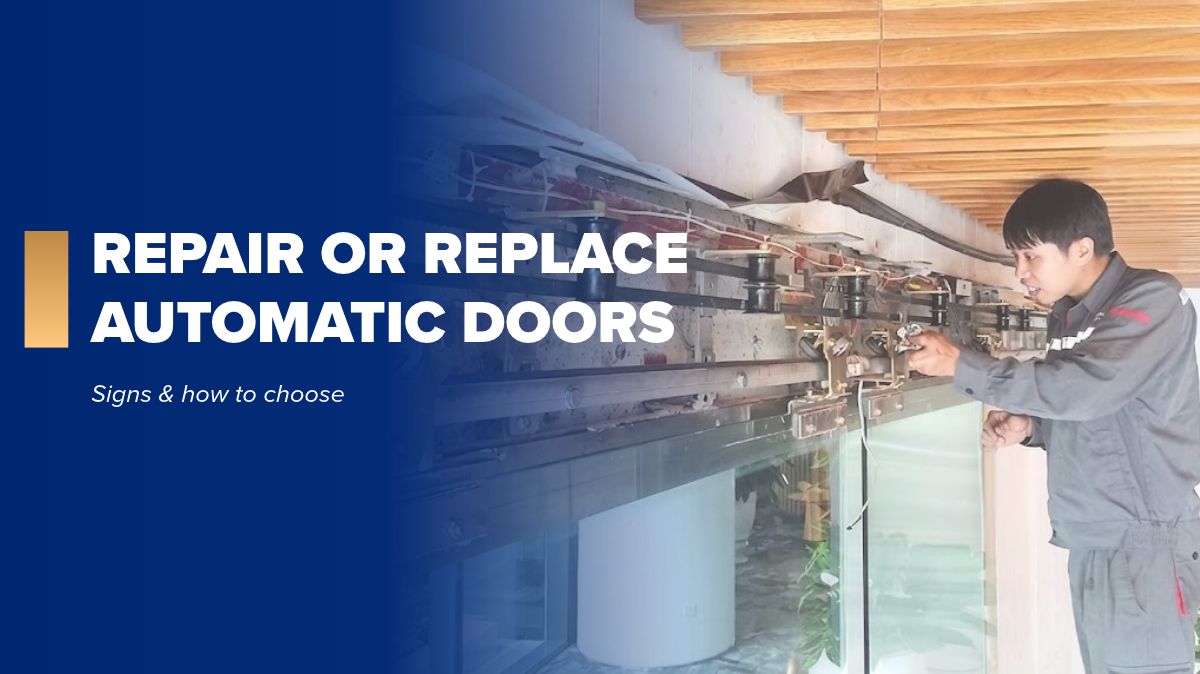
Both types of doors have a basic structure including: motor, controller, aluminum track, rollers, belt, sensors, and accompanying accessories. However, each country has different design and manufacturing standards, creating differences in the operational experience.
Motor Motor
- Japanese automatic sliding doors: Famous for durability and long-term operation. The motor runs very quietly, emitting almost no noise, suitable for environments requiring silence such as hospitals and high-end offices. Japanese automatic door motors typically have a lifespan of 10–15 years, or even longer if maintained correctly.
- Korean automatic doors: Korean automatic sliding door motors have high stability but belong to the mid-range segment, aiming for most common projects. The motor meets medium-to-high usage demands well, but the durability is not equal to Japanese motors if operated continuously 24/7. The average lifespan of a Korean motor is 5–8 years, suitable for limited budgets.

Controller
- Japanese doors possess a controller designed with intelligent processing algorithms, helping the door open and close smoothly, reducing system errors and increasing stability. This is why cases of circuit board errors or sensor deviations rarely occur, and the ability to integrate with Building Management Systems (BMS) is high.
- Korean doors have a stable controller, full basic functions, easy setup, and lower component replacement costs. However, the anti-interference capability and precision are not as strong as the Japanese line. This is understandable due to the significant price difference.
>>> See more: What is an automatic door safety sensor? Importance and real-world applications
Track, Belt, and Rollers
- Japanese doors: Thick, high-hardness aluminum track, good anodized treatment for wear resistance. Rollers run extremely quietly, with low friction, requiring little maintenance. The belt is usually a high-tensile type, helping the door operate stably even with heavy loads.
- Korean doors: The track and rollers achieve good stability, suitable for automatic glass sliding doors in small supermarkets, convenience stores, and offices. However, the wear of the rollers and track may be higher if operated continuously 24/7.
Comparison of sensors and smart features
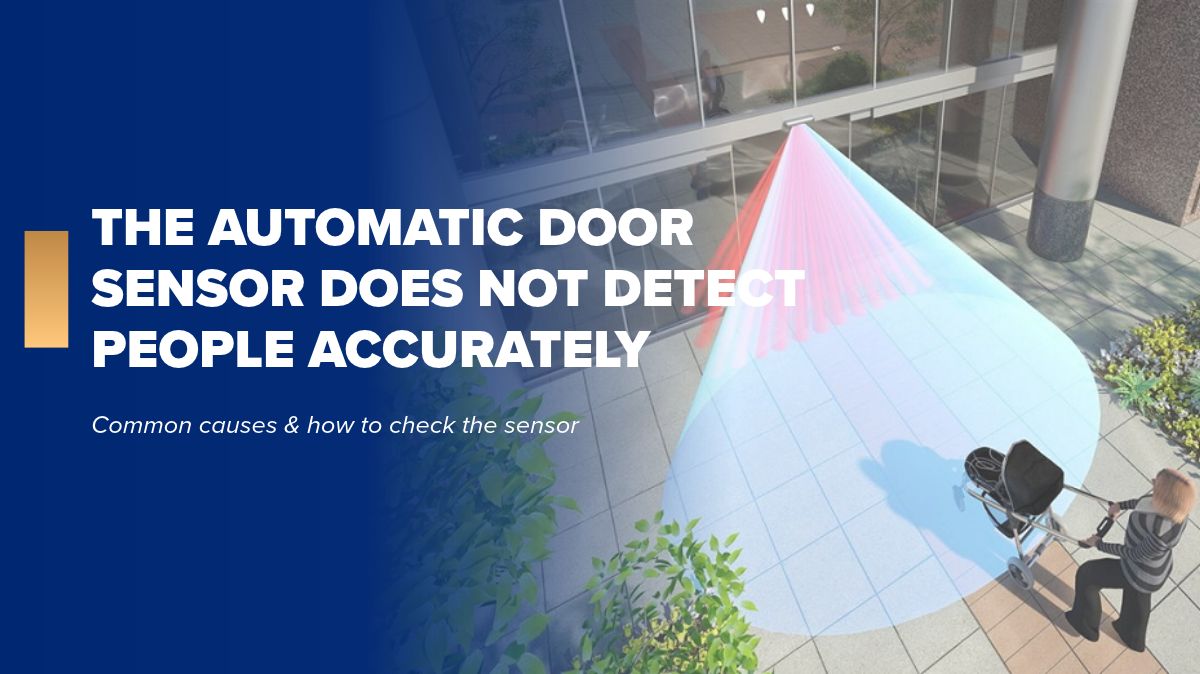
A well-operating automatic glass door system largely depends on its sensors.
| Feature | Japan | Korea |
| Sensor sensitivity | Extremely sensitive, customizable precise scanning area, good anti-interference (less likely to open mistakenly due to wind or strong light). | Stable, full basic features, responds well. |
| Safety (Anti-Pinch) | Integrated multi-point safety sensors, absolute anti-pinch and smart automatic stop/reverse features. | Equipped with basic photoelectric sensors, ensuring anti-pinch protection. |
| Customization and integration | Flexible integration with complex access control systems (operating rooms, clean rooms, elevators). | Basic integration capability (electric lock, push button), suitable for simple security systems. |

Durability – Lifespan – High-Intensity operation capability
This is a key factor for the comparison of Japanese and Korean automatic sliding doors in a business environment. To get the most specific view, we will look at the differences between two representative brands: NABCO (Japan’s leading brand) and SWICO (Korea’s high-quality brand).
| Criterion | Japanese Door (NABCO) | Korean Door (SWICO) |
| High-Intensity operation | Superior high-intensity operation capability. Designed to operate 24/7, unlimited cycles, ideal for airports, hospitals, train stations, shopping centers. | Good load-bearing capacity and operating intensity. Suitable for medium–high traffic, should not be operated continuously in extreme environments. |
| Average lifespan | 10 – 15 years (or more with good maintenance). | 7 – 10 years. |
| Component replacement | High price, but less frequent replacement needed. | Lower price, easy to find. |
Comparison of Quietness – Stability – Anti-Pinch Capability
- Quietness when opening/closing: Japanese automatic doors always provide a much smoother experience thanks to the absolute speed reduction mechanism and high-end brushless motor. Korean doors open and close quietly, but a slight motor sound may be heard when starting quickly.
- Stability after years of use: Japanese doors maintain their initial stability longer, with less looseness or speed deviation. Korean doors may require more frequent roller alignment maintenance after 5–7 years of use.
- Anti-Pinch capability: Both have basic anti-pinch features. However, the anti-pinch feature of Japanese doors is rated as more sensitive and smoother, ensuring maximum safety.
Aesthetic – Design – Finish Quality
- Japanese automatic doors are designed in a minimalist style, modern, focusing on the sophistication and high finish quality of the technical box, easily blending into the architecture.
- Korean automatic sliding doors have more diverse designs, easy to coordinate with various architectural styles, from modern to semi-classical. The price is flexible according to the design, but the mechanical finish is not absolutely equal to Japanese doors.
Suitable for which projects?
The comparison of Japanese and Korean automatic sliding doors ultimately must return to the actual needs of each project:
Japanese automatic sliding doors are suitable for:
- Projects requiring 24/7 operation: Hospitals (operating room doors, main corridors), airports, large shopping centers, train stations.
- Environments requiring absolute quietness: 5-star hotels, libraries, VIP areas of offices.
- Investors prioritizing top quality – stability: Willing to pay for maximum durability and safety.
Korean automatic sliding doors are suitable for:
- Cost optimization while ensuring durability: Offices, convenience stores, showrooms, medium and small supermarkets.
- Projects with medium traffic: Townhouses, restaurants, auxiliary entrances of large buildings.
- Projects requiring design flexibility and quick installation.

Experience choosing between Japanese and Korean doors
Choosing the right type of automatic door requires considering the following factors:
- Traffic flow: In places with very high traffic density such as airports and hospitals, the Japanese door is the safest choice. Conversely, if the traffic flow is medium to high like in offices and supermarkets, the Korean automatic sliding door (especially models with strong motors like SWICO) is the optimal choice for cost efficiency.
- Glass door load: For heavy and large automatic glass sliding doors, Japanese motors usually have higher reliability.
- Budget: If the budget is limited, prioritize the Korean line. If the budget is flexible, invest in Japan for long-term durability.
- Aesthetic and feature requirements: If complex features need to be integrated (interlocking locks, clean room control), Japan has a better ecosystem of accessories and algorithms.
- Warranty – maintenance policy: Always choose a supplier committed to providing genuine components for both door lines and having a skilled technical team.
>>> See more: What is a Japanese automatic sliding door? Reasons why this door type is the most preferred in 2025
Conclusion
Japanese and Korean automatic sliding doors are both high-quality smart entrance solutions. While Japanese automatic doors lead in technology, durability, and absolute quietness, suitable for key projects, Korean doors excel in cost efficiency and flexible application for the common market. The comparison of Japanese and Korean automatic sliding doors has helped you see that each product line has its own advantages. To choose correctly, you should base your decision on actual needs, especially usage frequency and investment budget. When installed correctly and used for the intended purpose, both types of doors offer a good experience and contribute to creating a smart entrance solution for your project.
With experience in distributing and installing both product lines, Son Ha Auto will advise on the most optimal solution, suitable for your needs, budget, and project type.
👉 Contact Son Ha Auto immediately for in-depth consultation and the fastest quote!