In pharmaceutical manufacturing plants, electronic cleanrooms, and hospital operating theaters, an airlock is one of the most critical areas for environmental control and contamination prevention. Although it is commonly used in these facilities, many people still do not fully understand its actual function. So, what is an Airlock, how does it work, and why is it always associated with specialized airtight door systems? In this article, Sonha Auto explains the concept in detail and explores why NABCO airtight doors are widely used in modern airlock applications.
What is an Airlock?
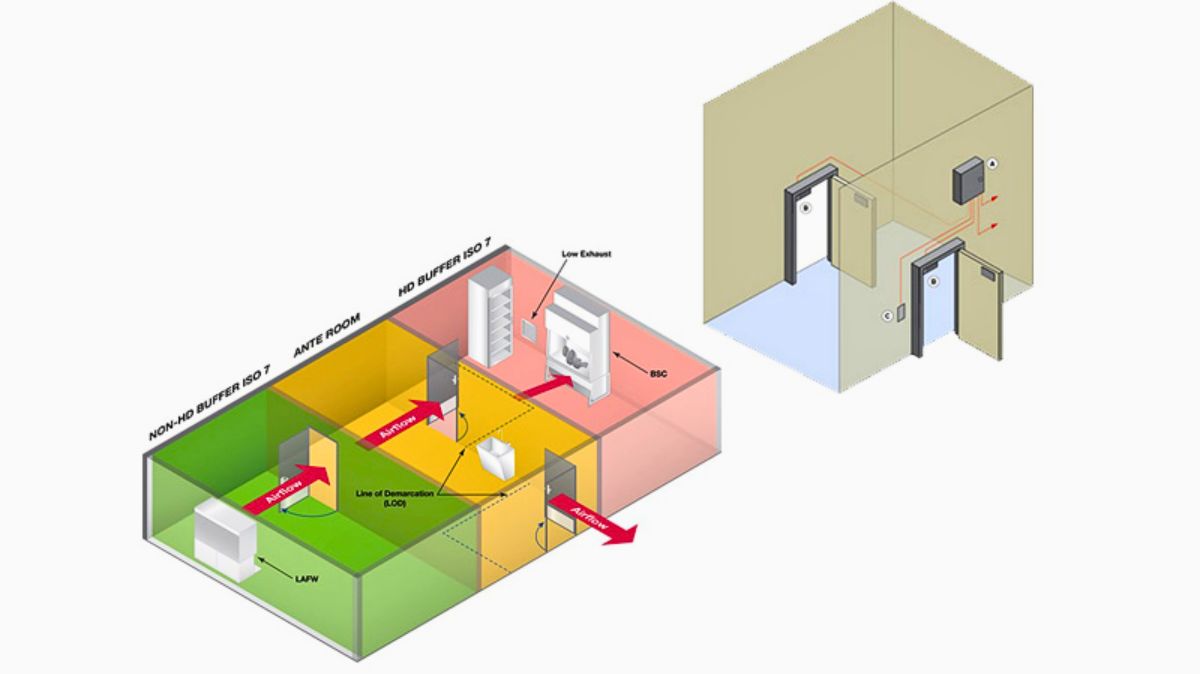
An airlock is an intermediate space positioned between two areas with different cleanliness classifications or pressure levels. Its purpose is to control the movement of air, personnel, and materials when transitioning from one zone to another.
An airlock can be thought of as a “buffer chamber.” Instead of entering a cleanroom directly from an external area, personnel or goods must first pass through the airlock before accessing the controlled environment.
The primary objectives of an airlock include:
- Minimizing direct air exchange between two environments.
- Maintaining pressure differentials.
- Reducing the risk of dust, bacteria, or other contaminants entering controlled areas.
- Supporting contamination control and cross-contamination prevention.
For this reason, airlocks are considered an essential component in GMP cleanrooms, ISO-classified cleanrooms, hospitals, operating rooms, and high-tech manufacturing facilities.
How does an Airlock work?
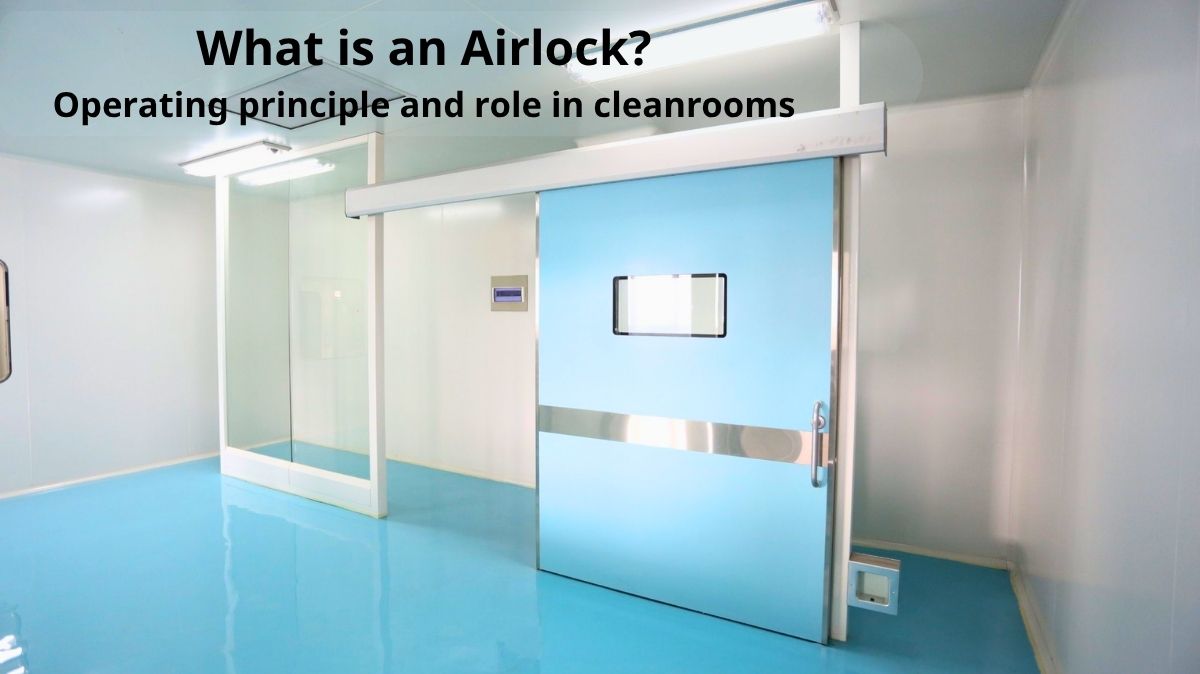
The operating principle of an airlock is relatively simple yet highly effective. Instead of allowing both doors to open simultaneously, the system controls door operation in a predefined sequence. When one door is open, the other door remains locked or cannot be activated. This prevents pressure loss and reduces the possibility of contaminated air entering the clean zone.
For an airlock to function effectively, HVAC and pressure control systems are important. However, the most critical component is the cleanroom door system. If the doors do not provide adequate sealing performance or operate inconsistently, the environmental control effectiveness of the entire airlock will be compromised.
Why do airtight doors determine the effectiveness of an Airlock?
Many people assume that an airlock is simply a small room located between two areas. In reality, the performance of an airlock depends heavily on the air-control capability of its door system.
A compliant airlock door should meet the following requirements:
High airtightness
An airlock can only function properly when pressure differentials are maintained consistently. If the door leaks air, pressure will continuously escape, reducing environmental control performance.
This is why modern cleanroom facilities often prioritize airtight doors instead of conventional doors.
Interlock integration capability
An interlock system creates a coordinated relationship between the two airlock doors. When one door opens, the other door is automatically locked or disabled. This is a critical requirement for preventing direct airflow exchange between adjacent areas.
Reduced physical contact
In cleanroom environments, every touchpoint may introduce dust particles or microorganisms. Automatic door systems minimize hand contact and contribute to improved contamination control.
Cleanroom-compatible materials
Door surfaces should be resistant to dust accumulation, corrosion, and routine cleaning with specialized disinfectants. These requirements make dedicated cleanroom doors a nearly mandatory choice for modern airlock systems.
How do NABCO airtight doors support Airlock design?
After understanding what an Airlock is, the next important question is: which door system can effectively meet the technical requirements of an airlock?
As a leading Japanese automatic door manufacturer, NABCO has developed a range of specialized airtight door solutions designed to satisfy stringent environmental control requirements. These systems are widely adopted in hospitals, pharmaceutical plants, and cleanroom facilities worldwide.
High airtightness for pressure maintenance
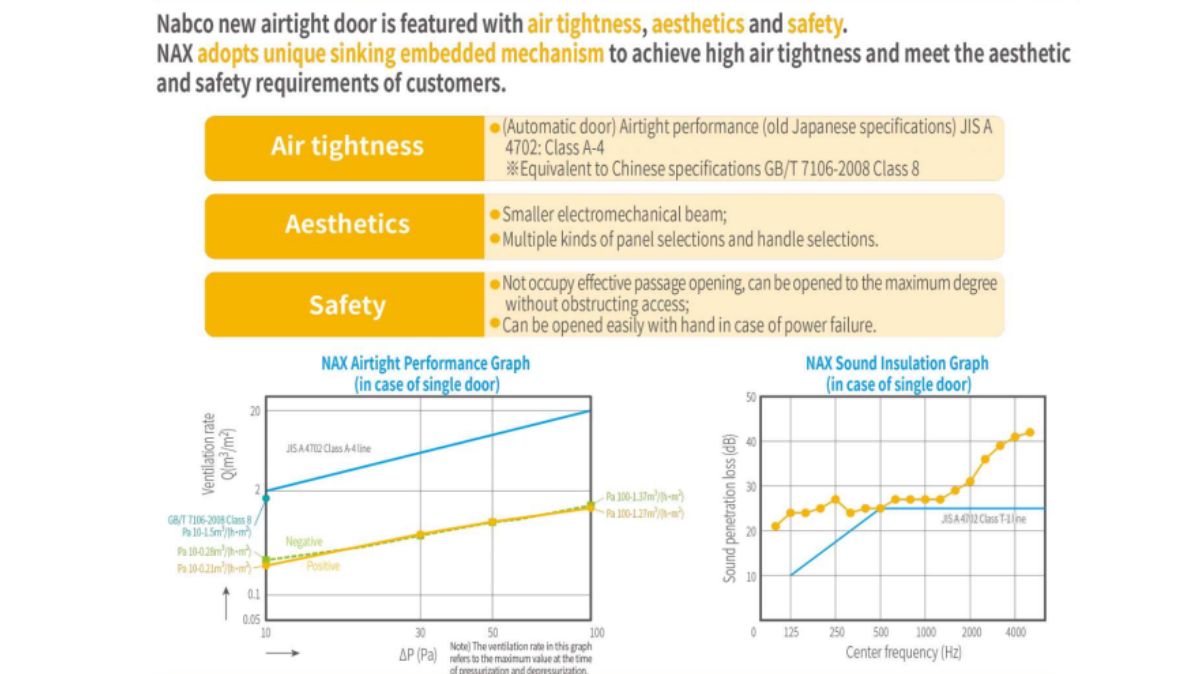
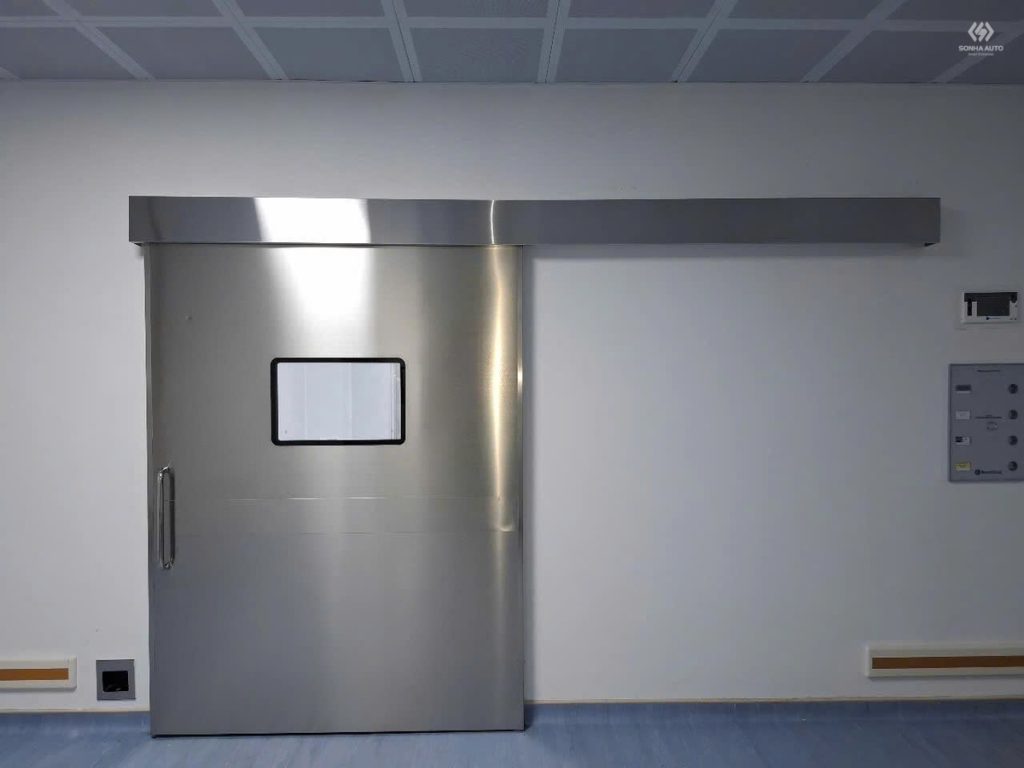
One of the most important requirements of an airlock is the ability to maintain pressure differentials between areas. NABCO NAX airtight doors are engineered with a dedicated compression-sealing mechanism. When closed, the door leaf is pressed tightly against the frame to minimize air leakage through gaps.
Certain NABCO airtight door models achieve A-4 airtightness performance according to JIS A 4702, a high-level airtightness classification commonly required for operating rooms, intensive care units (ICUs), and cleanrooms. This performance provides the foundation for effective environmental control within an airlock system.
Interlock integration for airlock systems
In airlock design, simultaneous opening of both doors must be avoided. NABCO cleanroom door solutions can be integrated with interlock systems through central controllers or PLCs, allowing coordinated door operation within the airlock chamber.
This ensures airflow remains controlled according to the original design intent. It is also one of the most critical requirements for GMP cleanroom facilities and modern healthcare projects.
Automatic operation to reduce cross-contamination risks
In airlock systems, minimizing contact with door surfaces is essential for environmental control. Compared with conventional manual doors, NABCO automatic hospital doors reduce direct physical contact, thereby lowering the risk of introducing dust and microorganisms into controlled areas.
The system can also be integrated with motion sensors, touchless activation switches, or access control devices, making movement more convenient while maintaining infection-control standards.
Materials suitable for cleanroom environments
Depending on project requirements, NABCO airtight doors can be finished with HPL, stainless steel, glass, or powder-coated aluminum. These materials are commonly used in cleanroom environments due to their resistance to dust accumulation, ease of cleaning, and ability to withstand frequent disinfection procedures.
High durability in continuous operation environments
Thanks to their airtight performance, stable operation, and interlock compatibility, NABCO airtight door solutions are widely used in:
- Pharmaceutical cleanroom airlocks.
- Electronics manufacturing airlocks.
- Hospital operating rooms.
- ICUs and isolation rooms.
- Research facilities and laboratories.
These environments all require stringent pressure control and contamination prevention measures.
Current trends in Airlock design
As pharmaceutical, electronics, and healthcare industries continue to evolve, requirements for airlock systems have become increasingly demanding. While airlocks were once regarded primarily as transition spaces between two areas, facility owners today are seeking fully integrated environmental control solutions with a higher degree of automation.
A growing trend is the replacement of traditional manual doors with automatic door systems, combined with interlock technology, high-performance airtight doors, and intelligent access-control devices. These solutions help maintain stable pressure differentials, reduce hand contact, and improve operational efficiency. As a result, an airlock is no longer simply a “buffer room.” It has become a critical component of the overall environmental control strategy in modern facilities.
>>> See more: What is JIS A 4702? Its significance for automatic doors and hospital airtight doors
Conclusion
Based on the information above, understanding what an Airlock is goes far beyond recognizing it as a simple transitional space. An airlock is a vital component of environmental control systems in cleanrooms and hospitals. To ensure optimal airlock performance, the key factors are maintaining pressure differentials, controlling airflow, and preventing cross-contamination through a reliable door system.
With high airtightness, interlock integration capability, touchless operation, and materials suitable for controlled environments, NABCO airtight doors provide an effective entrance solution for facilities that must meet the technical requirements of modern airlock systems.
Contact Sonha Auto for professional consultation on NABCO airtight door solutions tailored to the specific standards of cleanrooms, hospitals, and specialized manufacturing facilities.