After millions of opening and closing cycles, all automatic door components are affected to some extent by continuous operation. However, the actual rate of deterioration varies between components. Mechanical moving parts are regularly exposed to friction and door leaf loads, while electronic systems are particularly sensitive to fluctuations in power supply, temperature, and ambient humidity. Therefore, it is not possible to determine exactly which component will fail first based solely on the number of operating cycles. An accurate assessment must take into account each component’s technical characteristics, the actual operating environment, and the maintenance history of the installation.
Which automatic door components are most likely to wear out first?
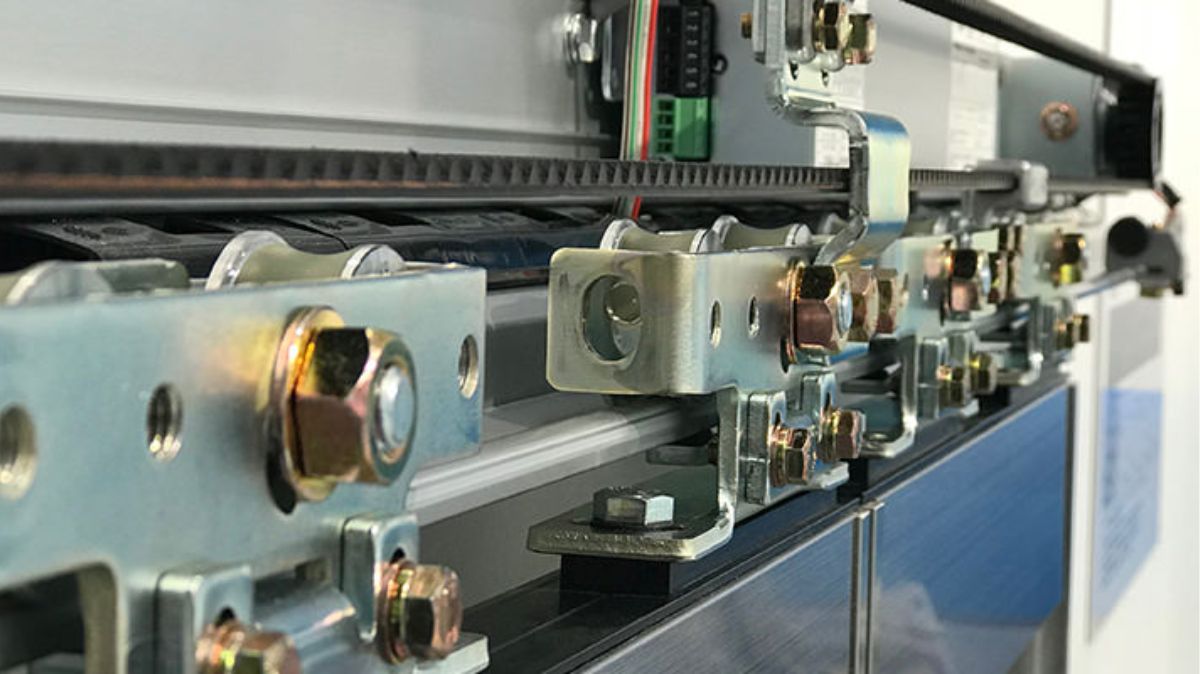
In automatic sliding door systems, components such as hanger rollers, drive belts, and pulleys are subject to substantial stress because they are directly involved in every movement of the door. The weight of the glass door leaves, combined with frequent opening and closing, causes these mechanical components to wear over time.
However, the order in which components wear out is not fixed. A system installed to the correct technical specifications, operated within its rated load limits, and maintained regularly will generally last significantly longer than one that is frequently overloaded or lacks proper technical maintenance.
Service life and signs of wear in different component groups
Hanger rollers and guide rollers
Hanger rollers support the entire door leaf load and travel directly along the aluminum track. When the roller surface or bearings become worn, the door may become noisy, vibrate, move with increased resistance, or deviate from its intended travel path. At this stage, technicians should inspect the rollers, track surface, and door leaf alignment together to identify and address the root cause.
Drive belt
The drive belt transmits power from the motor to the door leaves. After prolonged operation, the belt may lose tension, develop worn teeth, or become hardened, causing jerky door movement or squealing noises. Checking belt tension and surface condition helps identify the risk of belt failure at an early stage. When adjusting or replacing automatic door components, technicians must follow the manufacturer’s specified belt tension.
Pulleys and other drive components
The pulleys work with the drive belt to transmit motion. Worn contact surfaces, deteriorated bearings, or excessive play can cause noise and reduce transmission efficiency. Because these components operate together, pulleys should be inspected alongside the drive belt rather than assessed in isolation.

Motor and gearbox
The motor generates the driving force, while the gearbox transmits torque to suit the operating mechanism. The service life of these components depends on the door leaf load, usage frequency, heat dissipation, and mechanical resistance.
Unusual noise, motor overheating, or weak door movement may indicate that an inspection is needed. However, a slow-moving door does not necessarily mean the motor has failed. The cause may also lie in the track, rollers, drive belt, or power supply.
Controller
The controller receives and processes signals and coordinates the entire system’s operation. Meanwhile, activation sensors detect approaching users, while safety sensors detect obstacles to help ensure safe passage.
These electronic automatic door components are highly sensitive to voltage drops, humidity, dust, and incorrect detection angles. Before deciding to replace a component, technicians should measure the supply voltage, inspect signal wiring, and check the error codes on the control panel. Safety sensors must never be disconnected or bypassed as a temporary troubleshooting measure.
Electric lock and backup power supply
Electronic locks may malfunction due to mechanical jamming or faults in the control circuit. For backup power supplies, battery capacity naturally decreases over time, even in buildings that rarely experience power outages. Regularly checking the locking mechanism and testing the backup power function are essential to maintaining building security.

Reference service life of automatic door components by operating cycles
The number of opening and closing cycles is an important basis for facility management teams when planning maintenance budgets. The following are reference service life figures for the premium NABCO NATRUS sliding door range:
| Automatic door component group | Reference service life |
| Motor | Approximately 3 million cycles or 7 years |
| Urethane hanger rollers | Approximately 3 million cycles or 7 years |
| Pulleys | Approximately 3 million cycles or 7 years |
| Drive belt | Approximately 5 million cycles or 7 years |
| Controller | Approximately 7 years |
| Reflective sensors, photoelectric sensors, and touch switches | Approximately 5 years |
Note: These figures are technical guidelines for the NABCO NATRUS range, not mandatory replacement intervals for all products on the market. Actual service life varies depending on environmental conditions, installation quality, and maintenance practices.
Factors that accelerate component wear
Even when the same model is used, the actual service life of an automatic door system can vary considerably from one installation to another due to the following factors:
- Door leaf load: Heavy or oversized door leaves place greater loads on the motor, rollers, and drive components.
- Usage frequency: Doors in shopping malls, hospitals, and crowded buildings generally operate more frequently than those in areas with low foot traffic.
- Environmental conditions: Dust, humidity, high temperatures, and an unstable power supply can affect both mechanical and electronic components.
- Installation and maintenance quality: Incorrect alignment, dirty tracks, or a lack of regular inspections can increase mechanical resistance and accelerate wear.

When should automatic door components be repaired or replaced?
Not every sign of abnormal operation means a component must be replaced. Many issues can be resolved by cleaning, mechanical realignment, or resetting operating parameters. However, when a component is cracked, broken, worn beyond safe limits, or mechanically deformed, replacing automatic door components is essential to prevent further damage to other parts of the system.
The diagnostic process should begin with an inspection of the mechanical system, followed by checks of the motor, control board, and sensors. This approach helps technicians identify the actual fault and avoid unnecessary expenditure.
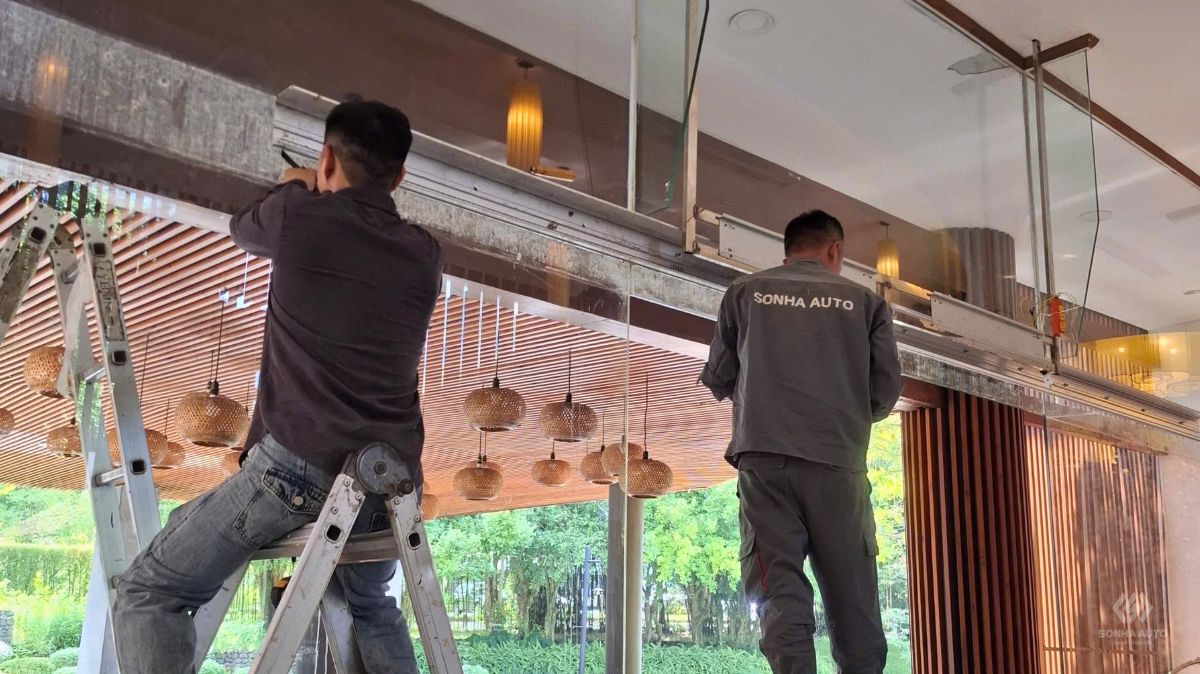
Building owners should prioritize genuine automatic door components or automatic door accessories with specifications that match the original model to maintain system compatibility and restore its original performance. Rather than waiting for a breakdown before contacting an automatic door repair provider, scheduling regular maintenance helps control costs and keep entrances safe and unobstructed.
>>> See more: How often should automatic doors be maintained to ensure stable operation?
Sonha Auto – Consultation on maintenance and replacement of automatic door components
With more than 20 years of specialized experience in the automatic door industry in Vietnam, Sonha Auto prioritizes on-site inspections and accurate diagnostics before recommending a solution. Depending on the degree of component wear, we provide the most appropriate approach, from technical adjustments and automatic door repairs to replacing parts in accordance with the system configuration.
Identifying the root cause and selecting components compatible with the specific model helps reduce the risk of recurring faults after repairs. It also enables investors and building management teams to plan long-term maintenance more proactively.
Contact Sonha Auto at 0934 546 008 for advice on inspecting, repairing, and replacing automatic door components based on the actual condition of your installation.