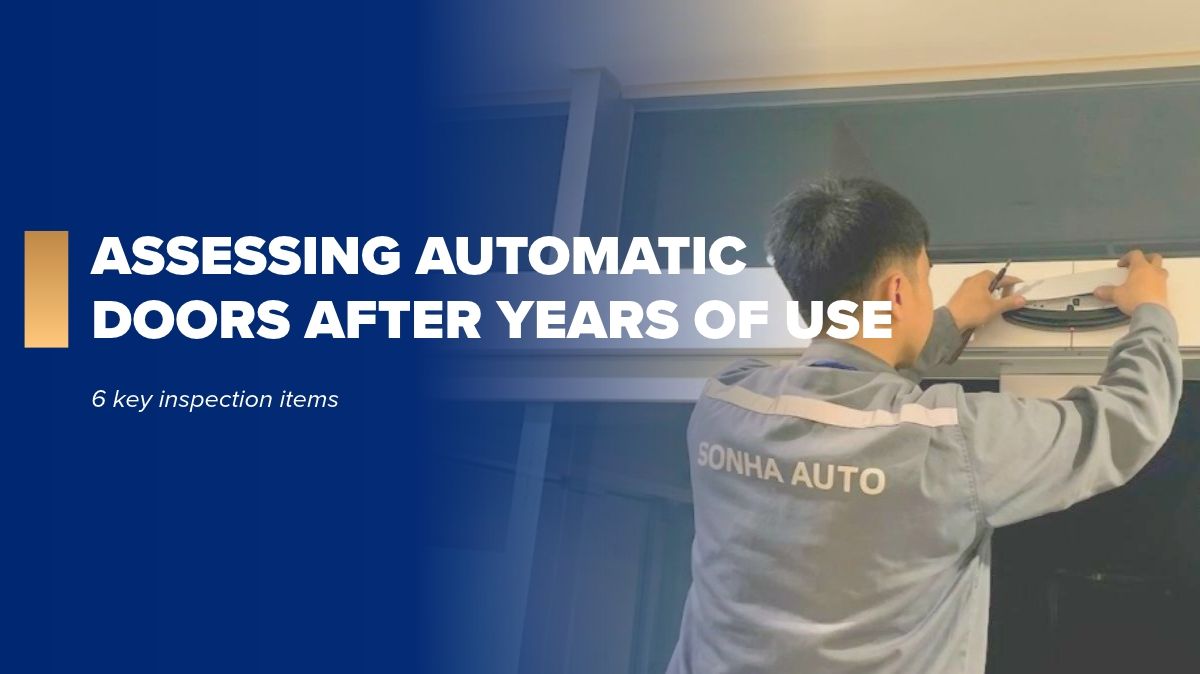
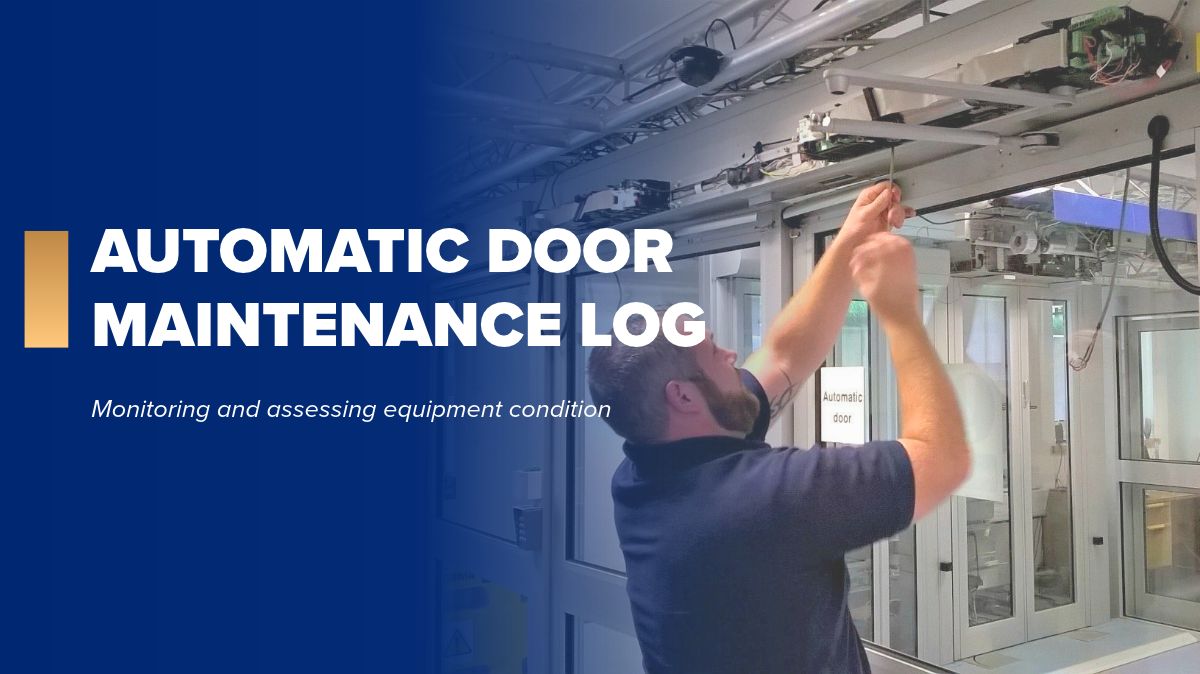
After years of operation, automatic doors may show signs such as irregular opening and closing, unusual noise, or inaccurate sensor responses. However, these symptoms alone are not enough to identify the cause or conclude that the equipment has deteriorated. Therefore, assessing automatic doors after years of use requires an evaluation of the actual condition of the relevant components and functions, from the door panels and guide rails to the operator, sensors, and safety devices. So, which items should be inspected, and how should the findings be documented? Find out with Sonha Auto in the following article.
Why is it necessary to assess automatic doors after years of use?
Automatic doors consist of multiple components that work together to perform opening and closing functions. When one component does not operate correctly, the performance of the entire system may be affected.
In its operation and maintenance documentation, NABCO emphasizes periodic inspections to identify abnormal signs and maintain equipment performance. The inspection scope should be based on the construction, model, and actual configuration of each system.
An inspection of the actual condition helps identify abnormalities, determine which items require attention, and assess safety functions, rather than relying solely on whether the door can still open and close.
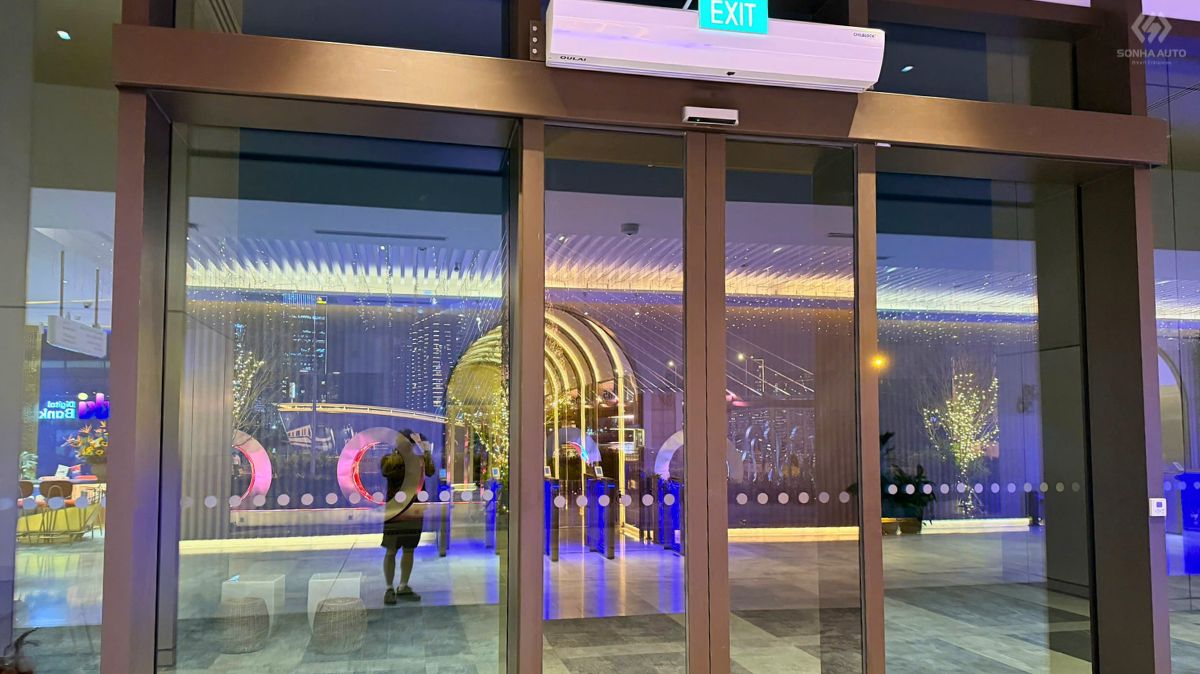
What should be checked when assessing automatic doors after years of use?
The inspection scope may vary depending on the model and installation configuration. The following categories provide a reference framework for assessing the actual condition of the system.
Door opening and closing performance
First, observe the door completing its opening and closing cycle under normal operating conditions:
- Does the door receive a signal and open when someone enters the detection zone?
- Does it close after the person has passed through?
- Is its movement stable, or does it jerk or stop unexpectedly?
- Does the door operate according to its configured operating mode?
The NABCO operating instructions also refer to checking the opening and closing cycle to confirm that the door operates normally. If an abnormality is detected, the symptom should be documented for a technician to investigate rather than attempting to identify the cause without inspection.

Door panels, frames, and guide rails
When assessing automatic doors after years of use, inspect the condition of the door panels, frames, and guide rails, paying particular attention to signs of damage, deformation, or foreign objects.
Items to check include:
- Are the door panels or frames damaged or deformed?
- Are there any dirt deposits or obstructions on the guide rails?
- Are there any objects obstructing the opening and closing path?
These are also areas highlighted by the manufacturer in its inspection and maintenance documentation. Such factors can affect door movement and should be addressed appropriately.
Operator and control equipment
Pay attention to signs such as the door failing to operate automatically, not performing its intended functions, unusual noise from the operator, or abnormal odors. In its troubleshooting instructions, NABCO indicates that a door failing to operate automatically may be related to the power supply, activation sensor, or operator. Therefore, these components should be inspected to identify the cause rather than diagnosing the problem based on a single symptom.
If smoke, unusual odors, or abnormal noise occur, disconnect the power supply and contact a qualified service provider. Users should not attempt to dismantle or adjust the equipment themselves.
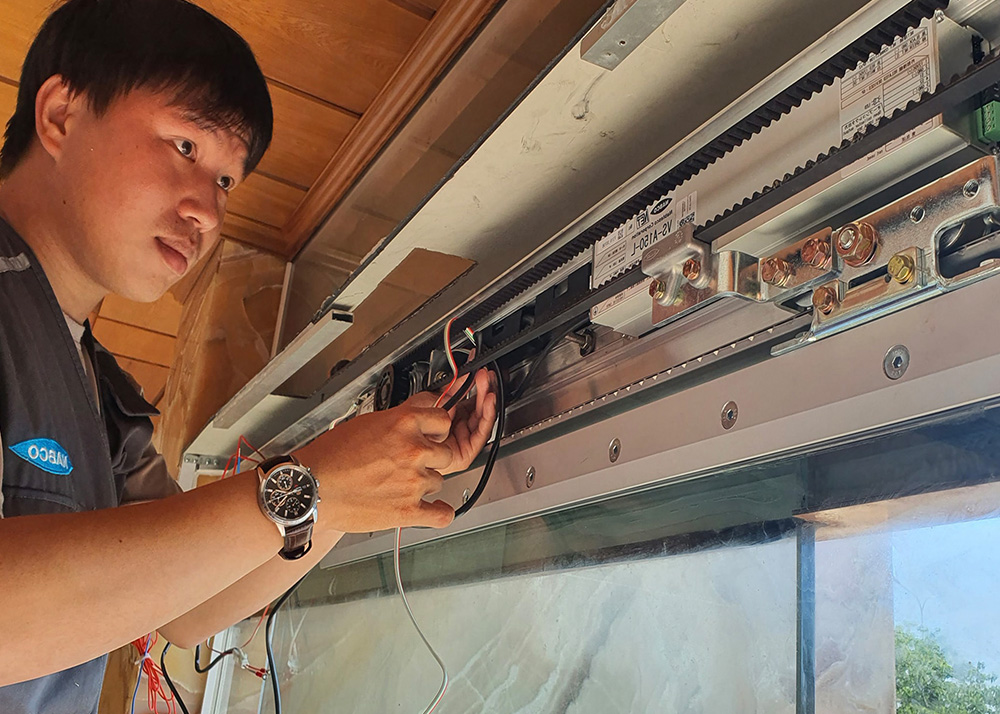
Activation sensors and supplementary sensors
The activation sensor detects people within its detection zone and sends a signal to open the door. Supplementary sensors help the door detect people or objects that remain within its operating area, reducing the risk of the door closing when it should remain open.
During inspection, check the following:
- Does the sensor correctly detect objects within its detection zone?
- Does the door respond appropriately when a supplementary sensor detects a person or object?
- Are the sensor surfaces dirty or obstructed?
- Have the sensor positions or mounting angles changed?
NABCO notes that dirt on sensor surfaces can reduce sensitivity, while changes in mounting angles may also affect the detection zone. Therefore, sensor functions should be checked in accordance with the manufacturer’s technical instructions.

Protective devices and safety functions
Normal door operation does not necessarily confirm that all protective functions are working correctly. An automatic door system may be equipped with protective sensors to monitor its operating area and reduce the risk of impact during opening and closing. The assessment should include the following checks:
- Which protective devices are installed in the system?
- Are these devices performing their intended functions correctly?
- Are the detection and protection zones appropriate for the actual system configuration?
- Does the door respond correctly when a person or object is present in the protected area?
EN 16005 addresses safety requirements and test methods for power-operated pedestrian doors. Therefore, protective functions must be checked according to the equipment configuration and technical instructions. They cannot be verified through visual observation alone.
Structural conditions and the surrounding area
Changes to the installation area can also affect door operation, particularly the sensor detection zones.
Check the following:
- Have the floor or walkway conditions changed since the original installation?
- Are there any new obstacles within the door’s operating area?
- Do the frame, door panels, or connection points show signs of damage?
- Has any nearby construction work affected the equipment?
NABCO also notes that floor repairs or finishing work near the door may change the operating conditions of the sensors. Therefore, consult the distributor before carrying out any modifications that could affect the system.

How to compile the results after inspecting automatic doors
When assessing automatic doors after years of use, inspection findings should be classified according to the actual condition of each item. Components that function correctly with no abnormalities identified can be classified as satisfactory at the time of inspection. Items showing damage or failing to meet functional requirements require corrective action, while symptoms whose causes have not yet been identified should be documented for further monitoring or in-depth inspection.
After the inspection, record the actual condition of each item, any abnormalities identified, and the corresponding corrective measures. This information should be retained in the automatic door maintenance log to track changes in equipment condition across successive inspections and provide a basis for planning appropriate servicing and repairs.
Important considerations when assessing automatic doors that have been in use for many years
After inspecting the door components and functions, care should be taken when drawing conclusions about equipment condition. Several points should be considered:
- Do not rely solely on opening and closing performance: A door that operates normally does not necessarily mean that all safety functions are working correctly.
- Do not rush to identify the cause: An abnormal symptom may originate from several different components. Inspection is necessary to determine the actual cause.
- Do not dismantle or adjust the equipment yourself: Work on the operator, sensors, and control equipment should be carried out by qualified technicians.
- Follow the instructions for the specific model: Construction and functions may differ between door models, so inspections should be based on the actual model and configuration.
In addition, the number of years in use is not the only factor in determining how much longer an automatic door can remain operational. Only an on-site inspection of the actual condition of its components and related functions can provide a reliable assessment, helping determine whether further monitoring, maintenance, automatic door repair, or replacement is required.
>>> See more: After millions of opening and closing cycles, which automatic door components wear out first?
Sonha Auto – Automatic door inspection, maintenance, and repair services
Inspection and assessment should be performed by qualified technicians to determine the actual equipment condition and select appropriate corrective measures.
With more than 20 years of experience in installing and maintaining automatic door systems, Sonha Auto provides automatic door inspection, maintenance, and repair services, including for NABCO systems. Inspections are carried out based on the equipment model, configuration, and actual operating conditions. Based on the assessment results, technicians recommend appropriate solutions, such as cleaning, maintenance, adjustment, repair, or component replacement when necessary.
Contact Sonha Auto at 0934 546 008 for consultation and assistance with automatic door inspections.